The Silent Sabotage: Why AI Tutors Might Be Harming Student Success
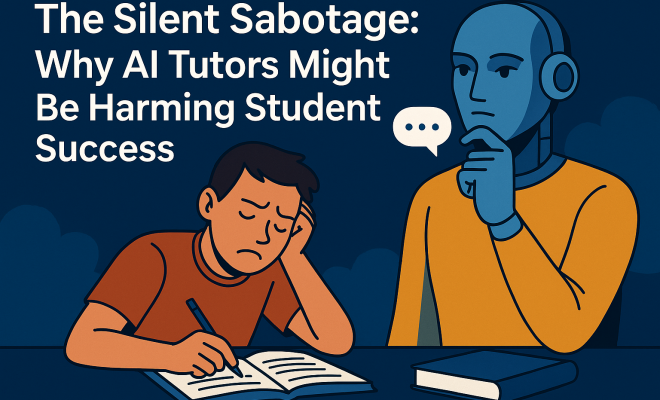
When you hear about artificial intelligence in education, what’s the first thing that comes to mind? Probably a future where personalized learning is the norm, where every student has a tireless, infinitely patient tutor at their beck and call. It’s a compelling vision, one that many of us in the education space, including myself, have championed for years. We’ve seen the potential, the promise of AI to democratize access to high-quality instruction and support diverse learning styles. But what if that promise, at least in its current iteration, isn’t just falling short, but actively detrimental to student achievement?
A recent study from the University of Maryland, published on October 2, 2026, has thrown a significant wrench into this prevailing narrative. Their findings, based on a randomized trial involving nearly 2,400 undergraduate students, suggest something quite counterintuitive: students with access to a GPT-4o-based AI tutor actually achieved lower grades and showed a sharp decline in engagement with their university’s learning platform. This isn’t just a minor blip; we’re talking about approximately four points lower in matched courses. As someone who has spent years in the classroom and in educational leadership, this is a finding that demands our serious attention and a reevaluation of our assumptions about AI tutor effectiveness.
This isn’t to say AI doesn’t have a place in education. Far from it. But this study forces us to confront the nuances, the unintended consequences, and the critical importance of pedagogical design when integrating such powerful tools. It’s not enough to simply drop advanced AI into a learning environment and expect miracles. We have to consider how students truly interact with these tools, what behaviors they foster, and whether they align with genuine learning outcomes. The debate this study is sparking among educators, parents, and edtech companies is precisely what we need right now.
1. The University of Maryland’s Controversial Findings: A Closer Look at the Data
The study itself was a robust undertaking, involving 2,379 undergraduate students, a significant sample size that lends considerable weight to its conclusions. The researchers at the University of Maryland set up a randomized trial, a gold standard in research design, to compare the academic performance and engagement of students who had access to a sophisticated GPT-4o-based AI tutor against a control group. The results were, to put it mildly, astonishing and, frankly, quite concerning for anyone invested in the future of edtech.
Students who were given access to the AI tutor ended up with grades that were, on average, four points lower in comparable courses. This isn’t a marginal difference; four points can easily be the difference between a B and a C, or even passing and failing in some contexts. Beyond the grade drop, the study also meticulously tracked student interaction with the university’s learning platform. Here, too, the AI-assisted group showed a marked decline in various engagement metrics. We’re talking about fewer page views, fewer active days on the platform, and a noticeable reduction in discussion forum responses. It paints a picture of disengagement, rather than enhanced learning.
To really dig into the data, the researchers employed a difference-in-differences approach, comparing changes in outcomes for the treatment group (with AI access) to the control group (without AI access) over time. This method helps isolate the effect of the AI tutor, controlling for other factors that might influence grades or engagement. What they found was consistent across multiple analyses: the negative impact on grades and engagement was statistically significant. The magnitude of the effect – four percentage points – is something we can’t just brush aside. It suggests a systemic issue, not just anecdotal evidence.
2. GPT-4o and the Nature of AI Tutoring: Why Immediate Answers Aren’t Always Best
The AI tutor used in the study was based on GPT-4o, one of the most advanced large language models available. These models are incredibly powerful, capable of generating coherent text, answering complex questions, and even performing creative tasks. The intention behind providing such a tool as a ‘study assistant’ was likely to offer immediate help, clarify concepts, and guide students through difficult material. However, the study’s findings suggest that students used the AI in a way that undermined these pedagogical goals.
Instead of engaging in a guided, iterative learning process – the kind of interaction a human tutor would foster – students tended to seek direct answers. Think about it: when you’re stuck on a problem, and a powerful AI can instantly give you the solution, what’s the path of least resistance? It’s to get the answer, not necessarily to understand the underlying principles or wrestle with the problem-solving process. This shortcut mentality, while efficient in the short term, bypasses the cognitive struggle that is absolutely essential for deep learning and retention. True learning often involves grappling with uncertainty, making mistakes, and slowly building understanding, a process that AI, when misused, can inadvertently short-circuit.
This phenomenon isn’t entirely new. We’ve seen similar patterns with readily available online answer keys or study guides that provide solutions without requiring students to engage in the problem-solving process. The difference here is the sophistication and accessibility of GPT-4o. It can provide not just answers, but explanations that *sound* authoritative and comprehensive, giving students a false sense of understanding. They might be able to parrot back the AI’s explanation, but can they apply the concept to a new problem? Can they synthesize information from multiple sources? That’s where the critical learning often happens, and it’s precisely what seems to be diminished when students over-rely on an AI for immediate solutions. (See: AI's impact on education outcomes.)
3. The Erosion of Engagement: Fewer Clicks, Less Learning
The decline in student engagement with the university’s learning platform is perhaps as troubling as the drop in grades. The platform is designed to be a central hub for learning – providing access to readings, assignments, discussion boards, and supplementary materials. A reduction in page views, active days, and discussion responses suggests students were simply spending less time interacting with the core curriculum and their peers. This has significant implications for how we measure and support student success in an increasingly digital learning environment.
Engagement isn’t just about logging in; it’s about active participation, critical thinking, and collaborative learning. When students bypass these elements by relying on an AI for quick answers, they miss out on the rich, multifaceted learning experiences that contribute to a holistic education. This also impacts the instructor’s ability to gauge student understanding and identify areas where additional support might be needed. If students aren’t engaging with the platform or participating in discussions, their struggles become invisible until it’s too late, often reflected in lower exam scores or assignment grades. For more context, see AI Apps Reshaping Learning.
Consider the ripple effects of this disengagement. University learning platforms often house valuable supplementary materials, instructor announcements, and peer-to-peer collaboration tools. If students are spending less time on these platforms, they might be missing out on crucial context, clarification, or opportunities to learn from their classmates. The decline in discussion forum responses is particularly concerning because these forums are often designed to foster critical thinking, debate, and the articulation of ideas – all vital skills that are hard to develop in isolation with an AI.
4. The Human Element: Why Interaction Still Reigns Supreme for AI Tutor Effectiveness
This study powerfully underscores a point many educators have argued for years: the irreplaceable value of human interaction in learning. A human tutor doesn’t just provide answers; they ask probing questions, offer encouragement, identify misconceptions, and adapt their approach based on a student’s emotional state and learning style. They build rapport and trust, creating a safe space for intellectual exploration and vulnerability.
While AI can mimic some of these functions, it currently lacks the nuanced understanding of human psychology and the ability to foster genuine connection. The motivation, accountability, and deeper understanding that come from interacting with a dedicated human educator are difficult, if not impossible, for even the most advanced AI to replicate. This isn’t a knock on AI’s capabilities, but rather a recognition of the complex, relational nature of effective pedagogy. The current state of AI tutor effectiveness seems to highlight that the ‘human touch’ is far more than just an optional extra.
Think about the subtle cues a human tutor picks up: a student’s furrowed brow, a hesitant answer, or a sigh of frustration. These non-verbal signals inform how a human tutor adjusts their approach, perhaps rephrasing a question, offering a different example, or simply providing a moment of encouragement. AI, even advanced models, struggles with this kind of emotional intelligence and adaptive empathy. Furthermore, a human tutor can hold a student accountable, not just for getting the right answer, but for the process of arriving at it. This accountability, coupled with personalized feedback, is a potent driver of genuine learning that current AI tutors haven’t quite mastered.
5. Pedagogical Design Matters: It’s Not Just About the Tech
One of the critical takeaways from the University of Maryland study is that simply deploying advanced technology without careful consideration of pedagogical design is a recipe for disappointment. It’s not enough to have a powerful AI; how that AI is integrated into the learning process, how students are instructed to use it, and what learning behaviors it encourages are paramount. If the AI is primarily seen as a shortcut to answers, then that’s how students will use it, irrespective of its deeper capabilities.
This means educators and edtech developers need to work hand-in-hand to design AI tools that encourage active learning, critical thinking, and problem-solving, rather than passive consumption or direct answer-seeking. This might involve designing AI prompts that challenge students to explain their reasoning, or AI systems that only offer hints rather than full solutions. It’s about building guardrails and designing interactions that align with established principles of effective learning, ensuring that the AI truly serves as a guide on the side, not an answer machine.
For example, imagine an AI tutor that responds to a student’s question not with a direct answer, but with a series of Socratic questions designed to lead the student to the answer themselves. Or an AI that requires students to justify their steps in solving a problem, providing feedback on their reasoning rather than just the final solution. This kind of thoughtful design shifts the AI from being a crutch to a cognitive partner, fostering deeper engagement and understanding. Without this intentional design, the most powerful AI can become a detriment, as the University of Maryland study suggests.
6. The Broader Implications: Reshaping the Edtech Landscape
The findings from this study are already generating significant debate, and rightly so. They challenge the often-unquestioned assumption that more AI in education automatically leads to better outcomes. For edtech companies, this means a potential shift in focus. It’s no longer just about who has the most advanced AI model, but who can integrate it most effectively and ethically into a pedagogically sound framework. We might see a greater emphasis on AI tools designed to support educators, rather than replace them, or AI that facilitates collaborative learning among students. (See: study on AI in education.)
For parents and educators, this research provides valuable evidence to inform decisions about educational technology. It encourages a more critical perspective, moving beyond the hype to ask tough questions about how these tools genuinely impact learning and development. It also highlights the need for robust professional development for teachers, ensuring they understand how to leverage AI tools effectively while mitigating potential downsides. We need to equip educators with the knowledge and skills to guide students in responsible and productive AI usage.
This study serves as a crucial data point in the ongoing conversation about AI’s role in education. It pushes us to move past the initial excitement and look critically at implementation. It’s not enough to say “AI will personalize learning.” We need to ask *how* it will personalize learning, *what kind* of personalization it offers, and *what trade-offs* come with that. The edtech landscape will likely pivot towards solutions that demonstrate clear pedagogical benefits and show a deeper understanding of human learning processes, rather than just technological prowess. For more context, see AI Tutoring and Its Impact on Universities.
7. Moving Forward: Redefining AI Tutor Effectiveness and Ethical AI Integration
So, where do we go from here? This study isn’t a death knell for AI in education; rather, it’s a crucial wake-up call. It compels us to move beyond simplistic narratives of AI as a universal panacea and to instead focus on nuanced, evidence-based approaches. Future development of AI tutors must prioritize pedagogical outcomes over technological flash. This means designing AI systems that guide, prompt, and challenge students to think critically, rather than simply providing instant gratification.
We need to explore hybrid models where AI supports human educators, augmenting their capabilities rather than supplanting their role. This could involve AI handling administrative tasks, providing data analytics to teachers, or offering initial conceptual explanations, freeing up human tutors to focus on higher-order thinking, personalized feedback, and emotional support. The conversation around ‘AI in education effectiveness reviews’ and ‘alternatives to AI tutors’ will undoubtedly grow, driving innovation towards human-centric learning solutions and advanced edtech tools that emphasize ethical AI integration and robust human oversight. The goal should always be to enhance learning, not just to automate it, and this study provides a stark reminder of that essential principle.
8. The Spectrum of AI in Education: Beyond the “Answer Machine”
It’s important to recognize that AI in education isn’t a monolith. The University of Maryland study focused on an AI tutor primarily used for generating answers, but AI applications stretch far beyond that. We’re seeing AI used in adaptive learning platforms that adjust content difficulty based on student performance, in intelligent grading systems that provide instant feedback on assignments, and in tools that analyze learning data to predict student success or identify those at risk. These applications have different pedagogical implications and varied levels of effectiveness.
For instance, an AI that helps teachers identify struggling students by analyzing their performance patterns across multiple assignments could be incredibly valuable, allowing for timely human intervention. An AI that provides scaffolded support by breaking down complex problems into smaller, manageable steps, offering hints along the way, is also a very different beast from one that just spits out the final solution. The key distinction lies in whether the AI is designed to *do the thinking for the student* or to *facilitate the student’s own thinking process*. The former, as the study suggests, can be detrimental; the latter holds significant promise for enhancing AI tutor effectiveness.
9. Addressing Equity and Access: A Double-Edged Sword for AI Tutors
One of the most compelling arguments for AI tutors has always been their potential to democratize access to high-quality education. Not every student has access to a dedicated human tutor, especially in underserved communities. AI, in theory, could bridge this gap, offering personalized support to millions. However, the Maryland study complicates this narrative. If poorly designed AI tutors lead to lower grades and disengagement, then simply providing access to them isn’t necessarily a win for equity.
In fact, it could exacerbate existing inequalities. Students who already have strong self-regulation skills and access to supplementary human support might be able to navigate the pitfalls of an “answer machine” AI more effectively, using it judiciously. But students who are already struggling, who might rely more heavily on the AI as their primary source of help, could be the ones most negatively impacted. This means that as we design and deploy AI in education, we must do so with an acute awareness of its potential to widen achievement gaps if not implemented thoughtfully and equitably, with robust support structures in place.
10. The Role of Digital Literacy and Self-Regulation in AI Usage
The study also implicitly highlights the critical importance of digital literacy and self-regulation skills in the age of AI. Students who are adept at navigating digital tools, discerning reliable information, and managing their own learning process are likely to use AI more effectively. They understand when to seek a direct answer, when to ask for a hint, and when to try to figure things out on their own. For more context, see Challenges of Neurodiversity Support in Schools. (See: CDC data on student engagement.)
However, not all students possess these skills to the same degree. Many students, especially younger ones or those new to independent learning, might struggle with the temptation of instant gratification offered by a powerful AI. This points to a need for explicit instruction in “AI literacy” – teaching students not just how to use AI tools, but *how to use them wisely*. This includes understanding the limitations of AI, recognizing when an AI-generated answer might be superficial, and developing the metacognitive skills to reflect on their own learning process and how AI can best support it.
11. Measuring True Learning vs. Performance Metrics
The University of Maryland study focused on grades and engagement metrics. While these are important indicators, they might not fully capture the nuances of learning. Grades often reflect a student’s ability to produce correct answers on assessments, but do they always reflect deep conceptual understanding or the ability to apply knowledge in novel situations?
This study prompts us to consider what “effective” AI tutoring truly means. Is it about boosting test scores, or is it about fostering critical thinking, creativity, and problem-solving abilities that extend beyond the classroom? Future research into AI tutor effectiveness should aim to measure these higher-order cognitive skills more directly. We need studies that look at long-term retention, transfer of learning to new contexts, and the development of meta-cognitive strategies, rather than just immediate performance gains or losses. This will give us a more complete picture of how AI truly impacts student development.
12. Looking Ahead: A Call for Collaborative Research and Development
The findings from the University of Maryland shouldn’t be seen as a setback, but rather as a catalyst for more thoughtful innovation. It’s a call for greater collaboration between AI developers, educational researchers, and classroom practitioners. Developers need to understand the realities of teaching and learning, and educators need to understand the capabilities and limitations of AI.
This collaboration should lead to the development of AI tools that are not just technologically impressive, but also pedagogically sound and ethically responsible. We need more randomized controlled trials like this one, across diverse educational settings and subject areas, to build a robust evidence base for what works and what doesn’t. Only through rigorous research and iterative design can we truly harness the power of AI to enhance education in a way that genuinely benefits all students, fostering deep learning and meaningful engagement rather than simply automating the process of getting answers. The goal is not to replace the human mind, but to augment it, and that requires a careful, deliberate approach.
As the owner of Entelechy, an AI-powered personal tutor, I am deeply invested in these conversations. Our mission at Entelechy is to use AI to enhance, not diminish, the learning process by focusing on interactive, guided discovery and critical thinking. This study reinforces our commitment to rigorous pedagogical design and continuous research to ensure our tools genuinely support students’ growth and understanding, rather than inadvertently hindering it.
Trending Now
Frequently Asked Questions
How do AI tutors affect student performance?
Recent research from the University of Maryland indicates that AI tutors, specifically those based on GPT-4o, may actually lower student grades and engagement. In a study involving 2,400 undergraduate students, those with AI tutoring performed about four points worse in matched courses, suggesting that the integration of AI in education may not yield the expected benefits.
What are the drawbacks of using AI in education?
While AI has the potential to enhance personalized learning, it can also lead to unintended consequences. The University of Maryland study highlights that AI tutors may decrease student engagement and performance, indicating that simply implementing AI tools without careful pedagogical design can be detrimental to student success.
Are AI tutors effective for all students?
The effectiveness of AI tutors varies among students. The recent study reveals that many students using AI tutoring experienced a decline in grades and engagement. This suggests that AI may not be universally beneficial and highlights the need for tailored approaches that consider individual learning styles and behaviors.
What should educators consider when using AI tutors?
Educators must critically assess how AI tutors are integrated into the learning environment. The focus should be on understanding student interactions with these tools and ensuring they promote genuine learning outcomes, rather than assuming AI will automatically enhance educational experiences.
Why is the debate around AI in education important?
The findings from the University of Maryland have sparked crucial discussions among educators, parents, and edtech companies about the role of AI in learning. This debate is vital for reevaluating assumptions about AI effectiveness and ensuring that educational tools genuinely support student achievement.
What did we miss? Let us know in the comments and join the conversation.