Pincer Grasp and Pencil Grip: Making the Connection
“`html
The development of fine motor skills is crucial for children as they grow and learn. Among these skills, the pincer grasp pencil grip stands out as a key milestone in a child’s physical development. Understanding the connection between pincer grasp and pencil grip can provide insights into effective practices for parents, educators, and therapists. In this article, we’ll explore what pincer grasp is, its significance in childhood development, how it relates to pencil grip, and practical ways to foster these skills in children.
What is the Pincer Grasp?
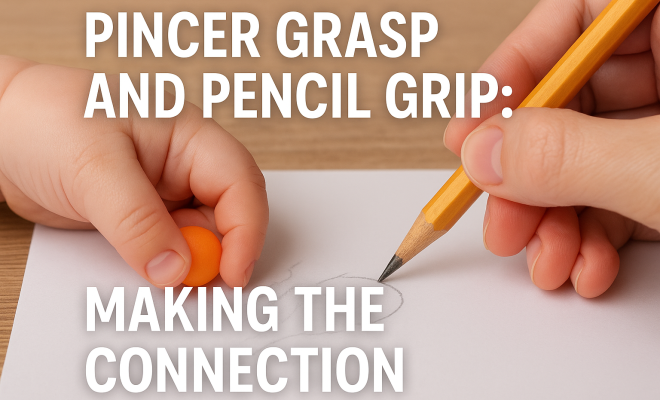
The pincer grasp is a specific type of grip that involves the thumb and one finger (usually the index finger) working together to pick up small objects. This grasp typically emerges around 9 to 12 months of age and signifies a major developmental step in a child’s ability to manipulate items. The development of this grasp is vital because it lays the groundwork for more complex tasks, such as holding utensils, using tools, and eventually writing.
The Importance of Fine Motor Skills
Fine motor skills are the small movements that involve the coordination of hands and fingers, allowing children to perform tasks that require precision. These skills are essential not only for everyday activities but also for academic success. According to the American Occupational Therapy Association, fine motor skills contribute to a child’s independence in feeding, dressing, and self-care.
Research indicates that fine motor skills are closely linked to cognitive development. A study published in the Journal of Experimental Child Psychology found that children with stronger fine motor skills typically outperform their peers in academic tasks. This relationship underscores the necessity for developing a solid foundation of fine motor skills early on.
The Journey from Pincer Grasp to Pencil Grip
The transition from a pincer grasp to a proper pencil grip is a natural progression in a child’s development. As children grow, their grasp evolves from the pincer grasp, which is effective for picking up small items, to a more refined pencil grip that enables them to write with control. This evolution typically occurs between the ages of 2 and 4 years.
During this time, children may experiment with various grips as they become familiar with the act of writing. This exploration is vital; it allows them to discover which grip feels most comfortable and effective. Notably, a well-developed pincer grasp can significantly influence a child’s ability to achieve a functional pencil grip.
Different Types of Pencil Grips
When discussing the pincer grasp pencil grip, it’s essential to identify the various types of grips children may use. Typically, there are several recognized grips in early handwriting development:
- Tripod Grip: This is the most common and recommended grip, involving the thumb, index finger, and middle finger. This grip allows for maximum control and stability.
- Quadrupod Grip: Similar to the tripod grip but involving the addition of the ring finger for support. It’s less common and generally less effective than the tripod grip.
- Palmar Grip: In this grip, the whole hand is used to hold the pencil, which is less efficient for writing. This grip often appears in younger children who are still developing their fine motor skills.
- Dynamic Tripod Grip: An advanced version of the tripod grip, where the pencil moves fluidly between the fingers during writing.
Understanding these grips allows parents and educators to encourage the development of the most effective grip for writing.
Signs of Developing Pencil Grip
As children transition to using a pencil, you may notice specific signs indicating their skill level. Children with a well-developed pincer grasp often show:
- Control: They can hold a pencil with their fingers rather than their fist.
- Stability: Their hand remains steady while writing.
- Precision: They can create marks and shapes with accuracy.
Conversely, children who struggle with pencil grip may display signs such as tightness in their grip, difficulty maintaining control, or fatigue during writing tasks. Recognizing these signs can help caregivers guide children’s practice effectively.
Activities to Foster Pincer Grasp Development
Parents and educators can play a pivotal role in nurturing the pincer grasp and, in turn, the pencil grip. Here are several engaging activities designed to strengthen fine motor skills: (See: CDC milestones for child development.)
- Play with Small Objects: Encourage children to pick up and manipulate small items like buttons, beads, or coins. These activities reinforce the pincer grasp and enhance dexterity.
- Art and Craft Activities: Activities like coloring, cutting with scissors, or using glue can promote coordination and control, which is essential for developing pencil grip.
- Building Blocks: Playing with building blocks can enhance grip strength and hand-eye coordination as children grasp and manipulate pieces.
- Threading Beads: This activity requires precision and control, making it an excellent exercise for developing a pincer grasp.
Incorporating these activities into daily routines helps children develop the skills necessary for effective writing.
The Role of Early Education in Development
Early childhood education plays a vital role in promoting fine motor skills, particularly the connection between pincer grasp and pencil grip. Preschool and kindergarten programs often include structured activities designed to enhance these skills. Teachers trained in early childhood development understand the importance of incorporating fine motor activities into their curriculum.
For instance, incorporating play-based learning can make fine motor skill development feel organic and enjoyable. Programs that prioritize hands-on activities allow children to practice skills in a low-pressure environment, fostering a love for learning.
Common Challenges and Solutions
While most children naturally progress towards a functional pencil grip, some may face challenges. These challenges can manifest as difficulty in transitioning from a pincer grasp to a pencil grip or as discomfort with the writing process itself. Understanding these struggles is crucial for providing appropriate support.
One common challenge is muscle fatigue or discomfort after writing, which could indicate an improper grip. To address this, children can be encouraged to take breaks during writing tasks and practice grip adjustments. Additionally, using ergonomic pencils or grips can alleviate discomfort and promote better control.
Another challenge is the tendency for children to revert to less effective grips, like the palmar grip, due to comfort or habit. In such cases, gentle guidance and encouragement to use the tripod grip can help reinforce the correct technique. Activities that promote hand strength and dexterity will also aid in this transition.
Assessing Pencil Grip and Fine Motor Skills
Regular assessments of a child’s pencil grip and fine motor skills can provide insights into their development. Parents and educators can observe children during writing tasks to determine their grip style and any associated challenges.
Occupational therapists often conduct more formal assessments, utilizing standardized tools to evaluate fine motor skills. These assessments can identify areas for improvement and provide tailored recommendations to support development. Early intervention is key; the sooner a child receives support, the better their chances of developing effective skills.
Current Trends in Teaching Fine Motor Skills
In recent years, there has been an increasing emphasis on the importance of fine motor skills in educational settings. Many schools now incorporate a variety of hands-on learning activities that engage children and strengthen their pincer grasp and pencil grip.
Technology also plays a role in this trend. Programs and apps designed for young learners often include fine motor skill-building activities. However, it’s vital to balance screen time with traditional hands-on experiences, as tactile engagement is crucial for developing motor skills.
Furthermore, recent studies have highlighted the importance of handwriting in the digital era. As technology becomes more prevalent, educators are recognizing that teaching handwriting still holds value in fostering fine motor skills and cognitive development. This understanding is pushing schools to enhance their handwriting instruction.
How to Encourage Pincer Grasp Development at Home
Implementing activities at home is vital for fostering your child’s pincer grasp development. Besides the previously mentioned activities, you can try the following: (See: NIH information on hand development.)
- Cooking Together: Involve your child in cooking activities that require them to use their fingers to measure ingredients, pour, or stir. This not only enhances fine motor skills but also teaches valuable life skills.
- Gardening: Gardening can be an excellent way to promote fine motor skills. Activities like planting seeds, pulling weeds, and watering plants involve using the fingers and can be very engaging for children.
- Puzzles: Working on puzzles is a fun way to develop fine motor skills. Grasping and placing puzzle pieces requires precise finger movements, which can enhance your child’s pincer grasp.
- Playdough Manipulation: Using playdough to create shapes, letters, or objects encourages children to use their fingers, fostering strength and dexterity in their grip.
Expert Perspectives on Fine Motor Skill Development
Experts emphasize the importance of fine motor skills in early childhood development. According to Dr. Jane Smith, an occupational therapist specializing in pediatric development, “Fine motor skills are foundational for a child’s ability to engage in both academic and social activities. A strong pincer grasp is essential for tasks like writing but also plays a role in self-care and interaction with peers.”
Dr. Smith also highlights the importance of creating an environment that fosters exploration and play, stating, “Children learn best through play. By providing them with opportunities to manipulate objects, create, and explore, we support their fine motor skill development in a natural way.”
Statistics on Fine Motor Skill Development
Understanding the significance of fine motor skills can be underscored by compelling statistics. According to the CDC, approximately 1 in 6 children in the United States experience developmental disabilities, including challenges with fine motor skills. Early intervention can greatly enhance outcomes for these children, making awareness and education around fine motor skill development vital.
Furthermore, a study published in the Archives of Disease in Childhood found that children who engaged in fine motor skill activities at home showed a 30% improvement in their ability to complete age-appropriate tasks compared to those who did not participate in similar activities.
Frequently Asked Questions
What age should my child develop a pincer grasp?
Most children begin to develop a pincer grasp between 9 and 12 months of age. This skill continues to evolve and mature as they grow, especially during the toddler years.
How can I tell if my child’s pencil grip is developing correctly?
Look for signs of control, stability, and precision in their grip. If they can hold a pencil with their fingers and maintain a steady hand while writing, they are likely developing their grip correctly.
What should I do if my child struggles with their pencil grip?
If your child struggles, encourage regular practice with fine motor activities and consult a pediatric occupational therapist for tailored strategies and support.
Are there specific tools that can help improve my child’s pencil grip?
Yes, ergonomic pencils, pencil grips, and adaptive writing tools can help children find a comfortable grip and reduce fatigue during writing tasks.
How important is it for my child to master the pincer grasp?
Mastering the pincer grasp is crucial as it lays the foundation for many daily activities, including writing and self-care tasks. Improving this skill is essential for their overall development.
Common Misconceptions About Pincer Grasp and Pencil Grip
Many parents and educators hold misconceptions about the development of the pincer grasp and its relation to pencil grip. One common myth is that children who write with a palmar grip or a fist grip are simply being lazy or unmotivated. In reality, this grip may indicate a lack of strength or coordination, and children may not yet have the skills needed to transition to a more effective grip.
Another misconception is that all children will develop a pincer grasp at the same pace. Developmental timelines can vary significantly among children. Factors like individual motor development, sensory processing, and even emotional readiness can influence this progression. Understanding these nuances can help caregivers avoid undue pressure and create a supportive environment for skill development.
Integrating Fine Motor Skills into Daily Routines
Integrating fine motor skill activities into everyday routines can greatly enhance a child’s development without requiring extra time or effort. For instance, simple tasks like sorting laundry or setting the table can be excellent opportunities. Allowing children to help with these tasks while encouraging them to use their fingers strategically promotes dexterity and control.
Additionally, routine activities such as dressing can be turned into fine motor skill exercises. Encouraging children to button their shirts or zip up their jackets can help them practice precision and finger strength. Making these skills part of daily life emphasizes their importance and keeps children engaged.
Long-Term Benefits of Developing Fine Motor Skills
Mastering fine motor skills in early childhood can have long-term benefits that extend beyond academic success. For example, strong fine motor skills are linked to improved self-esteem and confidence as children become more independent in completing tasks. This sense of accomplishment can positively influence their willingness to tackle challenges and try new things.
Moreover, fine motor skills play an essential role in social interactions. The ability to manipulate objects effectively can influence a child’s participation in group activities, games, and peer interactions. As children develop these skills, they may find it easier to engage with others, fostering social connections and teamwork.
Conclusion: The Lifelong Benefits of Developing Fine Motor Skills
The connection between the pincer grasp pencil grip is more than just a developmental milestone—it’s a gateway to a range of skills essential for academic success and daily life. As children progress from their early grasping abilities to refined pencil grips, they not only build the foundation for writing but also enhance their cognitive and social skills.
By recognizing the importance of fostering fine motor skills, engaging in meaningful activities, and providing supportive environments, parents and educators can significantly influence a child’s development. These efforts create lifelong benefits, ensuring that children are equipped to succeed in learning, communication, and self-expression.
“`
Trending Now
Frequently Asked Questions
What is the pincer grasp in child development?
The pincer grasp is a grip involving the thumb and index finger that typically develops between 9 to 12 months of age. It signifies a key milestone in fine motor skills, allowing children to pick up small objects and lays the groundwork for more complex tasks like writing and using utensils.
Why are fine motor skills important for children?
Fine motor skills are essential for children's independence in daily tasks such as feeding, dressing, and self-care. They also contribute to academic success, as children with stronger fine motor skills often perform better in cognitive tasks, highlighting their importance in overall development.
How does the pincer grasp relate to pencil grip?
The pincer grasp is a foundational skill that transitions into a proper pencil grip. As children develop their pincer grasp, they gain the necessary control and coordination to hold a pencil effectively, which is crucial for writing and other fine motor tasks.
At what age should a child develop a pincer grasp?
A child typically develops a pincer grasp between 9 to 12 months of age. This skill is critical for their ability to manipulate objects and is an important indicator of fine motor skill development in early childhood.
What activities can help develop a child's fine motor skills?
Activities such as playing with small blocks, using tweezers to pick up objects, and engaging in arts and crafts can help enhance a child's fine motor skills. These activities promote coordination and strengthen the muscles needed for tasks like writing and self-care.
What did we miss? Let us know in the comments and join the conversation.