One Billion-Dollar Problem: AI Wealth’s Devastating Impact on the San Francisco Housing Market
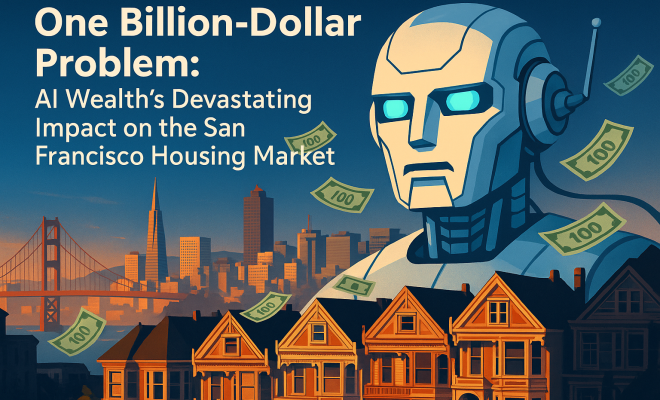
You know, for years, San Francisco has been a beacon of innovation, a place where big ideas blossom and fortunes are made. It’s always had a certain allure, a kind of golden sheen that drew in ambitious minds from all corners of the globe. But lately, that golden sheen has taken on a rather alarming hue, casting long shadows over the lives of everyday working people. We’re talking about a housing crisis that’s gone from bad to frankly, unmanageable, especially for our essential workers. And the culprit? A meteoric rise in wealth from the artificial intelligence sector that’s creating what many are calling a ‘mansion shortage,’ fundamentally upending the entire San Francisco housing market.
It’s a story we’ve seen play out before, in different iterations, with different industries. But the speed and scale of this current shift feel different, almost unprecedented. The infusion of AI-generated wealth is accelerating housing costs at an unsustainable rate, pushing a significant portion of the city’s workforce to the brink, or even out of the city entirely. Imagine being a dedicated PreK-12 teacher, pouring your heart into educating the next generation, only to discover you can’t afford a modest apartment in the very district you serve. It’s not just a financial bind; it’s an emotional gut punch, a feeling of being ‘financially trapped in place’ while the economic landscape shifts dramatically around you.
This isn’t just about a few high-end properties; the ripple effect is immense, impacting every rung of the housing ladder. It’s sparking heated debates, igniting social media discussions, and frankly, leaving many of us in education wondering what the future holds for our colleagues and our students. The chasm between the burgeoning tech wealth and the struggles of public sector employees is widening, and it’s a stark reminder of growing economic inequality right in one of America’s most prosperous cities. Let’s dig into what’s really happening and what it means for the heart and soul of San Francisco.
The AI Gold Rush: A Catalyst for Unprecedented Wealth Accumulation
The artificial intelligence boom isn’t just a technological revolution; it’s an economic earthquake, especially in the Bay Area. We’ve seen incredible advancements in AI over the past few years, moving from theoretical concepts to practical applications at a breakneck pace. This has translated into staggering valuations for AI companies and, consequently, immense wealth for their founders, executives, and even early-stage employees. Think about it: a small team with a groundbreaking AI algorithm can suddenly be worth billions, seemingly overnight. This isn’t your grandfather’s slow-and-steady wealth accumulation; it’s a hyper-accelerated trajectory that’s pumping unprecedented amounts of capital into a concentrated geographic area.
This rapid accumulation of wealth isn’t just sitting in bank accounts; it’s being spent. And one of the primary targets for this new class of ultra-rich individuals is, predictably, real estate. San Francisco has always been a desirable place to live, with its iconic landmarks, vibrant culture, and proximity to Silicon Valley. Now, with a fresh wave of AI millionaires and billionaires, the demand for luxury properties, particularly large single-family homes or ‘mansions,’ has skyrocketed. This isn’t just a slight uptick; it’s a surge that’s creating a literal ‘mansion shortage,’ where supply simply cannot keep up with the purchasing power of these new titans of industry. The sheer volume of cash transactions and bidding wars for these high-end homes is distorting the entire San Francisco housing market, setting new benchmarks that were unimaginable just a few years ago.
The ‘Mansion Shortage’ and Its Domino Effect on the San Francisco Housing Market
When we talk about a ‘mansion shortage,’ it sounds almost absurd, doesn’t it? Like a problem only the ultra-wealthy would face. But the reality is far more nuanced and, frankly, far more detrimental to the broader community. These high-value transactions at the very top of the market don’t happen in a vacuum. They send shockwaves down through every segment of the San Francisco housing market, driving up prices across the board. When a mansion sells for $20 million, it doesn’t just impact other mansions; it inflates the perceived value of every property in the vicinity. Real estate agents, developers, and even individual sellers adjust their expectations upwards, creating a cascading effect.
Think about it from a basic economic perspective: increased demand at the high end, coupled with a fixed or slowly growing supply, inevitably pushes prices higher. Landlords in apartment buildings see the rising property values and feel justified in raising rents. Homeowners who might have considered selling a more modest property suddenly realize they can command an even higher price. This phenomenon isn’t new to San Francisco, but the sheer velocity and magnitude of the AI wealth infusion have supercharged it. What was once a competitive market for middle-income earners has now become an almost impossible landscape to navigate, leaving many feeling utterly helpless.
The Disappearing Middle: Where Do Essential Workers Go?
This is where the rubber truly meets the road, and where the human cost of this economic shift becomes painfully clear. As the San Francisco housing market reaches stratospheric levels, who suffers the most? It’s not the tech moguls or the venture capitalists. It’s the backbone of our communities: the PreK-12 teachers, the nurses, the firefighters, the police officers, the service workers who keep our restaurants running, and the nonprofit employees dedicated to helping those in need. These are the people whose salaries, while respectable in many other parts of the country, simply cannot keep pace with the Bay Area’s runaway housing costs. (See: San Francisco housing crisis overview.)
We’re seeing a mass exodus, or at least a growing inability for these essential workers to even consider living in San Francisco. Many are forced into incredibly long commutes from more affordable cities and towns hours away. This doesn’t just impact their quality of life; it impacts the quality of our city’s services. Imagine a teacher who has to wake up at 4 AM just to get to their classroom by 7 AM, or a nurse who finishes a grueling 12-hour shift and faces a two-hour drive home. It’s unsustainable, and it leads to burnout, reduced engagement, and ultimately, a decline in the very services that make a city livable and functional. The phrase ‘financially trapped in place’ takes on a new, grim meaning when it refers to being trapped *out* of the community you serve. For more context, see AI sector's impact on education.
The Emotional Toll: Teachers Priced Out and the Viral Outcry
The plight of teachers being priced out of their districts resonates deeply, and it’s no wonder these stories often go viral on social media. There’s a fundamental disconnect there: we collectively agree that educators are vital to our society, yet we allow economic forces to make it impossible for them to live within the communities they nurture. It creates a profound sense of injustice, doesn’t it? When you see a dedicated teacher, someone who shapes young minds, forced to choose between an impossible commute, living in substandard housing, or leaving the profession entirely, it hits you right in the gut. These aren’t abstract economic figures; these are real people with real families and real commitments.
The emotional impact is undeniable. Teachers, like all essential workers, want to be part of the community they serve. They want to be able to attend school plays, volunteer for local events, and have their own children attend the schools where they teach. When the San Francisco housing market denies them that basic aspiration, it fosters resentment and a sense of being undervalued. Social media platforms become a sounding board for this frustration, with personal anecdotes and shared struggles quickly gaining traction. These viral discussions aren’t just complaints; they’re a collective cry for help, a demand for solutions to address a growing affordability gap that threatens the very fabric of urban life.
Economic Inequality on Full Display: The Tech-Nonprofit Divide
The stark contrast between the burgeoning wealth of the tech sector, particularly AI, and the stagnant wages of public sector and nonprofit employees is not just an observation; it’s a glaring symptom of deepening economic inequality. In San Francisco, this divide is more pronounced than perhaps anywhere else in the nation. On one side, you have individuals making astronomical sums, often in their twenties and thirties, with stock options that can turn into multi-million-dollar payouts overnight. On the other, you have dedicated professionals working for the common good, often earning salaries that haven’t kept pace with inflation, let alone the hyper-inflated cost of living in their city.
This isn’t to demonize wealth or success; it’s to highlight the systemic imbalance that’s emerged. When the market values certain types of labor so disproportionately, it creates a societal strain. The nonprofit sector, for example, is absolutely crucial for addressing social issues, supporting vulnerable populations, and building stronger communities. Yet, the very people who staff these organizations often find themselves struggling to afford basic necessities, including housing. This creates a vicious cycle: talented individuals who are passionate about public service are deterred from working in San Francisco, leading to a brain drain in critical areas and exacerbating the social problems that the nonprofit sector aims to solve. The San Francisco housing market, in essence, becomes a barrier to altruism.
Potential Solutions: Addressing the Affordability Gap in the San Francisco Housing Market
So, what can be done? This isn’t a simple problem with a single magic bullet, but there are several avenues worth exploring to mitigate the impact of the runaway San Francisco housing market. One immediate consideration is increasing the supply of affordable housing. This means streamlining zoning regulations, incentivizing developers to build more mixed-income housing, and potentially converting underutilized commercial spaces into residential units. It’s not just about building more luxury condos; it’s about creating housing options that are genuinely accessible to a wider range of income levels.
Another approach involves direct financial assistance for essential workers. Programs like rental subsidies, down payment assistance, or even employer-assisted housing initiatives could provide much-needed relief. Some cities have explored land trusts or community-owned housing models to take properties off the speculative market and preserve affordability long-term. And, of course, there’s the discussion around wage increases for public sector employees. While challenging to implement on a large scale, ensuring that teacher and service worker salaries are commensurate with the local cost of living is a fundamental step towards equity. We also need to look at innovative financing models and partnerships between the public and private sectors to tackle this complex issue head-on.
The Role of Policy and Urban Planning in Shaping the Future
Effective policy and thoughtful urban planning are absolutely critical here. Simply allowing market forces to dictate the future of the San Francisco housing market is proving to be disastrous for many. Local and state governments need to take a proactive stance. This could involve implementing inclusionary zoning laws that mandate a certain percentage of affordable units in new developments. It might also mean exploring vacancy taxes on homes that sit empty for extended periods, or even luxury taxes on high-end property transactions, with the revenue earmarked for affordable housing initiatives. We’ve seen some of these ideas floated, but the political will to implement them comprehensively often lags behind the urgency of the problem. (See: Impact of housing on health.)
Beyond specific policies, there’s a need for a broader vision for urban development that prioritizes livability and equity over pure profit. This means considering how new developments impact existing communities, ensuring access to public transportation, green spaces, and essential services for all residents, not just the wealthy. It’s about creating a city where people from all walks of life can thrive, not just survive. This requires courageous leadership and a willingness to challenge the status quo, even when faced with powerful economic interests.
Long-Term Implications for San Francisco’s Social Fabric and Economy
The long-term implications of this housing crisis extend far beyond individual financial hardship. If San Francisco continues to price out its essential workers, the very social fabric of the city will fray. Imagine a city without enough teachers for its schools, without enough nurses for its hospitals, or without enough service workers to keep its businesses running. It’s not just a hypothetical; it’s a looming reality. Schools struggle to attract and retain talent, leading to educational disparities. Hospitals face staffing shortages, impacting patient care. Small businesses find it impossible to hire local workers, leading to closures or reduced services. For more context, see reskilling programs in the age of AI.
Economically, while the AI sector brings immense wealth, an unbalanced economy that relies too heavily on one industry can be fragile. A healthy economy is diverse, supported by a broad base of workers across various sectors. If San Francisco becomes a city solely for the ultra-rich and those who directly serve them, it loses its vibrancy, its cultural richness, and its resilience. It risks becoming an exclusive enclave, rather than a dynamic, inclusive metropolis. The San Francisco housing market isn’t just about homes; it’s about the soul of a city and what kind of future it wants to build.
Lessons from Other High-Cost Cities and the Path Forward
San Francisco isn’t unique in facing housing affordability challenges, though the scale and speed of its current crisis are certainly notable. Other global cities like London, New York, Vancouver, and Sydney have grappled with similar issues, offering valuable lessons. Some have implemented aggressive social housing programs, rent control measures, or innovative public-private partnerships to create and preserve affordable units. Others have focused on regional planning, encouraging development in surrounding areas with robust transit links to distribute population and demand more evenly.
What’s clear is that a multi-faceted approach is required. There’s no single fix, and what works in one city might need adaptation for San Francisco’s unique context. But the shared experience highlights the importance of political will, community engagement, and a long-term vision. We need to look beyond quick fixes and commit to sustainable solutions that ensure San Francisco remains a city where diverse communities can thrive, not just a playground for the extremely wealthy. The future of our schools, our hospitals, and our entire city depends on finding a way to make the San Francisco housing market work for everyone.
The Impact on Education: Teacher Retention and Student Outcomes
Let’s really dig into what this housing crisis means for our schools. When teachers can’t afford to live in San Francisco, it creates a severe teacher retention problem. Districts spend significant resources training and developing educators, only to see them leave for areas with a lower cost of living. This high turnover means less experienced teachers in the classroom, which can negatively impact student learning. Students thrive on stability and consistent relationships with their teachers. When those relationships are constantly interrupted by teachers leaving, it’s the students who ultimately pay the price.
Beyond retention, there’s the issue of diversity within the teaching staff. If only the wealthiest can afford to teach in San Francisco, we risk losing the rich tapestry of backgrounds and experiences that a diverse teaching force brings to the classroom. Our students deserve to see themselves reflected in their educators, and they benefit immensely from teachers who understand their cultural contexts and lived realities. When the San Francisco housing market becomes a gatekeeper, it limits who can enter and stay in the profession, potentially creating a less inclusive and less effective educational environment for all students.
Beyond Housing: The Strain on Public Services
It’s not just housing; the entire public service infrastructure feels the squeeze. Think about it: our police officers, firefighters, sanitation workers, and public transportation operators are all facing the same affordability crunch. When these vital public servants are forced to commute hours each day, it impacts their morale, their availability for emergencies, and the overall efficiency of city services. A police officer living two hours away might take longer to respond to a call. A bus driver exhausted from a long commute might be less attentive. These aren’t minor inconveniences; they pose real risks to public safety and the smooth functioning of a major metropolitan area. For more context, see AI's effects on learning outcomes. (See: Affordable housing policies and resources.)
The city’s ability to recruit new talent for these crucial roles also diminishes. Why would someone choose to be a firefighter in San Francisco, despite the higher pay, if they can’t afford a decent place to live and have to spend half their day commuting? Other cities, with more affordable housing, become more attractive options. This brain drain in public services means that the quality of life for *all* residents, regardless of their income, starts to decline. The San Francisco housing market’s woes ripple out, touching every aspect of urban life.
A Call for Corporate Responsibility and Philanthropy
While government policies are essential, we also need to consider the role of the incredibly wealthy corporations and individuals benefiting from the AI boom. With great wealth comes great responsibility, doesn’t it? Tech companies, many of which are headquartered in or around San Francisco, could play a more active role in addressing the housing crisis they’ve, in part, exacerbated. This could take many forms: significant philanthropic contributions to affordable housing funds, direct investment in employee housing programs, or even advocating for pro-housing policies at the local and state levels.
Imagine if a consortium of major AI firms pooled resources to build thousands of units of mixed-income housing specifically for essential workers. This isn’t just charity; it’s an investment in the long-term health and stability of the ecosystem these companies rely on. A city where employees can live near their workplaces, where schools are staffed by happy, well-rested teachers, and where public services run efficiently is a more attractive and sustainable place for businesses to operate. It’s about recognizing that their prosperity is intertwined with the well-being of the entire community, not just their shareholders.
The Future of San Francisco: An Exclusive Enclave or a Diverse Metropolis?
This is the fundamental question facing San Francisco right now. Is it destined to become an exclusive enclave, a gilded cage for the ultra-rich, or can it reclaim its identity as a vibrant, diverse metropolis where people from all walks of life can thrive? The current trajectory, driven by the San Francisco housing market, points towards the former. If only the highest earners can afford to live here, San Francisco will lose its unique character, its artistic soul, and its innovative spirit.
A truly diverse city isn’t just about different income levels; it’s about a mix of professions, cultures, and perspectives. It’s about the barista who lives down the street from the venture capitalist, the artist who shares a neighborhood with the engineer, and the teacher whose children play with the children of the tech executive. When the housing market systematically excludes entire segments of the population, that rich mosaic starts to crack. The decisions made today regarding housing policy and economic equity will determine San Francisco’s identity for generations to come. It’s a pivotal moment, and the stakes couldn’t be higher.
Trending Now
Frequently Asked Questions
How is AI wealth affecting the San Francisco housing market?
The influx of wealth from the AI sector is driving up housing costs at an unsustainable rate, creating a 'mansion shortage' and pushing essential workers out of the city. This rapid economic shift is fundamentally altering the housing landscape, making it increasingly difficult for average workers to afford living in the area.
What is the impact of rising housing costs on essential workers in San Francisco?
Rising housing costs are financially trapping essential workers, such as teachers and healthcare professionals, who can no longer afford modest accommodations in the communities they serve. This situation not only affects their financial stability but also impacts the emotional well-being of those dedicated to public service.
Why is there a mansion shortage in San Francisco?
The mansion shortage in San Francisco is largely attributed to the overwhelming wealth generated by the AI industry, which has led to a surge in demand for high-end properties. This phenomenon is exacerbating the existing housing crisis and limiting access to affordable housing for the general workforce.
What are the social implications of the housing crisis in San Francisco?
The housing crisis in San Francisco is widening the economic gap between the wealthy tech sector and public service employees. It has sparked debates about economic inequality, community displacement, and the future of essential services, as many workers are forced to leave the city due to unaffordable housing.
How does the San Francisco housing crisis compare to previous economic shifts?
While San Francisco has experienced housing crises in the past due to various industries, the current crisis driven by AI wealth is unprecedented in speed and scale. This rapid change is creating a unique set of challenges that differ from previous economic shifts, impacting a broader range of the workforce.
What's your take on this? Share your thoughts in the comments below — we read every one.