Mount Etna’s Eruptive Secrets Unveiled: 2026 Research
“`html
Introduction: The Enigma of Mount Etna
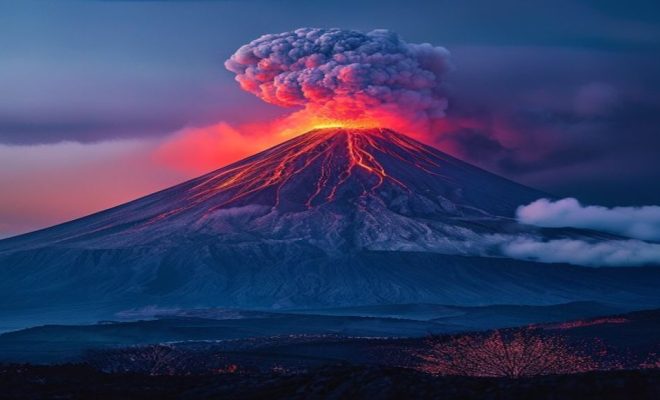
Mount Etna, one of the most studied volcanoes in the world, has long fascinated scientists and enthusiasts alike. Its dynamic eruptions range from gentle lava flows to explosive blasts, leading to a profound question: How can the same volcano exhibit such strikingly different eruption styles? Recent research has illuminated this complex phenomenon, uncovering crucial insights into the volcano eruption differences that characterize this iconic peak.
A Breakthrough Study
Published on June 28, 2026, the groundbreaking study reveals that Mount Etna’s internal magma dynamics are primarily responsible for its unpredictable behavior. Researchers found that shifts in pressure and changes in magma viscosity can dramatically alter how the volcano erupts. This revelation challenges long-held assumptions about volcanic activity and offers a new lens through which to examine the forces at play beneath the Earth’s surface.
The Nature of Eruptions: Explosive vs. Effusive
Understanding the types of eruptions is essential to grasping why Mount Etna behaves the way it does. Explosive eruptions are characterized by the violent release of gas and pyroclastic materials, leading to ash clouds and volcanic bombs. In contrast, effusive eruptions produce relatively gentle lava flows that ooze from the volcano’s vents.
The differences in eruption styles can largely be attributed to the viscosity of the magma. High-viscosity magma traps gases, resulting in increased pressure and explosive eruptions, while low-viscosity magma allows for gases to escape more easily, leading to effusive eruptions. This study indicates that Mount Etna can alternate between these two states based on its internal dynamics.
Unpacking the Research Findings
Researchers employed a combination of field studies, satellite imaging, and laboratory experiments to analyze past eruptions of Mount Etna. They discovered that the volcano’s internal structure plays a significant role in determining eruption style. Variations in magma composition, temperature, and pressure within the magma chamber can lead to shifts between explosive and effusive behavior.
This research is particularly significant because it provides a scientific basis for understanding the volcano eruption differences observed at Mount Etna. The findings also underscore the complexity of volcanic systems, which can behave in unpredictable ways even under similar geological conditions.
The Role of Magma Viscosity
Magma viscosity is a critical factor in determining how a volcano erupts. Viscosity refers to a fluid’s resistance to flow; in the case of magma, it can result from its temperature and composition. For instance, basaltic magma is typically low in viscosity, allowing for more fluid movement and effusive eruptions. In contrast, rhyolitic magma is high in viscosity, leading to more explosive eruptions.
The study emphasizes the importance of understanding magma viscosity in predicting volcanic behavior. By examining the chemical composition of the magma at different depths within Mount Etna, scientists can gain insights into potential eruption styles and frequencies. This knowledge could have profound implications for volcanic hazard assessment, particularly in populated areas surrounding the volcano.
Historical Context: Mount Etna’s Eruption Patterns
To fully appreciate the implications of the recent study, it’s essential to consider Mount Etna’s history of eruptions. Known for its frequent activity, the volcano has erupted over 300 times since 1500 BC. Each eruption presents a unique case study of the interplay between internal dynamics and surface phenomena.
Some of the most notable eruptions, such as the 1669 eruption that devastated nearby towns, highlight the potential dangers posed by explosive volcanic activity. Conversely, more recent effusive eruptions, like those in 2013 and 2021, showcase the less destructive but still significant lava flows. This historical data provides a rich context for understanding the variability in eruption styles and underscores the need for ongoing research. (See: Mount Etna on Wikipedia.)
Implications for Future Eruptions
The revelations from this study are not just academically interesting; they carry real-world implications. Understanding the volcano eruption differences at Mount Etna can significantly enhance predictive models for future eruptions. This is particularly important for local communities and authorities who must prepare for potential natural disasters.
By pinpointing the factors that lead to different eruption styles, scientists can develop more accurate forecasts. For instance, if magma begins to show signs of increased viscosity, it could signal an imminent explosive eruption. Conversely, indicators of lower viscosity might suggest a period of effusion. Such predictive capabilities can be invaluable for timely evacuations and disaster preparedness.
The Emotional Response to Volcanic Eruptions
Volcanic eruptions elicit strong emotional responses, not just from scientists but also from the general public. The fear of destructive eruptions is deeply ingrained in human psychology, often fueled by media representations of volcanic disasters. This emotional aspect has played a role in the viral nature of the recent study regarding Mount Etna.
Social media users have expressed disbelief and urgency as they share the news, reflecting a collective fascination and fear surrounding volcanic behavior. The study’s findings resonate on a personal level, prompting many to reconsider what they thought they knew about volcanoes and their potential dangers.
Challenges in Predicting Volcanic Behavior
Despite advancements in understanding volcanoes, predicting eruptions remains a challenging endeavor. The complex interplay of geological factors makes it difficult to create definitive forecasts. Mount Etna’s case exemplifies this complexity; two radically different eruption styles can emerge from the same geological structure.
Scientists face the daunting task of analyzing vast amounts of data while still accounting for the unpredictable nature of volcanic systems. The findings from this study provide a valuable framework, yet there’s still much to learn about the subtle signals that precede eruptions.
Broader Implications for Earth Science
The implications of this research extend beyond Mount Etna. Understanding the volcano eruption differences observed in one location can provide insights into volcanic systems globally. By applying the knowledge gained from Mount Etna, researchers may be able to refine models for other volcanoes, enhancing our overall understanding of volcanic behavior.
This study encourages a multidisciplinary approach, combining geology, geochemistry, and volcanology to create a more nuanced understanding of how volcanoes operate. As scientists continue to unravel the mysteries of volcanic activity, the potential to improve public safety and hazard preparedness grows.
Comparative Analysis: Volcano Eruption Differences Worldwide
When discussing the volcano eruption differences, it’s beneficial to compare Mount Etna with other notable volcanoes around the globe. For example, Kilauea in Hawaii is known for its predominantly effusive eruptions, characterized by steady lava flows rather than explosive blasts. The low-viscosity basaltic magma at Kilauea allows gases to escape easily, leading to relatively safe eruptions that create new land rather than destroy it.
On the other hand, Mount St. Helens in the United States illustrates the potential for explosive eruptions. The cataclysmic eruption in 1980 was fueled by the rapid buildup of pressure from highly viscous magma. This eruption provides a stark contrast to Mount Etna’s varied eruption styles, highlighting how different geological settings and magma compositions can lead to vastly different volcanic behaviors.
Furthermore, Mount Fuji in Japan is another example of a volcano known for its explosive potential. It has a history of Plinian eruptions, which are characterized by their high column of ash and pyroclastic flows. Such eruptions are often more dangerous to surrounding populations due to their unpredictability and destructive capacity. (See: Magma viscosity in scientific literature.)
By studying the eruption patterns of these volcanoes alongside Mount Etna, scientists can gain a more comprehensive view of volcanic behavior and its implications for human safety and environmental impact.
Frequently Asked Questions (FAQ)
What causes the differences in volcanic eruptions?
The differences in volcanic eruptions largely stem from the composition of the magma, its viscosity, and the level of gas content. High-viscosity magmas tend to trap gases, leading to explosive eruptions, while low-viscosity magmas allow gases to escape, resulting in effusive eruptions.
How do scientists predict volcanic eruptions?
Scientists use a combination of techniques to predict volcanic eruptions, including monitoring seismic activity, gas emissions, and changes in the shape of the volcano. Satellite imaging and ground-based sensors help detect shifts in magma movement, providing crucial data for forecasts.
Are all volcanoes the same?
No, volcanoes are not all the same. They vary greatly based on their geological setting, type of magma, and eruption history. This results in different eruption styles and behaviors, as seen in the differences between Mount Etna, Kilauea, and Mount St. Helens.
What safety measures are in place for communities near volcanoes?
Communities near volcanoes often have emergency plans that include evacuation routes, public education on volcanic hazards, and regular drills. Monitoring agencies also provide real-time information about volcanic activity to help residents prepare for potential eruptions.
Can volcanic eruptions affect climate?
Yes, volcanic eruptions can significantly impact climate, especially large explosive eruptions that inject vast amounts of ash and sulfur dioxide into the atmosphere. This can lead to temporary cooling effects globally, as the particles reflect sunlight away from the Earth.
How do eruptions shape the landscape?
Volcanic eruptions can dramatically alter landscapes, creating new landforms like lava plateaus and volcanic islands. Eruptions can also lead to the formation of craters, calderas, and other geological features that influence ecosystems and human activities.
The Impact of Volcanic Eruptions on Human Populations
Volcanic eruptions don’t just alter landscapes; they also deeply affect human populations. Communities living near volcanoes often face immediate threats from eruptions, and these can lead to long-lasting social and economic impacts. The 1980 eruption of Mount St. Helens resulted in the evacuation of thousands of people, and many have still not returned to their homes even decades later. The psychological toll can be immense, as people may experience anxiety and trauma related to the threat of future eruptions.
Additionally, the ash fallout can contaminate water supplies, damage crops, and affect air quality, leading to health issues. It’s crucial for scientists to not only understand eruption mechanics but also to study the social implications of volcanic activity.
New Research Directions in Volcanology
The study of Mount Etna is part of a broader trend in volcanology that seeks to incorporate new technologies and methodologies. For instance, the use of drones equipped with thermal imaging cameras allows scientists to monitor volcanic activity in real-time and from perspectives that were previously impossible. This can lead to more timely responses to changes in volcano behavior. (See: Research on volcanic eruptions in Nature.)
Another promising area of research involves machine learning algorithms that analyze seismic data. By training these algorithms on past eruption patterns, researchers hope to improve predictive capabilities significantly. This is particularly exciting, as traditional methods of monitoring can sometimes be slow to respond to subtle changes in volcanic activity.
The Interconnectedness of Volcanic Systems
A critical takeaway from recent studies is the interconnectedness of volcanic systems. What happens at one volcano can have implications for nearby volcanoes due to shared magma reservoirs or tectonic activity. A study published in 2023 illustrated this concept through the relationship between Mount Etna and Stromboli, another active volcano in Italy. It demonstrated that eruptions at one facility can affect the pressure and magma flow in another, complicating predictions and requiring a regional approach to monitoring.
Cultural Perspectives on Volcanic Eruptions
Volcanoes hold significant cultural importance across various societies. In many indigenous cultures, volcanic eruptions are seen as manifestations of the divine or spirits. For instance, in Hawaiian culture, the goddess Pele is considered the deity of volcanoes and fire. Such cultural lenses can shape how communities perceive and react to volcanic risks, potentially impacting local policies and emergency responses.
Understanding these cultural perspectives is critical for effective communication and education about volcanic hazards. It can enhance community resilience by fostering a collaborative approach that respects local traditions while promoting scientific understanding.
Future of Volcanic Research
As we look to the future, the field of volcanology is poised for exciting developments. The integration of geophysical, geochemical, and creative technologies like virtual reality may lead to breakthroughs in how we visualize and understand volcanic activity. This holistic approach could improve educational outreach and disaster preparedness.
Additionally, collaboration between scientists, policymakers, and local communities will be vital. Ensuring that research findings are effectively communicated to those at risk can make a significant difference in disaster response and recovery efforts.
Conclusion: The Evolving Understanding of Volcanic Activity
The new study on Mount Etna’s eruptions represents a significant leap forward in the field of volcanology. By revealing the underlying dynamics that lead to volcano eruption differences, it challenges longstanding assumptions and opens the door to deeper exploration of volcanic systems. As researchers continue their work, we can only hope that these insights lead to enhanced predictions and a greater understanding of the powerful forces at play beneath our feet.
“`
Trending Now
Frequently Asked Questions
What causes the different eruption styles of Mount Etna?
The different eruption styles of Mount Etna, ranging from explosive to effusive, are primarily caused by the internal dynamics of its magma. Variations in pressure and magma viscosity significantly influence whether the volcano will erupt violently or produce gentle lava flows.
How do explosive and effusive eruptions differ?
Explosive eruptions are marked by the violent release of gas and pyroclastic materials, resulting in ash clouds and volcanic bombs. In contrast, effusive eruptions produce gentle lava flows due to lower viscosity magma that allows gases to escape easily.
What recent research has been done on Mount Etna's eruptions?
A groundbreaking study published on June 28, 2026, revealed that the internal magma dynamics of Mount Etna are crucial for understanding its unpredictable eruption behavior, challenging previous assumptions about volcanic activity.
Why is Mount Etna considered one of the most studied volcanoes?
Mount Etna is considered one of the most studied volcanoes due to its frequent and varied eruptions, which provide valuable insights into volcanic behavior and dynamics, making it a focal point for researchers and enthusiasts alike.
What methods do researchers use to study Mount Etna?
Researchers studying Mount Etna utilize a combination of field studies, satellite imaging, and laboratory experiments to analyze past eruptions and understand the volcano's internal structure and dynamics.
What did we miss? Let us know in the comments and join the conversation.