Elon Musk’s Daring Starship Move: Will Flight 14 Catch a 160-Foot Rocket?
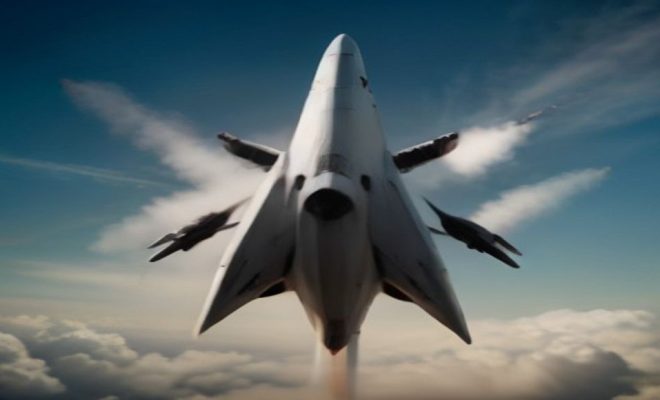
Alright, space fans, buckle up! SpaceX is gearing up for what could be one of the most audacious and visually spectacular moments in rocketry history. We’re talking about Starship Flight 14, an event tentatively penciled in for late August 2026 that’s absolutely bristling with ambition. This isn’t just another test flight; it’s a multi-layered mission designed to push the boundaries of what’s possible, not just for SpaceX, but for the entire space industry. If they pull off even half of what’s planned, it’ll be a game-changer.
At the heart of the excitement for Starship Flight 14 is a maneuver so daring it almost sounds like science fiction: catching the massive Starship upper stage – a 160-foot tall behemoth – right out of the sky with the launch tower’s robotic arms. Imagine a giant pair of chopsticks plucking a returning rocket out of mid-air. It’s a vision straight out of a comic book, but it’s precisely what Elon Musk and his team are striving for. This isn’t just about spectacle, though. This is about rapid reusability, a holy grail in spaceflight that promises to dramatically slash costs and accelerate our journey to the stars. top AI tools offers useful background here.
But the ‘chopstick catch’ isn’t the only headline. Starship Flight 14 aims for its first orbital insertion, a critical step that will demonstrate the vehicle’s capability to reach and operate in space. Beyond that, it’s slated to deploy the next generation of Starlink V3 satellites, crucial for expanding SpaceX’s burgeoning internet constellation. This mission, therefore, isn’t just about demonstrating hardware; it’s about validating the entire Starship ecosystem, from launch to in-space operations to unprecedented recovery methods. The stakes, as you can imagine, couldn’t be higher, drawing immense interest from everyone from hardcore space enthusiasts to savvy investors.
The Audacious ‘Chopstick Catch’: A New Era of Reusability
Let’s dive right into the most talked-about aspect of Starship Flight 14: the attempt to catch the Ship itself. For those unfamiliar, the ‘chopstick’ arms are part of the colossal Starship launch tower, affectionately known as ‘Mechazilla.’ These arms already played a critical role in catching the much larger Super Heavy booster on previous flights, a feat that, frankly, still feels astounding to witness. But catching the Ship, the upper stage, presents a whole new set of engineering and control challenges.
Why go through all this trouble? Why not just land on legs, like the Falcon 9 first stage? The answer lies in the pursuit of ultimate reusability and efficiency. Landing on legs, while impressive, adds mass, complexity, and potential points of failure to the vehicle. It also requires the rocket to hover and perform a precise, powered landing, which expends a significant amount of propellant. Catching the rocket with the tower means it can return to the launch site, be immediately re-stacked, refueled, and turned around for another flight with minimal ground operations. This isn’t just fast; it’s lightning-fast, a truly radical approach to space logistics that could shrink launch windows from weeks to hours.
Elon Musk himself confirmed the plan to attempt the Ship catch, a testament to SpaceX’s confidence after two successful precision splashdowns of the Ship in the Gulf of Mexico. Those splashdowns weren’t just about getting the vehicle back; they were crucial tests of the Ship’s reentry profile, thermal protection system, and, critically, its precise maneuverability and control during the final descent. Mastering those parameters is absolutely essential before attempting something as precise as a tower catch. It’s a testament to their iterative development process: test, learn, refine, and then push the envelope even further. This isn’t just a party trick; it’s a fundamental shift in how we might access space.
First Orbital Insertion: A Defining Moment for Starship Flight 14
While the ‘chopstick catch’ grabs all the headlines, let’s not forget another monumental goal for Starship Flight 14: achieving its first successful orbital insertion. This is, in many ways, the primary objective of any new orbital rocket system. Getting to space is one thing; staying there and operating effectively is another entirely. For Starship, which is designed to be the workhorse for everything from satellite deployment to lunar and Martian missions, reaching orbit is non-negotiable.
Previous Starship test flights have focused on demonstrating various aspects of the system: the raptor engines, the booster’s ascent, the ‘hot staging’ maneuver where the upper stage ignites before separating, and the Ship’s dramatic reentry and controlled descent. These were all crucial steps, but they stopped short of a full orbital profile. A successful orbital insertion means the Starship upper stage will reach sufficient velocity and altitude to remain in orbit around the Earth, rather than performing a suborbital trajectory and reentering after a single arc. (See: SpaceX Starship overview.)
Achieving orbit is not just about raw power; it’s about precision. It requires the engines to fire for the exact duration, at the precise angle, to place the vehicle into a stable trajectory. This will be a huge validation for the Starship design, confirming its ability to deliver payloads to space and serve as the foundation for its ambitious deep-space exploration goals. Without a consistent ability to reach orbit, Starship remains a powerful concept rather than a fully operational system. This flight aims to change that, marking a definitive transition from experimental vehicle to operational spacecraft. See also Musk's bold mission.
Starlink V3 Deployment: Fueling the Connectivity Revolution
Beyond the raw engineering feats, Starship Flight 14 also carries a very practical and commercially vital mission: the deployment of next-generation Starlink V3 satellites. You might be thinking, “Starlink’s already in orbit, right?” And you’d be correct. But the V3 satellites are a significant upgrade from the current V1.5 and V2 mini satellites that Falcon 9 rockets typically launch.
The V3 Starlinks are larger, more powerful, and designed to offer significantly higher bandwidth and lower latency. This is crucial for Starlink’s continued expansion and its ability to compete in the increasingly crowded satellite internet market. Think about it: more powerful satellites mean better service for subscribers, especially in rural and underserved areas where traditional broadband is scarce or non-existent. It also means Starlink can support more users and more data-intensive applications, strengthening its position as a global internet provider.
Deploying V3 satellites with Starship isn’t just about getting new hardware into space; it’s about demonstrating Starship’s capacity as a heavy-lift satellite deployer. Falcon 9 can carry a decent number of Starlinks, but Starship, with its enormous payload volume and mass capacity, can deploy them in unprecedented quantities. This dramatically accelerates the build-out of the Starlink constellation, which in turn fuels SpaceX’s revenue streams and helps finance its even grander ambitions for Mars and beyond. It’s a direct link between the cutting-edge engineering of Starship and the practical, commercial applications that are already changing lives on Earth.
The FCC Filing: A Glimpse into Double Tower Catches?
If you thought one tower catch was exciting, hold onto your hats. An FCC filing, often a goldmine of pre-launch information, hints at an even more ambitious scenario for Starship Flight 14: a possible back-to-back tower catch for both the Ship and the Super Heavy booster. Now, that’s what I call putting all your eggs in one basket, but with the potential for truly groundbreaking efficiency.
We’ve already seen the Super Heavy booster perform its incredible ‘chopstick catch’ on previous test flights. It’s a sight to behold, as the enormous booster, after propelling Starship skyward, descends with pinpoint accuracy, guiding itself between the tower arms to be gently snared. The idea that this same flight could then see the Ship return and be caught in a similar fashion is just mind-boggling. It underscores SpaceX’s ultimate vision for Starship: a fully and rapidly reusable two-stage system, where both components return directly to the launch site for immediate preparation for the next mission.
This kind of simultaneous, or near-simultaneous, recovery would be an engineering marvel and a massive leap forward in space logistics. It would mean the entire launch system could be ready for reflight in an incredibly short timeframe, perhaps even within hours. While the FCC filing suggests this as a possibility, we’ll have to wait for official confirmation and, of course, for the actual flight to see if SpaceX attempts this truly unprecedented double recovery. But the mere contemplation of it speaks volumes about the level of ambition and the engineering confidence within the company.
Regulatory Hurdles and Public Interest: The Unseen Forces
No matter how technically prepared SpaceX is, a launch of this magnitude, especially one involving novel recovery methods, is always subject to regulatory approval. The Federal Aviation Administration (FAA) plays a critical role here, ensuring public safety and environmental compliance. Each Starship flight requires extensive reviews, and given the complexity and the proximity of the launch site to sensitive ecological areas and populated zones, these approvals are never a given.
Elon Musk’s confirmation of the Ship catch attempt explicitly mentioned it was “pending regulatory approval.” This isn’t just a throwaway line; it’s a crucial caveat. The FAA will scrutinize everything from flight trajectories to potential debris fields, noise impacts, and contingency plans. The fact that the Ship will be returning to the launch site for a tower catch, rather than a splashdown far offshore, adds another layer of complexity to the regulatory process. It’s about ensuring that the benefits of rapid reusability don’t come at the expense of safety or environmental responsibility.
Beyond the regulators, there’s immense public and investor interest in Starship Flight 14. This isn’t just about space nerds anymore. Starship represents the future of commercial space travel, satellite internet, and even human exploration of other planets. Every test flight, every milestone, is watched by millions around the globe. Discussions about satellite internet services, space investment opportunities, and the future of humanity in space often revolve around Starship’s progress. This intense scrutiny adds pressure, but also fuels the excitement and drives innovation within SpaceX. (See: NASA's spaceflight initiatives.) SpaceX's journey to Uranus offers useful background here.
UBS Analysts Weigh In: Starship’s Pivotal Role in Connectivity and AI
It’s not just space enthusiasts who are keenly watching Starship Flight 14; financial analysts are too, and for very good reason. UBS analysts, for example, have been vocal about this flight’s pivotal role in advancing SpaceX’s expansion into the connectivity and AI sectors. This might seem like a broad statement, but it highlights the interconnectedness of SpaceX’s various ventures.
Think about it: Starlink is a connectivity business, providing internet services globally. The more V3 satellites Starship can launch, and the more efficiently it can do so, the stronger Starlink’s market position becomes. This directly impacts SpaceX’s valuation and its ability to generate substantial revenue. As the Starlink constellation grows, it creates a massive global network, and that network generates an enormous amount of data. This is where AI comes in.
Analyzing this vast dataset, optimizing network performance, predicting outages, and even developing new services based on user behavior – these all rely heavily on advanced AI algorithms. Furthermore, Starship’s capabilities in deploying large, complex satellites open doors for other space-based AI applications, such as earth observation satellites with onboard AI processing, or future space-based data centers. UBS analysts see Starship not just as a rocket, but as an enabler for SpaceX’s ambitious growth plans across multiple high-tech industries, making its success critical for the company’s substantial valuation in the burgeoning space economy.
The Iterative Development Philosophy: Learning from Every Flight
SpaceX operates on a unique and often controversial iterative development philosophy. Instead of years of ground testing leading to a perfectly polished first flight, they build, test, fly, and often, fail, in a very public way. This approach, while sometimes leading to dramatic setbacks, allows them to learn incredibly quickly and iterate on designs at a pace unheard of in traditional aerospace. Starship Flight 14 is a direct product of this philosophy.
Remember the early Starship prototypes, the ‘hops’ that often ended in spectacular explosions? Each of those provided invaluable data on engine performance, structural integrity, and landing dynamics. The more recent orbital test flights, despite not achieving all objectives, have provided crucial insights into booster separation, hot staging, reentry heating, and control systems. The two successful precision splashdowns of the Ship were not just ‘good enough’ outcomes; they were deliberate tests to validate the Ship’s controlled descent capabilities, a prerequisite for attempting the tower catch.
This isn’t about perfection; it’s about progress. Every flight, whether fully successful or not, generates terabytes of data that engineers pour over. They identify weaknesses, refine designs, and implement changes at an astonishing rate. This rapid iteration is what allows SpaceX to attempt such ambitious goals as a Ship tower catch so relatively early in the Starship program. It’s a testament to their willingness to take calculated risks, learn from their mistakes, and push forward relentlessly. This ethos is what has allowed them to disrupt the space industry time and time again. There’s a fuller look at Starship launch failure analysis.
Comparing Starship to Traditional Spaceflight: A Paradigm Shift
To truly appreciate the significance of Starship Flight 14, it helps to put it in context with traditional spaceflight. For decades, space travel has been characterized by single-use, incredibly expensive rockets. Each launch was a monumental effort, with components discarded into the ocean or burned up in the atmosphere. The Space Shuttle was a partial attempt at reusability, but its refurbishment costs and turnaround times were astronomical, ultimately making it economically unsustainable. (See: CDC on technology and safety.)
SpaceX’s Falcon 9, with its reusable first stage, was the first major paradigm shift. It proved that reusability could dramatically reduce launch costs and increase flight cadence. But Starship takes this concept to an entirely new level. It’s designed to be fully and rapidly reusable, meaning both the booster and the upper stage return to the launch site for quick turnaround. This isn’t just an incremental improvement; it’s an order-of-magnitude leap in efficiency.
A fully reusable Starship, especially one capable of tower catches for both stages, could bring the cost of launching a kilogram to orbit down by factors that were previously unimaginable. This isn’t just about saving money; it’s about opening up space to a much wider range of activities. Imagine launching massive space telescopes, building orbital space stations, undertaking lunar missions, or even sending thousands of people to Mars, all at a fraction of today’s costs. Starship Flight 14, with its audacious goals, represents a critical step on this path, moving us closer to a future where space travel is routine and accessible, rather than a rare and prohibitively expensive endeavor.
The Road Ahead: What Success or Setback Means for Starship Flight 14
So, what does success look like for Starship Flight 14, and what are the implications if things don’t go exactly as planned? True success would mean hitting all the major milestones: a clean launch, successful orbital insertion of the Ship, deployment of the Starlink V3 satellites, and crucially, the successful tower catch of the Ship. And if they manage the double tower catch with the booster, well, that would be the icing on an already massive cake.
Achieving these goals would be a monumental validation of the Starship architecture and SpaceX’s engineering prowess. It would accelerate Starlink’s expansion, strengthen investor confidence, and pave the way for future crewed and cargo missions to the Moon and Mars. It would confirm that rapid, full reusability is not just a dream, but an achievable reality, fundamentally reshaping the economics of spaceflight.
However, space is hard, and setbacks are always a possibility. A partial success, where some objectives are met but others aren’t, would still provide invaluable data for future iterations. If, for instance, the orbital insertion is successful but the Ship catch fails, it still marks significant progress. A more significant setback, such as a major anomaly during launch or reentry, would of course be disappointing but, in the SpaceX philosophy, would be treated as a learning opportunity, leading to design changes and another attempt. The key is that each flight, regardless of its immediate outcome, contributes to the overall learning curve.
Starship Flight 14 is shaping up to be far more than just another rocket launch. It’s a high-stakes demonstration of cutting-edge technology, a pivotal step in building a global connectivity network, and a bold stride towards making humanity a multi-planetary species. The late August 2026 timeframe gives us plenty of time to anticipate, speculate, and perhaps even hold our breath. One thing’s for sure: when Starship takes to the skies again, the world will be watching, eager to see if those giant chopsticks can really catch a falling star.
Trending Now
Frequently Asked Questions
What is SpaceX's Starship Flight 14?
Starship Flight 14 is an ambitious mission planned for late August 2026, aiming to demonstrate advanced rocket recovery methods and achieve its first orbital insertion. It will involve catching the 160-foot Starship upper stage using robotic arms on the launch tower, a move designed to enhance reusability and reduce costs in spaceflight.
How will SpaceX catch the Starship rocket?
SpaceX plans to catch the Starship upper stage using a unique method likened to giant chopsticks. The launch tower's robotic arms will attempt to grasp the returning rocket mid-air, a technique that could revolutionize rapid reusability in space missions.
What are the goals of Starship Flight 14?
The goals of Starship Flight 14 include achieving its first orbital insertion, deploying the next generation of Starlink V3 satellites, and validating the entire Starship ecosystem from launch to recovery, marking a significant step forward for SpaceX and the space industry.
Why is the chopstick catch significant for spaceflight?
The chopstick catch is significant because it represents a breakthrough in rocket recovery methods. Successfully catching the rocket could lead to faster reusability, significantly lowering costs and accelerating future space missions, which is a critical goal for SpaceX.
What impact will Starship Flight 14 have on the space industry?
Starship Flight 14 has the potential to be a game-changer for the space industry by validating advanced recovery techniques and expanding the Starlink satellite network. Its success could inspire further innovations in rocket technology and commercial spaceflight.
Have you experienced this yourself? We'd love to hear your story in the comments.