Irreversibility: How It Impacts Problem-Solving in Young Children
“`html
Understanding how irreversibility in young children affects cognitive development is a crucial area of study in child psychology and education. Irreversibility, a term coined by developmental psychologist Jean Piaget, refers to the inability of a child to mentally reverse a sequence of events or operations. This concept is pivotal to grasp as it significantly influences the way children approach problems and derive solutions. In this article, we’ll delve into how this cognitive limitation manifests in young children, its implications on problem-solving, and what educators and parents can do to foster better cognitive skills in these formative years.
What is Irreversibility?
Irreversibility is a cognitive limitation observed primarily in children during the preoperational stage, which typically spans ages 2 to 7. During this stage, children begin to engage in symbolic play and learn to manipulate symbols, but their thinking is still intuitive and egocentric. They struggle to understand that actions can be reversed, which affects their ability to solve problems effectively.
For instance, if a child sees a ball of clay flattened into a pancake shape, they may not understand that it can be reshaped back into a ball. This inability to reverse actions or thoughts leads to challenges in reasoning and problem-solving. Children may also struggle with tasks that involve the conservation of quantity, volume, or number—concepts that require them to mentally visualize changes and reversals.
The Importance of Irreversibility in Developmental Psychology
Irreversibility is a fundamental concept in developmental psychology because it highlights the cognitive limitations in young children. Understanding these limitations can help educators tailor their teaching methods to better suit the developmental stage of their students. Research indicates that children who struggle with irreversibility often face difficulties in areas that require logical reasoning and critical thinking.
Piaget suggested that cognitive development occurs in stages, and irreversibility is a hallmark of the preoperational stage. Once children transition into the concrete operational stage (around age 7), they begin to overcome this limitation, allowing them to manipulate information more effectively. Recognizing these stages can aid in understanding the progression of children’s problem-solving skills and cognitive abilities.
Real-World Examples of Irreversibility in Young Children
To illustrate how irreversibility impacts problem-solving, consider the following scenarios. A child might be presented with two identical glasses filled with water. When one glass is poured into a taller, narrower glass, the child may believe that the taller glass has more water, failing to understand that the amount remains the same. In this example, the child’s inability to mentally reverse the action of pouring leads to misconceptions about quantity.
Another common example occurs during a simple task like sorting objects by color or shape. A child might correctly sort a set of colored blocks, but if asked to switch the sorting criteria, they may struggle to break from their initial sorting rule. This difficulty illustrates how irreversibility can hinder flexibility in thinking, which is essential for problem-solving.
How Irreversibility Affects Problem-Solving Skills
The impact of irreversibility on problem-solving is profound. Children who cannot reverse their thought processes may find it challenging to approach problems from different angles. This limitation can lead to a rigid mindset where they cling to their first interpretations instead of exploring alternative solutions. Consequently, they may struggle with tasks that require critical and creative thinking.
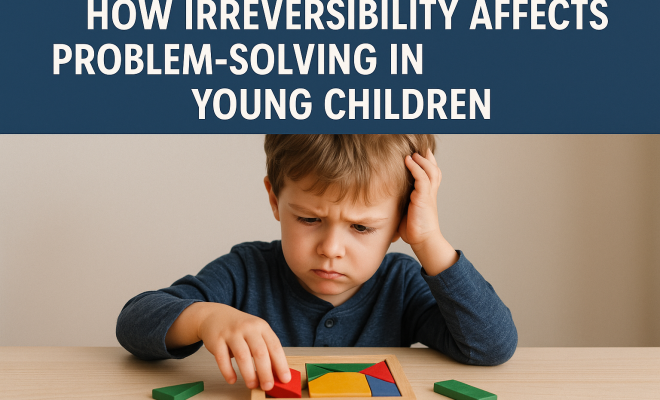
For instance, a child faced with a puzzle may only see one way to fit the pieces together. If that method does not work, their inability to mentally reverse or reconfigure their approach may lead to frustration and disengagement. This rigidity can affect their overall confidence in tackling new and unfamiliar challenges, which can persist into later stages of their education.
Educational Strategies to Address Irreversibility
To mitigate the effects of irreversibility in young children, educators and parents can adopt various strategies to enhance problem-solving skills. Here are some actionable approaches: (See: Jean Piaget's theory of cognitive development.)
- Encourage Exploration: Allow children to explore materials freely. Hands-on activities that involve manipulation and experimentation can help children learn about reversibility in a tangible way.
- Use Visual Aids: Visual aids such as diagrams or physical representations can help children see relationships and reversals between different states of objects.
- Teach Metacognitive Skills: Encourage children to think about their thinking. Asking questions that prompt reflection can help them recognize when they may need to change their approach.
- Model Problem-Solving: Demonstrate different ways to tackle problems. Modeling the thought process involved in finding solutions can provide children with strategies they may not have considered.
The Role of Play in Overcoming Irreversibility
Play is a critical avenue through which children can overcome the limitations of irreversibility. Engaging in imaginative play allows children to experiment with different scenarios, helping them understand the concept of reversibility. For example, pretending to cook can involve sequences of actions that children can act out repeatedly, making it easier for them to grasp how reversing those actions affects the outcome.
In addition, games that require strategy and planning can also foster flexibility in thinking. Board games, for example, can encourage children to think ahead and adjust their strategies based on changing circumstances, which can help them practice reversing their thought processes in a fun and engaging way.
Expert Perspectives on Irreversibility
Experts in child psychology emphasize the importance of recognizing and addressing the limitations posed by irreversibility. Dr. Laura Berk, a well-known developmental psychologist, points out that understanding cognitive limitations helps educators craft better learning experiences. In her research, she has found that children thrive when they are given opportunities to explore and manipulate their environment in ways that challenge their thinking.
Similarly, Dr. David Elkind, an advocate for play-based learning, argues that children learn best through play. He suggests that educators should create environments that stimulate curiosity and allow for trial and error. By doing so, children can learn to embrace reversibility and develop their problem-solving skills more effectively.
Current Relevance of Irreversibility in Young Children
Understanding irreversibility in young children remains relevant in contemporary educational discussions. With growing concerns about children’s cognitive development in a fast-paced, technology-driven world, educators are increasingly looking for ways to enhance critical thinking skills. As we transition to more dynamic and interactive methods of teaching, acknowledging the cognitive limitations of young learners is essential.
Moreover, the rise of digital learning tools provides unique opportunities to address irreversibility. Interactive games and educational apps that allow for trial and error can facilitate better understanding of concepts like reversibility. The key is to ensure that these tools are used thoughtfully to promote growth and development.
Understanding Irreversibility Through Cognitive Development Models
To further grasp the implications of irreversibility, it’s essential to look at various cognitive development models beyond Piaget’s framework. Vygotsky’s social development theory, for instance, places an emphasis on social interaction as a critical component of cognitive development. According to Vygotsky, children learn through interactions with more knowledgeable others, which can help them overcome cognitive limitations like irreversibility.
By engaging with peers or adults who can model reversible thinking, children may start to internalize these processes. For example, if a parent or teacher explains how to solve a problem in multiple ways, the child can learn to see beyond their initial rigid thinking patterns. This social aspect highlights the importance of collaborative learning environments in mitigating the limitations of irreversibility.
Statistics on Cognitive Development and Irreversibility
Research has shed light on the prevalence of cognitive limitations such as irreversibility in young children. A study conducted by the American Psychological Association found that approximately 60% of children aged 4-6 struggle with tasks involving reversibility. This statistic underscores the need for targeted approaches in education to address these cognitive challenges.
Additionally, a longitudinal study tracking children’s problem-solving abilities revealed that those who received specific training focused on flexible thinking and reversibility performed significantly better in logical reasoning tasks by age 8 compared to their peers who did not receive such training. This indicates that early interventions can have a lasting impact on cognitive development.
Comparing Irreversibility Across Cultures
Cognitive development, including aspects like irreversibility, can vary across different cultures. In some cultures, educational approaches emphasize rote memorization and structured tasks, which may unintentionally reinforce rigid thinking in young children. Conversely, cultures that prioritize exploration, creativity, and open-ended play may better support the development of cognitive flexibility. (See: Cognitive development in children.)
For example, children in Montessori or Reggio Emilia programs, which emphasize child-led exploration and learning, often show greater abilities to understand concepts of reversibility. These educational philosophies encourage children to experiment and discover, which can help them overcome cognitive limitations more effectively than traditional, teacher-centered methods.
Practical Applications for Parents and Educators
Parents and educators can implement practical strategies to support children struggling with irreversibility. Here are some ideas:
- Encourage Questions: Foster an environment where children feel comfortable asking questions. This can help them explore different possibilities and perspectives.
- Use Storytelling: Stories that involve sequences and reversibility can help children see the concept in action. Discussing the plot and character decisions can prompt children to think about how events could be altered or reversed.
- Incorporate Technology Wisely: Use educational apps and games that promote problem-solving and reversible thinking. Look for tools designed to encourage exploration rather than passive consumption.
- Observe and Reflect: Take time to observe children’s thought processes. Reflecting on their approaches can provide insights into their understanding and help you tailor guidance to their needs.
Frequently Asked Questions about Irreversibility in Young Children
What is the age range during which children typically exhibit irreversibility?
Children generally exhibit signs of irreversibility between the ages of 2 and 7, during the preoperational stage of cognitive development as described by Piaget.
How can I tell if my child is struggling with irreversibility?
Look for signs such as difficulty understanding that actions can be reversed, challenges in tasks requiring conservation of quantity or number, and rigidity in problem-solving approaches.
Are there specific activities that can help children overcome irreversibility?
Yes! Activities like hands-on experiments, role-playing scenarios, and engaging in strategic games can promote flexibility in thinking and help children practice reversing thought processes.
How critical is peer interaction in overcoming irreversibility?
Peer interaction is extremely beneficial as it allows children to observe and learn from one another. Collaborating with peers can expose children to different approaches to problem-solving, fostering cognitive flexibility.
Can digital learning tools assist with cognitive development regarding irreversibility?
Absolutely! Digital tools that encourage exploration, trial and error, and interactive problem-solving can effectively support children in understanding reversibility and improving their cognitive skills.
Understanding the Impact of Irreversibility on Emotional Development
Irreversibility in young children isn’t just a cognitive hurdle; it also has emotional implications. Children who struggle with understanding reversibility may feel more frustrated or anxious when faced with complex tasks. Imagine a child trying to build a tower with blocks but unable to see that they can take it apart and start again if it falls. This inability to conceptualize that they can “undo” a mistake may lead them to avoid challenges altogether, impacting their confidence and willingness to try new things.
Emotional development is closely tied to problem-solving. Children learn persistence through trial and error, and when they cannot reverse their actions, they may develop a fear of failure. It’s essential for caregivers to provide a supportive environment where mistakes are viewed as learning opportunities rather than setbacks. Encouraging a growth mindset can help children embrace challenges without the fear of being “wrong.”
Parental Involvement in Addressing Irreversibility
Parents play a vital role in helping children navigate the challenges posed by irreversibility. Engaging in activities that promote cognitive flexibility at home can complement educational efforts. Simple actions such as allowing children to help in the kitchen can be beneficial. While cooking, parents can discuss how ingredients can be combined and separated—demonstrating both the concept of transformations and reversibility in a concrete way.
Moreover, reading books that explore themes of change and reversibility can facilitate discussions about these concepts. For example, books about seasons changing or animals transforming can lead to interesting conversations about how things can revert to previous states. This dialogue helps children internalize the concept of reversibility in a meaningful context.
Group Activities to Foster Flexibility in Thinking
Group activities are not just beneficial for social development; they also help children learn about cognitive processes such as reversibility. Team-based games that require cooperative problem-solving, like building a structure with blocks or completing a scavenger hunt, encourage children to share ideas and consider multiple strategies. This collaborative effort allows children to witness different perspectives and approaches, promoting cognitive flexibility.
Furthermore, group discussions about how to approach a task can reinforce the idea that there are often multiple ways to achieve a goal. By seeing their peers successfully navigate problems, children may feel more empowered to explore different pathways themselves.
Long-term Effects of Irreversibility on Learning
The effects of irreversibility can extend beyond early childhood. Studies have shown that children who struggle with these cognitive limitations may have difficulties later in academic settings, particularly in subjects that require logical reasoning, such as mathematics and science. A longitudinal study monitored children from preschool through high school, revealing that those who developed better strategies for reversible thinking performed better academically overall.
This emphasizes the importance of early intervention and the implementation of strategies that promote cognitive flexibility. By addressing irreversibility in young children, we not only enhance their immediate problem-solving skills but also set a foundation for lifelong learning and adaptability.
Conclusion: Embracing Irreversibility for Growth
Irreversibility is a natural part of cognitive development in young children, influencing their problem-solving abilities in profound ways. By recognizing the limitations that come with this cognitive phase, parents and educators can better support children in developing essential skills. Through exploration, play, and the use of strategic teaching methods, we can help children overcome the challenges associated with irreversibility, paving the way for more flexible and creative thinkers in the future.
“`
Trending Now
Frequently Asked Questions
What is irreversibility in child development?
Irreversibility is a cognitive limitation in young children, primarily observed in the preoperational stage (ages 2 to 7). It refers to their inability to mentally reverse a sequence of events, affecting their problem-solving abilities and understanding of concepts like conservation of quantity or volume.
How does irreversibility affect problem-solving in children?
Irreversibility impacts children's problem-solving by limiting their ability to visualize changes and reversals. For instance, they may struggle to understand that a flattened ball of clay can be reshaped, which hinders their logical reasoning and effective problem-solving.
At what age do children exhibit irreversibility?
Children typically exhibit irreversibility during the preoperational stage, which spans from ages 2 to 7. During this period, their thinking is still intuitive and egocentric, leading to challenges in understanding reversible actions.
Why is understanding irreversibility important for educators?
Understanding irreversibility helps educators tailor their teaching methods to align with children's cognitive development stages. Recognizing these limitations allows for more effective strategies to enhance logical reasoning and problem-solving skills in young learners.
What can parents do to help children with irreversibility?
Parents can help children overcome irreversibility by engaging them in activities that encourage visualization and reversible thinking. Simple tasks that demonstrate conservation and allow for manipulation of objects can foster better cognitive skills and understanding of reversibility.
Have you experienced this yourself? We’d love to hear your story in the comments.