Artemis II Crew Shatters Apollo Record in Historic Lunar Flyby
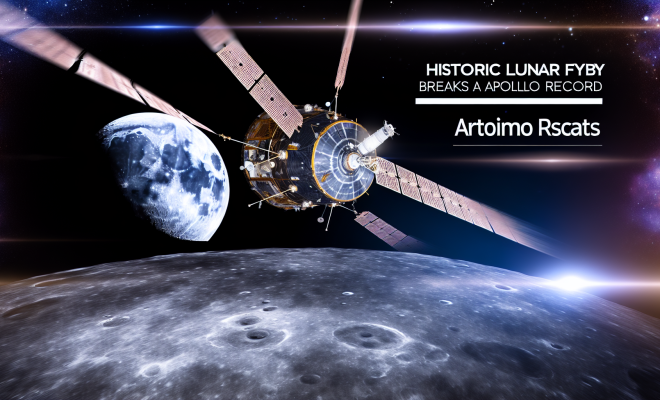
NASA’s Artemis II mission has etched its name into the annals of space exploration history, as its four-person crew completed a record-breaking trip around the Moon on Monday. This mission marks a significant milestone in humanity’s journey to return to the lunar surface and eventually beyond, setting the stage for future explorations.
Breaking Records and Making History
The Artemis II crew, consisting of commander Reid Wiseman, pilot Christina Koch, and mission specialists Victor Glover and Jeremy Hansen, traveled an astounding 252,756 miles from Earth during their lunar flyby. This remarkable distance surpassed the previous record set by the Apollo 13 mission in 1970 by more than 4,000 miles. The achievement underscores the advanced capabilities of modern spacecraft and the ambitious goals of NASA’s Artemis program.
A Mission of Discovery
Launched on April 1, 2024, the Artemis II mission was not just a test of distance but also a journey of exploration and discovery. As the crew traveled around the Moon, they experienced a breathtaking view of Mars and even witnessed a solar eclipse, both of which were made possible due to the mission’s unique trajectory and timing.
One of the most thrilling moments for the crew came when they found themselves behind the Moon. During this period, they experienced a 45-minute communication blackout with mission control on Earth. Upon re-establishing contact, they shared their exhilaration and awe at seeing Earth reappear on the horizon, a reminder of the planet they call home.
Presidential Recognition
In a show of support for the mission, former President Donald Trump spoke live with the Artemis II crew, congratulating them on their historic journey. He referred to them as “modern-day pioneers,” acknowledging the risks and challenges they faced in the name of scientific advancement and exploration.
Preparing for Future Lunar Landings
The data collected during this mission will be invaluable for NASA as it plans for future lunar landings, with the next crewed lunar landing targeted as early as 2028. The Artemis program aims to establish a sustainable human presence on the Moon, paving the way for future missions to Mars and beyond. The Artemis II mission serves as a critical step in testing the systems and technology that will be necessary for long-duration space missions.
The Orion Spacecraft: A Technological Marvel
At the heart of the Artemis II mission is the Orion spacecraft, designed to carry astronauts beyond low Earth orbit. Orion is equipped with advanced life support systems, navigation technologies, and safety features that will ensure the crew’s well-being throughout their journey. The spacecraft’s successful performance during the lunar flyby is a testament to its design and engineering, demonstrating its readiness for future crewed missions.
Looking Ahead: The Artemis Program
- Artemis III: This mission aims to land astronauts on the lunar South Pole, an area rich in resources and scientific potential.
- Artemis IV: Planned to establish a lunar base camp to support sustained human presence on the Moon.
- Future Mars Missions: The ultimate goal is to use knowledge gained from lunar exploration to prepare for crewed missions to Mars in the 2030s.
Conclusion
The Artemis II mission has not only set a new distance record for human space travel but has also reignited interest and excitement in space exploration. As the Orion spacecraft makes its way back to Earth, set for a splashdown off the coast of California near San Diego just after 8 p.m. EDT on Friday, the mission’s success represents a hopeful glimpse into the future of human exploration beyond our planet.
The Artemis program, with its ambitious goals and innovative technology, is poised to lead the way for humanity’s next great leap into the cosmos—one that will take us back to the Moon and eventually to Mars. The Artemis II crew, with their pioneering spirit and commitment to exploration, have taken us one step closer to realizing these dreams.