The Edvocate

Top Menu

Main Menu

  • Start Here
    • Our Brands
    • Governance
      • Lynch Education Consulting, LLC.
      • Dr. Lynch’s Personal Website
      • Careers
    • Write For Us
    • Books
    • The Tech Edvocate Product Guide
    • Contact Us
    • The Edvocate Podcast
    • Edupedia
    • Pedagogue
    • Terms and Conditions
    • Privacy Policy
  • PreK-12
    • Assessment
    • Assistive Technology
    • Best PreK-12 Schools in America
    • Child Development
    • Classroom Management
    • Early Childhood
    • EdTech & Innovation
    • Education Leadership
    • Equity
    • First Year Teachers
    • Gifted and Talented Education
    • Special Education
    • Parental Involvement
    • Policy & Reform
    • Teachers
  • Higher Ed
    • Best Colleges and Universities
    • Best College and University Programs
    • HBCU’s
    • Diversity
    • Higher Education EdTech
    • Higher Education
    • International Education
  • Advertise
  • The Tech Edvocate Awards
    • The Awards Process
    • Finalists and Winners of The 2025 Tech Edvocate Awards
    • Finalists and Winners of The 2024 Tech Edvocate Awards
    • Finalists and Winners of The 2023 Tech Edvocate Awards
    • Finalists and Winners of The 2021 Tech Edvocate Awards
    • Finalists and Winners of The 2022 Tech Edvocate Awards
    • Finalists and Winners of The 2020 Tech Edvocate Awards
    • Finalists and Winners of The 2019 Tech Edvocate Awards
    • Finalists and Winners of The 2018 Tech Edvocate Awards
    • Finalists and Winners of The 2017 Tech Edvocate Awards
    • Award Seals
  • Apps
    • GPA Calculator for College
    • GPA Calculator for High School
    • Cumulative GPA Calculator
    • Grade Calculator
    • Weighted Grade Calculator
    • Final Grade Calculator
  • The Tech Edvocate
  • Post a Job
  • AI Powered Personal Tutor

logo

The Edvocate

  • Start Here
    • Our Brands
    • Governance
      • Lynch Education Consulting, LLC.
      • Dr. Lynch’s Personal Website
        • My Speaking Page
      • Careers
    • Write For Us
    • Books
    • The Tech Edvocate Product Guide
    • Contact Us
    • The Edvocate Podcast
    • Edupedia
    • Pedagogue
    • Terms and Conditions
    • Privacy Policy
  • PreK-12
    • Assessment
    • Assistive Technology
    • Best PreK-12 Schools in America
    • Child Development
    • Classroom Management
    • Early Childhood
    • EdTech & Innovation
    • Education Leadership
    • Equity
    • First Year Teachers
    • Gifted and Talented Education
    • Special Education
    • Parental Involvement
    • Policy & Reform
    • Teachers
  • Higher Ed
    • Best Colleges and Universities
    • Best College and University Programs
    • HBCU’s
    • Diversity
    • Higher Education EdTech
    • Higher Education
    • International Education
  • Advertise
  • The Tech Edvocate Awards
    • The Awards Process
    • Finalists and Winners of The 2025 Tech Edvocate Awards
    • Finalists and Winners of The 2024 Tech Edvocate Awards
    • Finalists and Winners of The 2023 Tech Edvocate Awards
    • Finalists and Winners of The 2021 Tech Edvocate Awards
    • Finalists and Winners of The 2022 Tech Edvocate Awards
    • Finalists and Winners of The 2020 Tech Edvocate Awards
    • Finalists and Winners of The 2019 Tech Edvocate Awards
    • Finalists and Winners of The 2018 Tech Edvocate Awards
    • Finalists and Winners of The 2017 Tech Edvocate Awards
    • Award Seals
  • Apps
    • GPA Calculator for College
    • GPA Calculator for High School
    • Cumulative GPA Calculator
    • Grade Calculator
    • Weighted Grade Calculator
    • Final Grade Calculator
  • The Tech Edvocate
  • Post a Job
  • AI Powered Personal Tutor
  • 12 of the Best Free Grade Calculators for Teachers

  • OPINION: The Danger of Painting Male Teachers as Predators

  • Secondary Teachers, Can We Let You in on a Lesson Planning Secret

  • 10 EdTech Hacks for Every Classroom

  • Help! My Coworker Is Selling My Lessons Online

  • 10 Job Perks Your Friends Have, But You Don’t—Because You Teach

  • The Changing Landscape of Special Education Policy

  • Diversity, Equity, and Inclusion: A Contested Terrain

  • Research Challenges in Special Education Inclusion

  • School Safety and Communication Technologies

Assessment
Home›Assessment›Formative Assessment: Everything You Need to Know

Formative Assessment: Everything You Need to Know

By Matthew Lynch
February 13, 2023
0
Spread the love

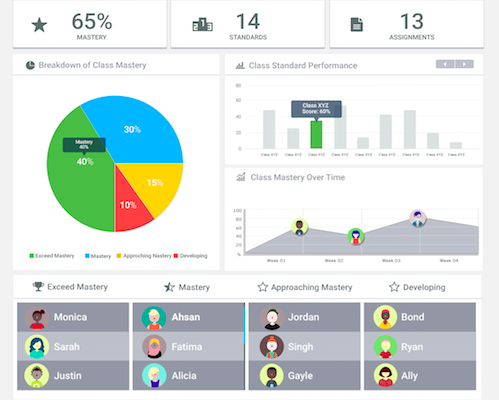
Formative assessment is the evaluation of a student’s progress towards achieving a specific academic goal. They are typically conducted at regular intervals and are administered by the teacher who studies the feedback and uses the information they get to help their students’ growth and progress towards their academic goals.

Teachers can use different methods to perform the in-process evaluation of student comprehension, academic progress, and learning needs during a unit, lesson, or course. Such methods can include summaries and reflections, charts, lists, exit cards, graphic organizers, visual representation of information, and collaborative activities. Using formative assessments, teachers can recognize concepts that students are finding difficult to understand, skills they’re struggling to gain, or learning standards they haven’t yet achieved. All these will help them adjust their instructional techniques, lesson plans, and academic support to help students improve their learning. Such assessments help students identify their weaknesses and strengths and target areas that they’ll need to work upon. Thus, formative assessment stands for tools that help spot struggles, misconceptions, and learning gaps along the way and evaluate ways to close those gaps. The process includes effective tools that help shape learning. It can even strengthen students’ abilities to take ownership of their learning when they realize that the objective is to improve their knowledge, not just focus on the final marks they receive.

If teachers decide to use a formative assessment, a good idea would be to ask open-ended questions to determine how well their students understand the task. Students will respond to the questions differently, with some providing answers eagerly and others opting for silence. As a result, it is common for specific students to dominate the formative assessment period. To combat this, teachers can organize the test so that everyone participates significantly and can be more committed. Teachers shouldn’t forget that the students’ hesitance to answer questions may stem from shyness, not understanding the topic, lack of confidence, etc. They can mold such a situation by rephrasing the question or asking another student to help out.

Formative assessment can be peer-led, tutor-led, or involve self-assessment. Since such assessments have low stakes and usually carry no or low point value or grade, they may, in some instances, put off the students from performing the task or engaging with it completely. Yet, this mode of assessment can support students to become self-directed learners. Additionally, it enables teachers to get evidence of student learning and make the necessary adjustments to help them achieve the intended learning outcomes.


Previous Article

Good Essay Topics on Shia Islam

Next Article

20 Ways to Teach Kids to Adapt ...

Matthew Lynch

Related articles More from author

  • Assessment

    Performance Assessment Apps, Tools, and Resources That We Love

    September 27, 2021
    By Matthew Lynch
  • AssessmentBehavior Management

    Functional Behavior Assessment Apps, Tools, and Resources That We Love

    September 3, 2021
    By Matthew Lynch
  • AssessmentHigher Education

    Improving Assessment in eLearning Programs

    February 12, 2020
    By Matthew Lynch
  • AssessmentCollege

    2021-2022 LSAT Dates

    April 6, 2021
    By Matthew Lynch
  • AssessmentHigher Education

    Midterm Exam: Everything Your Need to Know

    November 3, 2021
    By Matthew Lynch
  • AssessmentCollege

    The ACT (American College Test): Everything You Need to Know

    August 22, 2022
    By Matthew Lynch

Search

Registration and Login

  • Register
  • Log in
  • Entries feed
  • Comments feed
  • WordPress.org

Newsletter

Signup for The Edvocate Newsletter and have the latest in P-20 education news and opinion delivered to your email address!

RSS Matthew on Education Week

  • Au Revoir from Education Futures November 20, 2018 Matthew Lynch
  • 6 Steps to Data-Driven Literacy Instruction October 17, 2018 Matthew Lynch
  • Four Keys to a Modern IT Approach in K-12 Schools October 2, 2018 Matthew Lynch
  • What's the Difference Between Burnout and Demoralization, and What Can Teachers Do About It? September 27, 2018 Matthew Lynch
  • Revisiting Using Edtech for Bullying and Suicide Prevention September 10, 2018 Matthew Lynch

About Us

The Edvocate was created in 2014 to argue for shifts in education policy and organization in order to enhance the quality of education and the opportunities for learning afforded to P-20 students in America. What we envisage may not be the most straightforward or the most conventional ideas. We call for a relatively radical and certainly quite comprehensive reorganization of America’s P-20 system.

That reorganization, though, and the underlying effort, will have much to do with reviving the American education system, and reviving a national love of learning.  The Edvocate plans to be one of key architects of this revival, as it continues to advocate for education reform, equity, and innovation.

Newsletter

Signup for The Edvocate Newsletter and have the latest in P-20 education news and opinion delivered to your email address!

Contact

The Edvocate
910 Goddin Street
Richmond, VA 23230
(601) 630-5238
[email protected]
  • situs togel online
  • dentoto
  • situs toto 4d
  • situs toto slot
  • toto slot 4d
Copyright (c) 2025 Matthew Lynch. All rights reserved.