Boost Preschoolers’ Brains: Fun Executive Function Activities
“`html
As parents and educators, we all want our little ones to thrive. One of the most effective ways to help preschoolers develop crucial life skills is through executive function activities. These activities are foundational for building self-regulation, problem-solving, and critical thinking skills that will serve children well throughout their lives. In this article, we will explore essential insights into executive function, why it’s vital for preschoolers, and practical activities that can foster these skills in engaging ways.
Understanding Executive Function
Executive function refers to a set of cognitive skills that are essential for managing thoughts, actions, and emotions to achieve goals. Think of it as the brain’s management system, helping us plan, focus attention, remember instructions, and juggle multiple tasks. These skills typically develop during early childhood, making preschool the perfect time to introduce activities that enhance executive function.
According to researchers, executive function skills generally consist of three main components:
- Working Memory: The ability to hold information in mind and use it to guide behavior.
- Cognitive Flexibility: The capacity to switch between tasks or thoughts and adapt to new situations.
- Inhibitory Control: The skill to suppress impulses and resist distractions.
Each of these components plays a vital role in effective learning and life skills. For instance, working memory helps a child remember a story’s sequence, while inhibitory control allows them to wait for their turn during games.
The Importance of Executive Function for Preschoolers
Why should we prioritize developing executive function skills in preschoolers? The answer is multi-faceted. Research shows that children with strong executive function skills tend to perform better academically, have improved social skills, and exhibit greater emotional regulation. Furthermore, these skills are predictive of later success in life, including higher levels of education and better job performance.
Consider the findings from a study published in the journal Developmental Psychology, which tracked children from preschool to adolescence. The results indicated that students who engaged in activities fostering executive function showed significantly greater academic outcomes. This underscores the need for targeted practices in early childhood education to lay the groundwork for future success.
Identifying Executive Function Activities for Preschoolers
When looking for executive function activities for preschoolers, it’s essential to choose those that are not just educational but also engaging and fun. The best activities will challenge children’s cognitive skills while keeping them entertained. Here are ten effective activities that do just that:
1. Simon Says
This classic game promotes inhibitory control and listening skills. By following commands only when prefaced by “Simon says,” children learn to control impulses and focus on instruction. It can also be adapted to include more complex instructions for older preschoolers.
2. Memory Matching Games
Memory games boost working memory and cognitive flexibility. Using a set of picture cards, children take turns flipping over two cards to find a match. This simple yet engaging game sharpens their memory and enhances their ability to concentrate.
3. Obstacle Courses
Setting up an obstacle course requires children to plan their movements while navigating changes in direction and tasks. This activity fosters both cognitive flexibility and inhibitory control as kids must think ahead and resist the urge to skip steps.
4. Role-Playing
Engaging in role-play scenarios can significantly enhance a child’s social skills and emotional regulation. By putting themselves in various roles—like a teacher, doctor, or chef—children practice empathy, problem-solving, and decision-making, all while boosting their cognitive flexibility.
5. Storytelling with Picture Books
Telling stories or reading picture books can greatly contribute to working memory development. Ask children to recall events from the story or predict what happens next. This not only reinforces memory skills but also enhances their narrative ability and creative thinking. (See: CDC on executive function in children.)
6. Group Games Like Duck, Duck, Goose
Group games require children to work together, wait for their turn, and follow rules. Activities like Duck, Duck, Goose promote inhibitory control and self-regulation, as kids must remain patient and adhere to the game’s structure.
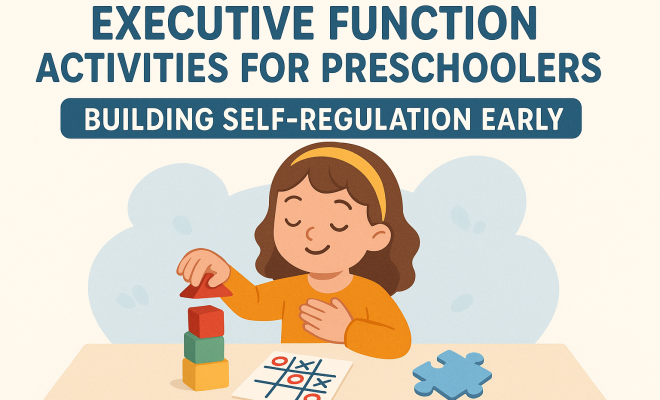
7. Building with Blocks
Encouraging children to create towers or structures with blocks requires planning and spatial awareness, which are essential elements of executive functioning. As they build, they practice problem-solving and cognitive flexibility, especially if their initial design doesn’t hold.
8. Sorting Games
Sorting objects by color, size, or shape can help develop cognitive flexibility. This can be done using everyday items like buttons or toys. The act of sorting not only fosters categorization skills but also teaches children to shift perspectives based on different criteria.
9. Art Projects
While doing art projects, children make decisions about colors, shapes, and materials. This process encourages creativity while requiring planning and working memory. When children share their artwork, they also practice communication skills and self-regulation.
10. Guided Mindfulness Activities
Incorporating mindfulness exercises can help children develop emotional regulation and focus. Simple breathing techniques or guided imagery can assist preschoolers in calming themselves and increasing their attention spans, ultimately benefiting their overall executive function.
Creating a Supportive Environment
Beyond structured activities, the environment plays a crucial role in developing executive function skills. Creating a setting that fosters exploration and problem-solving is essential. Here are some strategies to enhance the learning environment for preschoolers:
- Organized Spaces: Keep materials accessible and organized to encourage independence.
- Predictable Routines: Consistent daily schedules help children understand expectations and transitions.
- Encouragement of Exploration: Allow children to explore materials and make their own choices during playtime.
- Modeling Self-Regulation: Demonstrate patience, emotional control, and problem-solving in everyday situations.
By establishing an environment that prioritizes these elements, you’re setting the stage for children to practice executive function skills naturally.
Assessing Progress in Executive Function Skills
Understanding how to measure the progress of executive function skills is integral for parents and educators. While it can be challenging to quantify these skills, there are several methods to observe and assess development:
- Observational Checklists: Regularly document specific behaviors in various situations, such as during playtime or structured activities.
- Parent and Teacher Feedback: Gather input from multiple caregivers to gain a comprehensive view of a child’s growth.
- Skill-Specific Activities: Use targeted activities to evaluate improvements in focus, memory, and flexibility over time.
By employing these methods, you can tailor activities to suit the individual needs of each child, ensuring they receive the support necessary for their unique development.
Challenges in Developing Executive Function Skills
While the benefits of fostering executive function skills are clear, it’s essential to recognize potential challenges. Some children may naturally struggle with these skills due to various factors, including:
- Developmental Delays: Some preschoolers may experience delays in cognitive development that can affect executive function.
- Environmental Factors: Stressful home environments or lack of structured routines can hinder skill development.
- Individual Differences: Each child has a unique temperament and learning style affecting their executive function progression.
To combat these challenges, personalized approaches and consistent support from parents and educators are crucial. It’s important to be patient and understanding, celebrating small victories along the way.
Current Relevance and Future Implications
The importance of executive function activities for preschoolers has gained recognition in the educational community. With rising interest in Social-Emotional Learning (SEL), many schools are integrating executive function skills into their curriculum. As parenting and educational practices evolve, it is increasingly clear that fostering these skills early on leads to long-lasting benefits.
Moreover, given the rapid changes in today’s world, equipping children with robust executive function skills is more critical than ever. As they grow, these skills will help them navigate challenges, make informed decisions, and ultimately lead fulfilling lives.
Additional Executive Function Activities for Preschoolers
Beyond the initial list, there are a plethora of additional executive function activities that can be seamlessly integrated into a preschooler’s daily routine. Introducing variety ensures that children remain engaged and continue to develop these important skills. Here are a few more activities to consider: (See: NIH insights on executive function.)
11. Freeze Dance
This fun activity combines music with movement. When the music plays, children dance freely, but they must freeze when the music stops. This activity helps enhance inhibitory control as kids must learn to stop their movements at a moment’s notice, reinforcing self-regulation skills.
12. Treasure Hunts
Organizing a treasure hunt encourages children to follow clues and solve problems. They will need to engage their working memory by recalling the hints and using cognitive flexibility to adapt their strategies if they encounter unexpected challenges during the hunt.
13. Cooking Together
Involving children in simple cooking activities can be a fun way to develop executive functions. They can follow a recipe, which promotes working memory, and make decisions about ingredients, enhancing both planning and cognitive flexibility.
14. Nature Walks with Observational Tasks
Taking children on nature walks can be both educational and fun. Ask them to observe different plants, animals, or objects and then discuss what they saw afterward. This activity boosts their observational skills and encourages them to use their memory while also enhancing their ability to think critically about the environment.
15. Lego Challenges
Using Lego bricks, present children with specific construction challenges, such as building a bridge or a tower. This promotes problem-solving, planning, and cognitive flexibility, as they may need to adjust their designs to meet the challenge.
Expert Perspectives on Executive Function Development
Insights from child development experts highlight the profound impact of early executive function training. Dr. Adele Diamond, a leading researcher in the field, emphasizes, “Children who have developed good executive function skills are better prepared for school and life. They are better at paying attention, controlling their impulses, and thinking flexibly—skills that are crucial for academic success.”
Furthermore, Dr. Alia Crum, a psychologist known for her work in mindset and behavior, suggests that parents and educators should create environments rich in opportunities for executive function development. “Children thrive when they are given chances to practice these skills in safe, supportive settings. The more they practice, the more competent they feel, which further enhances their learning experience.”
Statistics Supporting Executive Function Skills Development
Research highlights the significance of executive function skills in overall development. According to a study published by the National Institute for Early Education Research, children who engage in activities that promote executive function are 30% more likely to demonstrate improved academic performance by the end of kindergarten. Additionally, a longitudinal study found that children with strong executive function skills had a 25% higher likelihood of finishing higher education compared to their peers.
These statistics underline the importance of incorporating executive function activities during preschool, as they can have lasting implications on children’s educational outcomes and future success.
Frequently Asked Questions (FAQ)
What age should children start engaging in executive function activities?
Children can begin engaging in simple executive function activities as early as 2 to 3 years old. At this age, activities that promote basic self-regulation, memory, and focus can be introduced. As they grow, activities can become more complex to match their developing skills.
How can I tell if my child is developing executive function skills?
You can observe your child’s ability to follow multi-step instructions, control impulses, shift tasks smoothly, and maintain attention during activities. Noticing improvements in these areas can indicate healthy executive function development.
Are executive function activities suitable for all preschoolers?
Yes, executive function activities can be adapted for different ages and developmental levels. It’s essential to tailor the complexity of activities according to each child’s unique abilities to ensure they are both challenged and engaged.
Can executive function skills be improved with practice?
Absolutely! Just like any other skill, executive function skills can be improved through consistent practice. Engaging in targeted activities regularly helps strengthen these skills over time.
What should I do if my child struggles with executive function activities?
If your child finds certain activities challenging, it’s crucial to provide support and encouragement. Break tasks into smaller steps, offer praise for their efforts, and choose activities that align more closely with their interests to foster a positive experience.
How can I incorporate executive function activities into daily routines?
Incorporating executive function activities into daily routines can be simple and enjoyable. Activities such as setting the table, choosing clothes for the day, or planning a family outing can all involve elements of planning, decision-making, and memory. Engaging your child in these tasks not only develops their skills but also promotes a sense of responsibility and independence.
What are some signs that my child may need additional support with executive function skills?
If your child frequently struggles to stay focused, has difficulty following instructions, or seems easily distracted, they may benefit from additional support. Signs of challenges in executive function can include difficulty with transitions, challenges in organizing tasks or belongings, or struggles with impulse control in social situations.
Engaging with Communities for Support
As you work on developing your child’s executive function skills, consider joining community groups or online forums focused on early childhood education and parenting. These spaces can provide valuable resources, shared experiences, and additional activities that other parents and educators have found effective. Engaging with a community can also alleviate the feeling of isolation that sometimes accompanies parenting, offering a network of support and encouragement.
Future Trends in Executive Function Development
Looking ahead, the integration of technology into executive function training for preschoolers is an exciting area of growth. Educational apps and games designed to enhance executive function skills are becoming more prevalent, allowing for interactive and engaging learning experiences. However, it’s important to balance screen time with physical play and face-to-face interactions to ensure well-rounded development.
Furthermore, as research continues to evolve, more tailored approaches to executive function development are likely to emerge, emphasizing the importance of individualized learning experiences that cater to each child’s strengths and challenges.
Conclusion
Incorporating executive function activities for preschoolers is not just a trend; it’s a vital part of child development that lays the groundwork for success. From games like Simon Says to creative art projects, the activities discussed here provide engaging ways to nurture these essential skills. With further activities, expert insights, and relevant statistics, it’s clear that fostering executive function in early childhood has immense benefits. By recognizing the importance of executive function and actively working to develop it, we can help our children thrive in both their early years and beyond. Investing in their executive function abilities is undeniably an investment in their future success.
“`
Trending Now
Frequently Asked Questions
What are executive function activities for preschoolers?
Executive function activities for preschoolers include games and tasks that enhance cognitive skills like working memory, cognitive flexibility, and inhibitory control. Examples include memory games, role-playing, and simple problem-solving tasks that encourage children to plan, focus, and manage their emotions.
Why is executive function important for preschoolers?
Executive function is crucial for preschoolers as it lays the foundation for academic success, social skills, and emotional regulation. Strong executive function skills help children learn to focus, remember instructions, and control impulses, which are essential for effective learning and interaction.
How can I improve my child's executive function skills?
You can improve your child's executive function skills through engaging activities like puzzles, board games, and memory challenges. Encouraging them to participate in structured play and providing opportunities for problem-solving can also foster these vital cognitive skills.
What are the three components of executive function?
The three main components of executive function are working memory, cognitive flexibility, and inhibitory control. Working memory helps children hold and use information, cognitive flexibility allows them to adapt to new tasks, and inhibitory control enables them to manage impulses and distractions.
At what age do children develop executive function skills?
Executive function skills begin to develop in early childhood, typically during preschool years. This is a critical time for introducing activities that strengthen these skills, as they are foundational for learning and social interactions throughout a child's life.
Agree or disagree? Drop a comment and tell us what you think.