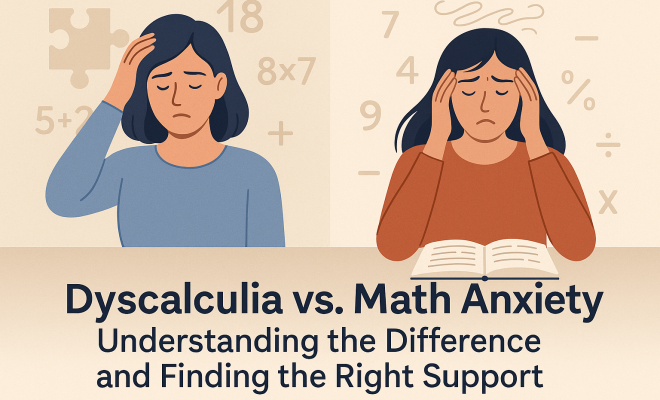
“Dyscalculia vs. Math Anxiety: Understanding the Difference and Finding the Right Support”
“`html
Understanding the difference between dyscalculia vs math anxiety is crucial for students, teachers, and parents alike. While both conditions can severely impact a person’s ability to engage with mathematics, they stem from different causes and require different approaches for support. In this article, we’ll delve into ten essential insights that will help clarify these differences and highlight effective strategies for overcoming their challenges.
1. Defining Dyscalculia: The Learning Disorder
Dyscalculia is a specific learning disability that affects an individual’s ability to understand numbers and perform mathematical operations. It’s not merely a symptom of poor teaching or a lack of practice; rather, it’s a neurological condition that can affect a person’s cognitive processes related to math. Estimates suggest that dyscalculia affects around 3-7% of the population, making it a significant issue in educational settings.
Individuals with dyscalculia may struggle with basic math concepts, such as number sense, counting, and understanding mathematical symbols. They might find it challenging to perform even simple calculations or to grasp more advanced concepts. This difficulty often leads to a lack of confidence in their math abilities, resulting in a negative cycle of frustration and avoidance.
2. Understanding Math Anxiety: The Emotional Response
In contrast, math anxiety is a psychological phenomenon that manifests as feelings of tension, apprehension, and fear when dealing with math-related tasks. While anyone can experience math anxiety, it often stems from negative experiences with math in the past, societal pressures, or the belief that one is “bad at math.” Research indicates that up to 50% of students experience some form of math anxiety, impacting their performance and participation in math classes.
Math anxiety can lead to physical symptoms such as sweating, increased heart rate, and even panic attacks. Students may avoid taking advanced math courses or participating in class discussions because of their fear of being judged or failing. This anxiety can perpetuate the cycle of poor performance in math, further reinforcing their negative beliefs about their abilities.
3. Key Differences in Identification: Recognizing the Signs
Identifying dyscalculia and math anxiety requires different approaches. For dyscalculia, specific diagnostic assessments are available, often conducted by educational psychologists or special education professionals. These assessments evaluate a range of cognitive skills related to numeracy and can help distinguish dyscalculia from other learning disabilities.
On the other hand, math anxiety is more subjective. It may be identified through self-reported surveys or questionnaires that assess emotional responses to math situations. Teachers and parents can often spot signs of math anxiety, such as reluctance to participate in math-related activities or a sudden drop in performance during tests.
4. Similarities in Impact: The Effects on Learning
While dyscalculia and math anxiety are distinct, they can have overlapping impacts on a student’s learning experience. Both can lead to a significant decrease in math performance and can contribute to a negative self-image. Students with either condition may develop a strong aversion to math, which can have long-lasting consequences on their academic paths and future opportunities.
Moreover, the stress from either condition can result in a loss of motivation to engage with math altogether, leading to further academic struggles. For educators, recognizing that both conditions require tailored support is essential for fostering a positive learning environment.
5. Proven Strategies for Support: Helping Students Cope
Supporting students with dyscalculia involves targeted interventions and accommodations. This may include using visual aids, manipulatives, or technology to help them grasp mathematical concepts. Encouraging a growth mindset can also be beneficial, as it helps students understand that ability in math can improve with effort and practice.
For students dealing with math anxiety, strategies might focus on reducing stress in the classroom. Techniques such as mindfulness, relaxation exercises, or even modifying test formats can help ease students’ apprehension. Building a supportive classroom culture where mistakes are viewed as learning opportunities can also significantly reduce anxiety levels. (See: Understanding dyscalculia from NIH.)
6. Role of Educators: Creating an Inclusive Environment
Educators play a pivotal role in addressing both dyscalculia and math anxiety. They should be trained to recognize the signs of these challenges and implement evidence-based practices tailored to individual needs. Professional development opportunities that focus on differentiated instruction can empower teachers to better support all students.
Additionally, fostering open communication with students about their struggles can create a safe space for them to discuss their difficulties. Encouraging students to express their feelings about math can help educators devise personalized strategies to mitigate both dyscalculia and anxiety.
7. The Importance of Early Intervention: Catching Issues Early
Research underscores the importance of early identification and intervention for students with dyscalculia or math anxiety. Early support can lead to better outcomes and help prevent the escalation of difficulties. Schools should implement screening processes to identify students at risk of dyscalculia or experiencing severe math anxiety.
By providing appropriate interventions and support from a young age, educators can help build a solid foundation in math skills. This proactive approach not only enhances students’ math abilities but also boosts their confidence, reducing the likelihood of developing negative feelings toward math.
8. Involving Parents: The Home-School Connection
Parents play a critical role in supporting children with dyscalculia and math anxiety. Open communication between parents and teachers is essential to create a cohesive support system. Parents should be informed about their child’s challenges and share insights about their experiences with math at home.
Additionally, parents can reinforce positive attitudes toward math through everyday activities, such as cooking or shopping, where math is naturally integrated. Encouraging problem-solving in a low-pressure environment can help mitigate anxiety and boost confidence in mathematical abilities.
9. Resources and Tools: Finding the Right Support
There are numerous resources available to assist individuals with dyscalculia and math anxiety. Online platforms offer engaging tools and games that target specific math skills through interactive learning. Many organizations also provide support groups, webinars, and workshops for parents and educators to better understand and address these challenges.
Moreover, educational apps designed for students with learning disabilities can provide personalized practice and feedback. Utilizing technology can create a more engaging learning experience and make it easier for students to connect with math concepts.
10. Looking Ahead: A Path to Understanding and Support
As we continue to explore the distinctions between dyscalculia vs math anxiety, it becomes apparent that awareness and understanding are vital. By recognizing the differences in how these challenges present themselves and the specific needs of individuals affected by them, we can create better support systems in our schools.
Continuous research into both conditions will help educators and parents refine their approaches, ensuring that every student has the opportunity to succeed in mathematics. By fostering a compassionate and informed educational environment, we can help reshape the narrative surrounding math difficulties, transforming fear into confidence and enabling all students to thrive.
11. Statistics and Impact of Dyscalculia vs Math Anxiety
To better understand the prevalence and impact of dyscalculia and math anxiety, let’s dive into some statistics. Studies indicate that dyscalculia affects approximately 5-7% of school-aged children, with many individuals remaining undiagnosed and unsupported throughout their educational journey. In contrast, research shows that nearly 60% of students report experiencing some degree of math anxiety during their schooling.
Moreover, the consequences of both conditions can be profound. A study conducted by the University of Chicago found that students with math anxiety performed significantly worse in tests compared to their peers without anxiety, even when they had similar abilities. In terms of dyscalculia, early intervention can decrease long-term academic struggles, suggesting that targeted support can lead to improved outcomes for students marked by this learning disability.
12. Expert Perspectives: Voices from the Field
Experts in education and psychology emphasize the importance of recognizing the differences between dyscalculia and math anxiety. Dr. Linda L. H. Smith, a renowned educational psychologist, argues that “understanding the root causes of a student’s struggles with math can lead to more effective teaching strategies.” She highlights the risk of misdiagnosing math anxiety as dyscalculia, which can lead to inappropriate interventions. (See: CDC resources on youth mental health.)
Additionally, Dr. Tom Wilson, a specialist in learning disabilities, notes, “While math anxiety can be addressed through emotional and psychological techniques, dyscalculia requires a more specialized approach focusing on cognitive skills development.” These perspectives underscore the need for tailored interventions that consider the unique challenges posed by each condition.
13. Comparative Analysis: Dyscalculia vs Math Anxiety
When comparing dyscalculia and math anxiety, it’s crucial to note their different natures. Dyscalculia is an inherent cognitive condition that affects mathematical understanding from a neurological standpoint. In contrast, math anxiety is primarily an emotional response that can be influenced by external factors, such as teaching quality and personal experiences.
Understanding these differences can help educators develop specific strategies suited for each condition. For instance, a student with dyscalculia may benefit from intensive, structured interventions that focus on building foundational math skills, while a student with math anxiety may respond better to relaxation techniques, positive reinforcement, and a supportive classroom environment.
14. Frequently Asked Questions (FAQs)
What is the difference between dyscalculia and math anxiety?
Dyscalculia is a learning disability that affects a person’s ability to understand and manipulate numbers, while math anxiety is an emotional response characterized by fear and apprehension towards math tasks. They require different approaches for remediation.
How can parents help their children with dyscalculia?
Parents can support children with dyscalculia by practicing math skills in everyday situations, using visual aids, and encouraging a positive mindset about math. Engaging in activities that promote number sense, such as cooking or playing math games, can be beneficial.
What are some strategies for overcoming math anxiety in students?
Strategies for overcoming math anxiety include teaching relaxation techniques, creating a supportive classroom environment, and encouraging a growth mindset. Providing opportunities for students to practice math in low-pressure settings can also help build confidence.
Can dyscalculia be diagnosed in adults?
Yes, dyscalculia can be diagnosed in adults. Many people remain undiagnosed throughout their childhood and may only realize their difficulties with math later in life. Adult assessments can help provide strategies for managing challenges in professional and personal settings.
Is there a relationship between dyscalculia and other learning disabilities?
Yes, dyscalculia can co-occur with other learning disabilities, such as dyslexia or ADHD. It’s important to evaluate each individual’s needs comprehensively to ensure that all challenges are addressed effectively.
Are there specific tools or resources for teachers to assist students with dyscalculia or math anxiety?
Many educational resources are available, including specialized teaching materials, online platforms, and professional development workshops focused on supporting students with dyscalculia and math anxiety. Collaborating with special education professionals can also provide valuable insights and strategies.
How can educators create a positive math learning environment?
Educators can create a positive learning environment by emphasizing growth, encouraging collaboration among students, and normalizing mistakes as part of the learning process. Promoting a culture of support and understanding can significantly reduce anxiety and improve overall math participation.
15. The Role of Technology in Addressing Dyscalculia and Math Anxiety
In recent years, technology has emerged as a powerful ally in the battle against both dyscalculia and math anxiety. Educational apps and online platforms incorporate interactive and engaging ways to learn math concepts. These tools often provide immediate feedback and personalized learning paths suited for individual needs, which can be particularly beneficial for students who struggle with traditional methods of instruction.
For instance, some apps focus on visual learning, using graphics and animations to explain mathematical ideas that might seem abstract or intimidating. This aligns perfectly with the needs of students with dyscalculia, who may benefit from visual representations of problems. On the other hand, interactive games can help alleviate math anxiety by turning learning into a fun and enjoyable experience. By reducing the pressure associated with learning math, students may feel more comfortable exploring challenging concepts.
Moreover, online math tutoring services are becoming increasingly popular, allowing students to receive support in a more relaxed environment. These platforms can connect students with tutors specializing in both dyscalculia and math anxiety, ensuring they receive the right kind of help tailored to their specific needs.
16. Success Stories: Overcoming Dyscalculia and Math Anxiety
A number of success stories highlight the transformative effect that understanding and support can have on students with dyscalculia and math anxiety. For example, a young boy named Liam struggled with number operations and consistently failed to meet grade-level expectations. After being diagnosed with dyscalculia, his school implemented a comprehensive support plan that included specialized tutoring and the use of manipulatives. Within a year, Liam’s confidence improved significantly, and he was able to perform basic calculations with ease.
Similarly, a high school student named Emma frequently experienced anxiety during math exams, which impacted her overall academic performance. After attending therapy sessions focused on cognitive-behavioral techniques, she learned how to manage her anxiety effectively. Emma also began participating in study groups where she practiced math in a supportive setting. This combination of therapy and peer support enabled her to not only pass her math class but also develop a newfound appreciation for the subject.
These stories remind us that with the appropriate support structures in place, students can overcome hurdles related to dyscalculia and math anxiety, moving toward a more positive relationship with mathematics.
17. Future Directions: Research and Advocacy
The future of addressing dyscalculia and math anxiety involves ongoing research and advocacy. Understanding the neurological underpinnings of dyscalculia can lead to more effective teaching methodologies and interventions. Meanwhile, greater awareness of math anxiety in educational settings can drive systemic changes in how math is taught and assessed.
Advocacy groups are also playing a crucial role in raising awareness about both dyscalculia and math anxiety. They aim to disseminate information regarding best practices for educators and parents alike, creating a more informed community. As awareness grows, so does the potential to improve educational resources, training, and policies that support students struggling with these challenges.
By continuing to invest in research and advocacy, we can ensure that students with dyscalculia and math anxiety receive the necessary support to thrive academically and develop a positive outlook on mathematics.
“`
Trending Now
Frequently Asked Questions
What is the difference between dyscalculia and math anxiety?
Dyscalculia is a specific learning disability affecting a person's ability to understand numbers and perform math operations, while math anxiety is an emotional response characterized by fear and apprehension towards math tasks. Dyscalculia is a neurological condition, whereas math anxiety often arises from negative experiences or societal pressures.
How can you identify dyscalculia in students?
Dyscalculia can be identified through difficulties in basic math concepts, such as number sense, counting, and understanding mathematical symbols. Students may struggle with calculations and experience a lack of confidence in their math abilities, leading to frustration and avoidance of math-related tasks.
What are the symptoms of math anxiety?
Symptoms of math anxiety include feelings of tension, apprehension, and fear when faced with math tasks. Physical symptoms may also manifest, such as sweating, increased heart rate, and even panic attacks, which can significantly impact a student's performance and participation in math classes.
How can students with dyscalculia be supported?
Students with dyscalculia can be supported through individualized instruction, using visual aids, manipulatives, and alternative teaching methods tailored to their learning needs. It's essential to foster a supportive environment that encourages practice and builds confidence in their math skills.
What strategies can help reduce math anxiety?
To reduce math anxiety, students can benefit from relaxation techniques, positive reinforcement, and a supportive learning environment. Building a growth mindset, practicing math in a low-pressure setting, and addressing negative past experiences can also help alleviate anxiety related to math tasks.
Have you experienced this yourself? We’d love to hear your story in the comments.