The Edvocate

Top Menu

Main Menu

  • Start Here
    • Our Brands
    • Governance
      • Lynch Education Consulting, LLC.
      • Dr. Lynch’s Personal Website
      • Careers
    • Write For Us
    • Books
    • The Tech Edvocate Product Guide
    • Contact Us
    • The Edvocate Podcast
    • Edupedia
    • Pedagogue
    • Terms and Conditions
    • Privacy Policy
  • PreK-12
    • Assessment
    • Assistive Technology
    • Best PreK-12 Schools in America
    • Child Development
    • Classroom Management
    • Early Childhood
    • EdTech & Innovation
    • Education Leadership
    • Equity
    • First Year Teachers
    • Gifted and Talented Education
    • Special Education
    • Parental Involvement
    • Policy & Reform
    • Teachers
  • Higher Ed
    • Best Colleges and Universities
    • Best College and University Programs
    • HBCU’s
    • Diversity
    • Higher Education EdTech
    • Higher Education
    • International Education
  • Advertise
  • The Tech Edvocate Awards
    • The Awards Process
    • Finalists and Winners of The 2026 Tech Edvocate Awards
    • Finalists and Winners of The 2025 Tech Edvocate Awards
    • Finalists and Winners of The 2024 Tech Edvocate Awards
    • Finalists and Winners of The 2023 Tech Edvocate Awards
    • Finalists and Winners of The 2021 Tech Edvocate Awards
    • Finalists and Winners of The 2022 Tech Edvocate Awards
    • Finalists and Winners of The 2020 Tech Edvocate Awards
    • Finalists and Winners of The 2019 Tech Edvocate Awards
    • Finalists and Winners of The 2018 Tech Edvocate Awards
    • Finalists and Winners of The 2017 Tech Edvocate Awards
    • Award Seals
  • Apps
    • GPA Calculator for College
    • GPA Calculator for High School
    • Cumulative GPA Calculator
    • Grade Calculator
    • Weighted Grade Calculator
    • Final Grade Calculator
  • The Tech Edvocate
  • Post a Job
  • AI Powered Personal Tutor

logo

The Edvocate

  • Start Here
    • Our Brands
    • Governance
      • Lynch Education Consulting, LLC.
      • Dr. Lynch’s Personal Website
        • My Speaking Page
      • Careers
    • Write For Us
    • Books
    • The Tech Edvocate Product Guide
    • Contact Us
    • The Edvocate Podcast
    • Edupedia
    • Pedagogue
    • Terms and Conditions
    • Privacy Policy
  • PreK-12
    • Assessment
    • Assistive Technology
    • Best PreK-12 Schools in America
    • Child Development
    • Classroom Management
    • Early Childhood
    • EdTech & Innovation
    • Education Leadership
    • Equity
    • First Year Teachers
    • Gifted and Talented Education
    • Special Education
    • Parental Involvement
    • Policy & Reform
    • Teachers
  • Higher Ed
    • Best Colleges and Universities
    • Best College and University Programs
    • HBCU’s
    • Diversity
    • Higher Education EdTech
    • Higher Education
    • International Education
  • Advertise
  • The Tech Edvocate Awards
    • The Awards Process
    • Finalists and Winners of The 2026 Tech Edvocate Awards
    • Finalists and Winners of The 2025 Tech Edvocate Awards
    • Finalists and Winners of The 2024 Tech Edvocate Awards
    • Finalists and Winners of The 2023 Tech Edvocate Awards
    • Finalists and Winners of The 2021 Tech Edvocate Awards
    • Finalists and Winners of The 2022 Tech Edvocate Awards
    • Finalists and Winners of The 2020 Tech Edvocate Awards
    • Finalists and Winners of The 2019 Tech Edvocate Awards
    • Finalists and Winners of The 2018 Tech Edvocate Awards
    • Finalists and Winners of The 2017 Tech Edvocate Awards
    • Award Seals
  • Apps
    • GPA Calculator for College
    • GPA Calculator for High School
    • Cumulative GPA Calculator
    • Grade Calculator
    • Weighted Grade Calculator
    • Final Grade Calculator
  • The Tech Edvocate
  • Post a Job
  • AI Powered Personal Tutor
  • The Brutal Truth About Shaken Baby Syndrome: What Every Parent Needs to Know Now

  • Baffling Demand: Moms for Liberty Co-Founder Calls for ‘Political Warning’ on Ms. Rachel’s Toddler Shows

  • Unbelievable: Major School Districts Just Banned AI, and Here’s Why You Should Care

  • The Shocking Truth About Your New Student Loan Repayment Plan

  • Bridging the Gap: Navigating the Growing Challenges of Neurodiversity Support in Schools

  • How School Districts Are Rethinking Contracts for Goods and Services

  • Mind-Blowing: These 7 AI Apps Are Quietly Reshaping Kids’ Learning

  • Heartbreaking: How Unaffordable Healthcare Forces Mothers to Sacrifice Their Own Well-being

  • The Staggering Truth About Child Care Costs — And How One Bill Could Finally Offer Relief

  • Harvard Study’s Troubling Discovery: Could AI Tutoring Make Universities Obsolete?

Early ChildhoodK-12Reading & LiteracyReading Education
Home›Early Childhood›Using Picture Walks to Motivate Students to Read

Using Picture Walks to Motivate Students to Read

By Matthew Lynch
April 9, 2021
0
Spread the love

Picture walks are an activity that is completed before reading occurs. The reader views the pictures of the story and predicts what they think is occurring. This activates prior knowledge and gives reading a direction.

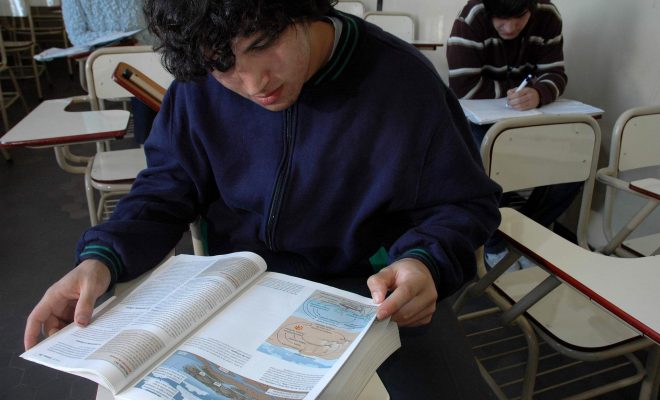
Book or picture walks are shared reading activities with the educator before reading new or unfamiliar text and involve the educator “walking” through the text with learners. During this time, text and graphic features are identified and discussed. Picture walks involve pointing out photographs or illustrations in a story to preview or introduce it prior to reading. Book walks involve studying the front and back covers, table of contents, a sample of pages, headings or bolded info, and illustrations in a text.

Book or picture walks spark learners’ interest and give learners a chance to begin thinking about or anticipate the story while making connections. Picture walks can help a learner connect the visual images in the story to their experiences and activate prior knowledge. This sets the purpose for reading, and learners can make predictions about what might happen in the story.

 As learners make predictions, make connections, and set purpose, comprehension of the story is increased. Students focus on the illustrations on the covers and throughout the story during a picture walk. Learners explain what they see in the pictures and often answer who, what, where, when, and why questions related to the images. Learners then predict what they think the story will be about. Learners might also read a sample of pages before making predictions.

Visual Representations

In this video to the right, an educator does a book walk with learners before reading a book about birds. For this book walk, the educator focuses on headings, table of contents, the glossary, and captions. At each of the focus points, they stop and ask learners questions or describe each part. A book walk also helps learners understand the structure of a book. In this video, learners are engaged throughout the entire process because the educator is asking questions. The questions are a type of formative assessment.

Content Area Examples

History- To adapt a picture walk to a history lesson, the educator can concentrate on dates that are bolded or that stick out. Dates are essential in history, so learners who pay attention to them might be likely to remember that important date. Focusing on dates might also let the learner predict what happens on those specific dates.

Art- Book walks can be adapted to other subjects.  When the educator starts a new unit, they might have a few books to introduce what the learners will be working on for the week.  The educator might do a book walk, talk about the title, and discuss a new skill. The educator might also go through the book and show the learners some pictures. This will let the learners have some background knowledge of what they will be creating in art class. After the educator goes through the book walk, they might have the learners read the book to know what they will be creating. 

Math- To adapt a picture walk for a math lesson, the educator can have the learners skim through a math unit and focus on vocabulary words that are bolded or concentrate on anything that may stand out.  The educator can then have the learners come together as a class and discuss the new vocabulary words and images. This would be a helpful strategy for each learner to clarify any unknown words or confusion.

Reading- A picture walk is an excellent strategy to use for a reading lesson. At the beginning of the unit, the educator might want to introduce a new book by first doing a picture walk. This allows the learners to talk about the book and make inferences about the story.  Learners can make inferences by looking at the pictures or any words that may stand out.

Previous Article

2023 Best Bachelor’s Degree Programs in Risk ...

Next Article

The Most Popular College Applications Today

Matthew Lynch

Related articles More from author

  • AssessmentK-12Learning Strategies, Tactics, and Methods

    The Edvocate’s Guide to Cut-Off Scores

    April 24, 2021
    By Matthew Lynch
  • K-12PreK-12

    20 of Our Favorite Kids’ Books About Camping

    July 25, 2022
    By Matthew Lynch
  • Critical Thinking and CreativityK-12Memory

    How to Unlock the Power of Visual Memory

    May 27, 2021
    By Matthew Lynch
  • Child DevelopmentCritical Thinking and CreativityEarly ChildhoodK-12Parental InvolvementPsychology and Education

    How to Teach Kids with Interpersonal Intelligence

    March 18, 2021
    By Matthew Lynch
  • K-12Teaching Strategies, Tactics, and Methods

    19 Hacks for Teaching Kids to Spell

    July 29, 2021
    By Matthew Lynch
  • Education LeadershipK-12Math EducationTeachers

    24 Effective Ways to Teach Addition Problem-Solving

    November 17, 2021
    By Matthew Lynch

Search

Registration and Login

  • Log in
  • Entries feed
  • Comments feed
  • WordPress.org

Newsletter

Signup for The Edvocate Newsletter and have the latest in P-20 education news and opinion delivered to your email address!

RSS feed: Matthew on Education Week Matthew on Education Week

  • Au Revoir from Education Futures November 20, 2018 Matthew Lynch
  • 6 Steps to Data-Driven Literacy Instruction October 17, 2018 Matthew Lynch
  • Four Keys to a Modern IT Approach in K-12 Schools October 2, 2018 Matthew Lynch
  • What's the Difference Between Burnout and Demoralization, and What Can Teachers Do About It? September 27, 2018 Matthew Lynch
  • Revisiting Using Edtech for Bullying and Suicide Prevention September 10, 2018 Matthew Lynch

About Us

The Edvocate was created in 2014 to argue for shifts in education policy and organization in order to enhance the quality of education and the opportunities for learning afforded to P-20 students in America. What we envisage may not be the most straightforward or the most conventional ideas. We call for a relatively radical and certainly quite comprehensive reorganization of America’s P-20 system.

That reorganization, though, and the underlying effort, will have much to do with reviving the American education system, and reviving a national love of learning.  The Edvocate plans to be one of key architects of this revival, as it continues to advocate for education reform, equity, and innovation.

Newsletter

Signup for The Edvocate Newsletter and have the latest in P-20 education news and opinion delivered to your email address!

Contact

The Edvocate
910 Goddin Street
Richmond, VA 23230
(601) 630-5238
[email protected]
  • situs togel online
  • dentoto
  • situs toto 4d
  • situs toto slot
  • toto slot 4d
Copyright (c) 2026 Matthew Lynch. All rights reserved.