Maldives GST Foreign Travel: The Astonishing Reversal That Just Saved Your Luxury Vacation
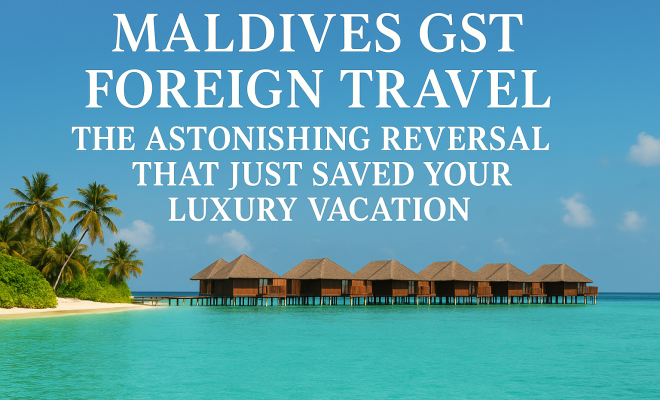
Imagine planning that dream escape to the Maldives – those iconic overwater bungalows, the crystal-clear turquoise waters, the unparalleled luxury. You’ve meticulously budgeted, perhaps even splurged a little, because, let’s be honest, it’s a once-in-a-lifetime kind of trip for many. Then, out of the blue, a new tax threatens to add a significant chunk to your carefully calculated costs. That’s precisely the scenario that unfolded recently, as the Maldivian government initially introduced, then astonishingly reversed, a controversial 17% Goods and Services Tax (GST) on foreign travel operators. This isn’t just bureaucratic maneuvering; it’s a policy pivot with real-world implications for anyone dreaming of those idyllic island getaways.
The story of the Maldives GST foreign travel saga is a fascinating case study in rapid policy shifts, industry pressure, and the delicate balance of a tourism-dependent economy. For a brief, tense period, it looked like your luxury vacation might become significantly more expensive, or at the very least, a lot more complicated to book. But in a move that surprised many, President Dr. Mohamed Muizzu’s administration quickly moved to scrap the tax, less than a month after its implementation. This reversal is a huge win for travelers and the global tourism industry alike, but it also highlights the precarious nature of international travel policy.
The Short-Lived Reign of the 17% Maldives GST on Foreign Travel
Let’s rewind a bit to understand the timeline here. The controversial 17% Goods and Services Tax (GST) was specifically aimed at offshore companies – think those big international booking platforms, global travel agencies, and foreign tour operators – that offer tourism services linked directly to the Maldives. This wasn’t a tax on the resorts themselves, nor directly on the consumer at the point of sale in the Maldives, but rather on the intermediaries that facilitate so much of the world’s travel bookings. The idea was to capture revenue from these overseas entities, which often operate with different tax structures than local businesses.
The legislation for this tax was officially ratified by President Dr. Mohamed Muizzu in late August, and it was slated to become effective on October 1st. So, for a few weeks, anyone booking a Maldivian holiday through an international platform was potentially looking at an additional 17% cost. Imagine the headache for travel agents and tour operators who had already locked in prices for clients months in advance! This wasn’t just a minor tweak; it was a substantial financial hit that could easily add hundreds, if not thousands, of dollars to a high-end luxury trip.
The Immediate Backlash: Why Everyone Hated the Tax
You can probably guess what happened next. The moment this tax was announced, it hit the travel industry like a monsoon. The backlash wasn’t just significant; it was immediate and widespread. It wasn’t just a few disgruntled tourists complaining on social media, though there was plenty of that too. This was a full-blown industry revolt, coming from both local Maldivian tourism operators and powerful international travel groups.
Local operators were rightly concerned that this tax would make the Maldives less competitive compared to other luxury destinations that don’t impose such levies. They feared a dip in bookings, which for an economy so heavily reliant on tourism, is truly catastrophic. On the international front, the response was even more forceful. Reports quickly emerged that major European tour operator associations were not just unhappy, but they were threatening to completely cease their promotional efforts for the Maldives if the tax remained in force. That’s a serious threat. These associations represent thousands of travel agencies and tour operators, and their promotional efforts are absolutely vital in driving bookings to a destination like the Maldives. Losing that marketing muscle would be a devastating blow.
President Muizzu’s Rapid U-Turn: Acknowledging the Damage
So, what prompted such a swift and decisive policy reversal? It rarely happens that a government implements a significant tax and then scraps it less than a month later. Well, the pressure was clearly immense and effective. Tourism Minister Mohamed Ameen played a crucial role, confirming that President Muizzu had agreed to reverse the legislation. This wasn’t a slow, drawn-out process of consultation and debate; it was an urgent response to an escalating crisis.
The minister’s confirmation underscored that the administration understood the depth of the concern. The tax had created considerable confusion, not just among travelers but within the industry itself. There was genuine worry about potential additional costs filtering down to consumers, making the Maldives less attractive, and the administrative nightmare of implementing and collecting such a tax from a global network of operators. When you see major industry players threatening to pull their support, it’s a clear signal that the policy is doing more harm than good, and President Muizzu’s administration clearly listened to those warnings.
Why This Reversal Matters for Your Next Maldivian Getaway
If you’re eyeing a trip to the Maldives, this reversal is excellent news. It means you can go back to planning your luxury escape without the added headache or potential sticker shock of that extra 17% GST. Think about it: on a trip that might easily cost you $10,000 or more, an additional 17% would have tacked on an extra $1,700. That’s not pocket change; that’s enough for extra excursions, a few more gourmet meals, or even an upgrade to a slightly more opulent villa.
The swift action by the Maldivian government demonstrates a strong commitment to maintaining the country’s appeal as a premier luxury travel destination. It sends a clear message to the international travel industry and potential visitors: the Maldives values its tourism sector and is responsive to concerns that could jeopardize it. This stability is incredibly important for consumer confidence and for tour operators who need predictability when planning and pricing packages for the future. The Maldives GST foreign travel issue, though brief, served as a stark reminder of how quickly travel costs can change.
The Economic Lifeline: Tourism’s Indispensable Role
It’s impossible to overstate just how vital tourism is to the Maldivian economy. We’re not talking about a supplementary industry here; it’s the absolute backbone of the nation. The country’s pristine natural beauty, particularly its coral reefs and marine life, combined with world-class hospitality, has made it a magnet for high-spending travelers. From the moment you land at Velana International Airport, you see the infrastructure built around tourism: the speedboats, seaplanes, and luxury yachts waiting to whisk guests away to their island paradises. (See: Tourism in the Maldives.)
The revenue generated from tourism directly supports countless local jobs, funds public services, and drives economic development across the archipelago. Any policy that threatens to diminish this revenue stream is immediately met with intense scrutiny, and rightly so. The threat from European tour operators wasn’t just about lost commissions; it was about the potential for a significant drop in tourist arrivals, which would ripple through every sector of the Maldivian economy, from local fishermen supplying resorts to small businesses providing excursions and souvenirs.
Understanding the Broader Implications for Global Travel Policy
This whole episode surrounding the Maldives GST foreign travel tax offers some interesting lessons for other tourism-dependent nations and the global travel industry at large. It highlights the intricate dance between governments seeking to maximize revenue and an industry that operates on razor-thin margins and fierce competition. When a destination imposes a tax on foreign operators, it’s often an attempt to level the playing field or capture a share of profits that might otherwise flow entirely overseas. For more context, see Unprecedented Student Loan Forgiveness Plan.
However, the rapid reversal in the Maldives demonstrates that such policies can quickly backfire if not carefully considered. The administrative burden, the potential for price increases, and the risk of alienating key distribution channels (like those powerful tour operator associations) can outweigh any perceived benefits. It’s a delicate balance, and often, simplicity and predictability are valued much more highly by the industry than attempts to introduce complex new levies. Other nations contemplating similar taxes would do well to study this Maldivian example.
What This Means for the Future of Maldives Travel
With the 17% GST now off the table, the future of Maldives travel looks much brighter and more stable. The immediate threat of increased costs and booking complications has been averted, which is a huge relief for both travelers and the industry. This quick action by President Muizzu’s administration reinforces the Maldives’ reputation as a destination that understands and prioritizes its tourism sector.
We can expect to see continued robust promotional efforts from international tour operators, and travelers can book their dream trips with confidence, knowing that the price they see is likely the price they’ll pay (barring standard currency fluctuations or other pre-existing taxes). This stability is crucial for long-term planning and investment in the tourism sector, ensuring that the Maldives remains a top-tier luxury destination for years to come. The Maldives GST foreign travel scare, while brief, certainly got everyone’s attention.
The Competitive Landscape: Maldives vs. Other Luxury Destinations
Let’s face it, the Maldives isn’t the only game in town when it comes to luxury tropical getaways. Destinations like Bora Bora, Fiji, Seychelles, and even certain parts of the Caribbean offer similar levels of exclusivity, stunning natural beauty, and high-end service. These destinations are constantly vying for the attention and wallets of affluent travelers. This competitive landscape is precisely why the 17% Maldives GST foreign travel tax was such a dangerous proposition.
Even a slight increase in price or perceived complexity can cause travelers to pivot to an alternative. When you’re spending a significant amount of money on a vacation, you want the experience to be seamless and straightforward. Any additional hurdle, especially a substantial tax, could easily push a potential visitor towards a competitor. The swift reversal by the Maldivian government clearly signals their understanding of this fierce competition and their commitment to remaining a top choice for luxury travelers worldwide.
Planning Your Perfect Maldives Getaway Post-Tax Reversal
Now that the dust has settled on the Maldives GST foreign travel debate, it’s a perfect time to start planning that unforgettable trip. With the reassurance that your bookings through overseas operators won’t be hit with an unexpected 17% surcharge, you can focus on the fun parts: choosing your resort, deciding between a beach villa or an overwater bungalow, and dreaming of those incredible sunsets.
When you’re ready to book, remember to compare prices across various platforms. While the tax on foreign operators is gone, different booking sites and travel agencies might still offer varying rates, package deals, or exclusive perks. Consider using a reputable travel agent who specializes in luxury destinations; they often have access to deals or amenities you might not find on your own. And always, always consider travel insurance. For a trip of this magnitude, it’s an absolute must-have to protect your investment against unforeseen circumstances. This quick policy turnaround just underscores how quickly things can change in the world of travel.
The brief saga of the 17% Maldives GST on foreign travel operators is a testament to the power of industry advocacy and the responsiveness of governments in tourism-dependent economies. While the tax was short-lived, its impact served as a powerful reminder of how interconnected global travel is and how quickly policy decisions can reverberate across continents. For anyone dreaming of those pristine Maldivian beaches, rest easy – your luxury escape is back on track, free from this particular fiscal hurdle.
Local Impact: Beyond Just Tourist Dollars
While the immediate concern of the 17% Maldives GST foreign travel tax was its effect on international bookings and government revenue, it’s crucial to consider the ripple effect on local Maldivian communities. The tourism industry isn’t just about luxury resorts; it’s a complex ecosystem. Think about the small businesses that supply fresh produce to resorts, the local boat captains offering excursions, the artisans selling handicrafts, and the staff working in various capacities – from housekeepers to chefs, diving instructors to spa therapists.
A significant downturn in tourism, even a projected one, sends shivers through these communities. Job security becomes a concern, local entrepreneurs face reduced demand, and the overall economic stability of the islands is threatened. The Maldivian government’s quick reversal wasn’t just about appeasing foreign tour operators; it was also a critical move to protect the livelihoods of its own citizens. It showed an understanding that a thriving tourism sector directly translates to a thriving local economy, supporting families and fueling development in ways that go far beyond the initial booking revenue. This interconnectedness is a powerful reason why such policy decisions require careful consideration of all stakeholders. (See: CDC travel information for Maldives.)
The Role of Digital Platforms and OTAs
The proposed 17% GST on foreign travel operators specifically targeted “offshore companies.” In today’s travel landscape, this largely means Online Travel Agencies (OTAs) like Expedia, Booking.com, and Agoda, as well as global tour operators that aggregate various services into packages. These digital platforms have revolutionized how people discover and book travel. They offer unparalleled reach, allowing destinations like the Maldives to be marketed to millions of potential travelers worldwide instantly.
While these platforms provide immense value by connecting travelers with destinations, they also operate under different tax jurisdictions than local businesses. Governments often grapple with how to fairly tax the revenue generated by these global digital giants within their borders. The Maldives’ attempt to levy a GST on these entities was an effort to capture a share of that value. However, the rapid backlash demonstrated that taxing these intermediaries can be tricky. OTAs and large tour operators have significant market power and can easily deprioritize a destination or pass costs directly to consumers, making the destination less attractive. This episode highlights the ongoing challenge for governments worldwide: how to tax the digital economy effectively without stifling the very channels that drive economic activity. For more context, see Baffling OSAP Pause for Private Colleges.
Expert Perspectives: What Industry Leaders Said
While the initial news of the Maldives GST foreign travel tax caused widespread alarm, hearing directly from industry leaders helps us understand the depth of the concern. Major figures in European travel associations, for example, voiced strong opposition, not just to the tax itself but to the sudden implementation. They argued that such a significant levy, introduced without ample warning or consultation, created immense logistical challenges and undermined existing contractual agreements.
One prominent European travel association spokesperson reportedly stated that the tax would make the Maldives “uncompetitive” and that their members would “struggle to promote a destination where prices could suddenly jump by nearly a fifth.” This isn’t just rhetoric; these organizations wield significant influence over booking trends. When they advise their extensive networks of travel agents to reconsider promoting a destination, it has real-world consequences. Their unified voice, representing thousands of businesses and millions of potential travelers, played a pivotal role in signaling to the Maldivian government the severity of the situation. Their swift and coordinated response demonstrated the collective power of the global travel industry when faced with policies they deem detrimental.
Historical Context: Previous Tax Adjustments in the Maldives
It’s worth noting that this isn’t the first time the Maldives has adjusted its tax structure within the tourism sector. The country has a history of refining its revenue collection methods to keep pace with economic needs and industry changes. For instance, the original Tourism Goods and Services Tax (TGST) was introduced years ago, and its rate has been adjusted periodically. There’s also the Green Tax, a mandatory fee collected from tourists, which funds environmental protection and sustainable development initiatives.
These existing taxes are typically well-understood and integrated into the pricing models of resorts and tour operators. The key difference with the proposed 17% GST on foreign operators was its novel target and its sudden introduction. Previous tax adjustments have often been implemented with more lead time, allowing the industry to adapt. This historical context makes the swift reversal of the 17% tax even more remarkable, highlighting that this particular levy was seen as uniquely problematic and potentially disruptive, even by a government accustomed to managing tourism-related taxation.
Future-Proofing Maldives Tourism: Beyond Taxation
While the Maldives GST foreign travel tax scare has passed, the incident underscores the need for the Maldives to continually “future-proof” its tourism sector. This goes beyond just tax policy. It involves diversifying its offerings, investing in sustainable practices, and addressing potential long-term threats like climate change, which poses an existential threat to low-lying island nations. The Maldives is already a leader in luxury, but innovation is key.
This could mean exploring niche markets like wellness tourism, adventure travel (beyond diving), or cultural immersion experiences. It also means strengthening local businesses to ensure they benefit directly from tourism and are resilient to global economic shifts. Furthermore, investing in infrastructure that can withstand rising sea levels and promoting eco-friendly tourism practices are critical for the long-term viability of the industry. The government’s responsiveness to the tax issue suggests a broader commitment to ensuring the tourism sector remains robust and attractive for generations to come, adapting to challenges both economic and environmental.
Frequently Asked Questions (FAQ) about Maldives GST Foreign Travel
1. What was the 17% Maldives GST on foreign travel operators?
It was a Goods and Services Tax of 17% proposed by the Maldivian government, specifically targeting offshore companies like international booking platforms, global travel agencies, and foreign tour operators that facilitate tourism services to the Maldives. It was intended to capture revenue from these overseas entities.
2. When was this tax introduced and reversed?
The legislation for the tax was ratified in late August and was slated to become effective on October 1st. However, due to significant industry backlash, President Dr. Mohamed Muizzu’s administration quickly reversed the legislation less than a month after its initial implementation, effectively scrapping it before it could fully take hold. For more context, see This Is Why Your Canadian Paycheck Feels Worthless. (See: Reuters article on Maldives tax reversal.)
3. Who would have been affected by this tax?
Primarily, foreign travel operators and international booking platforms would have been directly taxed. Indirectly, travelers booking their Maldivian holidays through these channels would likely have seen increased prices, as operators would have passed on the additional cost. Local Maldivian businesses also feared a drop in bookings due to the Maldives becoming less competitive.
4. Why was the tax so controversial?
The tax was controversial for several reasons: its significant rate of 17%, the short notice of its implementation which created logistical nightmares for operators with pre-booked packages, and the fear that it would make the Maldives an uncompetitive and more expensive destination compared to other luxury travel spots. International tour operators threatened to cease promotional efforts for the Maldives if the tax remained.
5. Is the 17% GST on foreign travel operators still in effect?
No, the 17% Goods and Services Tax on foreign travel operators was officially reversed and scrapped by the Maldivian government. It is no longer in effect.
6. Are there any other taxes tourists should be aware of when visiting the Maldives?
Yes, tourists should be aware of existing taxes such as the Tourism Goods and Services Tax (TGST), which is applied to tourist accommodation and services (currently 16%), and the Green Tax, a mandatory fee collected from tourists (currently US$6 per person per night) which goes towards environmental protection.
7. How does this reversal impact the cost of my Maldives trip?
The reversal means that your bookings through foreign travel operators or international platforms will not be subject to an additional 17% surcharge. This helps keep prices more stable and predictable, making your luxury escape potentially more affordable than it would have been if the tax had remained.
8. What does this incident tell us about global travel policy?
This incident highlights the delicate balance governments must strike between generating revenue and maintaining a competitive tourism sector. It demonstrates the significant influence of the global travel industry and how rapid policy changes, especially those that increase costs without sufficient notice, can quickly lead to widespread backlash and even policy reversals.
9. Is it safe to book a Maldives trip now, given this policy uncertainty?
Yes, it is generally safe to book a Maldives trip. The quick reversal of the 17% GST demonstrates the Maldivian government’s strong commitment to its tourism sector and its responsiveness to industry concerns. This action helps ensure stability and predictability for travelers and tour operators.
Trending Now
Frequently Asked Questions
What is the Maldives GST on foreign travel?
The Maldives GST on foreign travel was a proposed 17% Goods and Services Tax aimed at offshore companies, including international booking platforms and travel agencies that provide tourism services related to the Maldives. This tax was intended to impact the intermediaries rather than the resorts or consumers directly.
Why was the Maldives GST on foreign travel reversed?
The Maldives GST on foreign travel was reversed due to significant industry pressure and concerns about its impact on tourism. The Maldivian government, led by President Dr. Mohamed Muizzu, scrapped the tax less than a month after its introduction, recognizing the importance of maintaining a competitive travel environment for luxury vacations.
How does the Maldives GST reversal affect travelers?
The reversal of the Maldives GST on foreign travel is a positive development for travelers, as it prevents potential increases in vacation costs and simplifies the booking process. This decision helps ensure that luxury vacations to the Maldives remain accessible and appealing to international tourists.
What are the implications of the Maldives GST policy change?
The implications of the Maldives GST policy change highlight the fragility of international travel regulations and the need for a balance in tourism-dependent economies. The quick reversal emphasizes the government's responsiveness to industry concerns, which is crucial for sustaining tourism and the local economy.
What should travelers know about planning a trip to the Maldives now?
Travelers planning a trip to the Maldives can proceed with confidence now that the 17% GST on foreign travel has been reversed. This means no added tax burden from international booking platforms, allowing for a smoother and potentially less expensive luxury vacation experience in this idyllic destination.
What's your take on this? Share your thoughts in the comments below — we read every one.