Jamaica’s Nightmare: Why Hurricane Melissa’s Recovery Is a Game-Changer for Disaster Aid
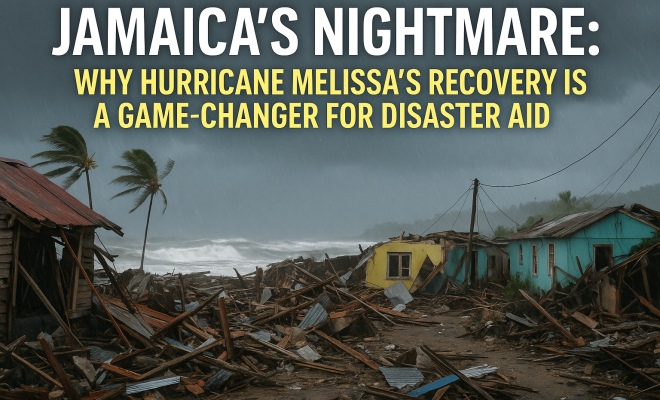
When you picture Jamaica, you probably imagine sun-drenched beaches, rhythmic reggae, and the kind of vibrant energy that just washes over you. It’s a paradise, right? A premier luxury travel destination that, for many, represents the ultimate escape. But beneath that idyllic surface, a different kind of story has been unfolding – one that’s far from a vacation dream. Nearly a year after Hurricane Melissa, a Category 5 storm, ripped through the island, leaving an estimated $12 billion in damage and dozens dead, Jamaica’s vital tourism sector is in a full-blown crisis. You see, the Hurricane Melissa recovery compared to other storms is proving to be a stark, even alarming, departure from past experiences, and it’s raising serious questions about how we approach disaster aid and insurance in the face of increasingly powerful natural events.
Tourism isn’t just a part of Jamaica’s economy; it is a huge chunk of it, accounting for up to 35% of the GDP and employing a quarter of the workforce. When that sector falters, the entire island feels the tremor. As the crucial winter travel season approaches, the struggle to rebuild isn’t just about damaged resorts; it’s about livelihoods, national pride, and the very fabric of Jamaican society. This isn’t just another hurricane story; it’s a detailed look at how a perfect storm of natural disaster and financial entanglement can cripple a nation, forcing us to re-evaluate our preconceived notions of recovery.
1. Hurricane Gilbert (1988): A Swift, Though Devastating, Rebound
Think back to Hurricane Gilbert in 1988. Now, that was a monster of a storm – another Category 5, much like Melissa, that left widespread destruction across Jamaica. Homes were flattened, infrastructure was wrecked, and the initial outlook was bleak. However, if you look at the recovery trajectory, it tells a different tale. Within months, there was a palpable sense of progress. International aid poured in, and, crucially, insurance claims, while complex, were processed with relative efficiency.
Businesses, particularly in the tourism sector, were able to access the capital they needed to repair and reopen. There were challenges, absolutely, but the system, flawed as it might have been, largely functioned. The Jamaican spirit of resilience, combined with a more straightforward insurance landscape and robust international support, allowed the island to bounce back with a speed that, in hindsight, seems almost miraculous when you consider the current situation with Hurricane Melissa recovery compared to other storms. The lessons learned from Gilbert certainly informed subsequent disaster preparedness, but perhaps not the financial mechanisms that underpin recovery.
2. Hurricane Ivan (2004): Resilience Under Pressure
Fast forward to 2004, and Hurricane Ivan made its unwelcome appearance. While it didn’t make a direct hit as a Category 5 on Jamaica, its proximity and sheer power as a Category 4 storm still inflicted significant damage, particularly to the southern coast and parts of the tourism infrastructure. Again, the initial devastation was severe, disrupting lives and impacting the peak travel season. However, what we saw in the aftermath of Ivan was a testament to improved disaster management and a relatively swift, albeit challenging, recovery.
The tourism sector, having learned from Gilbert, had somewhat better preparedness protocols in place. More importantly, the financial system, including insurance companies, generally managed to provide payouts that, while sometimes delayed, were sufficient to kickstart reconstruction efforts. There wasn’t the widespread, systemic paralysis we’re witnessing today. The focus then was on physical rebuilding and getting tourists back to the island, and for the most part, that goal was achieved within a reasonable timeframe. This historical context makes the current Hurricane Melissa recovery compared to other storms all the more perplexing and concerning.
3. Hurricane Dean (2007): A Test of Preparedness
Just a few years later, in 2007, Jamaica braced for Hurricane Dean. This Category 4 hurricane again spared the island a direct hit as a Cat 5, but its strong winds and heavy rains still caused significant damage, particularly to agriculture and coastal areas. What’s notable about Dean’s aftermath was the emphasis on preparedness that had grown since Ivan. Evacuation plans were better, and communities had a clearer understanding of what to do. The physical recovery, while still a monumental task, benefited from these improved frameworks.
Financially, the landscape was similar to Ivan’s. Insurance claims, while a headache for many, eventually came through, allowing businesses and homeowners to begin repairs. The tourism sector, though impacted, wasn’t brought to its knees by a lack of operating capital stemming from unresolved claims. The narrative then was one of resilience and incremental improvement in disaster response. When you put that alongside the current situation, where 61% of claimants are still awaiting full settlements almost a year later, the contrast in the Hurricane Melissa recovery compared to other storms is stark and frankly, quite alarming.
4. The Unprecedented Scale of Melissa’s Damage: More Than Just Wind and Water
So, what makes Hurricane Melissa so different? It’s easy to point to the fact that it was a Category 5 – a truly devastating storm – but Jamaica has faced powerful hurricanes before. The sheer estimated damage of $12 billion is astronomical for an island nation. To put that in perspective, Jamaica’s GDP in 2022 was around $17 billion. So, we’re talking about a storm that wiped out over two-thirds of the annual economic output in terms of damage. This isn’t just about replacing a few roofs; it’s about rebuilding entire segments of the economy and infrastructure from the ground up. (See: Hurricane Melissa on Wikipedia.)
The impact wasn’t just physical; it was deeply human, with dozens of lives lost. This scale of destruction creates a domino effect. The tourism sector, the lifeblood, is crippled. With resorts shuttered or operating at a fraction of capacity, not only do you lose tourist dollars, but a quarter of the workforce faces unemployment or severely reduced hours. This leads to a downturn in local businesses that rely on tourism, from craft vendors to taxi drivers to restaurants. It’s a national trauma, and the sheer financial and emotional weight makes the Hurricane Melissa recovery compared to other storms a beast of a different kind. For more context, see the impact of crises on communities.
5. The Insurance Crisis: The Real Game-Changer
Here’s where the story takes a truly frustrating and, frankly, infuriating turn. The primary obstacle to Jamaica’s recovery isn’t just the damage itself; it’s a mounting insurance crisis. We’re talking about significant payout delays and massive deductions that are leaving many hotels and businesses without the crucial operating capital they desperately need. O’Brian Heron, president of the Jamaica Hotel and Tourist Association, paints a grim picture: 61% of claimants are still awaiting full settlements almost a year later.
But it gets worse. Seven out of ten claimants are reporting deductions that exceed their policy allowances, thanks to something called an ‘average clause.’ Now, if you’re not familiar with insurance jargon, an average clause essentially means that if you’ve underinsured your property, the insurance company will only pay out a proportion of the loss, even if the loss is less than your sum insured. For example, if you insured a $1 million property for $500,000 (50% of its value) and suffer $100,000 in damage, the insurer might only pay you $50,000 (50% of the damage), arguing you only insured half the risk. This clause, often buried deep in the fine print, is now being weaponized, leaving businesses financially devastated and unable to rebuild. This is the critical differentiator in the Hurricane Melissa recovery compared to other storms.
6. Political Intervention and Future Implications: A Line in the Sand
This emotionally charged situation hasn’t gone unnoticed by the highest levels of government. Prime Minister Andrew Holness has stepped in, and he’s not mincing words. He’s warned of potential legislative action to force faster resolutions from these insurance companies. This isn’t just a stern talking-to; it’s a clear signal that the government views the current insurance practices as a direct impediment to national economic recovery. When the Prime Minister of a country feels compelled to threaten legislative action against an entire industry, you know the situation is dire. It highlights the critical role of insurance payouts in not just individual recovery, but in the entire national economic fabric.
The implications here are huge. If insurance companies can effectively stonewall or underpay claims on such a massive scale, it sets a terrifying precedent for future disaster recovery, not just in Jamaica, but across the vulnerable Caribbean region and beyond. It forces us to ask: what’s the point of having insurance if, when the worst happens, it doesn’t actually deliver? This political pressure and the potential for new legislation could fundamentally reshape the relationship between policyholders and insurers, making the Hurricane Melissa recovery compared to other storms a landmark case study.
7. The Tourism Sector’s Plight: A Domino Effect on Livelihoods
Let’s really dig into what this means for Jamaica’s tourism sector. Imagine being a hotel owner, seeing your property ravaged, and then waiting almost a year for an insurance payout that might not even cover your losses. How do you pay your staff? How do you fund repairs? How do you prepare for the crucial winter travel season, which is just around the corner? Many simply can’t. This financial paralysis isn’t just impacting the big resorts; it’s hitting the smaller guesthouses, the local tour operators, the craft markets, and every single person whose livelihood is directly or indirectly tied to visitors.
When hotels can’t reopen, or can only open partially, the ripple effect is devastating. Employees are laid off, leading to widespread economic hardship in communities that depend almost entirely on tourism wages. This isn’t just about luxury vacations; it’s about food on tables, children going to school, and the general well-being of a significant portion of the Jamaican population. The inability of the tourism sector to fully rebound quickly due to these insurance issues is the most poignant aspect of the Hurricane Melissa recovery compared to other storms, turning a natural disaster into a prolonged economic and social crisis.
8. Lessons from the Caribbean’s Past: A Region Under Siege
The Caribbean, as a whole, is no stranger to hurricanes. It’s a region that consistently faces the brunt of powerful storms, year after year. From Hurricane Irma devastating Barbuda in 2017 to Maria ripping through Dominica and Puerto Rico in the same year, the islands have a long, painful history of rebuilding. What we’ve often seen in these instances is a global outpouring of support, alongside national and regional efforts to reconstruct. However, the speed and efficacy of these recoveries have varied wildly.
Some islands, like those with very strong pre-existing financial reserves or direct support from larger metropolitan powers, have managed to bounce back relatively quickly. Others, smaller and more economically vulnerable, have struggled for years. The consistent thread, however, has often been the eventual, if sometimes delayed, functioning of insurance mechanisms. What makes Hurricane Melissa’s aftermath so unique is the scale of the insurance dispute, which seems to have moved beyond individual claim issues to a systemic problem threatening to derail an entire nation’s recovery. This is a crucial distinction when considering the Hurricane Melissa recovery compared to other storms across the broader Caribbean.
9. Rethinking Disaster Recovery: Beyond Immediate Aid
This whole situation with Hurricane Melissa forces us to fundamentally rethink disaster recovery. It’s not just about immediate aid – food, water, shelter – which is, of course, absolutely critical in the immediate aftermath. It’s also not just about the physical rebuilding of roads and buildings. True recovery, especially for economies heavily reliant on specific sectors like tourism, hinges on robust, transparent, and timely financial mechanisms. The current crisis in Jamaica reveals a gaping hole in this system. (See: CDC resources on hurricane recovery.)
We need to ask ourselves: are insurance policies truly designed to protect in the age of increasingly intense climate events? Or are they structured in a way that allows for loopholes and delays that ultimately cripple recovery efforts? The ‘average clause’ issue is a prime example of a contractual detail having catastrophic real-world consequences. Moving forward, the Hurricane Melissa recovery compared to other storms will serve as a stark case study, hopefully pushing for reforms that ensure when disaster strikes, the promise of insurance actually translates into meaningful, prompt support, rather than becoming another layer of crisis. For more context, see the economic challenges following disasters.
10. The Long-Term Economic Ripple Effects on Jamaica
Beyond the immediate struggle of the tourism sector, the economic fallout from Hurricane Melissa is poised to cast a long shadow over Jamaica’s broader economy. When a significant portion of the GDP is crippled, it impacts government revenue through reduced taxes from businesses and individuals. This, in turn, can affect public services – education, healthcare, infrastructure maintenance – which are already under strain. We’re not just talking about lost tourist dollars; we’re talking about a potential for increased national debt as the government scrambles to fund recovery efforts that aren’t being adequately covered by insurance.
Consider the impact on local entrepreneurship. Many small businesses, from craft vendors to independent restaurateurs, operate on thin margins. Without the steady flow of tourist income, and with their own properties potentially damaged and uninsured or underinsured, many may never reopen. This isn’t just an economic statistic; it’s a loss of cultural vibrancy and community backbone. The long-term effects could see a shift in the economic landscape, potentially increasing reliance on other sectors or, worse, leading to sustained economic stagnation. The Hurricane Melissa recovery compared to other storms highlights how a broken insurance system can transform a natural disaster into a prolonged economic downturn.
11. The Role of Climate Change in Intensifying Storms
It’s impossible to discuss Hurricane Melissa and its devastating impact without touching on the elephant in the room: climate change. While no single storm can be definitively attributed solely to climate change, the scientific consensus is clear: warmer ocean waters provide more fuel for hurricanes, leading to increased intensity, faster intensification, and higher rainfall rates. Category 5 storms, once rarer occurrences, are becoming more frequent and powerful. This means islands like Jamaica are facing an escalating threat.
This reality adds another layer of complexity to disaster recovery and insurance. If insurers are basing their premiums and policies on historical storm data, they might be severely underestimating future risks. The ‘average clause’ issue, for instance, might be a symptom of a larger problem where property valuations and insurance coverage simply haven’t kept pace with the true cost of rebuilding in an era of super-storms. The Hurricane Melissa recovery compared to other storms isn’t just about past events; it’s a stark preview of what many vulnerable nations will increasingly face, demanding a re-evaluation of how we financially prepare for these escalating threats.
12. International Aid and Global Responsibility
While the insurance crisis is a major internal hurdle, the response from the international community also plays a huge role in recovery. In past disasters, Jamaica has benefited from significant foreign aid and loans. However, the scale of Melissa’s damage, coupled with global economic pressures and competing crises, might mean that international assistance isn’t as robust or immediate as needed. There’s a moral imperative for developed nations, who have historically contributed most to climate change, to support vulnerable island nations disproportionately affected by its consequences.
The conversation around “loss and damage” funding for climate-vulnerable countries is gaining traction, but practical mechanisms for swift, substantial payouts are still evolving. For Jamaica, the waiting game for insurance settlements directly impacts its ability to leverage any international aid effectively. You can’t rebuild if you don’t have the initial capital, regardless of promises of future support. The efficacy of the Hurricane Melissa recovery compared to other storms will, in part, be a test of global solidarity and the commitment to supporting climate-vulnerable nations.
Frequently Asked Questions About Hurricane Melissa Recovery
Understanding the nuances of Jamaica’s situation after Hurricane Melissa can be complex, especially when comparing it to past events. Here are some common questions that help clarify the current challenges: (See: New York Times on Jamaica's recovery.)
Q1: What exactly made Hurricane Melissa different from past Category 5 storms like Gilbert?
A1: While both were Category 5, Melissa’s estimated damage of $12 billion is disproportionately higher than Gilbert’s inflation-adjusted impact. The key difference, however, lies in the financial aftermath: Melissa triggered a widespread insurance crisis with significant payout delays and deductions, largely due to the ‘average clause,’ which wasn’t as prevalent or impactful in Gilbert’s recovery. This has crippled the tourism sector’s ability to rebuild quickly, unlike Gilbert’s relatively swift rebound.
Q2: What is an ‘average clause’ in insurance, and why is it causing so much trouble?
A2: An ‘average clause’ (also called a co-insurance clause) means if you’ve insured your property for less than its actual value, the insurer will only pay a proportional amount of any loss, even if the loss is less than your total sum insured. For example, if your property is worth $1 million but you only insured it for $500,000 (50% coverage), and you suffer $100,000 in damage, the insurer might only pay you $50,000 (50% of the damage). This clause, often overlooked, is now significantly reducing payouts for many Jamaican businesses, making it impossible to fund repairs.
Q3: How reliant is Jamaica on tourism, and what does this crisis mean for the average Jamaican?
A3: Jamaica is heavily reliant on tourism; it accounts for up to 35% of its GDP and employs a quarter of its workforce. For the average Jamaican, this crisis means widespread job losses or reduced hours in hotels, restaurants, and related businesses like taxi services and craft markets. This directly impacts household incomes, food security, and access to education and healthcare, turning a natural disaster into a prolonged social and economic hardship.
Q4: Has the Jamaican government taken any action regarding the insurance issues?
A4: Yes, Prime Minister Andrew Holness has publicly warned insurance companies about their delayed payouts and unfair deductions. He has indicated that the government is considering legislative action to force faster resolutions and more equitable claim processing. This shows the severity of the situation, as such direct governmental intervention is rare.
Q5: What are the long-term implications of this recovery for Jamaica and other Caribbean nations?
A5: For Jamaica, the long-term implications could include sustained economic stagnation, increased national debt, and a significant blow to small businesses. For other Caribbean nations, the Hurricane Melissa recovery compared to other storms serves as a critical case study. It highlights the urgent need to review insurance policies, improve disaster preparedness, and establish more robust financial mechanisms to cope with increasingly powerful climate events, potentially pushing for regional or international reforms in disaster insurance and aid.
The path ahead for Jamaica is undoubtedly challenging, but the resilience of its people is legendary. What’s clear is that the world will be watching to see how this insurance crisis plays out, and what legislative changes, if any, emerge. The outcome could very well redefine disaster recovery policies for island nations everywhere.
Trending Now
Frequently Asked Questions
What impact did Hurricane Melissa have on Jamaica's economy?
Hurricane Melissa caused an estimated $12 billion in damage, severely impacting Jamaica's vital tourism sector, which accounts for up to 35% of the GDP. The storm's aftermath has put numerous jobs at risk, highlighting the interconnectedness of the economy and the urgent need for effective recovery strategies.
How does Hurricane Melissa compare to past hurricanes in Jamaica?
Unlike previous storms like Hurricane Gilbert in 1988, which saw a swift recovery, Hurricane Melissa's aftermath has been a stark departure. The current recovery efforts are facing challenges that raise important questions about disaster aid and insurance in the context of increasingly powerful natural disasters.
What lessons can be learned from Hurricane Melissa's recovery?
Hurricane Melissa's recovery emphasizes the importance of reevaluating disaster aid and insurance approaches. The challenges faced by Jamaica highlight how financial entanglements and the scale of destruction can affect recovery efforts, urging policymakers to develop more resilient strategies for the future.
Why is tourism crucial for Jamaica's recovery after Hurricane Melissa?
Tourism is vital for Jamaica's economy, employing a quarter of the workforce and contributing significantly to the GDP. As the island struggles to rebuild after Hurricane Melissa, the recovery of the tourism sector is essential for restoring livelihoods and national pride.
What are the long-term effects of Hurricane Melissa on Jamaica?
The long-term effects of Hurricane Melissa on Jamaica include a potential decline in tourism, increased financial strain on households, and a reevaluation of disaster preparedness. The challenges posed by this storm may reshape future disaster response and recovery strategies on the island.
Have you experienced this yourself? We'd love to hear your story in the comments.