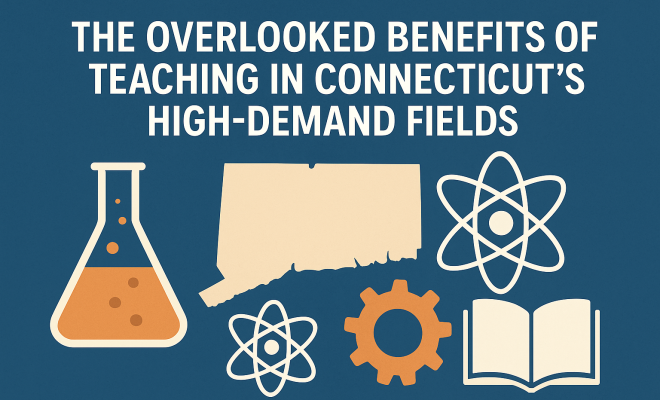
The Overlooked Benefits of Teaching in Connecticut’s High-Demand Fields
Alright, let’s talk about something that’s probably on the minds of many aspiring or even seasoned educators: where can you make the biggest impact, and frankly, where can you find the most support in your career? The Connecticut State Department of Education recently dropped its list of teacher shortage areas for the 2026-27 school year, and it’s not just a dry bureaucratic update. This list is a roadmap to opportunity, especially if you’re weighing the options between critical fields like bilingual education and special education. The truth is, the current bilingual education vs special education teacher shortage is creating some unique incentives that are too good to ignore.
Now, I’ve spent years in education, from K-12 classrooms to university deanships, and I’ve seen firsthand the struggles teachers face. But I’ve also seen the incredible power of targeted initiatives to draw talent into areas of desperate need. Connecticut’s approach is a prime example, offering tangible financial benefits like loan forgiveness, deferral programs, and even mortgage assistance. This isn’t just about filling a roster; it’s about investing in educators who step up to serve students with some of the most pressing needs. So, if you’re wondering which path might be right for you, let’s break down these two vital fields and see what they really offer.
1. Mathematics (Grades 4-12): More Than Just Numbers
When we talk about critical shortage areas, math often comes up, and for good reason. From fourth grade all the way through high school, a strong foundation in mathematics is absolutely essential for students’ future success, whether they’re heading to college or entering a trade. Yet, finding qualified, engaging math teachers who can connect with students across different learning styles is a constant battle for school districts. The demand here isn’t just for someone who can solve equations; it’s for someone who can inspire a love for problem-solving and critical thinking.
Teaching math in a shortage area means you’re not just a teacher; you’re a vital asset. You’ll likely find smaller class sizes, more resources, and a supportive administration eager to retain you. Plus, the financial incentives we’re seeing in Connecticut aren’t exclusive to special education or bilingual programs. Math teachers in these high-need areas are also eligible for significant perks. It’s an opportunity to shape young minds with a skill set that truly opens doors for them in an increasingly data-driven world.
2. Science (Grades 4-12): Igniting Curiosity and Discovery
Much like mathematics, science education from middle school through high school is another perennial shortage area. Think about it: our world is evolving at a breakneck pace, driven by scientific and technological advancements. We need passionate science teachers who can bring subjects like biology, chemistry, and physics to life, making them accessible and exciting for every student. This isn’t just about memorizing facts; it’s about fostering inquiry, experimentation, and an understanding of the natural world.
A science teacher in a high-need area often becomes a cornerstone of their school community. You might be leading robotics clubs, overseeing science fairs, or simply being the go-to person for all things STEM. The impact you can have is immense, guiding students towards careers in medicine, engineering, environmental science, and countless other fields. And yes, the financial benefits from the state department of education apply here too, making it an even more attractive proposition for those with a knack for scientific discovery.
3. Bilingual Education/TESOL (PreK-12): Bridging Language Barriers, Building Futures
Now, let’s dive into one of the two big ones we’re comparing: bilingual education and Teaching English to Speakers of Other Languages (TESOL). This is a field that has seen explosive growth in demand, reflecting the increasing diversity of our student population. Imagine walking into a classroom where many students are navigating a new country, a new culture, and a new language all at once. A bilingual education teacher isn’t just teaching English; they’re providing a lifeline, ensuring these students can access the full curriculum and thrive academically and socially.
The role of a bilingual educator is multifaceted. You’re often working with students from diverse linguistic and cultural backgrounds, helping them transition into an English-speaking environment while also validating their native language and heritage. This requires a deep understanding of language acquisition, cultural sensitivity, and the ability to differentiate instruction in profound ways. The bilingual education vs special education teacher shortage is particularly acute here, as the need for these specialized skills often outpaces the supply of certified teachers. This makes it a high-impact, high-reward career path, both personally and professionally.
4. Special Education (PreK-12): Advocating for Every Child’s Potential
On the other side of our comparison, we have special education, another incredibly critical and perennially understaffed area. Special education teachers work with students who have a wide range of learning, emotional, physical, or developmental disabilities. Their mission? To ensure every student, regardless of their challenges, receives an appropriate and individualized education. This isn’t just about compliance with federal mandates like IDEA; it’s about recognizing the inherent worth and potential in every child and providing the support they need to succeed.
The work of a special education teacher is often intense, requiring immense patience, adaptability, and a deep well of empathy. You’ll be developing Individualized Education Programs (IEPs), collaborating with parents and other specialists, and implementing strategies to address diverse learning needs. This field demands a particular kind of dedication, but the rewards are immeasurable. Witnessing a student with a learning disability finally grasp a concept, or seeing a child with social-emotional challenges make a breakthrough, is why so many educators are drawn to this vital calling. The ongoing bilingual education vs special education teacher shortage means that those who choose this path are truly making a difference where it’s needed most.
5. The Financial Incentives: A Game Changer for Educators
Let’s be honest, teaching isn’t always lauded for its financial rewards, which is why programs like Connecticut’s are so important. The state is offering significant financial benefits to educators who work under certification endorsements in these designated shortage areas. We’re talking about loan forgiveness, deferral programs, and even mortgage assistance. For many teachers, especially those just starting out or carrying significant student debt, these incentives are nothing short of life-changing. (See: CDC Youth Risk Behavior Survey.)
Imagine being able to reduce or even eliminate your student loan burden just by choosing to teach in a high-need field. Or getting assistance with a down payment on a home, something that feels increasingly out of reach for many young professionals. These aren’t just minor perks; they’re substantial supports designed to attract and retain talented individuals in roles where they are desperately needed. It’s a clear signal from the state that they value these positions and the educators who fill them. This kind of tangible support helps make the decision between a general education role and a specialized one, like special education or bilingual education, much clearer.
6. Navigating the Certification Labyrinth
Of course, accessing these benefits and teaching in these specialized areas requires proper certification. For bilingual education, this typically means demonstrating proficiency in English and another language, along with specific pedagogical training in second language acquisition. For special education, it involves coursework and practical experience focused on understanding various disabilities, developing IEPs, and implementing inclusive teaching strategies. It’s not a simple path, but the investment in certification pays off. For more context, see navigating the growing challenges of neurodiversity support in schools.
Many universities, like Virginia Union where I’ve served as Dean of the School of Education, Psychology, & Interdisciplinary Studies, offer programs specifically designed to prepare teachers for these shortage areas. Often, there are scholarships or grants available to help offset the cost of these specialized programs. It’s worth researching what your state or local universities offer, as they are often aligned with state needs and can provide a direct pipeline to these in-demand roles. Don’t let the idea of additional certification deter you; think of it as an investment in a secure and impactful career.
7. The Deep Personal Rewards of Specialized Teaching
Beyond the financial incentives, there’s a profound sense of purpose that comes with teaching in areas like bilingual education and special education. In bilingual classrooms, you’re not just teaching subject matter; you’re helping students find their voice in a new language and culture, empowering them to navigate complex transitions. You’re often the first point of contact for families who might also be new to the country, building bridges between homes and schools.
In special education, the impact is equally, if not more, profound. You’re often the advocate, the innovator, and the unwavering support system for students who face significant barriers. Seeing a student with autism communicate their needs for the first time, or a child with dyslexia finally read a passage independently, these are the moments that define a career and stay with you long after the school bell rings. These roles are challenging, no doubt, but the personal satisfaction of knowing you’ve made a tangible difference in a child’s life is truly unparalleled. This is where the bilingual education vs special education teacher shortage really highlights an opportunity for personal fulfillment.
8. Career Growth and Professional Development Opportunities
Working in a shortage area often means you’re at the forefront of educational innovation and reform. Districts are eager to support and develop teachers in these critical fields. This translates into more opportunities for professional development, specialized training, and leadership roles. For example, a bilingual educator might become a language program coordinator, or a special education teacher might transition into an instructional coach role, mentoring new teachers in their field.
The specialized knowledge and skills you gain in these areas are highly valued and transferable. As demographics shift and our understanding of diverse learning needs evolves, the demand for experts in bilingual education and special education will only continue to grow. This isn’t just about finding a job; it’s about building a robust, future-proof career with ample room for advancement and continuous learning. You become an invaluable resource, not just to your school, but to the broader educational community.
9. Which Path is Right for You? Self-Assessment is Key
So, how do you decide between bilingual education and special education, or even math and science? It really comes down to a deep self-assessment of your skills, passions, and personal strengths. Do you have a knack for languages, a sensitivity to cultural nuances, and a desire to help students bridge communication gaps? Bilingual education might be your calling. If you’re fluent in another language, that’s a huge asset, but even if you’re not, a TESOL certification can open many doors.
On the other hand, if you possess an abundance of patience, empathy, problem-solving skills, and a strong belief in the potential of every child, regardless of their challenges, then special education might be a better fit. It requires a resilient spirit and a commitment to individualized instruction. Ultimately, both fields demand dedication and a genuine desire to make a difference. Reflect on your own experiences, your comfort levels with different types of student needs, and where you feel you can contribute most authentically. The bilingual education vs special education teacher shortage means that whichever path you choose, you’ll be welcomed with open arms and, importantly, with substantial support.
10. The Broader Impact: Addressing a National Crisis
It’s crucial to remember that Connecticut’s situation isn’t unique. The teacher shortage is a national conversation, and states are scrambling to find effective ways to attract and retain educators. What we’re seeing in Connecticut — the financial incentives, the focus on critical areas — is a model that other states might well adopt. By choosing to enter one of these high-need fields, you’re not just helping a local school district; you’re contributing to a national solution.
The ongoing discussion around the bilingual education vs special education teacher shortage highlights systemic issues in our education system, but it also presents an incredible opportunity for those willing to step up. You’ll be part of a crucial effort to ensure equitable access to quality education for all students, regardless of their background or abilities. It’s a chance to be a leader, an innovator, and a true advocate in a profession that desperately needs passionate, dedicated individuals.
11. Understanding the Roots of the Shortage: Why These Areas?
It’s one thing to acknowledge a shortage, but it’s another to understand *why* these specific areas are so consistently understaffed. Let’s dig into the systemic factors contributing to the bilingual education vs special education teacher shortage, and why subjects like math and science also struggle to attract talent.
The Challenge for Bilingual Education/TESOL
The rise in demand for bilingual educators isn’t a mystery. Our student demographics are changing rapidly. According to the National Center for Education Statistics, the percentage of public school students who are English Learners (ELs) increased from 9.2% in fall 2000 to 10.4% in fall 2020. That’s millions of students who need support. The issue is, becoming a certified bilingual teacher requires proficiency in two languages, often a rigorous academic program, and a deep understanding of cultural nuances. This isn’t a quick or easy certification to obtain, which limits the pool of available candidates. Plus, many schools struggle to offer competitive salaries that reflect these specialized skills, making it harder to attract fluent speakers who might have other career options. (See: U.S. Department of Education Teacher Shortage Areas.)
The Hurdles in Special Education
Special education faces its own unique set of challenges. The work is incredibly demanding, both emotionally and intellectually. Special education teachers are often juggling multiple IEPs, managing diverse classroom behaviors, collaborating with numerous professionals (therapists, psychologists, parents), and staying current with evolving regulations. The paperwork alone can be overwhelming. This high-stress environment, coupled with compensation that often doesn’t adequately reflect the intensity of the work, leads to significant burnout and attrition. Many passionate educators enter the field only to find themselves overwhelmed, contributing to a revolving door effect that keeps the shortage persistent.
The STEM Struggle (Math and Science)
For math and science, the problem is often about competition. Individuals with strong STEM backgrounds have lucrative opportunities outside of education. An engineer, a data scientist, or a research chemist can often command much higher salaries in the private sector than in a public school classroom. While the passion for teaching is strong for some, the financial disparity can be a powerful deterrent. States like Connecticut recognize this and are attempting to bridge that gap with incentives, but it’s an uphill battle against market forces. For more context, see Alaska's bold gamble to fix its teacher crisis.
12. The Impact of Technology on Shortage Areas
While technology is often seen as a solution, its role in the bilingual education vs special education teacher shortage is complex. On one hand, edtech tools can certainly support teachers in these fields, but they also highlight the irreplaceable human element.
Tech in Bilingual Education
Tools like translation apps, language learning software, and interactive digital resources can be incredibly helpful for bilingual educators. They can personalize learning, provide immediate feedback, and offer diverse multimedia content to engage EL students. However, technology can’t replace the cultural understanding, the empathetic connection, or the nuanced instructional strategies a human bilingual teacher provides. A machine can translate words, but it can’t understand the emotional weight of a student struggling to articulate their feelings in a new language, nor can it build the bridge between home culture and school culture. The need for human connection and tailored support remains paramount.
Tech in Special Education
In special education, assistive technologies (AT) are game-changers. From text-to-speech software and communication devices for non-verbal students to adaptive keyboards and specialized learning programs, AT can significantly enhance a student’s access to the curriculum. Teletherapy and virtual learning platforms have also expanded access to specialists in underserved areas. But here again, the special education teacher is the orchestrator. They assess needs, integrate technology into IEPs, train students and families, and troubleshoot issues. The technology is a powerful tool, but the teacher’s expertise in individualizing instruction and fostering a supportive learning environment is what truly unlocks a student’s potential.
Tech in STEM Education
Technology is intrinsic to modern STEM education. Interactive simulations, coding platforms, virtual labs, and data analysis tools are essential for teaching contemporary math and science. These tools can make abstract concepts tangible and engage students in authentic scientific inquiry. However, the teacher’s role in guiding inquiry, facilitating critical thinking, and fostering a deep understanding of scientific principles is crucial. They interpret the data, lead the discussions, and inspire the next generation of innovators. Without skilled human teachers, these powerful tech tools are just expensive toys.
13. The Role of Policy and Advocacy in Sustaining These Fields
Beyond individual state incentives, broader policy and advocacy efforts are vital to addressing the bilingual education vs special education teacher shortage on a national scale. This isn’t just about recruiting; it’s about retention and systemic support.
Federal and State Funding
Sustained federal funding for programs that support teacher preparation in high-need areas, like Title III for ELs and IDEA funding for special education, is critical. When these funds are robust, states and districts can offer more scholarships, professional development, and competitive salaries. Advocacy groups constantly push for increased and consistent funding to ensure these vital services aren’t cut during budget crises.
Streamlining Certification Pathways
States can help by creating more accessible and affordable certification pathways. This might include alternative certification programs for career changers, reciprocity agreements with other states, or “grow your own” initiatives that identify and train paraprofessionals already working in schools. Reducing bureaucratic hurdles, while maintaining high standards, can open doors for more individuals to enter these fields.
Teacher Leadership and Mentorship
Retaining teachers is just as important as recruiting them. Strong mentorship programs, opportunities for teacher leadership (like instructional coaching or curriculum development roles), and a supportive school culture can significantly reduce burnout and encourage educators to stay in these challenging fields. Recognizing and valuing the expertise of experienced bilingual and special education teachers is key to building a sustainable workforce. (See: New York Times on Teacher Shortages.)
14. Frequently Asked Questions about the Teacher Shortage
Let’s tackle some common questions you might have if you’re considering a career in these high-demand areas.
Q1: Are these shortages really widespread, or just in certain states?
A: While the severity can vary by state and even by district, the shortages in bilingual education, special education, math, and science are widespread national issues. The Council of Chief State School Officers (CCSSO) consistently identifies these as critical shortage areas across a majority of states each year. So, while Connecticut is a great example, the opportunities exist almost everywhere.
Q2: What’s the typical salary difference for teachers in shortage areas compared to general education?
A: The base salary might not always be significantly higher directly due to being in a shortage area, though some districts offer stipends or bonuses for these roles. The major financial difference comes from the incentives like loan forgiveness, housing assistance, and scholarships for specialized training. These benefits can amount to tens of thousands of dollars over a career, making the overall compensation package much more attractive.
Q3: Do I need to be fluent in a second language to teach bilingual education?
A: Yes, for a bilingual education endorsement, you typically need to demonstrate proficiency in English and another language (often Spanish, but other languages are in high demand too). However, if you’re not fluent in another language but want to support EL students, a TESOL (Teaching English to Speakers of Other Languages) certification is an excellent alternative, focusing on strategies for teaching English to non-native speakers.
Q4: What are the biggest challenges for new special education teachers?
A: New special education teachers often cite managing complex caseloads, navigating extensive paperwork (especially IEPs), collaborating effectively with multiple stakeholders (parents, therapists, general education teachers), and developing effective behavior management strategies as their biggest challenges. Mentorship and strong administrative support are crucial for success in the initial years.
Q5: How long does it take to get certified in one of these shortage areas if I already have a teaching degree?
A: If you already hold a teaching license, adding an endorsement in special education or bilingual education/TESOL can often be done through a post-baccalaureate program or a master’s degree program. This might take anywhere from 1-2 years, depending on the program structure and if you attend full-time or part-time. Many universities offer accelerated or online options to accommodate working professionals.
Q6: Will the demand for these teachers continue to grow?
A: All indicators suggest that the demand for these specialized educators will continue to grow. Demographic shifts mean more English Learners in our schools, and increased awareness and identification of diverse learning needs ensure a continued need for special education services. The globalized, technologically driven world also means a constant need for strong STEM education. These aren’t temporary trends; they’re long-term shifts in our educational landscape.
Whether you lean towards helping students navigate new languages or empowering those with diverse learning needs, Connecticut’s approach makes a compelling case for choosing a specialized path. The benefits are real, the impact is profound, and the need is undeniable. It’s an exciting time to consider where your talents can best serve the next generation.
Trending Now
Frequently Asked Questions
What are the teacher shortage areas in Connecticut for 2026-27?
The Connecticut State Department of Education has identified several teacher shortage areas for the 2026-27 school year, including critical fields like bilingual education and special education. These areas present unique opportunities for educators looking to make a significant impact while also receiving support and incentives.
What incentives are available for teachers in high-demand fields in Connecticut?
Connecticut offers various incentives for teachers in high-demand fields, including loan forgiveness programs, deferral options, and mortgage assistance. These benefits are designed to attract talented educators to areas where their skills are urgently needed.
Why is there a demand for bilingual education teachers in Connecticut?
The demand for bilingual education teachers in Connecticut stems from the increasing diversity in student populations. As schools strive to meet the needs of English language learners, qualified bilingual educators are essential for fostering an inclusive and effective learning environment.
How does teaching math in grades 4-12 impact students' futures?
Teaching math from grades 4-12 is crucial as it lays a strong foundation for students' future success. Proficient math skills are essential not only for higher education but also for various trades, making qualified math teachers vital to student development and career readiness.
What challenges do teachers face in high-demand fields like special education?
Teachers in high-demand fields like special education often face challenges such as high workloads, emotional demands, and the need for specialized training. However, targeted initiatives and support systems can help alleviate some of these challenges, making the field more rewarding.
Agree or disagree? Drop a comment and tell us what you think.