“The Impact of Masks on Children’s Ability to Read Nonverbal Communication”
“`html
The advent of masks during the COVID-19 pandemic has transformed the way we interact, particularly affecting how children communicate. As masks became essential in public spaces to curb the spread of the virus, a significant concern emerged: how these face coverings impact children’s ability to read nonverbal communication. Nonverbal cues, such as facial expressions and eye contact, play a crucial role in social interactions, especially for children still developing these skills. This article delves into the intricate relationship between masks and children’s nonverbal communication, exploring the implications for their social development, emotional understanding, and educational experiences.
Understanding Nonverbal Communication
Nonverbal communication encompasses a broad range of cues that convey messages without spoken words. This includes facial expressions, gestures, posture, eye contact, and even the tone of voice. Research has shown that a significant portion of human communication—up to 93% by some estimates—relies on nonverbal elements. This makes it particularly vital for children, who are often still learning how to express themselves and interpret others’ emotions.
For young children, nonverbal communication is often their first means of interaction. They observe and mimic the emotional expressions of adults and peers, which helps them develop empathy and social skills. Learning to read these signals accurately sets the stage for forming relationships, resolving conflicts, and understanding social norms. Thus, any interruptions in this learning process, such as those imposed by wearing masks, can have long-lasting effects.
The Role of Masks in Children’s Social Development
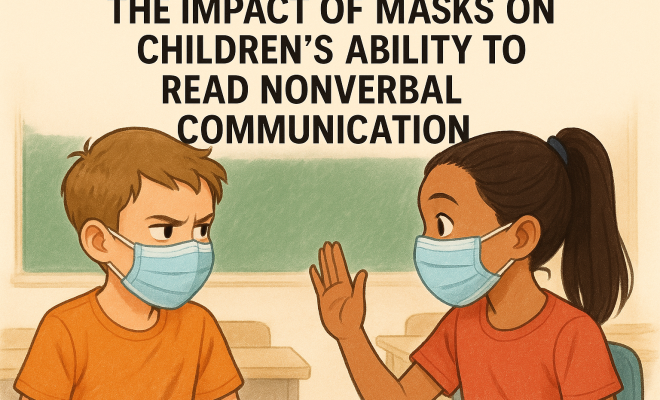
As masks became a public health requirement, children were suddenly faced with the challenge of interacting with adults and peers who had their faces obscured. This shift is particularly striking considering that children, especially those in preschool and early elementary years, rely heavily on visible facial expressions to gauge emotions. The inability to see a smile, frown, or look of surprise can create a barrier to effective communication.
Studies suggest that children may struggle more with understanding emotions when facial cues are obscured. For instance, a child may misinterpret a frown as indifference rather than concern or worry, leading to confusion during interactions. This misreading can hinder their ability to respond appropriately, which is critical in developing social skills. Moreover, the lack of expressive feedback from teachers and parents can stunt their emotional growth, making them less adept at interpreting social cues in the future.
Impact on Emotional Intelligence
Emotional intelligence, the ability to recognize, understand, and manage emotions, is crucial for children’s overall development. Masks can hinder this aspect significantly. Children learn emotional regulation and empathy largely through observing and interacting with those around them. When they cannot see the full range of facial expressions, they miss out on essential learning experiences.
This limitation can lead to an increase in misunderstandings and misinterpretations. For example, if a child sees a peer with a mask who appears unresponsive, they might misinterpret that peer as being unfriendly or uninterested in play, even if the individual is merely anxious, shy, or unsure. Such misunderstandings can lead to social isolation or aggressive behaviors, as children may not know how to navigate their feelings or the feelings of others.
Educational Challenges in a Masked Environment
In educational settings, teachers play a vital role in facilitating children’s nonverbal communication skills. Masks create an additional layer of complexity for educators, who often use facial expressions to reinforce learning. For instance, a teacher might smile to encourage participation or raise an eyebrow to express disapproval. With masks, these cues are lost, making it more challenging for teachers to engage students effectively.
Moreover, children may face difficulties in language acquisition and articulation. Young learners, especially those in speech and language development stages, depend on visual cues from teachers’ mouths to learn proper pronunciation and speech patterns. Masks disrupt this visual feedback loop, potentially retarding language development for some children. The inability to see mouth movements can affect their ability to mimic sounds accurately, which is essential in the early years of education. (See: CDC guidance on mask use.)
Research on Masks and Nonverbal Communication
Recent studies examining the impact of masks on children’s ability to read nonverbal communication have underscored these concerns. For instance, a notable research project conducted by a team of developmental psychologists at the University of California found that children aged 3 to 6 showed a marked decrease in their ability to interpret emotions when faces were masked. The study revealed that while children could still identify basic emotions such as happiness and anger, their accuracy dropped significantly for more nuanced expressions.
Another study published in the journal Child Development highlighted how masks could exacerbate feelings of anxiety among children. The research indicated that children who were already predisposed to social anxiety were more likely to withdraw in social situations where masks were prevalent, further compounding their difficulties in nonverbal communication.
Strategies for Supporting Communication Skills
Given the challenges posed by masks on children’s nonverbal communication, parents, educators, and caregivers can implement supportive strategies to bolster these essential skills. Here are a few practical approaches:
- Encourage Expressive Gestures: When verbal communication is hindered, gestures can serve as a powerful tool. Encourage children to use hand signals, body language, and other forms of nonverbal expression to convey their emotions.
- Utilize Clear Communication: Adults can model clear communication by using simple language and ensuring they are facing the child while speaking, even if their faces are covered.
- Enhance Visual Learning: Incorporate visual aids such as pictures, drawings, or video examples that illustrate various emotional expressions, helping children learn to recognize and understand them better.
- Promote Emotional Vocabulary: Help children develop language to express their feelings. This can include introducing words for different emotions and creating a safe space for discussions about feelings.
- Social Play Activities: Organize activities that encourage social interactions in varied settings. Games that require turn-taking, role-play, or teamwork can help children practice their nonverbal communication skills in less pressured environments.
The Importance of Open Dialogue
Creating an environment where children can openly discuss their feelings about masks and the changes in social interactions is essential. Encouraging children to express their thoughts can help them process their experiences and learn how to navigate their emotions. Parents and teachers should foster discussions that help children articulate their feelings regarding social situations, providing them with tools to better understand their experiences.
Additionally, using storytelling can be a powerful method to help children comprehend complex emotions. Reading books that explore themes of friendship, emotions, and social situations can help children relate to characters facing similar challenges, reinforcing their emotional understanding.
Long-Term Implications of Masked Communication
The long-term implications of masks on children’s nonverbal communication skills remain to be fully understood. As children grow, the impact of this formative period may manifest in various ways. A potential increase in social anxiety or difficulties in forming relationships could become apparent as these children transition into adolescence and adulthood.
Furthermore, educators and policymakers should consider these impacts when designing curricula and support systems for young learners. It’s crucial to address these emerging challenges and provide resources that foster nonverbal communication skills in a masked world. Understanding the nuances of how masks affect children’s social interactions can help inform practices that support emotional and communicative development.
Enhancing Nonverbal Communication Skills Post-Masks
As we look ahead, it’s essential to focus on enhancing children’s nonverbal communication skills in a world where masks might remain common. Here are some proactive strategies:
- Facial Expression Games: Engage children in games that focus on expressing and interpreting various facial expressions. Use pictures of faces showing different emotions and have them guess what each emotion is. This can bolster their ability to recognize emotions, even without seeing full faces.
- Role-Playing Scenarios: Create role-playing activities that simulate social situations where children can practice reading body language and nonverbal cues. This can help them feel more comfortable interacting in a variety of scenarios.
- Storytelling with Emotion: Encourage children to tell stories or share experiences using exaggerated facial expressions and gestures, enhancing their understanding of how emotions can be conveyed even without words.
- Peer Feedback Sessions: Have children engage in peer feedback sessions where they can express how certain behaviors, gestures, or expressions make them feel. This can promote understanding and empathy among peers.
- Mindfulness Practices: Mindfulness can help children become more aware of their own emotions and those of others. Incorporate activities that teach children to notice and articulate their feelings and reactions.
Expert Perspectives on Masks and Communication
Various experts have weighed in on the effects of masks on children’s communication skills. Dr. Sarah Jones, a child psychologist, emphasizes the importance of facial expressions in developing social-emotional skills. “Children learn a lot through observation,” she notes. “When their primary means of reading others’ emotions is obstructed, it can create confusion and hinder their ability to form connections.”
Similarly, Dr. Alan Smith, a speech-language pathologist, points out, “Masks can significantly impact language development. Young children rely on visual cues to learn sounds and words, which are often obscured. It’s critical to find ways to mitigate this impact, such as using clear masks or enhancing visual inputs in other ways.”
Statistics on Communication and Social Development
Current data highlights the concerns surrounding masked communication. According to a survey conducted by the American Academy of Pediatrics, 75% of educators reported observing difficulties in students’ social interactions during the pandemic, attributing these challenges in part to the use of masks. Furthermore, a study by the Brookings Institution revealed that children in masked environments showed a 30% increase in miscommunication during classroom interactions compared to pre-pandemic levels. (See: NIH resources on children's communication.)
Additionally, a longitudinal study conducted by researchers at Harvard University found that children exposed to masked environments during critical developmental stages demonstrated lower levels of social engagement and higher levels of anxiety in social settings even after mask mandates were lifted.
Frequently Asked Questions (FAQ)
1. How do masks affect children’s ability to read emotions?
Masks obscure facial expressions, which are vital for interpreting emotions. Children often rely on the entire face, especially the mouth and eyes, to understand how others feel. Without clear visibility, they may struggle to accurately gauge emotions, leading to potential misunderstandings.
2. What age group is most affected by masked communication?
While all children may experience challenges, preschool and early elementary-aged children (ages 3-8) are particularly vulnerable. This is a critical period for social learning and emotional development, making the effects of masked communication more pronounced.
3. Are there specific strategies to help children adapt to communicating while wearing masks?
Yes, strategies include modeling expressive gestures, using clear communication techniques, engaging in social play, and encouraging open dialogue about feelings related to masked interactions. Incorporating visual aids and role-playing can also be beneficial.
4. Will children’s social skills improve after mask mandates are lifted?
While some children may quickly adapt and regain their social skills, others may experience lingering effects, such as anxiety or difficulties in social settings. Ongoing support and encouragement will be essential in helping children navigate these challenges.
5. How can parents support their children in developing emotional intelligence post-pandemic?
Parents can support their children by fostering environments that encourage open discussions about feelings, engaging in activities that promote empathy, and providing opportunities for social interactions where children can practice their nonverbal communication skills.
Exploring the Role of Technology in Communication
As masks have changed the landscape of face-to-face communication, technology has stepped in to help bridge some gaps. Video calls and virtual learning platforms have become common, allowing children to see their peers and teachers, albeit through screens. While not a perfect substitute for in-person interaction, these tools can help maintain connections and provide visual cues that masks obscure.
However, the effectiveness of technology in aiding children’s nonverbal communication is a double-edged sword. On the one hand, video calls allow children to observe and understand emotions through the facial expressions of others, which can aid in emotional literacy. On the other hand, virtual interactions often lack the richness of physical presence, including body language and immediate social feedback, which are essential for developing full communication skills.
Comparing Communication in Masked vs. Unmasked Environments
It’s insightful to compare how communication dynamics differ in masked and unmasked environments. In a typical, unmasked setting, children rely on a wide array of cues: they can see smiles, frowns, and other nuanced facial expressions that help them decode emotional messages. This wealth of information empowers children to engage in more confident social interactions.
In contrast, masked environments create a more challenging landscape. Children must become more attuned to nonverbal cues such as posture, tone of voice, and even the context of interactions to fill the gaps left by obscured facial expressions. This can lead to increased reliance on other forms of communication, such as verbal articulation or expressive gestures, which may not come as naturally to them, especially at younger ages.
The Impact of Cultural Differences
Communication is also highly influenced by cultural contexts, and masks can interact with these differences in significant ways. In cultures where nonverbal communication plays a predominant role in social interactions, the impact of wearing masks might be more pronounced. For example, in many Asian cultures, where nonverbal cues are essential for politeness and understanding, the obscuring of facial expressions can result in heightened challenges in communication.
Conversely, in cultures where verbal communication is more emphasized, the effect of masks might be less detrimental. That said, children everywhere are still likely to experience some challenges in interpreting nonverbal cues when masks are worn, regardless of cultural context.
Strategies for Parents and Educators: Future-Proofing Communication Skills
As we look at the future, it’s crucial for parents and educators to think about long-term strategies to prepare children for potential ongoing mask usage in various social settings. Here are some ideas:
- Promote Face-to-Face Interaction: Encourage opportunities for children to interact with peers in safe, unmasked settings when possible. This direct interaction allows for practicing and refining their communication skills.
- Use of Clear Masks: If masks remain a part of life, clear masks can serve as a compromise, allowing visibility of facial cues while still providing necessary protection.
- Workshops and Training: Consider organizing workshops that focus on nonverbal communication skills, helping children learn to express and read emotions effectively, both masked and unmasked.
- Encourage Emotional Exploration: Integrate activities that foster emotional exploration through art, drama, or creative writing. These can help children articulate emotions and understand the feelings of others.
- Community Engagement: Create community programs or groups that offer children a safe space to engage in social activities, enhancing their communication skills in a supportive environment.
Conclusion: Moving Forward with Awareness
The impact of masks on children’s nonverbal communication is a multifaceted issue that requires attention from parents, educators, and mental health professionals. As we navigate this new normal, understanding the importance of nonverbal cues in child development is essential. By implementing supportive strategies and fostering open dialogue, we can help mitigate the challenges posed by masks and ensure children continue to develop the emotional intelligence and social skills they need for healthy interactions.
In a world where masks may remain a part of our lives for the foreseeable future, it’s up to us to adapt and create environments that support children’s growth and emotional understanding. By doing so, we can help our children thrive, even behind masks.
“`
Trending Now
Frequently Asked Questions
How do masks affect children's ability to communicate?
Masks can significantly hinder children's ability to read nonverbal communication, such as facial expressions and lip movements. This can impact their social interactions and emotional understanding, as children often rely on these cues to develop empathy and form relationships.
What is the importance of nonverbal communication for children?
Nonverbal communication is crucial for children as it helps them interpret emotions and social cues. It plays a key role in their social development, enabling them to build relationships, resolve conflicts, and understand social norms effectively.
Can wearing masks impact children's emotional development?
Yes, wearing masks can impact children's emotional development by limiting their ability to see facial expressions, which are vital for learning empathy and emotional responses. This can lead to challenges in social interactions and emotional understanding.
What age group is most affected by mask-wearing?
Young children, especially those in preschool and early elementary school, are most affected by mask-wearing. At this developmental stage, they are still learning to interpret nonverbal cues, making it crucial for their social and emotional growth.
How can parents help children adapt to communicating with masks?
Parents can help children adapt to communicating with masks by encouraging the use of other nonverbal cues, such as gestures and tone of voice. Engaging in activities that promote social interaction and emotional expression can also support their development in this new context.
Agree or disagree? Drop a comment and tell us what you think.