“How Nonverbal Communication Affects Classroom Management and Teacher-Student Relationships”
“`html
In any educational setting, the way teachers and students communicate goes beyond words. Nonverbal communication in education plays a pivotal role in shaping interactions, reinforcing learning, and establishing meaningful relationships. Understanding how nonverbal cues can affect classroom management and student-teacher dynamics is essential for creating a positive and productive learning environment.
The Power of Nonverbal Communication
Nonverbal communication encompasses all the ways we convey messages without using words. This includes gestures, facial expressions, posture, eye contact, tone of voice, and even the physical distance between people. According to Dr. Albert Mehrabian, a pioneer in the field of communication studies, up to 93% of our communication effectiveness is determined by nonverbal cues—55% by body language and 38% by vocal tone.
In the classroom, these nonverbal signals can significantly influence how teachers and students interact. For example, a teacher’s positive body language, such as smiling or maintaining an open posture, can create an inviting atmosphere that fosters student engagement. Conversely, a lack of eye contact or closed-off body language can create barriers that hinder communication and learning.
Establishing Authority and Classroom Management
Effective classroom management is crucial for creating a conducive learning environment. Nonverbal communication serves as a powerful tool for establishing authority and managing classroom dynamics. Teachers who project confidence through their body language—such as standing tall, making purposeful movements, and using appropriate facial expressions—instill a sense of respect and authority among students.
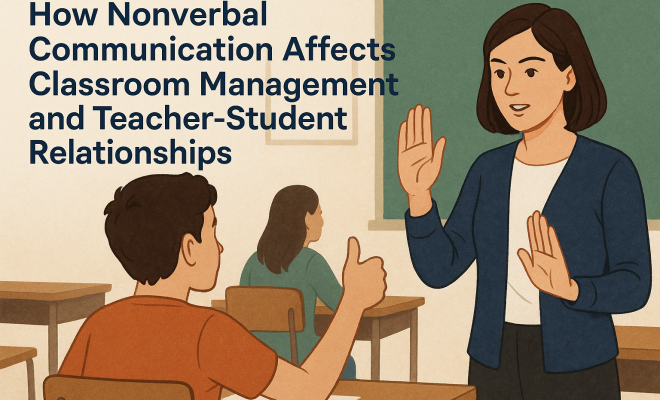
For instance, using a firm but calm tone of voice combined with assertive body language can effectively manage disruptive behavior. Teachers can also utilize nonverbal cues, such as raising their hand or using a specific gesture, to signal students to pay attention without interrupting the flow of the lesson.
Moreover, nonverbal signals are particularly important when addressing large classes. In situations where verbal instructions may not reach every student, nonverbal cues can help maintain order and focus. A simple gesture, such as a raised finger to indicate silence, can convey authority without breaking the teacher’s narrative.
Creating an Inclusive Classroom Environment
Inclusion is a fundamental aspect of modern education. Nonverbal communication can help create an environment where all students feel valued and included. Teachers can enhance inclusivity by being mindful of their body language, ensuring that it resonates positively with students from diverse backgrounds.
For example, adopting an open posture and using gestures that invite participation can encourage students who may be hesitant to speak up. Additionally, being aware of cultural differences in nonverbal cues is crucial. Some cultures may interpret gestures or expressions differently, so it’s essential for educators to adapt their communication styles accordingly.
Furthermore, teachers can use nonverbal communication to connect with students who may struggle with verbal interactions, such as those with learning disabilities or language barriers. Incorporating visual aids, body movements, and facial expressions can bridge communication gaps and enhance understanding.
Building Strong Teacher-Student Relationships
The relationship between teachers and students is foundational to effective learning. Nonverbal communication plays a critical role in building trust and rapport, which are essential for a thriving educational atmosphere. A teacher’s facial expressions and tone of voice can convey empathy and support, making students feel valued and understood.
For instance, a warm smile and encouraging nods during a student’s presentation can motivate them and reinforce their confidence. This positive reinforcement through nonverbal cues encourages students to engage more actively in class discussions and activities. (See: Nonverbal communication overview.)
Moreover, when teachers display genuine interest in their students’ well-being—through attentive body language and eye contact—it fosters a sense of safety and belonging. Students are more likely to express their thoughts and feelings when they believe their teacher is present and invested in their success.
The Role of Emotional Intelligence in Nonverbal Communication
Emotional intelligence (EI) refers to the ability to recognize, understand, and manage our own emotions as well as the emotions of others. In the context of nonverbal communication in education, EI is crucial for teachers to effectively interpret and respond to the nonverbal cues of their students.
Teachers with high emotional intelligence can gauge the mood of their classroom through subtle nonverbal signals, such as students’ facial expressions or body language. This awareness enables them to adjust their teaching style and approach to meet the emotional needs of their students.
Additionally, EI helps educators model appropriate nonverbal communication for their students. By demonstrating self-regulation and empathy through their own nonverbal cues, teachers can teach students how to express their emotions constructively and recognize others’ feelings, thereby fostering a supportive learning environment.
Practical Insights for Educators
For educators looking to harness the power of nonverbal communication in their classrooms, here are some practical insights:
- Be Mindful of Your Body Language: Your posture, gestures, and movements can significantly impact how students perceive you. Practice maintaining an open posture and using gestures that encourage engagement.
- Use Eye Contact Effectively: Eye contact can enhance connection and trust. Strive to make eye contact with students as you speak to them, ensuring they feel acknowledged.
- Observe Student Cues: Pay attention to your students’ nonverbal signals. Notice if they appear disengaged, anxious, or confused, and be prepared to adjust your approach accordingly.
- Incorporate Visual Aids: Use visual aids to complement your verbal communication. This approach can enhance understanding and retention, especially for visual learners.
- Model Empathy: Demonstrate empathy through your nonverbal cues. Acknowledge students’ feelings with appropriate facial expressions and gestures.
- Encourage Student Participation: Foster an environment where students feel comfortable sharing their thoughts. Use affirmative gestures and expressions to promote participation.
- Reflect on Your Communication Style: Take time to reflect on your nonverbal communication and how it affects your interactions with students. Seek feedback from peers to improve your approach.
Challenges in Nonverbal Communication
While nonverbal communication holds significant potential in education, it is not without challenges. Misinterpretations of nonverbal cues can lead to misunderstandings between teachers and students. For example, a teacher’s neutral facial expression might be perceived as disinterest by students, impacting their engagement.
Additionally, cultural differences can create barriers in nonverbal communication. A gesture that is encouraging in one culture may be offensive in another. Therefore, educators must continuously educate themselves about the diverse backgrounds of their students to communicate effectively.
Moreover, some students may struggle with interpreting nonverbal cues, particularly those with autism spectrum disorders or other social communication challenges. Teachers should be sensitive to these challenges and consider alternative methods of communication to ensure all students feel included.
The Future of Nonverbal Communication in Education
As education continues to evolve, the role of nonverbal communication is increasingly recognized as vital. With the rise of technology and online learning environments, understanding nonverbal communication may take on new dimensions. For instance, video conferencing tools have changed how teachers and students interact, making it essential to adapt nonverbal communication strategies in virtual settings.
Educators will need to become adept at interpreting nonverbal cues in digital formats, such as facial expressions and body posture visible on screens. Additionally, as hybrid learning becomes more common, the ability to balance nonverbal communication across in-person and online mediums will be critical for effective classroom management.
Professional development programs that emphasize nonverbal communication skills can equip educators with the tools necessary to thrive in these changing environments. Training teachers to recognize and respond to nonverbal cues, both in-person and online, can enhance their effectiveness and improve student outcomes.
Nonverbal Communication in Different Educational Contexts
The impact of nonverbal communication can vary significantly across different educational contexts. For example, consider the differences between primary, secondary, and higher education settings. At the primary level, teachers often use exaggerated facial expressions and gestures to engage young learners. The simplicity of these nonverbal cues helps maintain students’ attention and excitement about learning.
In secondary education, the dynamics shift as students become more socially aware. Nonverbal communication can play a crucial role in peer interactions and teacher authority. Here, students are more likely to read the emotional states of their peers through body language, which can affect classroom behavior and group dynamics. (See: CDC on nonverbal communication in education.)
At the higher education level, nonverbal communication becomes more nuanced. Professors often need to be aware of the diverse backgrounds of adult learners with various social and cultural experiences. Understanding these differences can be instrumental in creating a respectful classroom environment where all voices are heard.
Statistics and Research on Nonverbal Communication in Education
Research has shown that nonverbal communication can significantly impact learning outcomes. A study published in the journal Teaching and Teacher Education found that effective nonverbal communication from teachers positively correlates with student satisfaction and motivation. Specifically, students reported feeling more engaged and connected when teachers utilized appropriate body language and facial expressions.
Another study conducted by the National Center for Education Statistics revealed that students who perceive their teachers as approachable and supportive—often communicated through nonverbal cues—are more likely to perform better academically. Additionally, a survey of over 1,000 teachers indicated that 80% believe nonverbal communication is essential for establishing a positive classroom climate.
Expert Perspectives on Nonverbal Communication
Experts in the field of education and communication agree on the importance of nonverbal cues in the learning process. Dr. Paul Ekman, a psychologist known for his work on emotions and facial expressions, emphasizes that educators must be aware of their nonverbal signals. He states, “The ability to read and respond to nonverbal communication can enhance not only the learning experience but also the emotional well-being of students.”
Moreover, Dr. Judith Hall, a communication professor, highlights how nonverbal communication can either support or undermine verbal messages. “If a teacher says they’re excited about a topic but their body language suggests otherwise, students will likely feel confused. Consistency between spoken and unspoken messages is vital for effective teaching.”
Nonverbal Communication Techniques for Specific Situations
Different classroom situations may require distinct nonverbal communication techniques. Here are some strategies educators can employ for specific scenarios:
- Encouraging Participation: Use affirmative nods and expressive hand gestures to invite students to share their ideas. Leaning slightly forward can also signal interest in what a student is saying.
- Handling Disruptions: A calm but firm facial expression paired with a raised hand can effectively quiet a noisy classroom without shouting.
- Delivering Feedback: When providing constructive criticism, lean slightly forward and maintain soft eye contact to convey support and empathy. This approach can help students feel more receptive to feedback.
- Introducing New Concepts: Use visual storytelling through your body language. A teacher might use hand gestures to illustrate a concept while explaining it verbally, effectively enhancing comprehension.
FAQs about Nonverbal Communication in Education
What is nonverbal communication in education?
Nonverbal communication in education refers to the ways teachers and students convey messages without using words, including gestures, facial expressions, posture, and eye contact. It plays a crucial role in establishing relationships, managing classrooms, and facilitating learning.
How can teachers improve their nonverbal communication skills?
Teachers can improve their nonverbal communication by practicing mindful body language, maintaining eye contact, observing student cues, and reflecting on their own communication styles. Seeking feedback from peers can also help identify areas for improvement.
Why is nonverbal communication important in the classroom?
Nonverbal communication is important in the classroom because it influences student engagement, shapes classroom dynamics, and enhances teacher-student relationships. Effective nonverbal cues can help create a positive learning environment and foster inclusivity.
How does cultural background affect nonverbal communication?
Cultural background can significantly affect nonverbal communication, as different cultures interpret gestures and facial expressions differently. Educators should be aware of these differences to avoid misunderstandings and create an inclusive classroom environment.
Can nonverbal communication impact student learning outcomes?
Yes, research indicates that effective nonverbal communication can positively impact student learning outcomes by enhancing engagement, fostering positive relationships, and creating a supportive classroom climate. (See: Harvard University resources on communication.)
Addressing Nonverbal Communication in Online Education
As education transitions more towards online platforms, understanding how to navigate nonverbal communication in virtual environments becomes increasingly essential. Teachers must learn to use the technology at their disposal to convey nonverbal cues, such as adjusting camera angles to ensure facial expressions are visible or using gestures that can still be interpreted through a screen. In a virtual setting, facial expressions can help convey enthusiasm or disapproval, and maintaining eye contact with the camera can enhance the feeling of engagement with students.
Additionally, using chat features or reaction buttons during online classes can serve as a form of nonverbal communication, allowing students to express their feelings about the material being discussed. Encouraging students to use these features can create a more interactive and dynamic learning experience.
How Nonverbal Communication Enhances Collaboration
In group activities, nonverbal communication can significantly enhance collaboration among students. Group projects provide a unique opportunity for students to exhibit leadership through body language, eye contact, and even spatial arrangements. When students lean in towards one another, maintain eye contact, or use open hand gestures, it often signifies a willingness to collaborate and engage with their peers.
Teachers can facilitate this by designing activities that require students to work closely together, encouraging them to use nonverbal signals to express agreement, disagreement, or excitement about shared ideas. For example, with a project involving brainstorming, teachers might encourage students to nod or use thumbs-up gestures to show approval of ideas, fostering a collaborative spirit.
Long-Term Benefits of Effective Nonverbal Communication in Education
Understanding and mastering nonverbal communication can have long-term benefits for both educators and students. For teachers, being attuned to nonverbal cues can lead to improved classroom management, stronger relationships with students, and ultimately better academic performances. For students, learning to read and utilize nonverbal communication can enhance their interpersonal skills, which are critical for success in both personal and professional environments.
Moreover, students who are taught the importance of nonverbal communication are more likely to engage in positive social interactions, which can lead to better teamwork, enhanced empathy, and the ability to navigate complex social situations. As they carry these skills into their future workplaces, they will find that strong nonverbal communication abilities can set them apart in competitive job markets.
Conclusion: Embracing Nonverbal Communication in Education
Nonverbal communication in education is an essential component that influences classroom dynamics, teacher-student relationships, and overall learning outcomes. By understanding and effectively utilizing nonverbal cues, educators can create an inclusive, engaging, and respectful environment that fosters success.
As we move forward into a more interconnected and diverse educational landscape, embracing the nuances of nonverbal communication will be key to nurturing positive relationships and effective learning experiences for all students. So, whether you’re a seasoned educator or just starting your teaching journey, remember—your body language speaks volumes.
“`
Trending Now
- this guide on “the three core considerations of dap: age, individual, and cultural appropriateness”
- our breakdown of “why neuroscientists say learning styles theory lacks scientific evidence”
- “How to Teach to Different Learning…
- our breakdown of “how childhood attachment patterns affect adult relationships and mental health”
Frequently Asked Questions
How does nonverbal communication impact classroom management?
Nonverbal communication significantly affects classroom management by enabling teachers to establish authority and maintain control. Positive body language, such as open posture and eye contact, fosters engagement, while assertive gestures and tone help manage disruptive behavior, contributing to a more effective learning environment.
What are examples of nonverbal communication in the classroom?
Examples of nonverbal communication in the classroom include gestures, facial expressions, posture, eye contact, and tone of voice. These cues can convey messages that enhance learning and influence teacher-student relationships, making them essential for effective communication.
Why is nonverbal communication important for teacher-student relationships?
Nonverbal communication is crucial for teacher-student relationships because it helps establish trust and rapport. Positive nonverbal cues, like smiling and attentive listening, create an inviting atmosphere, encouraging students to engage and communicate openly.
What role does body language play in teaching?
Body language plays a vital role in teaching by influencing how messages are perceived. Teachers who use confident and positive body language can create a supportive environment that enhances student learning, while negative cues may create barriers to effective communication.
How can teachers improve their nonverbal communication skills?
Teachers can improve their nonverbal communication skills by practicing awareness of their body language, maintaining eye contact, and using appropriate gestures. Additionally, reflecting on their tone of voice and seeking feedback can help enhance their overall effectiveness in the classroom.
Agree or disagree? Drop a comment and tell us what you think.