Teach Kids to Interpret Nonverbal Cues for Social Success
“`html
In today’s fast-paced world, the ability to interpret nonverbal communication is crucial for children navigating various social situations. Nonverbal cues, from facial expressions to body language, can convey emotions and intentions just as strongly as spoken words. Teaching children these skills not only enhances their communication abilities but also improves their social interactions and emotional intelligence. Let’s explore effective strategies to teach children about nonverbal communication, its significance, and practical insights to help them thrive.
1. The Importance of Nonverbal Communication
Nonverbal communication encompasses a variety of elements, including gestures, facial expressions, posture, and eye contact. Research indicates that up to 93% of communication effectiveness comes from nonverbal cues. For children, understanding these signals can lead to better friendships, improved conflict resolution, and greater empathy towards others.
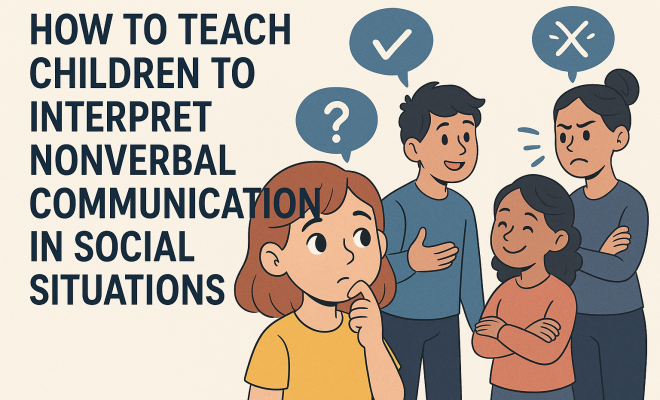
In social interactions, children often rely on nonverbal communication to interpret feelings. For instance, a smile may signal friendliness, while crossed arms might indicate defensiveness. By learning to recognize and respond to these cues, children can develop stronger relationships and more effectively navigate social settings.
2. Recognizing Facial Expressions
Facial expressions are one of the most immediate forms of nonverbal communication. They can express a wide range of emotions, from happiness to anger. Teaching children to recognize different facial expressions is an excellent starting point for understanding nonverbal communication.
A practical way to do this is through games and activities, such as showing various photographs of people displaying different emotions. Ask children to identify and discuss what they see. You could also use emotional charades, where children act out emotions without speaking, allowing their peers to guess which emotion is being represented. This not only makes learning fun but also reinforces the importance of recognizing emotions in others.
3. Understanding Body Language
Body language is another critical component of nonverbal communication. It involves the way people position themselves, their gestures, and even their physical proximity to others. For children, understanding body language can provide clues about someone’s emotional state or intentions.
To teach this, consider role-playing different scenarios. For example, demonstrate how leaning in might convey interest, while turning away could suggest disinterest. Discuss how posture can affect one’s perception, such as standing tall to appear confident. Encourage children to observe how body language varies in different contexts, such as school versus home, and how it can change based on the relationship between people.
4. The Role of Eye Contact
Eye contact plays a significant role in nonverbal communication, signaling engagement and attentiveness. However, it’s important to note that cultural norms regarding eye contact can vary. For example, while direct eye contact may be encouraged in some cultures, it might be viewed as disrespectful in others.
Teach children the importance of eye contact in most Western cultures—how it typically indicates that someone is listening and engaged. Practice exercises where children maintain eye contact when speaking to others and gauge the reactions they receive. Discuss situations where varying levels of eye contact may be appropriate and what they signify.
5. Using Gestures Effectively
Gestures are a universal part of communication, but their meanings can vary widely. Teaching children to use gestures appropriately can enhance their verbal communications and help convey their thoughts more clearly.
Encourage children to express themselves through gestures when speaking, such as using hand motions to emphasize a point. Additionally, clarify the difference between positive gestures, like thumbs up, and negative ones, like finger-pointing. Through guided practice, children can learn to incorporate gestures into their interactions, making them more engaging communicators. (See: children's emotional intelligence.)
6. Empathy Through Nonverbal Cues
Understanding nonverbal communication also means recognizing the emotions of others, which is vital for developing empathy. Teach children to look beyond words and pay attention to how people feel based on their nonverbal signals.
Activities that foster empathy can include discussing situations where someone might feel sad or happy without saying so verbally. Have children reflect on how they would feel in similar scenarios. Encourage them to ask questions about how their peers feel and to pay attention to the nonverbal cues that accompany those feelings. This can build a stronger emotional connection and support their social development.
7. Practical Exercises and Games
Incorporating fun exercises and games into learning about nonverbal communication can enhance children’s understanding. Various activities can make this learning process engaging and memorable.
- Emotion Charades: Children act out emotions while others guess what they are expressing.
- Role-Playing: Create scenarios that require kids to use nonverbal cues to communicate.
- Emotion Matching: Use cards with different facial expressions and have children match them to scenarios.
- Observation Walks: Take walks in public settings and discuss the nonverbal cues observed in people around them.
These activities will not only build their skills in interpreting nonverbal communication but also allow them to apply these lessons in real-life situations.
8. Encouraging Open Discussion
Creating an environment where children feel comfortable discussing their observations about nonverbal communication is vital. Encourage them to share their thoughts about what they notice in various interactions—at school, at home, or in social settings.
Open discussions can help children articulate their observations and feelings about nonverbal cues, reinforcing their learning. Ask questions like, “What did you notice about how that person reacted?” or “How do you think they felt based on their body language?” This dialogue fosters critical thinking and helps children to articulate their understanding.
9. Applying Nonverbal Communication Skills in Real Life
The ultimate goal of teaching nonverbal communication for children is to apply these skills in real-life situations. Encourage children to practice their skills in a variety of contexts—from casual conversations with friends to more structured environments like school presentations.
Support them in recognizing the importance of nonverbal cues in different situations. For instance, discuss how they can adjust their body language when meeting new people, ensuring they appear friendly and approachable. Encourage them to reflect on their experiences and learn from both successes and challenges.
10. Deeper Analysis of Nonverbal Communication
Understanding nonverbal communication goes beyond just recognizing signs and signals; it involves a deeper analysis of how these cues affect interpersonal dynamics. For example, a child who learns to read nonverbal signals can identify situations like bullying or exclusion, leading to more proactive behavior in supporting peers.
Studies show that children who are adept at interpreting nonverbal cues often demonstrate higher levels of social competence. They can navigate complex social situations, such as group dynamics, where subtle nonverbal signals play a critical role. For instance, a child who notices that a friend is withdrawing from a conversation may reach out and invite them back into the fold, fostering inclusivity.
11. Statistics on Nonverbal Communication
Statistics reveal the significant role of nonverbal communication in our daily interactions. According to research by Albert Mehrabian, about 93% of communication effectiveness is derived from nonverbal signals: 55% from body language, 38% from tone of voice, and only 7% from words. This highlights the necessity of teaching children about these cues from an early age.
Moreover, a study conducted at the University of California found that children who practice nonverbal communication skills show a 40% increase in their ability to resolve conflicts amicably. These statistics underline the importance of incorporating nonverbal communication training in educational curriculums. (See: research on nonverbal cues.)
12. Comparison Between Verbal and Nonverbal Communication
While verbal communication relies on words and language, nonverbal communication encompasses a broader spectrum of human interaction. Understanding the comparison between these two forms of communication can help children appreciate the nuances involved.
- Verbal Communication: Focuses on language, vocabulary, and the structure of sentences. It is often clear and direct but may lack emotional depth.
- Nonverbal Communication: Involves body language, eye contact, facial expressions, and tone of voice. It is often more intuitive and can convey emotions that words sometimes fail to express.
By emphasizing the differences and interconnections between verbal and nonverbal communication, children can become more versatile communicators, learning when to rely on each type effectively.
13. Creating a Nonverbal Communication Toolkit
To aid children in mastering nonverbal communication, consider developing a “nonverbal communication toolkit.” This toolkit can include various resources and activities designed to reinforce the skills they learn.
- Books: Include age-appropriate books that focus on emotions and body language.
- Visual Aids: Create charts that display different facial expressions and their meanings.
- Video Clips: Use clips from movies or shows that illustrate effective nonverbal communication.
- Reflection Journals: Encourage children to keep journals reflecting on their encounters with nonverbal communication throughout their day.
This toolkit can serve as a dynamic resource, allowing children to engage with nonverbal communication in varied and meaningful ways.
14. Frequently Asked Questions
What are some signs of effective nonverbal communication in children?
Effective nonverbal communication in children can manifest as appropriate eye contact, open body posture, and the ability to interpret others’ emotions accurately. Children who display these signs tend to create better social connections.
How can parents reinforce nonverbal communication skills at home?
Parents can reinforce these skills by modeling nonverbal communication, engaging in role-play, and discussing emotions openly. Additionally, they can encourage children to express themselves using gestures and facial expressions.
Is nonverbal communication the same across different cultures?
No, nonverbal communication can vary significantly between cultures. What is considered polite in one culture may be disrespectful in another. Teaching children about these differences can foster global awareness and sensitivity.
What age should children start learning about nonverbal communication?
Children can begin learning about nonverbal communication as early as preschool age. Simple activities, such as recognizing emotions in storybooks and participating in games, can be effective at this stage.
How can teachers incorporate nonverbal communication into the curriculum?
Teachers can integrate nonverbal communication by including activities like group discussions, charades, and peer feedback sessions. They can also create a safe environment for students to express themselves nonverbally in various contexts.
15. Nonverbal Communication and Social Media
In today’s digital age, nonverbal communication has extended beyond face-to-face interactions to include digital platforms. Kids are using emojis, GIFs, and stickers to convey emotions when they communicate online. It’s important to discuss how these digital nonverbal cues can enhance or sometimes misrepresent the intended message.
For instance, a smiley face emoji may lighten a serious discussion, but it can also be interpreted as a lack of seriousness. Teaching children to be mindful of the nonverbal signals they send and receive online can help them navigate social media more effectively and avoid misunderstandings.
16. Case Studies: Real-Life Applications of Nonverbal Communication
Analyzing real-life situations in which nonverbal communication plays a critical role can provide children with practical insights. For example, recount the story of a child who used their body language to defuse a potential conflict during recess. Instead of escalating the situation, they approached their peers with open body language, maintaining a calm demeanor which helped to alleviate tensions.
Another example could involve a scenario where a child successfully made a new friend at a school event by using friendly gestures and maintaining positive eye contact, encouraging the other child to engage and reciprocate. These case studies can highlight the effectiveness of nonverbal communication in everyday life.
17. Expert Perspectives on Nonverbal Communication
Gathering insights from psychologists and child development experts can further emphasize the importance of nonverbal communication. For instance, Dr. Paul Ekman, a renowned psychologist, emphasizes the role of nonverbal cues in understanding human emotions, stating that “the face is a window to the soul.” Incorporating quotes and perspectives from experts can validate the significance of teaching these skills to children.
Additionally, educators who have integrated nonverbal communication training into their classrooms can provide valuable feedback on its effectiveness. Collecting testimonies or conducting interviews with teachers can yield encouraging results that highlight improvements in classroom dynamics and student interactions.
18. Long-Term Benefits of Learning Nonverbal Communication
The benefits of understanding nonverbal communication extend far beyond childhood. A strong foundation can lead to improved social skills, better emotional regulation, and enhanced relationships in adulthood. Studies suggest that individuals who are skilled at reading nonverbal cues tend to have more successful careers and interpersonal relationships.
Teaching children about nonverbal communication can also prepare them for diverse environments they will encounter later in life. Whether it’s in a professional setting or in personal relationships, these skills can help them navigate complex social landscapes, making them more adaptable and resilient.
In summary, teaching children about nonverbal communication is more than simply recognizing gestures or expressions; it’s about fostering a deeper understanding of human interaction. This skill set not only enhances their personal relationships but also prepares them for future social encounters. By engaging children in discussions, activities, and real-life applications, we equip them with the tools to navigate their social worlds confidently and empathetically.
“`
Trending Now
Frequently Asked Questions
What is nonverbal communication and why is it important for children?
Nonverbal communication includes gestures, facial expressions, posture, and eye contact. It's crucial for children as it helps them understand emotions and intentions in social situations, leading to better friendships, conflict resolution, and empathy.
How can I teach my child to recognize facial expressions?
You can teach your child to recognize facial expressions by using games and activities. Show them photographs of people with different emotions and ask them to identify and discuss these feelings. Emotional charades can also be a fun way to practice.
What are some activities to improve children's nonverbal communication skills?
Activities like emotional charades, role-playing, and analyzing photographs of expressions can enhance children's nonverbal communication skills. These interactive methods allow children to engage and learn how to interpret various nonverbal cues effectively.
How does nonverbal communication affect social interactions in children?
Nonverbal communication significantly impacts children's social interactions. By understanding nonverbal cues, children can better interpret feelings, leading to improved relationships, enhanced empathy, and more effective conflict resolution.
Why is emotional intelligence important for children?
Emotional intelligence is vital for children as it helps them understand and manage their emotions, recognize the feelings of others, and navigate social situations more effectively. This skill contributes to their overall social development and relationships.
Have you experienced this yourself? We’d love to hear your story in the comments.