Spotting Developmentally Inappropriate Practices in Classrooms
“`html
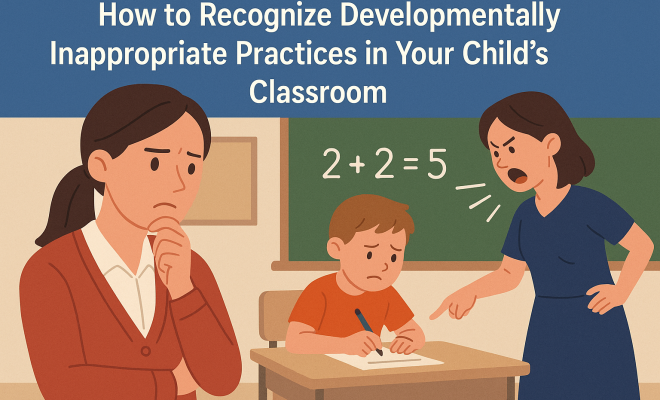
As a parent, it’s natural to want the best for your child. You expect their classroom to be a nurturing environment that fosters growth, creativity, and learning tailored to their individual developmental stage. However, not all educational practices align with these ideals. Developmentally inappropriate practices can hinder a child’s learning and emotional well-being. Understanding what these practices look like is crucial for advocating effectively for your child’s education. Here’s how to recognize these practices in your child’s classroom.
1. What Are Developmentally Inappropriate Practices?
Developmentally inappropriate practices refer to teaching methods and classroom environments that do not align with the cognitive, emotional, or social development levels of children. These practices can manifest in various ways, such as overly rigorous academic expectations, lack of play-based learning, or inappropriate disciplinary measures. The National Association for the Education of Young Children (NAEYC) emphasizes that education should be tailored to the developmental stages of children to foster a positive and effective learning experience.
For example, children in preschool should not be expected to sit quietly for long periods or engage in intensive rote learning. Instead, they thrive in environments where play and exploration are prioritized. Recognizing these practices involves observing how teachers interact with students and the types of activities that are emphasized in the curriculum.
2. Overly Academic Focus
One of the most glaring signs of developmentally inappropriate practices is an excessive focus on academic skills, particularly in early childhood education. If your child’s classroom is heavily centered around standardized testing, worksheets, and formal assessments, this could be a red flag. Research indicates that children learn best through play and hands-on experiences, especially in their formative years.
In instances where kindergartners are expected to master reading and math skills that are typically reserved for later grades, it’s essential to take action. A balanced curriculum should include opportunities for exploration, social interaction, and physical play. If your child’s learning environment lacks these components, you may want to discuss your concerns with the teacher or school administration.
3. Neglect of Social-Emotional Learning
Another critical aspect of healthy development is social-emotional learning (SEL). Classrooms that ignore the emotional and social needs of students promote developmentally inappropriate practices. Children need to learn how to interact with peers, manage their emotions, and build relationships. If your child’s classroom does not integrate SEL into its curriculum through activities like cooperative learning or peer discussions, this could hinder their social development.
For instance, a classroom that emphasizes individual work over group projects may neglect the development of essential teamwork skills. Pay attention to whether teachers actively promote discussions about feelings and conflict resolution. If these practices are absent, it may be time to advocate for a more holistic approach to education.
4. Inflexibility in Teaching Methods
Every child learns differently. A one-size-fits-all approach to teaching is often a sign of developmentally inappropriate practices. If a teacher employs the same method for every student, regardless of their varying learning styles, this may stifle creativity and limit engagement. For example, if a teacher refuses to allow students to explore topics of interest or apply their learning in diverse ways, that rigidity can be detrimental.
Effective educators recognize the importance of flexibility in their teaching strategies. They should adapt lessons to meet the needs of different learners, whether through hands-on projects, discussions, or multimedia resources. If you notice a lack of differentiation in your child’s learning experience, consider discussing this with the teacher to explore ways to better accommodate all students.
5. Limited Opportunities for Play-Based Learning
Play is a fundamental way in which children learn about the world around them. Classrooms that lack ample opportunities for play-based learning are often not meeting the developmental needs of young children. Play fosters critical thinking, creativity, and social skills, all of which are essential for holistic development. If your child spends most of their time engaged in formal instruction without opportunities for imaginative play, it may indicate developmentally inappropriate practices. (See: Child Development and Mental Health.)
You might ask your child about their day and find that they rarely have time for unstructured play. Activities that allow for exploration and creativity should be a staple of the curriculum, especially in early childhood settings. If you find a limited focus on these aspects, it might be worthwhile to engage with the school about integrating more play-based learning into the daily routine.
6. Excessive Behavioral Expectations
Classrooms that impose excessive behavioral expectations can create an environment of stress and anxiety rather than one of learning. Young children are still developing their self-regulation skills, and expecting them to behave perfectly at all times is unreasonable. If your child’s classroom has stringent rules that are not age-appropriate, it may lead to feelings of frustration and disengagement.
For example, requiring young students to remain silent and seated for extended periods can hinder their natural impulses to move and explore. Instead, classrooms should encourage healthy behavioral development by incorporating movement breaks and allowing for natural expressions of energy. Engaging with teachers about their behavioral management strategies can help ensure they align with developmentally appropriate practices.
7. How to Advocate for Change
If you recognize developmentally inappropriate practices in your child’s classroom, it’s essential to take action. Start by documenting specific concerns, noting how they affect your child’s learning experience. Open a dialogue with the teacher to express your observations and ask questions about their teaching philosophy. You might find that they are unaware of these issues and are open to feedback.
If necessary, escalate your concerns to school administration, emphasizing the importance of developmentally appropriate practices. Engaging with other parents can also strengthen your voice. Collaborating as a group can bring greater attention to these issues and foster change in teaching methods that benefit all students.
8. Statistics on Developmentally Inappropriate Practices
Understanding the prevalence and impact of developmentally inappropriate practices can provide context for your advocacy efforts. A study conducted by the NAEYC found that nearly 20% of early childhood classrooms reported excessive focus on academic readiness at the expense of social-emotional learning. This figure highlights a concerning trend where the joy of learning is compromised in favor of standardized expectations.
Additionally, research from the National Institute for Early Education Research (NIEER) shows that children exposed to developmentally appropriate practices are 30% more likely to demonstrate better social skills and emotional regulation compared to their peers in inappropriate settings. This underscores the need for educational environments that support a well-rounded development approach.
9. Expert Perspectives on Developmentally Inappropriate Practices
Experts in child development emphasize the importance of aligning educational practices with developmental stages. Dr. Susan S. Miller, a child psychologist, explains that “when children are subjected to developmentally inappropriate practices, it not only affects their academic performance but can also have long-term effects on their mental health.” Her insights reveal the critical nature of nurturing environments that respect children’s developmental needs.
Similarly, Dr. John H. McLellan, a professor of education, states, “Education should not be a race. It should be a journey that allows children to explore, learn, and grow at their own pace.” These expert opinions reinforce the notion that educating young children requires a thoughtful approach that considers their unique developmental stages.
10. Examples of Developmentally Appropriate Practices
In contrast to developmentally inappropriate practices, there are numerous examples of effective, developmentally appropriate strategies. For instance, a kindergarten classroom might incorporate “learning centers” where children can choose activities based on their interests, such as building blocks for spatial awareness, art supplies for creative expression, or storytelling corners for language development.
Furthermore, educators can integrate nature-based learning, where children explore outdoor environments, fostering curiosity and connection to the natural world. Activities like gardening or nature walks not only promote physical activity but also encourage observation and inquiry—key components of effective learning.
Another example is the use of mixed-age groups in classrooms, which promotes peer learning and social interactions that are crucial for developing empathy and cooperation skills. This approach allows younger children to learn from older peers while also giving older children the opportunity to reinforce their learning by teaching others.
11. FAQs About Developmentally Inappropriate Practices
What should I look for to identify developmentally inappropriate practices?
Look for excessive emphasis on formal academics, minimal play-based learning, rigid teaching methods, and lack of social-emotional support in the classroom. These indicators can signal that the educational environment is not adequately meeting your child’s developmental needs.
How can I tell if the expectations in my child’s classroom are appropriate?
Evaluate whether the curriculum allows for exploration, creativity, and active engagement. In appropriate settings, children should have opportunities to interact with peers, participate in play, and engage in hands-on learning experiences.
What can I do if I suspect my child is experiencing developmentally inappropriate practices?
Start by documenting your observations and concerns, then have a conversation with your child’s teacher to express your thoughts. If necessary, involve school administration and collaborate with other parents to advocate for changes that benefit all students.
Are there any resources for parents to learn more about developmentally appropriate practices?
Yes! The NAEYC offers numerous resources on developmentally appropriate practices, including guidelines, articles, and professional development opportunities. Additionally, local parenting workshops or educational seminars can provide helpful insights and strategies.
How do developmentally inappropriate practices impact a child’s long-term outcomes?
Children exposed to developmentally inappropriate practices may face challenges such as lower academic achievement, difficulties with social skills, and increased anxiety. These impacts can extend into adolescence and adulthood, affecting overall well-being and success.
12. The Role of Parental Involvement
Parental involvement can significantly influence a child’s educational experience. When parents actively participate in their child’s education—whether through volunteering in the classroom, attending school meetings, or staying engaged with homework—they can help foster an environment that prioritizes developmentally appropriate practices. Creating a partnership with teachers can lead to more tailored educational approaches that consider each child’s unique needs. Furthermore, by being involved, parents can help advocate for changes that promote a healthier learning environment for all students.
Research shows that children whose parents are involved in their education perform better academically and exhibit improved behavior. In one study, it was found that schools with high levels of parental involvement reported a 30% higher level of student engagement compared to those with low involvement. This suggests that your engagement can directly impact your child’s experience and learning outcomes.
13. Impact of Technology on Developmentally Inappropriate Practices
In today’s digital age, the role of technology in education is increasingly prominent. While technology can enhance learning, an over-reliance on digital tools without consideration for developmental appropriateness can lead to negative outcomes. For instance, classrooms that prioritize screen time over hands-on, interactive learning experiences may inadvertently contribute to developmentally inappropriate practices.
Studies indicate that young children exposed to excessive screen time may struggle with attention regulation and social interactions. A report from the American Academy of Pediatrics highlights that children aged 2 to 5 should have no more than one hour of high-quality programming daily. This balance is crucial; while technology can be a powerful educational tool, it should not replace the vital social experiences children gain through physical play and face-to-face interaction.
14. Cultural Considerations in Developmentally Appropriate Practices
Culture can significantly shape how developmentally appropriate practices are perceived and implemented. Different cultural backgrounds may emphasize varying values in education, particularly regarding discipline, social interactions, and learning styles. For example, some cultures might prioritize group learning and collaboration, while others may focus on individual achievement and competition. Understanding these cultural contexts is essential for educators to cater to the diverse needs of their students.
As parents, it’s vital to discuss your cultural values and expectations with teachers. Open communication can lead to a more inclusive classroom environment that respects and integrates various cultural perspectives. This not only helps in addressing developmentally inappropriate practices but also enriches the educational experience for all students involved.
15. Future Trends in Early Childhood Education
The landscape of early childhood education is continually evolving, and it’s crucial to stay informed about future trends that may impact developmentally appropriate practices. One significant trend is the increased emphasis on social-emotional learning and mental health awareness in educational settings. Educators and administrators are starting to recognize the importance of nurturing emotional intelligence and resilience in young learners, which aligns with developmentally appropriate practices.
Another trend is the growing integration of outdoor and experiential learning. Schools are beginning to design curricula that incorporate nature-based learning and community involvement, which not only offer hands-on experiences but also foster a connection to the environment. This shift is particularly significant as research continues to support the benefits of outdoor play on child development, including enhanced creativity, problem-solving skills, and overall well-being.
Finally, there is a movement towards personalized learning, which tailors educational experiences to meet the individual needs of each child. This approach aligns well with the principles of developmentally appropriate practices, allowing educators to accommodate various learning styles and paces.
Conclusion
Recognizing developmentally inappropriate practices in your child’s classroom is crucial for ensuring they receive an education that meets their developmental needs. By assessing the focus of the curriculum, the integration of social-emotional learning, the flexibility of teaching methods, and the opportunities for play, you can pinpoint potential areas of concern. Armed with this knowledge, you can advocate effectively for a learning environment that nurtures your child’s growth and well-being. With increased awareness and active participation, you can help foster an educational landscape that prioritizes the healthy development of all children.
“`
Trending Now
Frequently Asked Questions
What are developmentally inappropriate practices in education?
Developmentally inappropriate practices are teaching methods and classroom environments that do not align with children's cognitive, emotional, or social development levels. Examples include overly rigorous academic expectations and lack of play-based learning, which can hinder a child's learning and emotional well-being.
How can I identify inappropriate practices in my child's classroom?
To identify inappropriate practices, observe the classroom environment and teaching methods. Look for signs such as excessive focus on standardized testing, long periods of sitting still, and minimal opportunities for play and exploration, which are crucial for young children's development.
Why is play important in early childhood education?
Play is essential in early childhood education because it fosters creativity, social skills, and cognitive development. Children learn best through hands-on experiences and exploration, which help them engage with concepts more effectively than traditional rote learning methods.
What can I do if I notice developmentally inappropriate practices?
If you notice developmentally inappropriate practices, consider discussing your concerns with the teacher or school administration. Advocate for changes that align with child development principles and suggest incorporating more play-based learning and age-appropriate activities.
What role does the National Association for the Education of Young Children (NAEYC) play in education?
The NAEYC promotes high-quality early childhood education by providing guidelines and resources that emphasize developmentally appropriate practices. They advocate for teaching methods that support children's cognitive, emotional, and social development, ensuring a positive learning environment.
What’s your take on this? Share your thoughts in the comments below — we read every one.