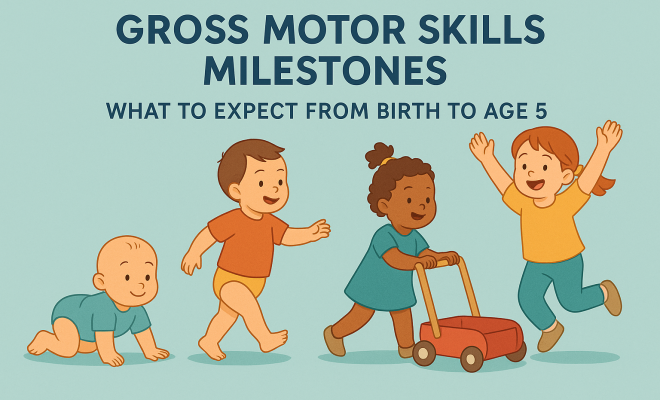
“Gross Motor Skills Milestones: What to Expect from Birth to Age 5”
“`html
Understanding Gross Motor Skills
Gross motor skills are the large movements your child makes with arms, legs, feet, or their entire body. Whether it’s crawling, walking, jumping, or climbing, these skills are vital for children’s physical development. They play a crucial role in children’s ability to navigate their environments and interact with the world around them. The importance of these skills cannot be understated, as they serve as the foundation for more complex physical abilities and affect a child’s cognitive and emotional growth.
From the moment a child is born, they begin a journey of development that includes numerous milestones, particularly in gross motor skills. Tracking these gross motor skills milestones can provide valuable insights into a child’s growth and development. Parents and caregivers must know what to expect as their children grow, as this knowledge can help in identifying potential developmental delays or challenges.
The Timeline of Gross Motor Skills Development
Gross motor skills development follows a general timeframe. While every child is unique and may reach these milestones at their own pace, there are typical age ranges that serve as guides. Here’s a breakdown of what to expect from birth to age 5:
- Birth to 3 months: At this stage, babies primarily display reflexive movements. They can move their arms and legs but lack control.
- 4 to 6 months: Babies begin to gain control over their head and can push up when lying on their stomach. They may also start to roll over.
- 7 to 12 months: Most infants begin to crawl around 8 to 10 months and may start to pull themselves up to stand.
- 1 to 2 years: Children typically take their first steps between 9 and 15 months. By 18 months, most are walking independently and may begin to run.
- 2 to 3 years: This is a busy time for toddlers as they refine their movements. They can walk up and down stairs, kick a ball, and jump in place.
- 3 to 4 years: Preschoolers gain more confidence as they run, climb, and may begin to hop on one foot. They can also ride a tricycle.
- 4 to 5 years: Children at this age can perform more complex movements such as skipping, catching a ball, and balancing on one foot for a brief moment. They have better control over their body movements.
Factors Affecting Gross Motor Skills Development
Numerous factors can influence a child’s gross motor skills development. Genetics, environment, and opportunities for physical activity all play a role. For instance, a child with physically active parents might have more opportunities to engage in outdoor play, positively impacting their gross motor skills milestones.
Additionally, children’s exposure to various activities is critical. Those who participate in structured play, such as sports or organized physical activities, often develop their skills more quickly. Conversely, children who spend a lot of time in strollers or in front of screens may miss out on vital practice opportunities.
Identifying Delays in Gross Motor Skills
While every child develops at their own pace, certain signs may indicate a delay in gross motor skills. Parents should keep an eye out for the following:
- By 9 months, not rolling over or pushing up to a sitting position.
- By 15 months, not walking independently.
- By 2 years, not running or climbing.
- By 3 years, difficulty jumping or playing with gross motor activities.
If any of these milestones are missed, it may be worth consulting a pediatrician or child development specialist. Early intervention can make a significant difference in a child’s development trajectory.
Encouraging Gross Motor Skills Development
There are plenty of fun and engaging activities parents can do to encourage their children to develop gross motor skills. Here are some practical ideas:
- Tummy time: For infants, tummy time is essential for building strength in their neck, shoulders, and back. Aim for a few minutes several times a day.
- Outdoor play: Let your child explore safe outdoor environments where they can run, jump, and climb. Simple activities like playing tag or going to the playground can be very beneficial.
- Active play: Encourage play that involves movement, such as dancing, kicking a ball, or playing with a hula hoop. These activities not only enhance gross motor skills but also promote coordination and balance.
- Join a class: Consider enrolling your child in classes that promote physical activity, such as swimming or gymnastics, which can help develop their skills in a structured setting.
The Role of Parents and Caregivers
Parents and caregivers play a pivotal role in a child’s gross motor skills development. Modeling active behaviors, being engaged in physical play, and providing encouragement can create a supportive environment for growth. Additionally, it’s essential to give children time and space to explore their capabilities without undue restrictions. (See: CDC milestones for child development.)
Moreover, caregivers should recognize that children learn at their own pace. Some may need more time to master specific skills, while others may excel quickly. Providing positive reinforcement and celebrating achievements, no matter how small, fosters a child’s self-esteem and eagerness to engage in physical activities.
Current Relevance of Gross Motor Skills Milestones
In our increasingly digital world, concerns have arisen about children’s physical development. Many children spend significant amounts of time engaged with screens, which can limit opportunities for active play. Research indicates that physical inactivity during early childhood can have long-term implications for both physical and mental health.
As parents and educators, it’s vital to prioritize physical activity as part of a child’s daily routine. According to the Centers for Disease Control and Prevention (CDC), preschool children should engage in at least 150 minutes of weekly physical activity. This engagement is crucial not only for developing gross motor skills but also for fostering social skills, emotional regulation, and overall health.
Expert Perspectives on Gross Motor Skills Milestones
Experts in child development emphasize the importance of play in mastering gross motor skills. Dr. Angela Hanscom, a pediatric occupational therapist, notes that unstructured play—where children have the freedom to explore and take risks—is critical to developing balance, coordination, and strength. She advocates for children to spend more time outdoors, stating that the natural environment encourages movement and creativity.
Additionally, physical education specialists highlight the role of routine physical activity in school settings. They argue that integrating physical activities into the school curriculum not only supports gross motor skills development but also improves children’s focus and cognitive performance in academic tasks. This approach not only enhances physical skills but also contributes to children’s overall well-being.
The Impact of Nutrition on Gross Motor Skills
Nutrition plays an often-overlooked role in a child’s physical development, including gross motor skills. The right nutrients fuel a child’s growth and support the energy levels required for physical activity. A balanced diet rich in fruits, vegetables, whole grains, and proteins is vital.
Iron, calcium, and vitamins D and C are particularly important for physical development. For example, calcium and vitamin D are crucial for bone strength, which is particularly important as children begin to engage in more physical activities. Likewise, protein is necessary for muscle development, which directly impacts a child’s ability to perform gross motor tasks.
Comparative Analysis: Gross Motor Skills Across Cultures
The development of gross motor skills can vary significantly across different cultures and environments. For instance, children in rural areas may have more freedom to engage in outdoor play compared to their urban counterparts who might be more confined to indoor activities due to safety concerns.
In some cultures, children are encouraged to climb trees, engage in traditional games, and explore their surroundings more freely than in others where structured play is emphasized. This cultural context can impact when children reach their gross motor skills milestones. Research suggests that children who have the opportunity for more diverse and unstructured play often develop these skills at a faster rate. (See: WHO fact sheet on child development.)
Statistics on Gross Motor Skills Development
Understanding the statistics surrounding gross motor skills milestones can provide a clearer picture of child development trends. For example, a study by the American Academy of Pediatrics found that approximately 70% of children who engage in structured physical activities meet their gross motor skill milestones by age 3, compared to just 30% of those who do not participate in organized activities.
Moreover, the CDC reported that only 24% of children aged 2 to 5 years meet the recommended guidelines for physical activity, highlighting a significant gap that could lead to delays in gross motor skills development. This gap emphasizes the importance of parents and caregivers actively encouraging physical play and outdoor activities.
FAQs About Gross Motor Skills Milestones
What are gross motor skills milestones?
Gross motor skills milestones are specific physical achievements that children typically reach as they grow. These milestones include activities such as sitting up, crawling, walking, running, jumping, and climbing. Each milestone reflects a child’s physical development and capability.
At what age should my child walk independently?
Most children take their first steps between 9 and 15 months of age. By about 18 months, many children walk independently. However, it’s essential to remember that all children develop at their own pace, and some may walk a little earlier or later.
How can I help my child develop gross motor skills?
Encouraging active play is one of the best ways to help your child develop gross motor skills. Activities like playing tag, climbing on playground equipment, and engaging in dance or sports can significantly enhance their physical abilities. Providing a safe space for movement and exploration is also crucial.
What should I do if I suspect my child has a delay in gross motor skills?
If you notice any significant delays, such as not reaching certain milestones by the expected age, it’s best to consult with a pediatrician or child development specialist. They can assess your child’s development and recommend appropriate interventions if necessary.
Are there specific games or activities that promote gross motor skills?
Yes! Activities like obstacle courses, playing catch, riding bikes, and even simple games like Simon Says can effectively promote gross motor skills. In addition, dancing to music encourages movement and rhythm while developing coordination.
How do gross motor skills relate to other areas of development?
Gross motor skills are closely linked to other developmental areas, including fine motor skills, cognitive development, and social-emotional growth. For example, improved gross motor skills can lead to greater independence and confidence in children, which positively affects their social interactions and self-esteem. (See: NIH information on developmental milestones.)
Can delays in gross motor skills affect learning?
Yes, delays in gross motor skills can impact a child’s learning. Children with underdeveloped gross motor skills may struggle with tasks requiring coordination, balance, and spatial awareness. This can hinder their performance in physical education, affect their confidence in social settings, and even influence their academic learning as they engage in activities that require physical movement.
Strategies for Schools to Support Gross Motor Skills
Schools play an essential role in supporting gross motor skills development among students. Integrating physical activities into the curriculum can foster skill development and enhance students’ overall well-being. Here are a few strategies schools can utilize:
- Incorporate Movement into Lessons: Teachers can integrate movement into academic lessons to keep students engaged while promoting physical activity. For example, using movement-based learning techniques, such as having students act out vocabulary words, can reinforce their learning while enhancing their gross motor skills.
- Structured Recess: Providing structured recess activities that focus on physical play can encourage students to practice their gross motor skills in a fun and social environment. Activities such as organized games, climbing structures, and collaborative sports can benefit children’s physical development.
- After-School Programs: Offering after-school activities that promote physical activity, such as sports, dance classes, or gymnastics, can provide students with additional opportunities to develop their gross motor skills in a structured environment.
- Professional Development for Educators: Training teachers on the importance of gross motor skills and how to facilitate physical activity can empower them to create a movement-rich environment that supports all students.
The Future of Gross Motor Skills Awareness
As the digital age progresses, the conversation surrounding gross motor skills and early childhood development will likely continue to grow. Awareness of the importance of these skills and how they are affected by modern lifestyles will be crucial. Parents, educators, and healthcare providers must collaborate to ensure that children have ample opportunities to engage in physical activity, whether through organized sports, unstructured play, or family outings.
With the proper knowledge and resources, families can create environments that promote active living, ultimately nurturing well-rounded, healthy children capable of achieving their gross motor skills milestones. As awareness increases, so does the push for policies that prioritize physical education in schools, promote outdoor play, and encourage healthy lifestyles for children.
Conclusion: The Journey of Development
Tracking gross motor skills milestones from birth to age 5 provides valuable insights into a child’s growth and development. While all children progress at their pace, understanding the typical milestones, recognizing potential delays, and fostering development through play and physical activity is essential for parents and caregivers.
By actively engaging in their child’s physical journey, promoting a healthy lifestyle, and ensuring they have opportunities to explore their environment, parents can lay a solid foundation for their child’s future physical, cognitive, and emotional health.
“`
Trending Now
Frequently Asked Questions
What are gross motor skills milestones for infants?
Gross motor skills milestones for infants include reflexive movements at birth, gaining head control by 4 to 6 months, and crawling by 8 to 10 months. By their first birthday, many infants can pull themselves up to stand, marking significant progress in their physical development.
At what age do children typically start walking?
Children typically take their first steps between 9 and 15 months. By 18 months, most are walking independently, showcasing their growing gross motor skills and coordination as they transition from crawling to walking.
How can I track my child's gross motor skills development?
Tracking your child's gross motor skills development involves observing key milestones such as rolling over, crawling, and walking. Familiarizing yourself with age-appropriate expectations can help identify any potential delays and ensure your child is developing normally.
What activities promote gross motor skills in toddlers?
Activities that promote gross motor skills in toddlers include climbing, jumping, running, and playing with balls. Encouraging outdoor play and providing safe spaces for movement can significantly enhance their physical development and coordination.
Why are gross motor skills important for children?
Gross motor skills are crucial for children's physical development as they enable movement and interaction with their environment. These skills lay the foundation for more complex physical abilities and are linked to cognitive and emotional growth, impacting overall development.
What’s your take on this? Share your thoughts in the comments below — we read every one.