The Relationship Between Object Permanence and Cognitive Development in Infants
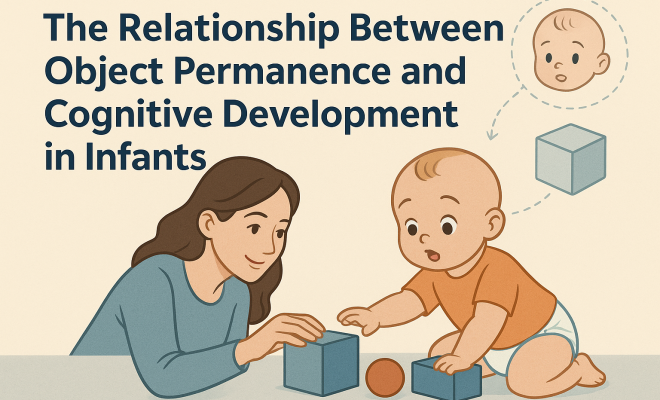
“`html
The journey of cognitive development in infants is nothing short of fascinating. One of the pivotal milestones in this journey is the concept of object permanence, which serves as a critical marker in understanding how babies perceive the world around them. This article explores the intricate relationship between object permanence and cognitive development in infants, shedding light on its significance, stages, and implications for future learning.
Understanding Object Permanence
Object permanence refers to the understanding that objects continue to exist even when they cannot be seen, heard, or touched. This concept was notably introduced by Swiss psychologist Jean Piaget in his theory of cognitive development. According to Piaget, infants start developing object permanence around 4 to 7 months of age, indicating a significant leap in their cognitive abilities.
In layman’s terms, when a child plays peek-a-boo, their reaction depends on their understanding of object permanence. For younger infants, if a caregiver’s face is obscured by hands, they may think it has vanished. However, as they grow and develop this understanding, they realize that the caregiver still exists, even when out of sight.
The Four Stages of Cognitive Development
Piaget categorized cognitive development into four stages, and object permanence plays a crucial role in the first stage, known as the sensorimotor stage, which spans from birth to approximately 2 years old. Here’s a breakdown of these stages:
- Sensorimotor Stage (0-2 years): This is where object permanence begins to form. Infants learn through their senses and motor actions.
- Preoperational Stage (2-7 years): Characterized by symbolic thinking and egocentrism, children use language to express their thoughts.
- Concrete Operational Stage (7-11 years): Logical thinking develops, and children can perform operations on concrete objects.
- Formal Operational Stage (12 years and up): Abstract reasoning emerges, allowing for advanced problem-solving and hypothetical thinking.
Understanding these stages helps contextualize how object permanence is a foundational aspect of cognitive development.
Milestones in Developing Object Permanence
As infants grow, they progress through various milestones in developing object permanence. Here’s a closer look at what to expect during the first year:
- 0-4 Months: Babies engage with their environment primarily through sensory experiences. They react to visual stimuli but do not yet recognize that objects continue to exist when out of sight.
- 4-7 Months: Infants begin to search for partially hidden objects. For example, if you place a toy partially under a blanket, they may try to reveal it.
- 8-12 Months: This is a critical period where infants fully grasp object permanence. They will actively search for toys that are completely hidden. Their understanding that objects exist independently of their perception marks a significant cognitive leap.
These milestones are not just about toys; they reflect a growing awareness of the world that surrounds them.
The Role of Play in Developing Object Permanence
Play is essential for cognitive development, especially in understanding object permanence. Engaging infants in interactive games such as hide-and-seek or peek-a-boo can effectively promote this cognitive skill. Here’s how:
- Peek-a-Boo: This classic game teaches infants that even when they can’t see someone, that person hasn’t disappeared. This reinforces the idea of object permanence.
- Hide-and-Seek with Toys: Hiding toys under blankets or cups encourages infants to search for them, solidifying their understanding that the toys still exist.
- Interactive Books: Books with flaps or pop-ups can also aid in this cognitive development, as they encourage infants to explore and discover hidden objects.
Through play, infants learn not just about object permanence but also develop problem-solving skills, enhance their memory, and build social interactions.
Factors Influencing Object Permanence Development
While there are typical milestones, it’s important to remember that individual differences can affect how and when infants develop object permanence. Factors influencing this include: (See: Wikipedia article on object permanence.)
- Genetics: Some infants may naturally develop cognitive skills at different rates, influenced by their genetic makeup.
- Environment: A stimulating environment with a variety of objects and opportunities to explore can significantly enhance cognitive development.
- Parental Interaction: Responsive, interactive parenting fosters cognitive growth. Engaging with infants during play and offering new experiences can help them grasp concepts like object permanence more effectively.
Each infant’s journey is unique, and understanding the nuances of these factors can help caregivers support their cognitive development more effectively.
Current Research on Object Permanence and Cognitive Development
Recent studies have shed light on the nuances of object permanence and its implications for cognitive development. Research indicates that this understanding is more complex than initially thought. For instance, some studies suggest that infants may demonstrate a basic understanding of object permanence even earlier than the 4-month mark proposed by Piaget.
Advanced eye-tracking technology allows researchers to observe how infants respond to moving objects and predict their behaviors, leading to insights about cognitive processes. For example, when an object moves behind an occluder, infants as young as 3 months show surprise if it doesn’t reappear, suggesting a rudimentary grasp of permanence.
This ongoing research continues to challenge and refine our understanding of cognitive development and the role of object permanence, indicating that this concept may be more foundational than previously acknowledged.
Practical Implications for Parents and Educators
Understanding the role of object permanence in cognitive development provides valuable insights for parents and educators. Here are some practical implications:
- Encourage Exploration: Create a safe environment where infants can explore different objects and their properties. This interaction fosters curiosity and cognitive growth.
- Interactive Learning: Utilize games that promote object permanence. Simple activities like hiding toys can be both educational and entertaining.
- Be Patient: Every infant develops at their own pace. Recognizing and nurturing individual differences is crucial in supporting their cognitive journey.
Parents and educators play a critical role in fostering an environment conducive to cognitive development, particularly through understanding object permanence.
Long-Term Implications of Object Permanence on Learning
The implications of developing object permanence extend far beyond infancy. As children grow, their understanding of object permanence can influence various aspects of their cognitive development:
- Memory Development: Understanding that objects exist independent of their perception enhances memory skills, as children learn to recall information about objects, their characteristics, and locations.
- Problem-Solving Skills: Children who grasp object permanence can better navigate puzzles and tasks as they age, translating into improved critical thinking and reasoning abilities.
- Social Interactions: Understanding that others have perspectives and experiences that differ from their own is rooted in the concept of object permanence. This ability enhances empathy and social skills.
In essence, the seeds of cognitive development planted through understanding object permanence can have lasting effects throughout a child’s educational journey.
The Intersection of Object Permanence and Emotional Development
Interestingly, the understanding of object permanence is not only vital for cognitive skills but is also closely tied to emotional development. Infants who have a solid grasp of object permanence tend to exhibit greater emotional security.
For example, infants who understand that caregivers will return after they leave tend to experience less anxiety when separated. This emotional stability is crucial in developing healthy relationships later in life. Furthermore, as children learn that objects and people exist independently of their immediate perception, they can better navigate social situations, leading to healthier emotional and social interactions. (See: CDC resources on infant cognitive development.)
FAQ: Object Permanence and Cognitive Development
What is the importance of object permanence in cognitive development?
Object permanence is crucial because it signifies the beginning of a child’s ability to think abstractly. It lays the groundwork for other cognitive skills like memory, problem-solving, and social understanding.
At what age do babies start to develop object permanence?
Babies typically begin to show signs of understanding object permanence between 4 to 7 months of age, with more definite grasping occurring around 8 to 12 months.
Can parents help develop their child’s object permanence skills?
Absolutely! Parents can engage their infants in games like peek-a-boo and hide-and-seek, which reinforce the concept of object permanence in a fun and interactive way.
What are some signs that my child understands object permanence?
Signs include actively searching for hidden objects, showing surprise when an object does not reappear after being obscured, and demonstrating curiosity about objects that are out of sight.
How does object permanence affect later cognitive development?
The understanding of object permanence lays the foundation for more advanced cognitive tasks, such as memory recall, logical reasoning, and even social interactions as children learn that others have independent thoughts and feelings.
Is object permanence the same for all children?
No, while there are general milestones, the development of object permanence can vary significantly among individual children, influenced by factors like genetics, environment, and parental engagement.
Additional Insights on Object Permanence
Many parents and educators find it insightful to observe the activities that can further nurture the understanding of object permanence. Beyond games and toys, daily interactions can serve as excellent learning opportunities. For instance, when a parent steps out of a room but continues to talk or sing, the child learns that the parent still exists even when they are not visible. This simple act reinforces the idea that people and objects are constant, leading to a stronger grasp of permanence.
Research has also explored how cultural factors may influence the ways in which object permanence is developed. In some cultures, children are encouraged to explore more independently, which may lead to earlier development of cognitive skills related to object permanence. In contrast, more protective parenting styles might result in slower progression through these milestones. Understanding these dynamics can help caregivers tailor their interaction strategies to best support their child’s unique development.
Exploring Object Permanence through Different Learning Modalities
Another interesting angle on object permanence is examining how different learning modalities can influence its development. Infants learn best when information is presented in multiple forms. For instance, combining visual and auditory cues can enhance their understanding. A toy that makes a sound when hidden can promote searching behavior, reinforcing the idea that the toy exists even when out of sight. (See: HHS overview of cognitive development.)
Additionally, incorporating movement into lessons can also aid in developing object permanence. Activities where caregivers hide an object while the child watches can solidify their understanding. This physical interaction combined with the cognitive challenge can boost retention and understanding.
Case Studies and Real-World Examples
To better illustrate the impact of object permanence on cognitive development, consider case studies from various childcare settings. In one daycare, caregivers implemented a daily routine of hiding toys and encouraging infants to find them. Over a few months, the children started exhibiting more advanced problem-solving strategies, such as looking for toys in more complex hiding spots and communicating about their discoveries with their peers. This improvement demonstrated not just a grasp of object permanence but also a deeper understanding of spatial awareness and cooperative play.
Another example can be found in developmental assessments. Children who struggled with object permanence often showed delays in social interactions and problem-solving skills in later assessments. Educators noted that these children would become frustrated during activities that required them to remember hidden objects or anticipate the actions of peers. This highlights the long-term implications of understanding object permanence, as it is interconnected with broader cognitive skills.
Expert Perspectives on Object Permanence
Insights from child development experts further underscore the importance of object permanence in cognitive development. Dr. Lisa Miller, a child psychologist, emphasizes that “the ability to understand that objects exist even when out of sight is fundamental not only for cognitive growth but also for emotional security. Children who master this concept tend to feel more secure and less anxious about their caregivers’ presence.” This perspective reinforces the notion that fostering object permanence is integral to holistic development.
Similarly, Dr. Harriet Cohen, an early childhood educator, notes that “activities promoting object permanence during the formative months can lead to more curious, engaged learners. When children understand that things exist beyond their immediate perception, they are more likely to explore and experiment.” This viewpoint connects cognitive development with the cultivation of a lifelong love for learning.
Conclusion: Nurturing Cognitive Growth Through Object Permanence
The relationship between object permanence and cognitive development in infants is profound and multi-faceted. As a cornerstone of early cognitive understanding, object permanence sets the stage for future learning and emotional growth. By fostering an environment that encourages exploration, interaction, and play, caregivers can significantly impact an infant’s cognitive trajectory.
In understanding and nurturing object permanence, we not only help our infants grasp the fundamental aspects of their world but also lay the foundation for lifelong learning. As research continues to evolve, the insights gained will undoubtedly enrich our approaches to early childhood education and development.
“`
Trending Now
Frequently Asked Questions
What is object permanence in infants?
Object permanence is the understanding that objects continue to exist even when they cannot be seen, heard, or touched. This concept, introduced by Jean Piaget, typically begins to develop in infants around 4 to 7 months of age, marking a significant cognitive milestone in their ability to perceive the world.
At what age do infants develop object permanence?
Infants generally start to develop object permanence between 4 to 7 months of age. This development indicates a crucial leap in their cognitive abilities, as they begin to understand that objects continue to exist even when out of sight.
How does object permanence relate to cognitive development?
Object permanence is a key aspect of cognitive development in infants, particularly during the sensorimotor stage (0-2 years). It reflects their growing understanding of the world, as they learn that objects exist independently of their immediate perception.
What are the stages of cognitive development according to Piaget?
Piaget identified four stages of cognitive development: the sensorimotor stage (0-2 years), where object permanence develops; the preoperational stage (2-7 years), characterized by symbolic thinking; the concrete operational stage (7-11 years), involving logical thinking; and the formal operational stage (12 years and up), where abstract reasoning emerges.
Why is object permanence important for infants?
Object permanence is crucial because it signifies an infant's cognitive growth and understanding of their environment. It lays the foundation for future learning and social interactions, as infants who grasp this concept are better equipped to explore and engage with the world around them.
Have you experienced this yourself? We’d love to hear your story in the comments.