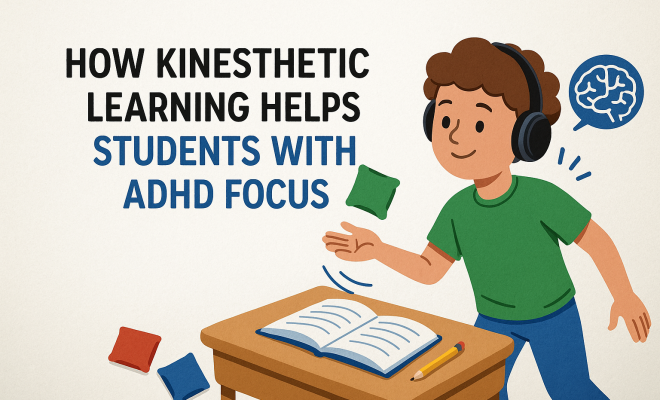
How Kinesthetic Learning Helps Students with ADHD Focus
“`html
Understanding ADHD: Challenges in Focus and Learning
Attention Deficit Hyperactivity Disorder (ADHD) is more than just a label; it’s a complex neurodevelopmental disorder affecting millions of children and adults worldwide. According to the Centers for Disease Control and Prevention (CDC), approximately 6.1 million children aged 2-17 years have been diagnosed with ADHD in the United States. This condition can make focusing on tasks particularly challenging, leading to difficulties in both academic and social settings.
Students with ADHD often struggle with impulsivity, hyperactivity, and inattention, which can hinder their learning processes in traditional educational environments. Conventional teaching methods may not resonate with these students, making it crucial to explore alternative approaches. One particularly effective strategy is kinesthetic learning, which leverages movement and hands-on activities to enhance understanding and retention.
What Is Kinesthetic Learning?
Kinesthetic learning is an educational approach that emphasizes physical activity as a means of engaging students in the learning process. This style of learning relies on the idea that students learn best when they can experience concepts through hands-on activities rather than simply memorizing information through lectures or textbooks.
Kinesthetic learners often excel in environments that allow for movement—like labs, workshops, and outdoor activities—where they can manipulate materials and interact with their surroundings. This approach not only caters to different learning styles but can be especially beneficial for students with ADHD, who may find it challenging to focus in more traditional, sedentary classroom settings.
Why Kinesthetic Learning Works for ADHD Students
Research shows that kinesthetic learning can significantly improve focus and engagement for students with ADHD. When students are allowed to move and interact with learning materials, they often experience enhanced concentration and reduced impulsivity. Here are several reasons why kinesthetic learning is particularly effective for these students:
- Physical Engagement: Movement stimulates brain activity. For students with ADHD, physical involvement helps to channel their energy productively, allowing them to engage with the material more effectively.
- Enhanced Memory: Studies indicate that students who learn through physical activity are more likely to remember information. The connection between movement and memory aids retention, making it easier for ADHD students to recall what they’ve learned.
- Reduced Distraction: Kinesthetic activities can help minimize distractions that often plague ADHD students. When they are actively participating in their learning, they are less likely to lose focus on tasks.
- Improved Motivation: Engaging in hands-on activities can make learning more enjoyable, thereby increasing motivation. Students with ADHD often respond better to material that is dynamic and interactive.
Practical Applications of Kinesthetic Learning in the Classroom
Implementing kinesthetic learning strategies in the classroom doesn’t have to be complicated. Here are some practical applications that educators can incorporate to support students with ADHD:
- Movement Breaks: Incorporating short, structured movement breaks during lessons can revitalize students’ focus. Activities might include stretching, quick exercises, or even a short walk around the classroom.
- Hands-On Projects: Engaging students in projects that require physical participation—like building models, conducting experiments, or role-playing—can help reinforce concepts in a tangible way.
- Interactive Learning Stations: Setting up learning centers that involve different activities allows students to rotate and engage with various materials, catering to their kinesthetic learning preferences.
- Use of Technology: Incorporating technology that encourages movement, such as educational video games that require physical responses or apps that promote interactive learning, can also be highly effective.
Creating a Kinesthetic Learning Environment
For kinesthetic learning to be effective, it’s crucial to create an environment that supports movement and interaction. Here are some tips for educators and parents:
- Flexible Furniture: Use furniture that can be easily moved or rearranged to facilitate different activities. Standing desks, bean bags, and movable chairs allow students to choose their most comfortable learning position.
- Accessible Materials: Ensure that learning materials are within reach and organized in a way that encourages exploration. Keeping supplies readily available can motivate students to engage with tasks independently.
- Designated Activity Areas: Create specific zones in the classroom for different types of activities. Having a space for quiet work, a space for collaborative projects, and a space for physical activities can help structure the learning experience.
Case Studies: Successful Kinesthetic Learning Implementation
To understand the real-world impacts of kinesthetic learning, we can look at several case studies where schools have successfully integrated these strategies, particularly for students with ADHD.
One notable example comes from the Riverside School District in California, where teachers implemented movement-based learning activities across various subjects. They noticed significant improvements in students’ focus and academic performance, particularly among those diagnosed with ADHD. Teachers reported that students were more engaged during lessons and exhibited fewer behavioral issues. (See: CDC ADHD facts.)
Another case study involves the Engage Learning Academy in Florida, which was designed specifically for students with ADHD. This school employs a curriculum that heavily relies on kinesthetic learning principles. Their focus on hands-on projects and active engagement has resulted in higher student retention rates and improved test scores. Parents often report that their children enjoy school more, showing a renewed interest in learning.
Challenges and Limitations
While kinesthetic learning presents numerous benefits, it’s essential to acknowledge that it also comes with challenges. Some educators may find it difficult to balance traditional teaching methods with kinesthetic approaches. Additionally, not all learning environments are conducive to movement, particularly in standard classroom setups.
There is also the potential for sensory overload in highly active settings, which can be counterproductive for some students, including those with ADHD. Therefore, it’s important to tailor kinesthetic activities to individual needs, ensuring that they enhance rather than detract from the learning experience.
Expert Perspectives on Kinesthetic Learning and ADHD
Experts in education and psychology emphasize the importance of adapting teaching methods to meet the needs of students with ADHD. Dr. Lindsay DeMeyer, a clinical psychologist specializing in ADHD, suggests that kinesthetic learning is not just beneficial but essential for many ADHD students.
“Hands-on learning helps to create connections in the brain that are crucial for retention and understanding,” she explains. “These students often thrive in environments where they can move and interact, as it allows them to channel their energy positively.”
Furthermore, Dr. James H. Faraone, a leading researcher on ADHD, advocates for educational systems to embrace diverse teaching strategies that incorporate kinesthetic elements. “If we want to support all learners, we must provide environments that cater to different learning styles, especially for those facing the unique challenges presented by ADHD,” he notes.
How Parents Can Support Kinesthetic Learning at Home
Parents play a crucial role in reinforcing kinesthetic learning principles at home. Here are some strategies that can help:
- Interactive Learning Activities: Engage your child in activities that promote movement and exploration, such as cooking, gardening, or DIY projects.
- Incorporate Learning Games: Use board games or educational apps that require physical action or problem-solving, making learning a fun and dynamic experience.
- Encourage Outdoor Play: Outdoor activities provide natural opportunities for kinesthetic learning. Encourage your child to play sports, explore nature, or participate in community activities.
- Balance Screen Time: While technology can be a valuable educational tool, be sure to balance it with physical activity to ensure that your child stays engaged and active.
Current Trends and Future Directions
As awareness of ADHD and its unique challenges grows, educational institutions are beginning to adopt more inclusive practices. Kinesthetic learning is gaining recognition as an effective approach, and many schools are now integrating movement-based strategies into their curricula.
Moreover, advancements in technology are opening new avenues for kinesthetic learning. Virtual reality (VR) and augmented reality (AR) technologies offer exciting possibilities for creating immersive learning experiences that cater to kinesthetic learners. These tools enable students to engage with educational content in new ways, reinforcing their understanding through movement and interaction.
Educators are also exploring the potential of outdoor classrooms, where students can learn in natural settings that promote movement and exploration. These innovative approaches reflect a growing understanding of the importance of diverse learning styles, particularly for students with ADHD. (See: NIMH ADHD statistics.)
Broader Implications of Kinesthetic Learning
The benefits of kinesthetic learning extend beyond just ADHD. Many students, regardless of whether they have learning differences, can thrive in an environment that encourages movement. Studies have shown that incorporating physical activity into lessons can improve overall academic performance, reduce behavioral issues, and promote social skills.
For instance, a study published in the Journal of Educational Psychology found that students who participated in movement-based learning activities scored higher on standardized tests than their peers who engaged in traditional learning methods. This suggests that kinesthetic learning not only helps students with ADHD but can also enhance learning for all students.
Statistics and Research Supporting Kinesthetic Learning
Several research studies provide compelling evidence for the effectiveness of kinesthetic learning. According to a report from the National Center for Learning Disabilities, implementing kinesthetic strategies can lead to a 20% increase in information retention compared to traditional methods. This statistic underscores the importance of active engagement in the learning process.
Furthermore, a study conducted by the University of California, Los Angeles, revealed that schools that incorporated kinesthetic learning saw a 15% improvement in student motivation and a 10% reduction in behavioral problems. Such statistics highlight the transformative potential of kinesthetic approaches, especially in classrooms that cater to students with ADHD.
Creative Kinesthetic Learning Ideas
To implement kinesthetic learning in practical ways, educators can consider the following creative ideas:
- Math with Movement: Instead of sitting at desks, students can use large floor mats to solve problems physically. For example, they can jump to different numbers representing their answers or perform actions that illustrate mathematical concepts, like forming geometric shapes with their bodies.
- History Through Drama: Engaging students in role-play activities where they act out historical events can make learning more dynamic and memorable. This not only helps in understanding the material but also encourages teamwork and communication skills.
- Science Experiments: Hands-on experiments allow students to engage directly with scientific concepts. Whether they’re mixing chemicals to see reactions or building simple machines, the active participation will enhance their understanding and retention.
- Literature and Movement: For literature lessons, students can create physical representations of stories or characters. This could involve acting out scenes, creating art installations, or even filming short skits that summarize chapters, deepening comprehension through physical engagement.
Frequently Asked Questions (FAQ)
What are the signs of ADHD in children?
Common signs of ADHD in children include difficulty focusing on tasks, excessive fidgeting, impulsivity, challenges with organization, and difficulty following through on tasks. These behaviors can significantly impact their academic performance and social interactions.
How can I determine if my child is a kinesthetic learner?
If your child enjoys activities that involve movement, such as dance, sports, or hands-on projects, they may be a kinesthetic learner. Observing how they best engage with learning materials, preferring to interact with them physically rather than just reading or listening, can provide insight into their learning style.
Can kinesthetic learning methods be applied in high school or college?
Absolutely! While kinesthetic learning is often associated with younger students, high school and college students can also benefit from hands-on and movement-based approaches. Activities like collaborative projects, lab work, and interactive workshops can enhance learning at any educational level.
What role does technology play in kinesthetic learning?
Technology can be a valuable ally in kinesthetic learning. Tools like VR and interactive educational apps enable students to engage physically with content, making learning more immersive. Gamified learning experiences can also motivate students by integrating movement into educational activities.
How can teachers assess kinesthetic learning effectiveness?
Teachers can assess the effectiveness of kinesthetic learning by tracking student engagement, performance in both assessments and participation, and gathering feedback from students about their learning experiences. Observing improvements in focus, retention, and enthusiasm for learning can indicate success.
Additional Strategies for Supporting Kinesthetic Learners
To ensure students with ADHD and other kinesthetic learners receive the support they need, it’s helpful to implement additional strategies within the classroom and at home:
- Integrate Arts and Crafts: Encourage creativity through arts and crafts that require movement. Activities like painting murals or building sculptures can engage students physically and intellectually.
- Incorporate Dance and Movement: Use dance or movement-based activities to teach concepts in subjects like math or language arts. For instance, students can create choreographed routines that correspond with certain lessons or themes.
- Peer Teaching: Allow students to work in pairs or groups where they can teach each other through movement. This not only reinforces their learning but also builds social skills and confidence.
- Real-Life Applications: Show students how their learning applies to real-world situations. For example, when teaching math, take them outside to measure distances or calculate angles using objects around the playground.
Understanding the Science Behind Kinesthetic Learning
There’s significant scientific backing for kinesthetic learning, especially in relation to how it aligns with neurological functions. Kinesthetic learning activates various parts of the brain, particularly those associated with motor control and spatial awareness. A study published in the Journal of Neurophysiology highlights that when learners engage in physical activities, neural pathways involved in memory and learning are activated, enhancing cognitive functions.
Another critical factor is the role of dopamine, a neurotransmitter associated with pleasure and reward. Physical activity increases dopamine levels, which is often lower in individuals with ADHD. As such, kinesthetic learning not only makes learning more enjoyable but also leverages this natural boost in motivation and focus.
Wrapping It Up: The Future of Kinesthetic Learning
The future of education is leaning toward inclusivity and understanding diverse learning styles. Kinesthetic learning methods are becoming more mainstream as educators realize their effectiveness for all students, particularly those with ADHD. As schools continue to adopt these innovative approaches, we can expect to see improvements in engagement, retention, and overall academic success.
By embracing kinesthetic learning strategies, we’re not only supporting students with ADHD but also fostering a more dynamic and engaging educational landscape for all learners. Creating a movement-centric environment can transform the classroom experience and lead to better outcomes both academically and socially.
“`
Trending Now
Frequently Asked Questions
How does kinesthetic learning help students with ADHD?
Kinesthetic learning helps students with ADHD by incorporating movement and hands-on activities into the learning process. This approach engages them more effectively, improving focus and retention, as it caters to their need for physical activity and interaction, which traditional sedentary methods often fail to provide.
What are the benefits of kinesthetic learning for ADHD students?
The benefits of kinesthetic learning for ADHD students include increased engagement, improved focus, and enhanced retention of information. By allowing students to learn through movement and hands-on experiences, they are more likely to stay interested and absorb concepts effectively.
What are some examples of kinesthetic learning activities?
Examples of kinesthetic learning activities include role-playing, building models, conducting experiments, and outdoor learning experiences. These activities allow students to interact physically with the material, making learning more dynamic and enjoyable, especially for those with ADHD.
Why do students with ADHD struggle in traditional classrooms?
Students with ADHD often struggle in traditional classrooms due to challenges with impulsivity, hyperactivity, and inattention. These factors can make it difficult for them to sit still and focus during lectures, leading to disengagement and difficulties in learning.
What teaching strategies are effective for ADHD students?
Effective teaching strategies for ADHD students include incorporating kinesthetic learning, using visual aids, breaking tasks into smaller steps, and providing regular breaks. These methods help accommodate their unique learning needs and keep them engaged in the educational process.
What’s your take on this? Share your thoughts in the comments below — we read every one.