Assess Student Potential: Unlocking the Zone of Proximal Development
“`html
Understanding how to effectively assess a student’s learning capabilities and potential is essential for any educator. One of the critical frameworks for approaching this is the concept of the zone of proximal development (ZPD), introduced by psychologist Lev Vygotsky. This theory suggests that learners can achieve higher understanding and skills with the help of a more knowledgeable person, be it a teacher or a peer. In this article, we’ll explore the ZPD in depth, discuss its significance in educational settings, and outline practical strategies for assessing it.
What is the Zone of Proximal Development?
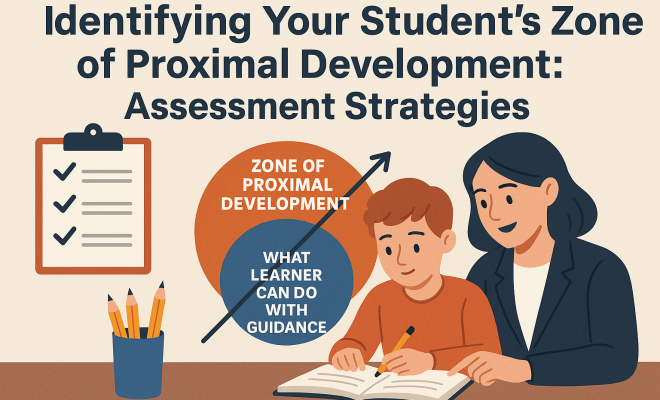
The zone of proximal development is defined as the difference between what a learner can do independently and what they can do with guidance. Vygotsky emphasized that learning occurs best within this zone, where the challenge is neither too easy nor too difficult. This concept has profound implications for teaching strategies and curriculum design.
To illustrate, consider a student who can solve basic addition problems independently but struggles with subtraction. If they are taught subtraction techniques through guided practice, they can start to tackle these problems with help, eventually mastering them on their own. The ZPD highlights the importance of tailored instruction that meets students where they are, pushing them toward greater independence.
The Importance of Assessing the ZPD
Assessing a student’s zone of proximal development is crucial for several reasons:
- Personalized Learning: By understanding where a student is within their ZPD, educators can create personalized learning experiences that foster growth.
- Maximized Engagement: Activities that align with a student’s ZPD can enhance motivation and engagement, as students are more likely to experience success and challenge.
- Targeted Interventions: Recognizing a student’s ZPD allows for timely interventions that can prevent learning gaps from widening.
- Collaboration and Social Learning: ZPD emphasizes the role of social interaction in learning, which encourages collaboration among peers.
Key Assessment Strategies
Identifying a student’s ZPD involves a range of assessment strategies. Below are some effective approaches educators can utilize:
1. Observational Assessment
Observational assessments allow teachers to monitor student behavior and learning processes in real-time. By observing how students approach tasks, engage with peers, and respond to instruction, educators can gain insights into their ZPD. This method is particularly effective in dynamic classroom environments where interactions can reveal a lot about a learner’s capabilities.
For example, when working on group projects, observing how a student contributes can indicate their confidence in the subject matter. If they take on a leadership role, it may suggest they are ready for more advanced challenges, whereas a more passive role might indicate areas needing support.
2. Dynamic Assessment
Dynamic assessment is a method that combines testing with feedback and intervention. This approach measures how well a student can perform a task with assistance compared to their independent performance. For instance, a teacher might first assess a student’s ability to solve mathematical problems on their own and then provide guided instruction on similar problems to see how much their performance improves.
This method not only identifies the ZPD but also quantifies the potential for growth. The difference in performance with and without assistance can indicate the degree of support needed for the student to reach their next level of understanding.
3. Formative Assessment
Formative assessments, such as quizzes, class discussions, and homework assignments, provide ongoing feedback about student learning. These assessments help educators gauge a student’s understanding and readiness for more advanced material. By analyzing patterns in formative assessments, teachers can determine where a student’s ZPD lies.
For instance, if a student consistently performs well on basic math quizzes but struggles with application problems, this disparity can signal that they need targeted instruction on applying concepts rather than on the foundational skills themselves.
4. Peer Assessment
Incorporating peer assessment in the classroom can provide additional perspectives on a student’s abilities. Peers often engage in collaborative tasks, allowing them to provide feedback and support to one another. Through peer assessment, students can articulate their understanding while also gaining insights into their ZPD.
For example, in a writing workshop, students can review each other’s drafts and offer constructive criticism. This process can reveal which aspects of writing a peer is comfortable with and which areas they struggle with, helping the teacher identify the ZPD for both students involved.
Creating a Supportive Learning Environment
Once educators identify a student’s zone of proximal development, the next step is to create an environment conducive to learning. Here are key strategies for fostering such an atmosphere: (See: Wikipedia on Zone of Proximal Development.)
1. Scaffold Learning
Scaffolding refers to providing temporary support structures to help students achieve their learning goals. Teachers can gradually remove this support as students gain independence. This might involve breaking tasks into smaller, manageable parts, providing hints, or offering examples. For instance, when teaching a new writing format, a teacher might first provide an outline before asking students to create their own.
2. Encourage Collaborative Learning
Collaboration among students can enhance learning within the ZPD. Group work fosters peer support, allowing students to learn from one another and build confidence. Teachers can assign roles within groups to ensure that all students participate and contribute based on their strengths.
Having students teach one another can also reinforce their understanding and help them articulate their thought processes, further solidifying their grasp of concepts.
3. Foster a Growth Mindset
Encouraging a growth mindset in students can lead to greater resilience and a willingness to tackle challenges within their ZPD. Teachers should emphasize the value of effort and persistence, praising students for their hard work rather than innate ability. This can motivate students to take risks and engage more deeply with the material.
Examples of ZPD in Classroom Practice
To illustrate how the zone of proximal development operates in practice, consider the following examples across different subjects:
1. Mathematics
In a mathematics class, a teacher might notice that some students struggle with fractions while others excel. By identifying the ZPD, the teacher can provide targeted instruction that moves students from understanding basic fractions to applying them in real-world problems. This might involve using visual aids or manipulatives to bridge the gap.
2. Reading
In a reading lesson, a teacher might assess a student’s fluency through a running record. If a student reads a passage with 95% accuracy but struggles with comprehension questions, the teacher can provide guided reading sessions targeting higher-order questioning, thereby addressing the ZPD effectively.
3. Science
In a science class, conducting experiments allows students to explore concepts practically. A teacher can assess students’ understanding and readiness for advanced scientific methods by observing their engagement and ability to formulate hypotheses with peer support. This hands-on approach aligns perfectly with the ZPD, as students engage deeply with the content at their current level while being challenged to reach higher levels of understanding.
The Role of Technology in Identifying ZPD
As technology continues to advance, it provides innovative tools for assessing the zone of proximal development. Digital platforms can offer personalized learning experiences that adapt to the individual needs of students. Here are some ways technology enhances assessment:
1. Adaptive Learning Software
Adaptive learning programs adjust content based on a student’s performance, allowing for immediate feedback and tailored challenges. These platforms can identify a student’s ZPD by analyzing their responses and presenting tasks that push their learning boundaries.
2. Online Collaborative Tools
Online collaborative tools, like Google Classroom or Microsoft Teams, facilitate peer feedback and collaborative projects, enabling students to learn from each other’s strengths. These platforms can also track participation, helping teachers identify areas where students thrive and where they may need additional support.
Current Relevance of ZPD in Education
The concept of the zone of proximal development remains highly relevant in today’s educational landscape, especially in light of recent shifts toward personalized learning and differentiated instruction. As educators strive to meet the diverse needs of their students, understanding and assessing the ZPD is crucial for effective teaching.
Furthermore, the rise of remote learning has challenged educators to adapt their methods. Online instruction can easily misinterpret a student’s capabilities. Therefore, continually assessing students’ ZPD through various strategies becomes even more critical in virtual settings.
Challenges in Assessing the ZPD
While assessing a student’s zone of proximal development is vital, it can come with its own set of challenges. Here are a few hurdles educators may face:
1. Time Constraints
In a typical school day, teachers often have limited time to conduct detailed assessments. Balancing the curriculum with the need for individual assessments can be daunting, leading to rushed evaluations that may not accurately capture a student’s ZPD.
2. Diverse Learning Styles
Students come to class with various backgrounds, learning styles, and prior knowledge. Some may thrive in collaborative settings, while others might require more individualized attention to grasp concepts. Tailoring assessments to accommodate these differences can be challenging. (See: Harvard University educational resources.)
3. Misinterpretation of Data
Data from assessments can sometimes be misinterpreted. For instance, a student may perform poorly on a test not because they haven’t learned but due to test anxiety or misunderstandings of the questions. Educators need to look beyond the surface of assessment results to truly understand a student’s ZPD.
4. Lack of Training
Many educators are not formally trained in assessing the ZPD. Understanding how to conduct dynamic assessments or interpret observational data may not be part of their professional development, limiting their ability to effectively gauge a student’s learning potential.
Real-World Applications of ZPD
The principles of the zone of proximal development extend beyond the classroom. Here are some real-world applications that illustrate its broader significance:
1. Parental Involvement
Parents can utilize the ZPD concept to support their children’s learning at home. Understanding where their child struggles and where they excel can help parents provide appropriate challenges and support, reinforcing skills without overwhelming them. This partnership between home and school is crucial for student success.
2. Workplace Training
Employers can apply ZPD principles in training programs by assessing the current skills of employees and providing mentorship or training that aligns with their development needs. This fosters a culture of continuous improvement and can lead to higher job satisfaction and performance.
3. Lifelong Learning
The ZPD framework emphasizes that learning is a lifelong process. Whether in formal education, training, or self-directed learning, individuals can benefit from identifying their ZPD and seeking out resources or support to help them advance to the next level of understanding in various areas of interest.
Frequently Asked Questions about ZPD
1. What is the primary purpose of understanding ZPD?
The primary purpose of understanding the zone of proximal development is to identify the optimal learning space where students can progress with the right support. This ensures that instruction is tailored to their current abilities while still challenging them to grow.
2. How can teachers determine a student’s ZPD?
Teachers can determine a student’s ZPD through various assessment methods, including observational assessments, dynamic assessments, formative assessments, and peer assessments. Each approach provides different insights into a student’s capabilities and needs.
3. Can ZPD apply to adult learners?
Absolutely! The concept of ZPD can apply to adult learners as well. Understanding where an adult learner needs support can enhance their professional development or personal growth, making learning experiences more effective across all age groups.
4. What role do peers play in ZPD?
Peers play a crucial role in a student’s ZPD by providing collaborative support and alternative perspectives. Through interactions with classmates, learners can engage in discussions, share insights, and learn from one another, enhancing their understanding and pushing them further within their ZPD.
5. How does ZPD influence curriculum design?
When educators understand ZPD, they can design curricula that provide appropriate challenges for students at various levels. This means creating learning experiences that not only align with students’ current knowledge but also encourage exploration and growth.
Practical Applications of ZPD Beyond the Classroom
The principles of the zone of proximal development can be applied in various contexts outside the traditional classroom. Here are some practical applications that showcase the versatility of ZPD:
1. Tutoring Programs
Tutoring sessions can leverage the ZPD by focusing on areas where a student needs support while providing enough challenge to promote growth. Tutors can use assessments to identify each student’s ZPD, which allows them to customize their teaching approach effectively.
For instance, a tutor working with a high school student on calculus might find that the student understands basic derivatives but struggles with integrals. By starting with guided practice on integrals and gradually increasing complexity, the tutor helps the student navigate their ZPD toward mastery. (See: CDC on education and youth development.)
2. Online Learning Platforms
Online learning platforms have the ability to personalize learning experiences for students. By implementing algorithms that assess a learner’s past performance, these platforms can present new content in accordance with the learner’s ZPD. This can significantly enhance engagement and effectiveness in learning.
For example, platforms like Khan Academy provide exercises that adapt in difficulty as students progress, ensuring that learners are always working within their ZPD, which maximizes their potential for success.
3. Community Education Programs
Community education initiatives can also embrace ZPD principles by assessing the needs and abilities of participants. Workshops designed for adult learners, such as computer literacy courses, can tailor content to accommodate varying skill levels, ensuring that all participants can progress without feeling overwhelmed.
By creating learning environments that consider the ZPD, these programs can empower community members to acquire new skills and knowledge that are relevant to their personal and professional lives.
Benefits of Utilizing ZPD in Education
Utilizing the concept of zone of proximal development offers numerous benefits, emphasizing both educational effectiveness and student well-being:
1. Enhanced Learning Outcomes
By accurately assessing and addressing a student’s ZPD, educators can help students achieve better learning outcomes. When students are appropriately challenged, they are more likely to retain information and master skills, leading to long-term academic success.
2. Increased Student Confidence
When students successfully navigate tasks within their ZPD, it boosts their confidence and self-esteem. This positive reinforcement encourages students to take on new challenges and fosters a love for learning, which is crucial for lifelong educational engagement.
3. Effective Differentiation
The ZPD framework supports effective differentiation in teaching. By recognizing the varying levels of readiness among students, teachers can tailor instruction to meet specific needs, ensuring that all learners receive the support necessary for their development pathways.
4. Building Relationships
Understanding each student’s ZPD allows educators to build stronger relationships with their students. By showing that they are aware of and responsive to individual learning needs, teachers can create a trusting and supportive classroom environment where students feel valued.
Conclusion
Identifying a student’s zone of proximal development is vital for fostering effective learning experiences. By employing assessment strategies such as observational assessments, dynamic assessments, and collaborative learning, educators can gain valuable insights into each student’s learning path. Creating a supportive environment that scaffolds learning, encourages collaboration, and cultivates a growth mindset can help students reach their full potential. As education evolves, embracing the principles of the ZPD will ensure that all learners can navigate their educational journeys with confidence.
“`
Trending Now
Frequently Asked Questions
What is the zone of proximal development?
The zone of proximal development (ZPD) is the gap between what a learner can accomplish independently and what they can achieve with guidance. Introduced by Vygotsky, it emphasizes that optimal learning occurs when students face challenges that are appropriately difficult, allowing them to grow with support.
Why is assessing the zone of proximal development important?
Assessing a student's ZPD is crucial because it enables personalized learning experiences, maximizes student engagement, and allows for timely interventions. Understanding where a student is within their ZPD helps educators tailor instruction to foster growth and prevent learning gaps.
How can teachers assess a student's ZPD?
Teachers can assess a student's ZPD through observations, formative assessments, and one-on-one interactions. By identifying the skills a student can perform independently versus those needing assistance, educators can better tailor their teaching strategies to meet individual learning needs.
What are some strategies for teaching within a student's ZPD?
Effective strategies for teaching within a student's ZPD include scaffolding, providing guided practice, and using collaborative learning techniques. These approaches help students build on their existing knowledge while gradually increasing the complexity of tasks to promote independence.
How does the ZPD influence curriculum design?
The ZPD influences curriculum design by encouraging educators to create learning experiences that are appropriately challenging. By aligning activities with students' ZPDs, educators can foster engagement, motivation, and mastery of skills, ensuring that instruction meets diverse learner needs.
Agree or disagree? Drop a comment and tell us what you think.