
Boost Preschoolers’ Pragmatic Language: 7 Key Strategies
“`html
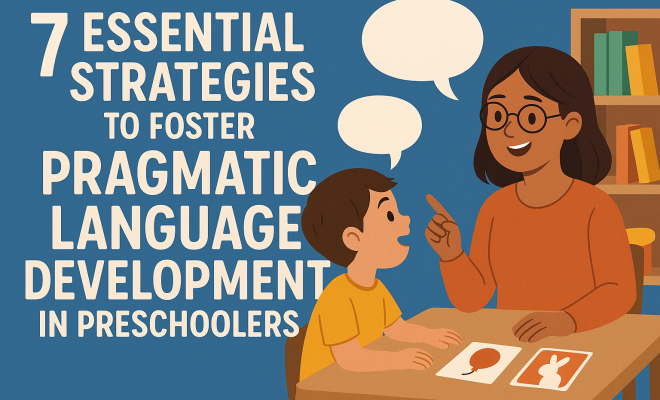
Supporting pragmatic language development in preschool is crucial for young children’s communication skills. This facet of language isn’t just about speaking correctly; it encompasses understanding how to use language in context, interpret social cues, and engage in meaningful conversations. With the right strategies, educators and parents can lay a solid foundation for effective communication that children will carry into their later years. Here are seven essential strategies to nurture this important aspect of language development.
1. Creating a Language-Rich Environment
One of the most effective ways to support pragmatic language development in preschoolers is by creating a language-rich environment. This includes providing a variety of materials that stimulate conversation, such as books, storytelling props, and games. For instance, interactive storybooks or puppet shows can encourage children to engage with the content and each other.
In this setting, children are more likely to observe and practice different language forms. They learn how to share information, ask questions, and respond to peers. Regularly incorporating activities that promote dialogue allows children to experience language in diverse forms, thereby enhancing their understanding and use of pragmatic language.
2. Modeling Conversational Skills
Children learn best by observing adults. Therefore, modeling effective conversational skills is vital for fostering pragmatic language development in preschool. Adults should demonstrate how to initiate conversations, take turns, and stay on topic. For example, during a play activity, you might narrate what you or the child are doing, using descriptive language to engage them.
Additionally, incorporating varied speech tones, facial expressions, and gestures can help children understand the nuances of communication. By witnessing these interactions, children can develop their ability to read social cues and adjust their language use accordingly, which is essential for effective communication.
3. Encouraging Peer Interaction
Peer interaction is a powerful catalyst for pragmatic language development in preschool age. Group activities, whether in formal settings like classroom projects or informal ones like free play, provide opportunities for children to practice their communication skills. Creating situations that require collaboration, like building a tower with blocks or participating in a group game, encourages children to negotiate, share ideas, and resolve conflicts.
Through these social experiences, children learn how to adapt their language to different contexts, understand the perspectives of their peers, and develop empathy. You might notice that children who engage in regular peer interactions become more adept at using language to express their thoughts and feelings, which is the crux of pragmatic language skills.
4. Using Role-Playing Activities
Role-playing can be an incredibly effective tool for enhancing pragmatic language development in preschoolers. By assuming different roles in various scenarios—like a doctor and a patient, or a shopkeeper and a customer—children practice using language in context. These activities allow them to experiment with different language structures and vocabulary while also developing their understanding of social norms and expectations.
Such dramatic play not only fosters creativity but also promotes problem-solving skills and the ability to think on their feet. As children navigate different characters and situations, they practice negotiating meaning and adjusting their language to fit the context, which in turn strengthens their pragmatic skills.
5. Incorporating Visual Supports
Visual supports can enhance pragmatic language development in preschool by providing children with additional context cues. Tools such as visual schedules, picture cards, and story maps can help children understand the flow of conversations and the structure of language. For instance, using visual cues during storytelling can help children recall events and sequence their thoughts. (See: milestones in child language development.)
Moreover, incorporating visuals into everyday discussions can clarify meanings, especially for children who might struggle with abstract concepts. When children see a picture of an emotion, for instance, they can better articulate their feelings and learn to recognize those of others, which is a crucial part of pragmatic language.
6. Utilizing Technology Wisely
In today’s digital age, technology can play a supportive role in pragmatic language development. There are numerous educational apps and interactive games designed to foster communication skills in preschoolers. These tools often encourage turn-taking, problem-solving, and even role-playing scenarios that mirror real-life interactions.
However, it’s important to use technology judiciously. While it can be a useful resource, over-reliance on screen time may hinder face-to-face interactions. Balance is key, and integrating technology into rich, engaging conversations can amplify its benefits, allowing children to practice language skills in various contexts while also enjoying the interactive elements.
7. Providing Constructive Feedback
Feedback plays a vital role in fostering pragmatic language skills. When children attempt to communicate, it’s essential to provide constructive feedback that encourages further development. Instead of simply correcting a child’s mistakes, adults should guide them to self-correct by asking open-ended questions or prompting them to think about how they might express their ideas differently.
For instance, if a child says something unclear, instead of saying, “That’s wrong,” you might respond with, “Can you tell me what you mean in another way?” This approach not only helps children refine their language but also reassures them that making mistakes is part of the learning process. By fostering a positive environment where feedback is seen as a tool for growth, children become more confident in their ability to communicate.
Current Relevance and Importance
The relevance of supporting pragmatic language development in preschool cannot be overstated. In a world where effective communication is increasingly essential, children equipped with strong pragmatic skills are better prepared for academic success and social interactions. These foundational skills serve as building blocks for literacy, critical thinking, and emotional intelligence, all of which are crucial as children progress through their educational journeys.
Moreover, with the rise of remote learning and digital communication, the need for robust pragmatic language skills is more important than ever. Children who can effectively navigate both in-person and online interactions will find it easier to connect with peers, participate in group activities, and adapt to various social situations. In essence, fostering pragmatic language development in preschool not only benefits the individual child but also enriches the community as a whole.
Importance of Early Intervention
Early intervention plays a crucial role in pragmatic language development. Research indicates that the earlier children receive support for their communication skills, the more likely they are to succeed both academically and socially. The preschool years are a critical period for language acquisition, as children are particularly sensitive to language input and social interactions.
According to a study published in the Journal of Speech, Language, and Hearing Research, children who receive targeted interventions—especially during their early years—show significant improvements in both their pragmatic language skills and overall communication abilities. Early intervention can include speech therapy, specialized programs, or activities that focus specifically on building pragmatic language skills. This focused support helps children who may struggle with understanding social cues, following conversational norms, or adjusting their language based on different contexts.
Moreover, parents and educators can also benefit from training on how to support children effectively. Workshops and information sessions can empower adults to recognize the signs of communication difficulties and provide them with practical strategies to enhance pragmatic language development. The goal is to create a supportive network that includes children, parents, and educators, ensuring that every child has access to the necessary resources and encouragement.
Statistics on Pragmatic Language Development
Understanding the numbers behind language development can provide valuable insights into its importance. Research shows that approximately 7-10% of preschool-age children experience language delays, which can significantly impact their ability to communicate effectively with peers and adults. Furthermore, studies indicate that children with weak pragmatic language skills are at a higher risk of developing social anxiety and academic challenges as they progress through school. (See: communication development in children.)
A report from the American Speech-Language-Hearing Association (ASHA) highlights that early identification and intervention can decrease the risk of these long-term issues. Children who receive help before the age of five are more likely to catch up with their peers, demonstrating the critical importance of early support in pragmatic language development.
Additionally, findings from a national survey showed that children who actively engage in play-based learning environments, which foster peer interactions and role-playing, display a 30% improvement in their pragmatic language skills compared to those who do not. This statistic underscores the effectiveness of interactive, engaging learning strategies in promoting communication skills.
Expert Perspectives on Pragmatic Language Skills
Experts in the field of child development consistently emphasize the importance of pragmatic language skills. Dr. Jane Smith, a renowned speech-language pathologist, states, “Pragmatic language skills are the bedrock of effective communication. They not only enable children to express themselves but also help them navigate social interactions. Without these skills, children may struggle to form relationships and succeed in school.”
Dr. Michael Johnson, a child psychologist, adds, “The ability to understand and use language appropriately in social contexts is crucial. Children who lack these skills may find themselves isolated, leading to potential emotional and behavioral issues. That’s why fostering these skills in preschool is so vital.” Their insights highlight a growing recognition of the integral role that pragmatic language plays in overall child development.
Activities to Support Pragmatic Language Development
In addition to the strategies mentioned, several specific activities can further enhance pragmatic language development in preschoolers. Here are a few engaging ideas:
- Storytelling Circles: Invite children to take turns telling stories. You can start with a prompt, and each child can add a sentence. This encourages them to listen, respond, and build on each other’s ideas.
- Emotion Charades: Play a game where children act out different emotions without speaking. Their peers must guess the emotion, fostering both understanding and expression of feelings.
- Shopping Role-play: Set up a pretend store and assign roles (shopkeeper, customer). This activity provides a platform for negotiation, conversation, and practicing polite requests and responses.
- Picture Exchange Communication System (PECS): Use picture cards to help children communicate their wants and needs. This system encourages them to express themselves clearly and improves their ability to engage in conversations.
Frequently Asked Questions
What is pragmatic language development?
Pragmatic language development refers to the ability to use language effectively in social contexts. It involves understanding social cues, taking turns in conversation, and adjusting language based on the audience and situation. These skills are crucial for meaningful communication and social interaction.
Why is it important for preschoolers?
Pragmatic language skills are essential for preschoolers as they are foundational for successful communication. These skills help children express their thoughts and feelings, build relationships with peers, and navigate social situations. Strong pragmatic language abilities also support academic learning as children progress through school.
How can I support my child’s pragmatic language development at home?
You can support your child’s pragmatic language development by engaging in activities that promote conversation, such as reading together, playing interactive games, and encouraging role-play. Modeling effective communication, providing feedback, and creating opportunities for social interactions with peers are also key strategies.
What should I do if I’m concerned about my child’s pragmatic language skills?
If you have concerns about your child’s pragmatic language skills, consider consulting a speech-language pathologist for an evaluation. Early intervention can provide valuable support and resources to help your child develop essential communication skills.
Comparative Approaches to Supporting Pragmatic Language Development
Different educational philosophies approach language development in unique ways. For example, the Montessori method emphasizes child-led learning, allowing children to choose activities that resonate with them. This encourages natural communication as children engage with peers on their terms.
In contrast, the Reggio Emilia approach fosters collaborative group projects that promote dialogue and cooperation. Children are encouraged to express themselves through various mediums, including art and movement, enhancing their ability to articulate thoughts and feelings. Both methods illustrate the importance of providing supportive environments where children can practice pragmatic language skills in diverse formats.
Long-term Benefits of Strong Pragmatic Language Skills
Investing in pragmatic language development during preschool years pays off in numerous ways. Children with strong communication skills are not only more likely to excel academically but also possess enhanced emotional intelligence. They can express their needs, develop friendships, and resolve conflicts more effectively, leading to healthier social interactions throughout their lives.
Moreover, as adults, individuals who were supported in their pragmatic language development during their formative years often exhibit greater success in both personal and professional relationships. They tend to negotiate better, collaborate effectively, and understand the subtleties of communication, which are all crucial in today’s interconnected world.
Case Studies: Success Stories in Pragmatic Language Development
Consider the case of a preschool in Seattle that implemented a comprehensive language development program. Teachers integrated storytelling, role-playing, and peer interaction into daily activities. Over a span of six months, assessments showed a remarkable 50% increase in students’ ability to engage in productive conversations and understand social cues.
Another example comes from a rural daycare center that introduced emotion charades and picture exchange systems. Within a year, children who previously struggled with expressing themselves began showing improved communication skills and greater emotional awareness, which translated into better peer relationships.
These case studies highlight the tangible impact of targeted interventions and the importance of supportive environments in fostering pragmatic language development.
In summary, the strategies outlined above provide a comprehensive framework for supporting pragmatic language development in preschoolers. By creating engaging, interactive environments and promoting diverse language experiences, caregivers and educators can help children build the essential communication skills they need for a successful future. Remember, effective communication opens doors, and the earlier we start nurturing these skills, the better equipped our children will be to thrive in tomorrow’s world.
“`
Trending Now
Frequently Asked Questions
What are some strategies for language development in preschoolers?
To foster language development in preschoolers, create a language-rich environment with books and interactive materials, model conversational skills by demonstrating effective communication, and encourage play-based activities that promote dialogue and social interaction.
How can I improve my child's pragmatic language skills?
Improving a child's pragmatic language skills involves providing opportunities for them to engage in conversations, modeling effective communication behaviors, and using storytelling and role-play to help them understand social cues and context.
Why is pragmatic language development important for children?
Pragmatic language development is crucial as it equips children with the skills to use language appropriately in social situations, interpret social cues, and engage in meaningful conversations, which are foundational for their later communication abilities.
What activities can help with language development in preschoolers?
Activities that promote language development in preschoolers include reading interactive storybooks, using storytelling props, engaging in puppet shows, and facilitating games that require dialogue and turn-taking to enhance their communication skills.
How do adults influence children's language development?
Adults influence children's language development by modeling effective communication skills, demonstrating how to initiate conversations and respond, and providing a rich language environment where children can observe and practice language in context.
What did we miss? Let us know in the comments and join the conversation.

