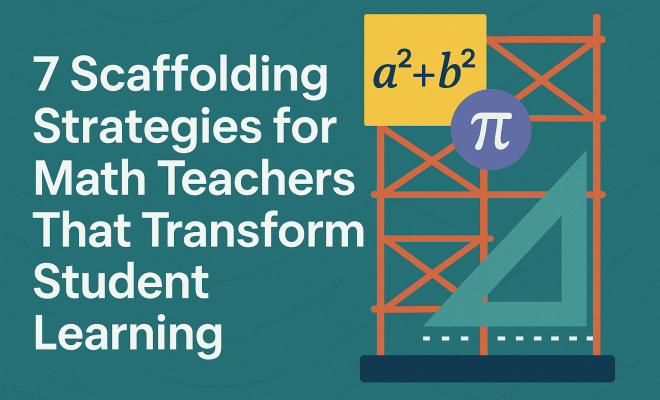
7 Scaffolding Strategies for Math Teachers to Boost Learning
“`html
Teaching high school mathematics can be a challenging endeavor. With an array of concepts and skills to cover, math teachers must find effective ways to engage their students and ensure they grasp challenging material. One powerful approach is implementing scaffolding strategies for math teachers. These strategies help break down complex ideas into manageable chunks, allowing students to build on their knowledge incrementally.
Understanding Scaffolding in Education
Scaffolding in education refers to a teaching method that involves providing temporary support to students as they learn new concepts. By gradually removing these supports as students become more proficient, teachers can foster independence and confidence. This concept is rooted in the work of psychologist Lev Vygotsky, who emphasized the importance of social interaction and the role of a more knowledgeable other in the learning process.
In a math classroom, scaffolding can take many forms. It might involve breaking down problems into smaller steps, using visual aids, or providing guided practice before students tackle problems independently. The goal is to create a supportive learning environment where students can develop their skills at their own pace.
The Importance of Scaffolding in Math Education
Math is often perceived as a linear subject, with each new concept building on the last. This creates a unique challenge for both students and teachers. If a student struggles with foundational skills, they may find it difficult to grasp more complex ideas. Scaffolding provides a way to address this issue by allowing teachers to meet students where they are and guide them toward mastery.
Moreover, effective scaffolding can increase student engagement. When students feel supported and capable, they’re more likely to participate in class discussions, ask questions, and tackle challenging problems. This positive classroom dynamic not only enhances learning but also fosters a growth mindset, where students believe their abilities can improve with effort and practice.
Key Scaffolding Strategies for Math Teachers
Effective scaffolding strategies for math teachers can vary widely, but a few key approaches consistently show positive results. Here are some of the most impactful methods:
1. Chunking Information
Breaking complex information into smaller, more digestible parts is known as chunking. For instance, when teaching a new topic like quadratic equations, a teacher might first introduce the concept of parabolas before moving into the specifics of solving equations. This allows students to focus on one aspect of the topic at a time, reducing cognitive overload and enhancing retention.
2. Using Visual Aids
Visual aids such as graphs, diagrams, and color-coded notes can be incredibly helpful in a math classroom. These tools help students visualize relationships between concepts, making abstract ideas more concrete. For instance, using a number line to demonstrate addition and subtraction can clarify these operations for students who struggle with numerical representations.
3. Modeling Problem-Solving
Demonstrating how to approach a problem step-by-step is another vital scaffolding strategy. Teachers can model problem-solving techniques by thinking aloud as they solve a math problem. This process helps students understand the rationale behind each step and encourages them to adopt similar strategies when faced with their own problems.
4. Providing Guided Practice
After modeling a problem, it’s crucial to provide students with guided practice. During this phase, the teacher can walk students through similar problems, offering assistance and feedback as needed. This collaborative approach not only reinforces learning but also builds confidence as students begin to tackle problems independently.
5. Encouraging Peer Collaboration
Group work can be an effective scaffolding strategy. When students work together, they can share their understanding and clarify misconceptions. Pairing students for problem-solving activities allows them to learn from one another, ultimately leading to a deeper grasp of the material. Teachers can structure these collaborations by assigning specific roles to group members, ensuring that everyone is actively engaged.
6. Incorporating Technology
In today’s digital age, technology can enhance scaffolding efforts in the math classroom. Tools like interactive simulations, online quizzes, and math software provide immediate feedback and allow students to learn at their own pace. For instance, platforms like Khan Academy offer personalized learning experiences that adapt to each student’s skill level, providing support where it’s most needed. (See: Understanding scaffolding in education.)
7. Assessing Understanding Regularly
Frequent formative assessments are crucial in a scaffolding framework. By regularly checking for understanding, teachers can identify areas where students may need additional support. These assessments can be informal, such as exit tickets or quick quizzes, or more structured. The key is to use the data collected to adjust instruction accordingly, ensuring that scaffolding remains responsive to student needs.
Real-World Applications of Scaffolding in Math Classes
To see how these scaffolding strategies play out in real classrooms, let’s examine a few examples:
Case Study 1: Algebra 1
In a high school Algebra 1 class, a teacher introduces the concept of solving linear equations. Instead of diving straight into complex problems, the teacher first reviews the concept of variables and constants, using visual aids like charts to illustrate the differences. After students demonstrate understanding, the teacher models the steps of solving an equation, then guides the class through several practice problems before allowing students to work independently.
Case Study 2: Geometry
Another teacher might use scaffolding strategies while teaching geometry. Beginning with basic shapes, the teacher gradually introduces more complex concepts like the Pythagorean theorem. Utilizing group activities, students can explore this theorem’s applications in real-world contexts, collaborating to solve problems. The teacher’s role becomes one of facilitator, allowing students to discover and apply mathematical principles themselves.
Challenges in Implementing Scaffolding Strategies
While scaffolding can significantly benefit student learning, it’s not without challenges. Some common obstacles that math teachers may encounter include:
- Time Constraints: Implementing scaffolding strategies often requires more time for planning and execution than traditional teaching methods.
- Differentiation: In a diverse classroom, meeting the varied needs of students can be challenging. Teachers must tailor scaffolding techniques for different skill levels.
- Resistance to Change: Some educators may feel hesitant to depart from traditional teaching practices. Changing how they approach instruction can be daunting.
Overcoming Challenges with Scaffolding
Despite these challenges, there are effective ways to overcome them. Establishing a collaborative teaching environment can significantly ease the transition to scaffolding. Teachers can share resources, strategies, and experiences, creating a support network. Additionally, ongoing professional development can help teachers build the necessary skills to implement these strategies successfully.
Utilizing technology can also serve as a tool for overcoming challenges. For instance, online resources can offer differentiated instruction and personalized learning pathways that cater to individual student needs, making scaffolding more manageable.
Current Relevance of Scaffolding in Math Education
As education continues to evolve, the relevance of scaffolding strategies remains strong. With an emphasis on student-centered learning and personalized instruction, scaffolding aligns with modern educational standards. Teachers are increasingly encouraged to focus on fostering critical thinking, problem-solving skills, and collaboration—all of which are inherent in effective scaffolding practices.
Moreover, in a time when many students are facing learning gaps due to disruptions caused by the COVID-19 pandemic, scaffolding strategies become even more vital. They provide a structured approach to help students catch up and rebuild their confidence in math.
Conclusion: The Future of Scaffolding in Math Classrooms
Implementing scaffolding strategies for math teachers is not just about improving student performance; it’s about fostering a classroom environment where students feel empowered to take ownership of their learning. By integrating these strategies, educators can create a more inclusive and effective math classroom that prepares students for future challenges. As we move forward, the continued exploration and application of scaffolding will undoubtedly play a critical role in shaping the landscape of math education.
Advanced Scaffolding Techniques
As math education advances, so do the strategies teachers can employ to better support their students. Here are some advanced scaffolding techniques that can further enhance the learning experience:
1. Gradual Release of Responsibility
This model emphasizes shifting the learning responsibility from the teacher to the student. It typically involves four phases:
- Modeling: The teacher demonstrates how to solve a problem.
- Guided Practice: Students practice with the teacher’s assistance.
- Collaborative Practice: Students work together on problems, encouraging peer learning.
- Independent Practice: Students tackle problems on their own, applying what they’ve learned.
By gradually releasing responsibility, students become more independent thinkers and problem solvers.
2. Concept Mapping
Encouraging students to create concept maps can help them visually organize their thoughts and understand the relationships between different math concepts. For example, when learning about functions, students can map out types of functions, their characteristics, and real-world applications. This not only reinforces their learning but also helps them recall information more effectively.
3. Use of Manipulatives
Physical tools such as blocks, counters, or geometric shapes can make abstract concepts tangible. For instance, when teaching fractions, using pie charts made from colored paper can help students visualize parts of a whole. Manipulatives provide a hands-on experience that can deepen understanding and retention. (See: CDC resources for effective teaching strategies.)
4. Think-Pair-Share
This collaborative strategy encourages students to think about a question or problem, discuss their thoughts with a partner, and then share their ideas with the class. This method not only helps students articulate their understanding but also exposes them to diverse perspectives and solutions.
Statistics Supporting the Effectiveness of Scaffolding
Numerous studies highlight the significant impact of scaffolding on student achievement in math. For instance, research conducted by the Institute of Education Sciences found that students who received scaffolded instruction scored an average of 20% higher on assessments compared to those who experienced traditional teaching methods. Additionally, a study published in the Journal of Educational Psychology reported that classrooms utilizing scaffolding strategies saw a 30% increase in student engagement and participation.
Expert Perspectives on Scaffolding
Many educational experts advocate for the use of scaffolding in math classrooms. Dr. John Hattie, an influential researcher in education, emphasizes the importance of visible learning and teaching. According to him, the clarity of learning intentions and success criteria is crucial for effective scaffolding. “Students need to know what they are learning and why,” he states, highlighting the role of scaffolding in enhancing student understanding.
Similarly, Dr. Carol Ann Tomlinson, a leader in differentiated instruction, points out that scaffolding is essential for helping students access the curriculum at their individual readiness levels. “Effective scaffolding allows teachers to meet diverse learning needs while ensuring all students can engage with the curriculum,” she notes.
Frequently Asked Questions About Scaffolding in Math Education
What is the primary aim of scaffolding in math education?
The primary aim of scaffolding in math education is to support students as they learn complex concepts, allowing them to build knowledge progressively. By providing temporary assistance, teachers help students develop the skills and confidence they need to tackle problems independently.
How can I determine if my scaffolding strategies are effective?
Regular formative assessments, student feedback, and observations can help you gauge the effectiveness of your scaffolding strategies. If students demonstrate a clear understanding of concepts and are able to work independently, your scaffolding methods are likely effective.
How can I adapt scaffolding strategies for students with different learning needs?
To adapt scaffolding strategies, consider using varied instructional methods such as visual aids, manipulatives, and technology. Ensure that you differentiate tasks to meet the individual needs of students, providing more support for those who require it while challenging advanced learners with deeper problems.
Can scaffolding be used in online math instruction?
Absolutely! Scaffolding can be effectively implemented in online math instruction via video demonstrations, interactive exercises, and collaborative online tools. Digital platforms offer unique opportunities for providing immediate feedback and personalized learning paths to students.
How can I encourage a growth mindset when implementing scaffolding?
Encouraging a growth mindset involves praising effort rather than results, emphasizing the value of persistence, and creating an environment where mistakes are seen as learning opportunities. Incorporating discussions about perseverance and learning from challenges can help reinforce this mindset.
Examples of Scaffolding in Practice
To better illustrate how scaffolding can be effectively implemented, here are a few additional examples from various math topics:
Example 1: Fractions
When teaching fractions, starting with visual models such as pie charts or fraction bars helps students understand the concept of parts of a whole. After introducing these visuals, the teacher can lead a discussion on equivalent fractions, using hands-on activities where students manipulate objects to see how different fractions can represent the same amount. Once foundational understanding is established, students can progress to solving fraction problems independently, supported by their earlier experiences.
Example 2: Algebraic Expressions
When introducing algebraic expressions, a teacher might begin with a concrete example, such as using blocks to represent different variables and constants. For instance, showing that 2x + 3 can be modeled using two blocks labeled x and three single blocks. This visual representation can then transition to symbolic representation as students become comfortable working with the blocks. By the end of the lesson, students might be able to simplify algebraic expressions on their own.
Example 3: Data Analysis
In teaching data analysis, the teacher might first gather data as a class and create a graph collectively. Through guided questioning, the teacher can help students identify trends or outliers. After this shared experience, students can be given their own datasets to analyze, applying the concepts they learned together. This gradual shift from collective to independent analysis allows students to feel secure in their ability to interpret data.
Building a Scaffolding Framework
Creating a robust scaffolding framework requires thoughtful planning and execution. Here are some steps to consider:
1. Assess Student Needs
Start by evaluating where your students stand in terms of their math skills. This can include formal assessments, informal observations, and conversations with students about their learning preferences. Understanding their strengths and weaknesses will help tailor your scaffolding approach.
2. Set Clear Learning Objectives
Define what you want students to achieve by the end of the unit. Clear objectives will guide your scaffolding strategies and help students understand the purpose behind each activity.
3. Develop a Variety of Supports
Prepare multiple forms of support, such as graphic organizers, manipulatives, and technology tools. This variety will help meet the diverse needs of your students and keep them engaged.
4. Monitor Progress
Use formative assessments to track student progress and adjust your scaffolding as needed. Regular check-ins can help you identify when to introduce more challenges or provide additional support. choice boards for engagement offers useful background here.
5. Foster a Growth Mindset
Encourage students to embrace challenges and view mistakes as learning opportunities. This mindset will empower them to take risks and engage actively in their learning process.
Final Thoughts on Scaffolding Strategies for Math Teachers
Scaffolding strategies for math teachers are essential in creating an inclusive classroom that accommodates diverse learning styles and paces. As educators continue to explore and refine these techniques, they not only enhance students’ mathematical skills but also foster a lifelong love for learning. By investing time in these scaffolding strategies, teachers can significantly impact their students’ academic journeys, equipping them with the skills needed to succeed in mathematics and beyond.
“`
Trending Now
Frequently Asked Questions
What are scaffolding strategies in education?
Scaffolding strategies in education involve providing temporary support to students while they learn new concepts. This method helps break down complex ideas into manageable parts, allowing students to build their knowledge incrementally. As students become more proficient, these supports are gradually removed to foster independence.
Why is scaffolding important in math education?
Scaffolding is crucial in math education because it addresses the linear nature of the subject. It helps students who struggle with foundational skills to grasp more complex concepts by providing tailored support. This approach enhances student engagement and confidence, leading to improved learning outcomes.
How can teachers implement scaffolding in math?
Teachers can implement scaffolding in math by breaking problems into smaller steps, using visual aids, and providing guided practice. These strategies create a supportive learning environment, enabling students to develop their skills at their own pace and fostering a deeper understanding of mathematical concepts.
What are some examples of scaffolding techniques?
Examples of scaffolding techniques include using graphic organizers, modeling problem-solving processes, offering step-by-step instructions, and providing collaborative learning opportunities. These methods help students understand complex material and build their confidence as they progress in their learning.
How does scaffolding benefit student engagement?
Scaffolding benefits student engagement by creating a supportive atmosphere where students feel capable of tackling challenges. When students receive the right level of assistance, they are more likely to participate in discussions, ask questions, and take risks in their learning, enhancing their overall classroom experience.
What did we miss? Let us know in the comments and join the conversation.