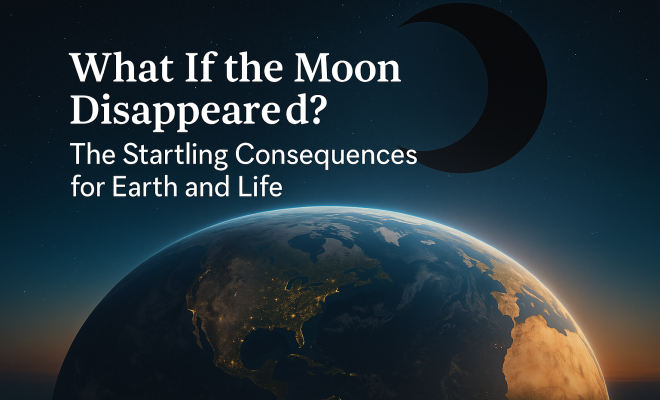
What If the the Moon Vanished? Earth’s Startling Fate
“`html
The Moon has been a constant figure in our night sky, a source of inspiration and wonder throughout human history. But have you ever stopped to think about what would happen if the Moon disappeared? The question isn’t just a whimsical thought experiment; it has serious implications for our planet and all life on it. The consequences would be staggering, unfolding in ways that might surprise you. Let’s explore the various aspects of this cosmic scenario and uncover the profound impacts of losing our lunar companion.
The Moon’s Role in Earth’s Stability
The Moon plays a crucial role in maintaining Earth’s axial tilt and stabilizing its rotation. Currently, the Earth’s axial tilt is about 23.5 degrees, which is responsible for our seasons. This tilt is partly maintained by the gravitational pull of the Moon. Without it, the axial tilt could vary dramatically over time, leading to severe climate shifts. In essence, the Moon acts like a cosmic stabilizer, ensuring that our planet maintains a relatively stable climate over millennia.
If the Moon were to vanish, scientists predict that Earth’s tilt could fluctuate anywhere from 0 to 85 degrees. Such changes would lead to extreme weather patterns, drastically altering ecosystems and agricultural landscapes. Imagine a world where summers could be scorching hot and winters might plunge into severe cold, rendering traditional farming practices obsolete. The viability of entire regions for agriculture and habitation could be jeopardized.
The Tidal Effects of a Moonless Earth
One of the most immediate and significant changes would be the alteration of tides. The Moon’s gravitational pull is responsible for the rise and fall of ocean tides, a phenomenon that influences not just coastal ecosystems, but also weather patterns and even human activities. If we ponder what if the Moon disappeared, we find that without its gravitational influence, tides would diminish significantly, being left largely to the Sun’s gravitational forces.
This reduction in tidal activity would lead to less mixing of ocean waters, affecting nutrient distribution. Many marine species rely on tidal cycles for breeding and feeding. The shift would disrupt entire marine ecosystems, leading to a decline in fish populations and other sea life that depend on the regular ebb and flow of tides. Coastal communities, which often depend on fishing and tourism, could face economic hardship as marine biodiversity dwindles.
Impact on Weather Patterns and Climate
The effects of a Moonless Earth extend beyond just tides; they also impact our weather systems. The Moon helps to stabilize the tilt of Earth, which in turn influences atmospheric circulation patterns. These patterns dictate everything from wind currents to precipitation levels. Without the Moon, these systems could become erratic and unpredictable.
For instance, we might witness shifts in monsoon patterns, leading to longer droughts in some regions while others could become prone to excessive rainfall. Increased climate variability could exacerbate natural disasters, such as hurricanes and floods, putting countless lives at risk. The unpredictability of the weather would challenge humanity’s ability to adapt and respond, potentially leading to widespread agricultural failures and food shortages.
The Disruption of Biological Rhythms
Many organisms on Earth have evolved in sync with the Moon’s cycles. From the reproductive cycles of marine life to the migration patterns of birds, countless species depend on lunar phases. If you consider what if the Moon disappeared, it’s clear that the disruption of these rhythms would have cascading effects on ecosystems.
For example, certain fish species spawn during specific lunar phases. Without those cues, their reproductive success could plummet, leading to declines in population. Similarly, nocturnal animals that rely on moonlight for navigation and hunting could become disoriented, shifting their feeding habits and impacting the food chain. The delicate balance of ecosystems would be thrown into chaos, causing potential extinctions and loss of biodiversity. (See: Wikipedia article on the Moon.)
A Shift in Human Culture and Activity
The Moon has held a significant place in human culture, guiding navigation, rituals, and even timekeeping. Agriculture, for instance, has long been tied to lunar cycles; planting and harvesting often align with the Moon’s phases. If the Moon were to vanish, societies would need to adapt, finding new ways to mark time and seasons.
Moreover, human activities such as fishing, which often rely on lunar calendars, would be thrown into disarray. Our cultural narratives, stories, and even religious practices linked to the Moon would need to be redefined. The loss of this celestial body would fundamentally alter how we view the night sky and our place in the universe.
The Psychological Impact of a Moonless Night Sky
Beyond the tangible ecological and cultural repercussions, the disappearance of the Moon would likely have profound psychological effects on humanity. The Moon is a symbol of inspiration and wonder; its absence could lead to feelings of loss and disconnection. Consider the calm and serenity often evoked by a full moon illuminating the night—what would its absence mean for our emotional well-being?
Studies have shown that exposure to natural environments, including the night sky, can enhance mood and reduce stress. A moonless night could deprive many people of that experience, potentially leading to an increase in anxiety and a decrease in overall happiness. It’s a stark reminder of how deeply intertwined our emotional lives are with the natural world.
The Long-Term Evolutionary Consequences
In the long run, the absence of the Moon would impact the evolutionary trajectory of life on Earth. As ecosystems shift and species adapt to new challenges, we could see entirely new life forms emerge over millions of years. Some species may thrive in the absence of lunar cues, while others could face extinction.
This evolutionary shift would not be limited to terrestrial life; it would also reshape marine ecosystems. New species might rise to fill ecological niches left vacant by those that could not adapt. The landscape of life on Earth would be unrecognizable over millennia, showcasing nature’s incredible resilience and adaptability.
Speculations on the Future of Earth
Lastly, what if the Moon disappeared prompts us to consider the future of our planet. Would Earth become a less hospitable place for life? While some may argue that life would eventually find a way to adapt, the immediate consequences of such a dramatic change would be severe. Entire ecosystems could collapse, and human societies would face unprecedented challenges.
As we look to the stars and ponder our place in the universe, it’s vital to recognize the critical role the Moon plays in sustaining life on Earth. Protecting our planet and understanding its intricate systems is crucial for ensuring a balanced relationship with our celestial neighbors. The disappearance of the Moon serves as a stark reminder of how interconnected and fragile our existence is and that we must cherish the natural world around us.
Final Thoughts: The Moon’s Indispensable Role
Considering what if the Moon disappeared opens a Pandora’s box of potential outcomes, many of which are alarming. From destabilizing tides and shifting weather patterns to the loss of ecological balance and cultural identity, the ramifications would be felt across every facet of life on Earth. The Moon is far more than just a glowing orb in our night sky; it is a fundamental part of what makes our planet the vibrant, life-sustaining place it is. So the next time you gaze up at the Moon, take a moment to appreciate its presence and the countless ways it shapes our world.
What Are the Scientific Perspectives on a Moonless Earth?
Scientists have long studied the Moon’s influence on Earth, and many have put forth theories on the potential outcomes of its disappearance. According to physicist Dr. Matthew A. G. Mendez, losing the Moon would throw Earth into a state of chaos, particularly with its rotational dynamics. He states, “Without the Moon, Earth would wobble unpredictably. This wobble is not just theoretical; it could lead to significant geological events.” The destabilization of the Earth’s rotation could lead to increased volcanic activity and earthquakes, which would pose additional threats to humanity. We covered NASA's Artemis 2 mission in more detail.
Furthermore, climatologist Dr. Elaine Thompson emphasizes the impact on climate. She notes, “The Moon’s gravitational influence plays a subtle yet vital role in our climate regulation. A moonless Earth could potentially lead to a runaway greenhouse effect in various regions.” This means that some areas could experience extreme temperatures, making them uninhabitable for many species, including humans. (See: NASA's Lunar Reconnaissance Orbiter findings.)
Comparing Earth to Other Planets
When contemplating what if the Moon disappeared, it can be insightful to compare Earth with other celestial bodies. For instance, Mars, which has two small moons, Phobos and Deimos, experiences significantly different tides compared to Earth. Tidal forces on Mars are weak due to the small size and distance of its moons, leading to less pronounced tidal effects. Consequently, Martian life (if it ever existed) would have adapted to very different environmental conditions. This raises the question: how would life on Earth have evolved differently if we had no Moon at all?
On the flip side, Earth’s moon-sized companion contributes to the richness of our environment. Venus, often called Earth’s “sister planet,” has no moons and possesses a thick atmosphere that creates a runaway greenhouse effect, resulting in extreme surface temperatures. This comparison highlights the critical role that a moon can play in shaping planetary conditions conducive to life.
The Economic Impact of a Moonless World
The economic ramifications of a moonless Earth could be profound. Industries that depend on tidal patterns, such as fishing, shipping, and even some forms of renewable energy, would face significant challenges. Without consistent tidal patterns, shipping routes could be affected, leading to higher transportation costs and potential shortages of goods.
Additionally, tourism, particularly in coastal areas that draw visitors for their beaches and marine life, could see a dramatic decline. Imagine beach resorts that rely on the beauty of moonlit nights losing their charm. This could lead to substantial economic downturns in regions heavily reliant on tourism. Experts estimate that coastal economies could lose billions in revenue, affecting jobs and local businesses.
Frequently Asked Questions
What would happen to the oceans if the Moon disappeared?
Without the Moon, ocean tides would become significantly weaker, primarily influenced by the Sun’s gravity. This would disrupt marine ecosystems, affecting nutrient distribution and breeding patterns for many sea species.
How would climate change be affected by the disappearance of the Moon?
The Moon’s absence would lead to unstable axial tilt, which could exacerbate climate change effects by creating erratic weather patterns, extreme temperatures, and unpredictable climate events.
Could life on Earth survive without the Moon?
While some life might adapt over time, the initial removal of the Moon would likely lead to significant ecological instability and potential extinction events. The long-term viability of many species, including humans, could be compromised.
What cultural changes might occur with a moonless sky?
Culturally, the loss of the Moon would mean a significant shift in how societies mark time and observe seasons. Many traditions, rituals, and artistic expressions tied to the Moon would be lost or need to be redefined.
How would human psychology be affected by the absence of the Moon?
Studies suggest that the Moon’s light influences sleep cycles and mood. Its absence could lead to increased anxiety and mental health issues as people may feel disconnected from the natural world, potentially leading to a sense of loss and disorientation. (See: Scientific article on Earth's axial tilt.)
Would the absence of the Moon affect space exploration?
The Moon serves as a critical stepping stone for space exploration. Without it, our plans for lunar exploration and eventual Mars colonization would be hindered. The Moon provides a platform for launching deeper space missions, and its absence would necessitate a reevaluation of our strategies for exploring the solar system.
The Role of the Moon in Scientific Research
The Moon has served as an essential platform for scientific research, providing valuable insights into the formation of our solar system. If the Moon were to vanish, so too would the opportunities for scientific study it offers. Lunar missions have significantly advanced our understanding of geology, planetary processes, and even astronomical phenomena.
For instance, the Apollo missions returned samples that have helped scientists learn about the history of the Earth-Moon system. Observations from the Moon can also help us understand cosmic events, as the Moon’s lack of atmosphere makes it an ideal place for telescopes. The loss of these research opportunities would set back our understanding of not only our own planet but the universe at large.
The Moon’s Influence on Global Navigation
The Moon’s gravitational pull has been crucial for navigation throughout history. Before modern technology, sailors relied heavily on the Moon’s phases and positions to guide their journeys across the oceans. If we consider what if the Moon disappeared, we would lose an important celestial navigation tool.
In the absence of lunar guidance, alternative navigation methods would need to be heavily relied upon, potentially leading to increased challenges at sea. This could also impact international shipping, as vessels may need additional time and resources to adjust to new navigational tools and techniques.
Final Reflections: Embracing Our Cosmic Connection
The thought of what if the Moon disappeared is not just an exercise in imagination; it emphasizes the profound connections between celestial bodies and life on Earth. The Moon influences our climate, our tides, our biology, and even our culture. Recognizing this interdependence can inspire us to take better care of our planet and appreciate the delicate balance that sustains life. As we gaze up at the night sky, the Moon stands as a testament to the wonders of our universe, reminding us of the importance of preservation and stewardship in all our cosmic endeavors.
“` This builds on breathtaking Earthset photo.
Trending Now
Frequently Asked Questions
What would happen to Earth if the Moon disappeared?
If the Moon disappeared, Earth would experience significant changes, including fluctuations in its axial tilt, which could vary from 0 to 85 degrees. This instability would lead to extreme climate shifts, impacting seasons and weather patterns, and jeopardizing agriculture and ecosystems.
How does the Moon stabilize Earth's climate?
The Moon stabilizes Earth's axial tilt at about 23.5 degrees, which is crucial for maintaining a consistent climate and seasons. Without the Moon, this tilt could vary dramatically, leading to severe climate changes over time.
What effects would a moonless Earth have on tides?
Without the Moon, tides would be significantly reduced, primarily influenced by the Sun's gravitational pull. This change would affect coastal ecosystems, weather patterns, and human activities that rely on tidal movements.
Can life on Earth survive without the Moon?
While life on Earth could technically survive without the Moon, the drastic changes in climate, weather patterns, and agricultural viability would pose severe challenges, potentially leading to widespread ecological disruption and challenges for human civilization.
What are the long-term consequences of losing the Moon?
The long-term consequences of losing the Moon include unstable climate patterns, extreme weather, biodiversity loss, and challenges to agriculture. These factors could dramatically reshape life on Earth and alter habitats over time.
What’s your take on this? Share your thoughts in the comments below — we read every one.