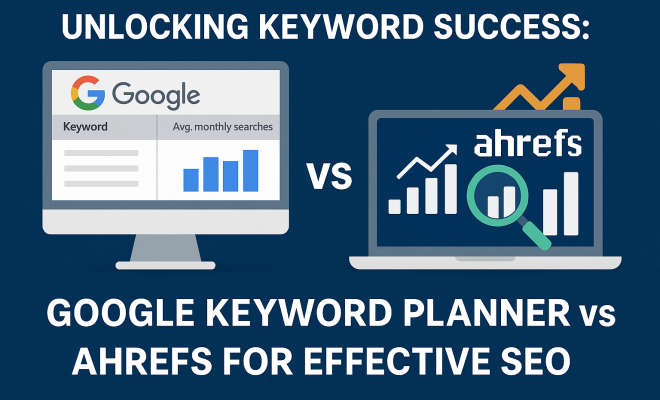
Unlocking Keyword Success: Google Keyword Planner vs Ahrefs for Effective SEO
“`html
When it comes to mastering SEO and driving traffic to your website, keyword research is a fundamental component that cannot be overlooked. Two of the most prominent tools in the digital marketing space, Google Keyword Planner and Ahrefs, offer distinct advantages for anyone looking to optimize their content strategy. But how do you decide which tool to use and when? In this article, we explore the key differences between Google Keyword Planner vs Ahrefs, their functionalities, and how they can complement each other for better results.
1. Understanding the Basics of Each Tool
Before diving into a comparison, it’s essential to understand what each tool offers. Google Keyword Planner is primarily a free tool provided by Google that gives insights into keyword search volumes, trends, and forecasts directly from the search engine itself. This proximity to Google is significant, as it reflects actual user queries and provides a sense of authenticity that few other tools can match.
On the other hand, Ahrefs is a comprehensive SEO suite known for its robust backlink analysis and site audit features. While it also offers keyword research capabilities, its strength lies in competitive analysis, allowing users to dissect their competition’s strategies and identify gaps in the market. Understanding these core functionalities will help users choose the right tool based on their specific needs.
2. Why Google Keyword Planner Stands Out
Google Keyword Planner is often seen as the gold standard for keyword research due to its direct connection with Google’s search engine. Since it provides data based on actual search behavior, users can trust the accuracy of the traffic estimates it provides. The tool also identifies high-volume parent topics, which is crucial for avoiding duplicate content. This feature is particularly important for content creators in the gaming industry, where multiple articles may arise around trending topics.
Moreover, the planner allows users to segment keywords by various metrics such as location, language, and device. This level of granularity is invaluable for tailoring content to specific audiences, ensuring that your articles resonate with the right demographics. It’s a powerful tool for those aiming to capture organic traffic based on real user intent.
3. Exploring Ahrefs’ Unique Features
Ahrefs offers a rich suite of features that go beyond mere keyword research. Its keyword explorer not only provides search volume data but also displays keyword difficulty scores, click-through rates, and the potential return on investment for targeting specific keywords. These insights are beneficial for content strategists who need to justify their choices based on data.
Additionally, Ahrefs shines in its competitive analysis capabilities. Users can easily analyze the content strategies of competitors, which helps identify high-performing keywords and content gaps that can be exploited. This competitive intelligence is critical when crafting a successful SEO strategy in a crowded space such as gaming, where staying ahead of the competition is essential.
4. Combining Both Tools for Best Results
While both Google Keyword Planner and Ahrefs have their strengths, combining their capabilities can yield the best results. For instance, using Google Keyword Planner for initial keyword discovery can help identify high-volume keywords tied to trending topics. Once these keywords are identified, employing Ahrefs to analyze the competition and assess keyword difficulty can refine your strategy further.
This combination allows users to validate their content topics against actual user queries while also understanding the competitive landscape. Being aware of both search intent and competitive dynamics ensures that content is not only relevant but also positioned to achieve maximum visibility.
5. Understanding User Intent
One of the most critical aspects of keyword research is understanding user intent. Google Keyword Planner excels in providing insights into the intent behind specific keywords. For instance, it can differentiate between informational, navigational, and transactional queries, allowing content creators to structure their articles to meet the needs of users accurately.
Meanwhile, Ahrefs takes a different approach by revealing what type of content already ranks for particular keywords. This data can indicate whether users are looking for in-depth articles, simple definitions, or product recommendations. By understanding the nature of the search intent, marketers can create highly tailored content that drives engagement and conversions. (See: Search engine optimization overview.)
6. The Importance of SERP Analysis
Another essential factor in the Google Keyword Planner vs Ahrefs debate is how each tool handles SERP (Search Engine Results Page) analysis. Google Keyword Planner provides insight into search volume and trends but lacks detailed SERP analysis features. Users might not get a clear picture of who is ranking or what type of content is performing well.
Ahrefs, however, specializes in SERP analysis, offering insights into the types of pages that rank for specific keywords, how many backlinks they have, and their overall domain authority. This information is crucial for understanding the competitive landscape and formulating an effective strategy to outrank competitors. By leveraging SERP analysis, content creators can identify opportunities and adapt their content to improve its chances of ranking.
7. Pricing Considerations
Pricing is a significant factor for many users deciding between Google Keyword Planner and Ahrefs. Google Keyword Planner is free to use for anyone with a Google Ads account, making it accessible to a broader audience, including those on tighter budgets. This price point allows new marketers and small businesses to benefit from valuable insights without incurring additional costs.
In contrast, Ahrefs is a premium tool that requires a monthly subscription. While this investment may seem steep, the wealth of features and data it provides can justify the cost for serious marketers and businesses. Given its comprehensive nature, Ahrefs can save users considerable time and effort by providing a centralized platform for all SEO needs, which can ultimately lead to higher returns on investment.
8. Case Studies: Real-World Applications
Examining real-world applications of both tools can provide valuable context for their effectiveness. For instance, a gaming website could utilize Google Keyword Planner to identify keywords related to a new game release. The planner would help uncover related terms that gamers are searching for, ensuring that the website produces relevant content that captures early traffic.
Once the keywords are identified, the website can then use Ahrefs to analyze competitors’ pages, evaluating what content is already ranking and what gaps exist. By understanding which keywords competitors rank for and how they structure their content, the gaming website can create unique articles or guides that fill those gaps, thereby driving more organic traffic.
9. Final Thoughts: Choosing the Right Tool for Your Needs
Ultimately, the decision between Google Keyword Planner vs Ahrefs comes down to your specific needs, goals, and budget. If you are just starting with SEO and need a reliable source of keyword data that reflects actual user behavior, Google Keyword Planner is an excellent choice. It provides the foundational insights necessary for effective keyword research.
However, if you are looking for a more comprehensive tool that combines keyword research, competitor analysis, and SERP insights, investing in Ahrefs would be worthwhile. The ability to analyze the competitive landscape and refine your content strategy can lead to significant gains in organic traffic over time. Combining the strengths of both tools can set you on a path to keyword success in the ever-evolving digital landscape.
10. Deep Dive into Specific Features
Both Google Keyword Planner and Ahrefs offer unique features that can significantly enhance your keyword research process. In this section, we’ll take a closer look at some specific functionalities that set these tools apart.
10.1 Google Keyword Planner’s Forecasting Feature
One of the standout features of Google Keyword Planner is its forecasting tools. Users can enter a list of keywords and receive forecasts on the expected clicks and impressions they might receive if they were to run ads for those keywords. This predictive capability can help marketers evaluate the potential success of targeting certain keywords before fully committing to content creation or advertising. Additionally, Google’s forecast data often reflects the most current trends, allowing marketers to pivot their strategies effectively.
10.2 Ahrefs’ Content Explorer
Ahrefs offers a unique feature called Content Explorer, which allows users to find the most shared and linked-to content for specific keywords. This can be invaluable for content creators looking to understand what types of articles are successful in their niche. By analyzing the top-performing content, users can glean insights on effective headlines, formats, and angles that resonate with audiences. This feature fosters an understanding of current trends and preferences, enabling marketers to create more engaging and shareable content.
11. Statistics: The Impact of Keyword Research on SEO
Keyword research plays a vital role in driving organic traffic to websites. Statistics show that more than 60% of all clicks go to the top three organic search results. Furthermore, a study by HubSpot indicated that organizations that prioritize blogging are 13 times more likely to achieve a positive ROI. In another study by SEMrush, 83% of marketers say keyword research is a critical part of their overall SEO strategy. These statistics underscore the significant impact that effective keyword research can have on a website’s visibility and success. (See: strategies for effective communication.)
12. Expert Perspectives on Choosing the Right Tool
SEO professionals often have diverse opinions on which tool to use for keyword research. Some advocate for the use of both tools in tandem, leveraging the strengths of each. According to Neil Patel, a well-known figure in the digital marketing space, “Google Keyword Planner is great for discovering new keywords, but Ahrefs is essential for understanding the competitive landscape.” This sentiment is echoed by many SEO experts who recognize the complementary nature of these tools.
Conversely, some marketers may prefer to specialize in one tool. Rand Fishkin, co-founder of Moz, advocates for Ahrefs, stating, “The level of detail provided in Ahrefs’ data is unmatched. For serious SEO professionals, it’s invaluable for crafting long-term strategies.” This highlights the importance of choosing a tool that aligns with your specific needs and expertise level.
13. Common Misconceptions About Each Tool
Several misconceptions exist regarding Google Keyword Planner and Ahrefs that can lead to confusion among users. One common myth about Google Keyword Planner is that it is only for PPC advertising. While it is widely used in Google Ads, many marketers overlook its efficacy for organic keyword research. The data is valuable for SEO, especially when identifying potential content topics.
On the other hand, Ahrefs is often perceived as being overly complex for beginners. While it does offer a plethora of data, Ahrefs has made strides in user experience, providing tutorials and resources for new users to navigate its features effectively. Understanding that each tool has its learning curve can help marketers choose the one that best suits their current skill level.
14. FAQ: Addressing Common Queries
14.1 Can I use Google Keyword Planner without a budget for ads?
Yes, you can use Google Keyword Planner for free as long as you have a Google Ads account. Although it is designed to assist advertisers, its keyword research capabilities are beneficial for SEO as well.
14.2 Is Ahrefs worth the investment for small businesses?
Yes, many small businesses find value in investing in Ahrefs due to the comprehensive data it provides. While the subscription cost can be significant, the insights gained can lead to better-targeted strategies and increased organic traffic, which can ultimately justify the expense.
14.3 How often should I perform keyword research?
Keyword research is an ongoing process. It’s advisable to review and update your keyword strategy at least once a quarter or whenever significant changes occur in your industry or target audience. Continuous monitoring allows you to adapt to changing trends and maintain a competitive edge.
14.4 Can I rely solely on one of these tools for my SEO strategy?
While you can rely on one tool, using both in conjunction often yields the best results. Google Keyword Planner provides accurate search data, while Ahrefs offers insights into competitive landscapes and content strategies. Combining the two can enhance your overall SEO effectiveness.
14.5 What type of keywords should I focus on for my content?
Focus on a mix of short-tail and long-tail keywords. Short-tail keywords are more general and have higher search volumes, while long-tail keywords are more specific and often have lower competition. Incorporating both types into your strategy can help you attract a diverse audience.
15. Future Trends in Keyword Research Tools
As digital marketing evolves, the tools used for keyword research will also adapt. Emerging trends indicate that AI and machine learning will play a significant role in the future of SEO and keyword research. Tools may become more intuitive, providing predictive analytics that suggest keywords based on user behavior patterns and trends. (See: Google Keyword Planner insights.)
Additionally, the integration of voice search optimization will likely reshape keyword research strategies. As more users opt for voice search, the focus will shift towards natural language queries, necessitating a reevaluation of traditional keyword strategies. Marketers will need to adapt to these changes to remain competitive, making keyword research tools more important than ever.
16. Comparison of User Interfaces
The user interface of a tool can greatly impact how effectively users can navigate its features and extract valuable insights. Google Keyword Planner has a straightforward interface, making it relatively easy for beginners to start their keyword research journey. Users can quickly enter keywords and receive suggestions along with related metrics like search volume, competition level, and suggested bid prices for PPC campaigns.
Ahrefs, while also user-friendly, offers a more complex dashboard filled with a wealth of data. Users can dive deep into various metrics, such as keyword difficulty, organic traffic, and historical search volume trends. This complexity can be beneficial for advanced users but may present a learning curve for newcomers. Understanding each tool’s interface can help users maximize its potential, ensuring they can leverage the available data to inform their strategies effectively.
17. The Role of Community and Support
Community and support resources can make a significant difference when users are learning how to navigate keyword research tools. Google Keyword Planner, being a free tool, has extensive support through Google’s Help Center, forums, and user communities. Marketers can find tutorials, guides, and answer sections that help clarify common queries and enhance user experience.
Ahrefs also boasts robust support and community engagement. The Ahrefs blog is well-known for its in-depth articles that educate users on SEO best practices and how to utilize their tools effectively. Ahrefs Academy offers video tutorials and courses that cater to different skill levels, which is particularly useful for users who want to maximize their understanding of the tool. Engaging with these resources can empower users and lead to more informed decision-making in their keyword strategies.
18. Final Recommendations: When to Use Each Tool
When deciding between Google Keyword Planner and Ahrefs, consider your specific needs, budget, and the depth of analysis required for your SEO strategy. If you are just starting out, focusing on high-volume keywords and need a no-cost option, Google Keyword Planner is an excellent starting point. It can help you establish a foundation for your keyword strategy and understand the basics of user intent and search behavior.
On the other hand, if you have a more established website and require detailed competitive analysis, backlink tracking, and in-depth keyword difficulty metrics, Ahrefs is worth the investment. Its comprehensive features are particularly advantageous for marketers focused on long-term SEO strategies, enabling you to stay ahead of competitors and optimize content effectively.
In conclusion, the debate between Google Keyword Planner vs Ahrefs highlights the strengths and weaknesses of each tool. Understanding their unique features, pricing models, and applications can help marketers make informed decisions that align with their specific needs and goals. Leveraging the strengths of both tools will ultimately enhance your SEO strategy, drive organic traffic, and contribute to the long-term success of your digital marketing efforts.
“`
Trending Now
- the complete explanation
- Unlocking the Power of Emotional Intelligence in Education Through Conflict Resolution
- Unlocking Potential: Understanding the Link Between ADHD and Emotional Intelligence in Children
- Unlocking Potential: Essential Emotional Intelligence Assessment Tools for High School Counselors
- read the full story
Frequently Asked Questions
What is the difference between Google Keyword Planner and Ahrefs?
Google Keyword Planner is a free tool that provides keyword search volumes and trends directly from Google, making it a reliable source for keyword research. In contrast, Ahrefs is a comprehensive SEO suite that excels in backlink analysis and competitive research, offering insights into market gaps and competitor strategies.
Is Google Keyword Planner good for SEO?
Yes, Google Keyword Planner is excellent for SEO as it provides accurate data based on actual search behavior. Its insights into keyword search volumes and trends help users identify high-value keywords, making it a valuable tool for optimizing content strategies.
Can Ahrefs be used for keyword research?
Absolutely! Ahrefs offers keyword research capabilities along with robust features for competitive analysis. While it may not be as focused on search volume data as Google Keyword Planner, it provides valuable insights into competitors' keywords and market opportunities.
What are the benefits of using both Google Keyword Planner and Ahrefs?
Using both tools can enhance your SEO strategy. Google Keyword Planner provides reliable keyword data from Google, while Ahrefs offers deep insights into competition and backlink profiles. Together, they allow for a well-rounded approach to keyword research and content optimization.
How do I choose between Google Keyword Planner and Ahrefs?
Choosing between the two depends on your specific needs. If you need accurate keyword data directly from Google, opt for Google Keyword Planner. If you're focused on competitive analysis and backlink strategies, Ahrefs would be more suitable. Assess your goals to make the best choice.
What’s your take on this? Share your thoughts in the comments below — we read every one.