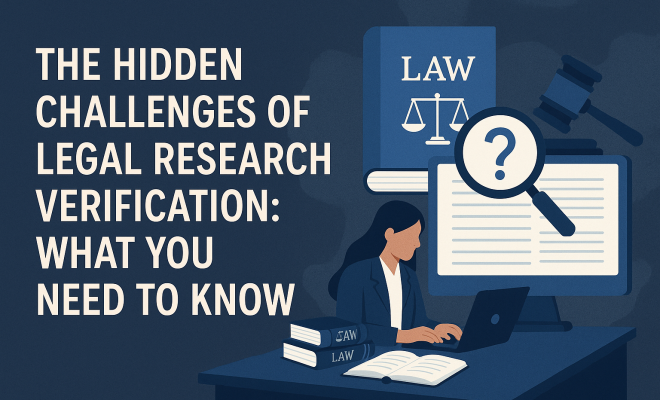
The Hidden Challenges of Legal Research Verification: What You Need to Know
“`html
Legal research verification is an essential step in any legal practice, ensuring that information sourced is accurate, reliable, and applicable to current legal standards. However, many attorneys and legal scholars face significant hurdles in this process, particularly in an era where information floods the internet at an unprecedented rate. This article explores ten critical aspects of legal research verification, highlighting the challenges, best practices, and the importance of staying updated in a rapidly evolving legal landscape.
1. The Importance of Reliable Sources
In the realm of legal research, the authenticity and reliability of sources are paramount. Legal professionals must differentiate between reputable sources—such as peer-reviewed journals, established law firms, and recognized legal databases—and those that might lack credibility. A significant aspect of legal research verification involves assessing the pedigree of the information utilized in legal arguments and documentation.
Using unreliable sources can lead to unfavorable outcomes in cases, as inaccuracies can undermine an attorney’s credibility and the court’s trust in the presented evidence. Therefore, legal researchers are encouraged to utilize databases like Westlaw, LexisNexis, and governmental archives, which provide vetted information that is more likely to withstand scrutiny.
Additionally, being aware of the publication’s background can lend further insight into its reliability. For instance, articles published by recognized legal scholars or institutions will generally carry more weight than a blog post by an unknown author. Legal practitioners should also consider the publication’s date since legal standards and interpretations can change over time, making outdated information potentially harmful.
2. Challenges of Evolution in Legal Standards
Legal standards are not static; they evolve with societal changes, court rulings, and legislative amendments. This dynamic nature poses a challenge for legal research verification, as outdated information can lead to incorrect conclusions. For instance, a precedent set by a court decision may no longer be applicable if subsequent rulings have modified the interpretation of the law.
To mitigate this risk, legal professionals should continuously update their research and remain informed on recent legal developments. This can include subscribing to legal news outlets, following relevant legal blogs, and joining professional organizations that provide ongoing education and insights into current trends in law.
Moreover, employing a systematic approach to monitor changes in the law—such as utilizing alerts from legal databases for relevant jurisdictions—can ensure that practitioners do not miss crucial updates. This proactive approach is especially pertinent in areas like family law and criminal law, where legislation can change frequently and significantly impact cases.
3. The Role of Technology in Legal Research
Modern technology has revolutionized legal research, offering tools that enhance the speed and accuracy of the verification process. Online legal databases, AI-driven research platforms, and machine learning applications are at the forefront of transforming how legal professionals conduct their research.
However, while technology can expedite the search for legal information, it is crucial for users to understand how these systems categorize and prioritize information. Legal professionals must remain vigilant and critically analyze data generated by algorithms, ensuring that the sources and conclusions drawn from them are still subject to human verification and context analysis.
For example, AI tools can provide quick access to relevant case law, but they are not infallible. They might overlook nuances in the law or context that a human researcher would not. Therefore, legal professionals should use technology to complement their own research efforts rather than rely solely on these tools.
4. The Risk of Overreliance on Law Firm Publications
Many legal professionals rely on publications from law firms as primary sources for research, but this can be a double-edged sword. While law firms often produce high-quality content that reflects their expertise, these publications can also be biased, reflecting the firm’s interest rather than a neutral perspective.
Legal research verification necessitates an awareness of this potential bias. It is essential to cross-reference any claims made in law firm publications with court cases, statutes, and independent legal analyses to ensure a balanced and accurate understanding of the law. (See: Legal research definition and resources.)
Furthermore, law firms may also publish updates on new legal precedents or changes in law that are advantageous to their clients or their practice area. Legal professionals should always question the motivations behind such publications and seek out multiple sources of information to create a comprehensive view of the legal landscape.
5. Staying Current with Legal Trends
The legal landscape is constantly changing, with new cases, laws, and regulations emerging regularly. Staying current with these changes is critical for effective legal research verification. Legal professionals should actively engage with recent publications, attend seminars, and participate in continuing education programs.
Additionally, utilizing social media platforms, such as Twitter, can provide real-time updates on legal trends and significant cases. Following legal influencers, law firm accounts, and court announcements can help legal professionals remain ahead of the curve in their research endeavors.
In addition to social media, platforms like LinkedIn can serve as networking tools, allowing legal professionals to connect with peers and gain insights into emerging trends and practices. Participating in online forums or joining legal associations can also facilitate knowledge sharing and professional growth in the ever-evolving legal field.
6. Best Practices for Verifying Legal Information
Implementing best practices for legal research verification can enhance the overall quality of legal work. First, establish a systematic approach to research, including creating a checklist of sources to consult. Second, prioritize primary sources, such as statutes and judicial opinions, over secondary sources, which can offer interpretations and opinions.
Moreover, maintaining a critical mindset is crucial. Legal professionals should question the validity of their sources, checking for author credentials, publication dates, and the context in which the information is presented. These practices can significantly reduce the risk of relying on inaccurate or outdated information.
Another best practice is to engage in peer reviews of legal research. By having a colleague review the findings, legal professionals can benefit from additional perspectives and insights, ultimately leading to a more robust verification process. This collaborative approach can also help identify any gaps in the research that may have been overlooked.
7. The Impact of Legal Research Verification on Case Outcomes
The outcome of a legal case can heavily depend on the thoroughness of legal research verification. Judges and juries alike are influenced by the quality and credibility of the information presented in court. High-quality research can lead to successful arguments, while inadequate verification can result in losing cases or facing sanctions for malpractice.
Therefore, investing time and resources into comprehensive legal research verification is critical for lawyers seeking to provide their clients with the best possible representation. A well-prepared case supported by robust research not only strengthens arguments but also enhances the lawyer’s reputation in the legal community.
To illustrate, consider cases where lawyers presented unverified or poorly researched evidence. The negative repercussions not only impacted the clients but also tarnished the lawyers’ reputations, showcasing how crucial thorough verification is in maintaining credibility and professional integrity within the legal field.
8. Ethical Considerations in Research Verification
Legal ethics play a vital role in the process of research verification. Legal professionals are bound by ethical obligations to provide accurate, truthful information to the courts and their clients. Failing to verify information adequately can lead to ethical breaches, resulting in disciplinary action or loss of license.
Lawyers must ensure that their research complies with professional standards and responsibilities. This includes being transparent about the sources of their information and avoiding any form of misrepresentation that could mislead clients or the court.
Furthermore, legal professionals should document their research processes, ensuring that there is a clear record of how conclusions were reached. This documentation not only provides a roadmap for the validity of the information presented but also protects legal practitioners against allegations of misconduct by demonstrating due diligence in their research efforts.
9. Case Studies: Legal Research Verification in Action
Examining real-life cases can provide insight into the importance of effective legal research verification. For instance, a high-profile case may highlight how a lawyer’s diligent research led to a favorable ruling, emphasizing the critical nature of verified information in legal arguments. (See: Challenges in legal research today.)
Conversely, cases where inadequate verification was evident can serve as cautionary tales, demonstrating the potential repercussions of negligence in this area. These case studies illustrate that the stakes are high and that thorough verification is non-negotiable for legal professionals.
One notable case is Brown v. Board of Education, where extensive research and verification of historical documents and social science studies were crucial in arguing for desegregation. The thorough verification of evidence played a key role in the landmark Supreme Court decision. Such examples underscore the necessity of rigorous legal research verification in high-stakes environments.
10. The Future of Legal Research Verification
As we move into an increasingly digital age, the future of legal research verification will likely involve further advancements in technology. With artificial intelligence and machine learning systems becoming more integrated into legal research workflows, the accuracy and efficiency of verifying legal information are expected to improve significantly.
However, legal professionals must remain vigilant in preserving ethical standards and critical thinking in their verification processes. The human element in analyzing and interpreting legal information will always be necessary, ensuring that technology complements rather than replaces the vital functions of legal research verification.
Furthermore, as technology evolves, so do the techniques for misinformation. Legal professionals will need to enhance their skills in discernment and verification to counteract potential inaccuracies from automated sources. Continuous training and adaptation to new methodologies will be essential in maintaining the integrity of legal research in the digital age.
11. Statistics on Legal Research Verification Practices
Understanding the landscape of legal research verification can be greatly enhanced by examining relevant statistics. According to a survey by the American Bar Association, approximately 70% of legal professionals reported that they frequently encounter challenges related to verifying the accuracy of legal information. Furthermore, an alarming 45% stated that they have faced negative consequences, such as losing a case, due to reliance on unverified sources.
Moreover, research published by the National Association for Law Placement indicates that 63% of law graduates feel ill-equipped to conduct thorough legal research due to inadequate training in research methodologies during their education. These statistics highlight the pressing need for improved training and resources in legal research verification, as the ramifications of poor verification practices can have far-reaching consequences in legal proceedings.
12. Expert Perspectives on Legal Research Verification
Insights from legal experts underscore the importance of rigorous verification processes. Professor John Smith, a legal scholar at Harvard Law School, emphasizes that “the integrity of our legal system relies on the accuracy of the information presented. Legal research verification is not merely a task; it is a fundamental duty of every legal professional.”
Similarly, seasoned attorney Rachel Green notes that “in today’s fast-paced legal environment, it is crucial to adopt a mindset of thoroughness. Rushed research leads to errors that can cost not only cases but also reputations.” These expert perspectives reinforce the necessity of prioritizing verification in legal research, advocating for a culture of diligence and accuracy within legal practices.
13. FAQs About Legal Research Verification
What is legal research verification?
Legal research verification is the process of confirming the accuracy and reliability of legal information before utilizing it in legal arguments or documentation. This includes checking the credibility of sources, ensuring information is up-to-date, and corroborating facts with primary legal materials.
Why is legal research verification important?
It is crucial because inaccurate or outdated information can lead to unfavorable outcomes in legal cases. Reliable verification supports the integrity of the legal profession and helps maintain trust in the judicial system.
How can legal professionals stay updated on legal developments?
Professionals can subscribe to legal news outlets, participate in continuing education programs, follow relevant blogs, and use social media platforms to receive real-time updates on legal trends and significant rulings.
What are the best sources for legal research?
Primary sources, such as statutes, case law, and legal codes, are the best sources for legal research. Additionally, reputable legal databases like Westlaw and LexisNexis provide vetted information that enhances the accuracy of legal research.
How can technology aid in legal research verification?
Technology, particularly AI-driven research tools, can help streamline the search process, provide quick access to relevant case law, and assist in organizing information. However, legal professionals must critically evaluate the data produced by these systems to ensure its validity.
What are the consequences of inadequate legal research verification?
Consequences may include losing cases, damaging a lawyer’s reputation, and potential disciplinary actions for ethical breaches. Inaccurate information can undermine the integrity of the legal profession and the judicial process.
14. Navigating Jurisdictional Variations in Legal Research Verification
Legal research verification can be further complicated by the variations in laws and legal practices across different jurisdictions. Each state or country may have distinct legal codes, court rules, and procedural requirements that can affect how legal information is interpreted and utilized.
For example, the approach to verifying statutes can differ between federal and state laws in the United States. Federal laws may take precedence in certain cases, but state laws might offer unique defenses or interpretations that could be pivotal in a case. Legal professionals must be adept at recognizing these jurisdictional nuances and ensuring that their research reflects the appropriate legal standards relevant to the specific jurisdiction in question.
Additionally, international legal practices can introduce complexities, especially for lawyers involved in cross-border legal matters. International treaties, differing legal systems, and varying standards for evidence can pose challenges in verifying legal information accurately. Legal practitioners working on international cases must stay informed about the legal frameworks of the countries involved and utilize appropriate resources to ensure compliance and accuracy in their research verification processes.
15. Emerging Trends in Legal Research Verification
The legal field is witnessing emerging trends that are reshaping the landscape of legal research verification. One notable trend is the increasing reliance on collaborative technology platforms that allow legal teams to share and verify research findings more efficiently. Tools such as cloud-based document management systems enable seamless collaboration among team members, fostering a culture of shared knowledge and accountability in research practices.
Furthermore, the integration of blockchain technology into legal research verification is gaining traction. Blockchain’s immutable ledger system can serve as a means of verifying the authenticity of legal documents and maintaining a transparent chain of custody. This could significantly enhance the reliability of legal research by providing verifiable source documentation that is resistant to tampering.
Moreover, the rise of data analytics in legal research is allowing practitioners to gain insights from vast amounts of legal data. By analyzing trends, outcomes, and citation practices, legal professionals can make more informed decisions and ensure their research is aligned with the prevailing legal landscape. These emerging trends highlight the need for legal professionals to remain adaptable and open to new methodologies in order to enhance their verification processes.
“`
Trending Now
Frequently Asked Questions
What is legal research verification?
Legal research verification is the process of ensuring that legal information sourced is accurate, reliable, and applicable to current legal standards. It involves assessing the credibility of sources and the relevance of the information for legal arguments and documentation.
Why is it important to use reliable sources in legal research?
Using reliable sources in legal research is crucial because inaccurate information can undermine an attorney's credibility and affect case outcomes. Reliable sources, such as peer-reviewed journals and established databases, ensure that the information holds up under scrutiny.
What are the challenges of legal research verification?
Legal research verification faces challenges such as distinguishing between credible and unreliable sources, keeping up with evolving legal standards, and managing the overwhelming amount of information available online. These challenges can impact the accuracy of legal arguments.
How do legal standards evolve over time?
Legal standards evolve through societal changes, court rulings, and legislative amendments. As new interpretations and laws emerge, legal practitioners must stay updated to ensure their research and arguments reflect the current legal landscape.
What are best practices for legal research verification?
Best practices for legal research verification include using reputable databases like Westlaw and LexisNexis, assessing the credibility and publication date of sources, and staying informed about changes in legal standards to ensure the accuracy of legal information.
What’s your take on this? Share your thoughts in the comments below — we read every one.