Exploring Extraterrestrial Life: Fungi’s Remarkable Resilience in Mars-Like Conditions
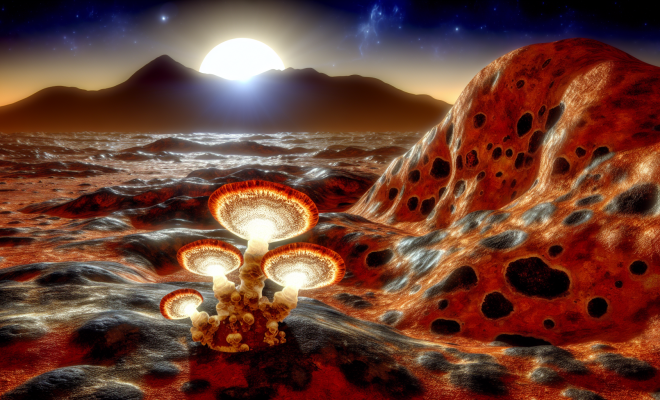
As humanity intensifies its preparations for interplanetary exploration, the quest for sustaining life beyond Earth has taken a fascinating turn. A groundbreaking study published on April 26, 2026, in the journal Applied and Environmental Microbiology unveils astonishing findings about the survival abilities of certain fungi species in environments reminiscent of Mars. This discovery not only deepens our understanding of microbial resilience but also opens up new avenues for sustainable life support systems in the harsh conditions of outer space.
The Intersection of Microbiology and Space Exploration
With plans for crewed missions to Mars accelerating, researchers are increasingly focused on the challenges of sustaining life during long-duration space travel. While traditional technologies for rocket propulsion and landing systems have received significant attention, the role of microorganisms—particularly fungi—has emerged as a crucial area of research. Fungi, known for their adaptability and resilience, could potentially play a vital role in creating self-sustaining ecosystems in extraterrestrial environments.
The Study’s Key Findings
The study highlights the remarkable survival capabilities of specific fungi species under conditions that closely mimic the Martian environment. Although the exact species were not detailed, the research indicates that these fungi can withstand extreme temperatures, radiation levels, and low atmospheric pressure—conditions that are characteristic of Mars.
Understanding Fungi: Nature’s Survivors
Fungi are a diverse group of organisms that have adapted to thrive in a variety of environments on Earth, from the depths of the ocean to the highest mountains. Their unique biological characteristics enable them to endure extreme conditions, making them prime candidates for survival in space.
- Extreme Tolerance: Many fungi can withstand extreme temperatures, desiccation, and high levels of radiation.
- Metabolic Versatility: Fungi can utilize various substrates for growth, which could be crucial for resource recycling in space habitats.
- Symbiotic Relationships: Fungi often form beneficial relationships with plants, which could enhance food production in extraterrestrial agriculture.
The Implications for Future Mars Missions
The findings from this study have significant implications for future Mars missions. As astronauts prepare for the challenges of living on the Red Planet, the incorporation of fungi into life support systems could provide numerous benefits:
- Oxygen Production: Certain fungi can contribute to oxygen generation, a critical need for human survival.
- Nutrient Recycling: Fungi can break down organic waste, transforming it into usable nutrients for plants, thereby creating a closed-loop system.
- Bioremediation: Fungi could help mitigate toxic substances found in Martian soil, making it safer for human habitation.
Preparing for the Unknown
As researchers continue to explore the potential of fungi in space, the implications extend beyond life support systems. Understanding how these organisms adapt and survive in extraterrestrial conditions could inform broader strategies for colonization and resource utilization on Mars and beyond.
The Role of Microbial Research in Space Exploration
The study of microbes, particularly extremophiles like fungi, is gaining traction in the field of astrobiology. By examining how these organisms function in extreme environments, scientists can develop innovative solutions for the challenges posed by long-duration space missions.
Microbial Resilience: A Key to Sustainability
Microbial resilience is not just about survival; it’s also about thriving in conditions that would be inhospitable to most life forms. This resilience is critical for establishing sustainable ecosystems in space. Researchers are now investigating various microbial species to determine their potential contributions to life support systems.
Future Research Directions
The journey ahead involves several key research directions aimed at harnessing the potential of fungi and other microorganisms for space exploration:
- Identifying Key Species: Further studies are needed to identify specific fungi species with the best survival traits for Mars-like conditions.
- Genetic Engineering: Scientists may explore genetic modifications to enhance the resilience of fungi, making them even more suitable for extraterrestrial environments.
- Field Tests: Conducting experiments in Mars analog environments on Earth will provide valuable insights into how these organisms behave in conditions similar to those on the Red Planet.
The Broader Impact of Extraterrestrial Research
The implications of this research extend beyond Mars missions. Understanding how life can survive in extreme environments could provide insights into the potential for life on other celestial bodies, such as Europa or Enceladus, which harbor subsurface oceans beneath icy crusts. The study of extremophiles could therefore reshape our understanding of life’s possibilities in the universe.
Public Engagement and Awareness
As interest in space exploration grows, public engagement in scientific research is becoming increasingly important. Educating the public about the potential roles of fungi and other microorganisms in space can foster greater interest and support for scientific endeavors aimed at exploring our solar system and beyond.
A Collective Future in Space
The prospect of human life on Mars is no longer a distant dream but a tangible goal. As NASA and other space agencies develop plans for crewed missions, the integration of microbial research into these plans is essential for ensuring the health and sustainability of astronauts during their journey.
Conclusion: A New Frontier for Fungi
The discovery of fungi’s surprising survival abilities in Mars-like conditions is a testament to nature’s ingenuity. As we stand on the brink of a new era in space exploration, the potential for these resilient organisms to support human life in the cosmos is both exciting and promising. The ongoing research into microbial resilience will not only aid in our efforts to reach Mars but will also deepen our understanding of life’s adaptability, paving the way for future generations to explore and perhaps inhabit other worlds.