Supreme Court to Review Haitian & Syrian Migrant Protections in 2026
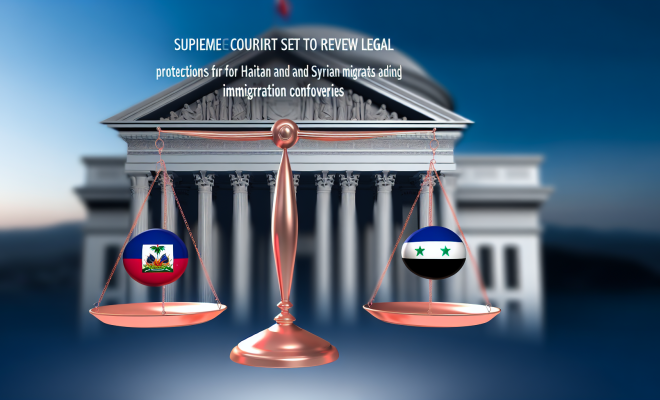
The U.S. Supreme Court is poised to hear critical arguments in April 2026 regarding the future of Temporary Protected Status (TPS) for migrants from Haiti and Syria. This legal battle involves approximately 350,000 Haitians and 6,000 Syrians who have sought refuge in the United States due to ongoing humanitarian crises, including war and natural disasters. The potential termination of TPS has significant implications not only for these individuals but also for the broader landscape of U.S. immigration policy.
Background on Temporary Protected Status
Temporary Protected Status is a humanitarian program established to provide legal protections to individuals from designated countries experiencing severe conditions, such as armed conflict or environmental disasters. Under TPS, eligible migrants are allowed to live and work legally in the U.S. without the fear of deportation. This program has been a lifeline for many, especially in the wake of devastating events that have rendered their home countries unsafe.
The Trump Administration’s Push to End TPS
Under the Trump administration, there was a concerted effort to revoke TPS for various nationalities, including a significant push to terminate protections for Haitians and Syrians. The administration’s stance stems from a broader immigration crackdown aimed at reducing the number of non-citizens residing in the U.S. Critics of the decision argue that it disregards the continuing crises in these countries, where conditions remain dire.
Legal Proceedings and Lower Court Decisions
Lower courts have intervened in this contentious issue, with decisions in New York and Washington, D.C., halting the terminations. One court expressed concern over the potential “hostility to nonwhite immigrants” present in the administration’s policies, indicating a broader societal and legal context in which these decisions are being made. The findings from these lower courts highlight the complexities of immigration law and the intersection of race, policy, and human rights.
Justice Department’s Argument
The Justice Department has maintained that the Department of Homeland Security (DHS) possesses the sole authority to determine the status of TPS designations. They argue that the courts are overstepping their boundaries by intervening in executive policy matters. This claim underscores a fundamental legal debate regarding the balance of power between the judiciary and the executive branches of government.
Impact on Migrants and Communities
The potential termination of TPS for Haitians and Syrians would have profound implications for the affected communities. Many individuals under this status have built lives in the U.S., contributing to their local economies and communities. The loss of legal protections would not only jeopardize their ability to work but also place them at risk of deportation back to countries struggling with instability.
Community Responses
- Advocacy Groups: Numerous advocacy organizations are rallying support for TPS recipients, emphasizing the need for humanitarian considerations in immigration policy.
- Legal Assistance: Many legal aid groups are preparing to assist migrants who may face legal challenges should TPS be rescinded.
- Public Opinion: There is a growing awareness and support among the public for protecting vulnerable migrants, which could influence the Supreme Court’s deliberations.
Looking Ahead: The Supreme Court’s Role
The Supreme Court’s decision, expected weeks or months after the April 2026 arguments, will likely set a precedent that could reshape the landscape of Temporary Protected Status and immigration policy in the U.S. As the justices deliberate, they will have to weigh the legal arguments presented by both the government and the lower courts, considering not only the letter of the law but also the human implications of their ruling.
Conclusion
The case surrounding TPS for Haitians and Syrians is emblematic of the broader challenges facing U.S. immigration policy today. As the Supreme Court prepares to hear this pivotal case, the outcome will resonate far beyond legal circles, impacting countless lives and defining the United States’ commitment to humanitarian protections in an increasingly polarized political climate.