The Edvocate

Top Menu

Main Menu

  • Start Here
    • Our Brands
    • Governance
      • Lynch Education Consulting, LLC.
      • Dr. Lynch’s Personal Website
      • Careers
    • Write For Us
    • Books
    • The Tech Edvocate Product Guide
    • Contact Us
    • The Edvocate Podcast
    • Edupedia
    • Pedagogue
    • Terms and Conditions
    • Privacy Policy
  • PreK-12
    • Assessment
    • Assistive Technology
    • Best PreK-12 Schools in America
    • Child Development
    • Classroom Management
    • Early Childhood
    • EdTech & Innovation
    • Education Leadership
    • Equity
    • First Year Teachers
    • Gifted and Talented Education
    • Special Education
    • Parental Involvement
    • Policy & Reform
    • Teachers
  • Higher Ed
    • Best Colleges and Universities
    • Best College and University Programs
    • HBCU’s
    • Diversity
    • Higher Education EdTech
    • Higher Education
    • International Education
  • Advertise
  • The Tech Edvocate Awards
    • The Awards Process
    • Finalists and Winners of The 2025 Tech Edvocate Awards
    • Finalists and Winners of The 2024 Tech Edvocate Awards
    • Finalists and Winners of The 2023 Tech Edvocate Awards
    • Finalists and Winners of The 2021 Tech Edvocate Awards
    • Finalists and Winners of The 2022 Tech Edvocate Awards
    • Finalists and Winners of The 2020 Tech Edvocate Awards
    • Finalists and Winners of The 2019 Tech Edvocate Awards
    • Finalists and Winners of The 2018 Tech Edvocate Awards
    • Finalists and Winners of The 2017 Tech Edvocate Awards
    • Award Seals
  • Apps
    • GPA Calculator for College
    • GPA Calculator for High School
    • Cumulative GPA Calculator
    • Grade Calculator
    • Weighted Grade Calculator
    • Final Grade Calculator
  • The Tech Edvocate
  • Post a Job
  • AI Powered Personal Tutor

logo

The Edvocate

  • Start Here
    • Our Brands
    • Governance
      • Lynch Education Consulting, LLC.
      • Dr. Lynch’s Personal Website
        • My Speaking Page
      • Careers
    • Write For Us
    • Books
    • The Tech Edvocate Product Guide
    • Contact Us
    • The Edvocate Podcast
    • Edupedia
    • Pedagogue
    • Terms and Conditions
    • Privacy Policy
  • PreK-12
    • Assessment
    • Assistive Technology
    • Best PreK-12 Schools in America
    • Child Development
    • Classroom Management
    • Early Childhood
    • EdTech & Innovation
    • Education Leadership
    • Equity
    • First Year Teachers
    • Gifted and Talented Education
    • Special Education
    • Parental Involvement
    • Policy & Reform
    • Teachers
  • Higher Ed
    • Best Colleges and Universities
    • Best College and University Programs
    • HBCU’s
    • Diversity
    • Higher Education EdTech
    • Higher Education
    • International Education
  • Advertise
  • The Tech Edvocate Awards
    • The Awards Process
    • Finalists and Winners of The 2025 Tech Edvocate Awards
    • Finalists and Winners of The 2024 Tech Edvocate Awards
    • Finalists and Winners of The 2023 Tech Edvocate Awards
    • Finalists and Winners of The 2021 Tech Edvocate Awards
    • Finalists and Winners of The 2022 Tech Edvocate Awards
    • Finalists and Winners of The 2020 Tech Edvocate Awards
    • Finalists and Winners of The 2019 Tech Edvocate Awards
    • Finalists and Winners of The 2018 Tech Edvocate Awards
    • Finalists and Winners of The 2017 Tech Edvocate Awards
    • Award Seals
  • Apps
    • GPA Calculator for College
    • GPA Calculator for High School
    • Cumulative GPA Calculator
    • Grade Calculator
    • Weighted Grade Calculator
    • Final Grade Calculator
  • The Tech Edvocate
  • Post a Job
  • AI Powered Personal Tutor
  • 7 Diverse Texts to Bolster Reading Lessons

  • 7 Teacher Ideas for Supporting Students Who Aren’t Doing Any Work at All

  • 7 Traits of an Ineffective Teacher

  • 7 Teacher-on-Teacher Pranks

  • 7 Steps to Boost Your Leadership Self-Confidence

  • 7 Tips for Moving Learning Outside

  • 7 Common Parenting Myths We Have Believed For Generations

  • 7 Effective Steps When Teenager Is Not Listening To Parents

  • 7 Ideas from Reggio Emilia That Any Early Childhood Teacher Can Use

  • 7 Tips To Parenting Teens With Ease

Policy & ReformTrending Topics
Home›Policy & Reform›Pass or Fail: Horace Mann – An American Public School Pioneer

Pass or Fail: Horace Mann – An American Public School Pioneer

By Matthew Lynch
May 9, 2017
0
Spread the love

In this multi-part series, I provide a dissection of the phenomenon of retention and social promotion. Also, I describe the many different methods that would improve student instruction in classrooms and eliminate the need for retention and social promotion if combined effectively.

While reading this series, periodically ask yourself this question: Why are educators, parents and the American public complicit in a practice that does demonstrable harm to children and the competitive future of the country?

Horace Mann brought the ideal of public education for ALL children, regardless of income or ability, to the forefront in the 19th century and ushered in new philosophy on what public school should entail. 
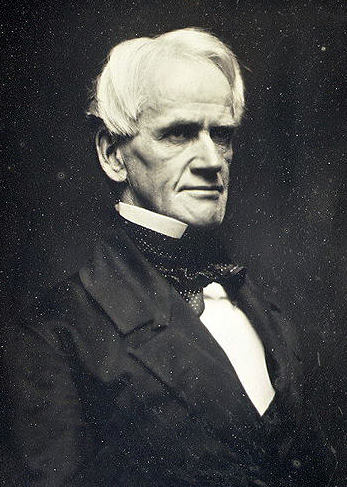
Horace Mann

There were many early supporters of equal education for all, but there was still considerable controversy about access to education. Questions arose about whether poor children were being restricted to instruction in basic skills while the middle classes received broad education meant to maintain and improve their quality of life. It was in this period of transition from theoretical public education to an implemented system that worked for all citizens, that Horace Mann emerged as one of the principal champions of education.

Horace Mann, who many education experts and historians consider to be the father of the common school concept. With his craggy features and passionate speeches, he embodied the spirit of educational idealism during the first half of the 1800s.

Mann was born into an impoverished Massachusetts family and was largely self-taught. He managed to secure a place at Brown University, where his oratorical prowess first became evident. He was to use this rhetorical ability to further his careers in law and politics. As secretary of the first board of education in the United States, he gave lectures and started the influential Common School Journal.

Picking up on many of the ideas of the founding fathers, Mann went on to envisage how a system of universal education would best serve the social, economic, and political needs of society. He centered his lofty hopes for the nation on the solo successes of children because he believed that a common experience in school could mold them into successful individuals.

Mann developed six educational principles that would come to define his involvement, and would influence the American education system for decades:

(1) Citizens cannot maintain both ignorance and freedom;

(2) This education should be paid for, controlled, and maintained by the public;

(3) This education should be provided in schools that embrace children from varying backgrounds;

(4) This education must be nonsectarian;

(5) This education must be taught using tenets of a free society; and

(6) This education must be provided by well-trained, professional teachers.

Ever expansive in his ideas, Mann also believed that common schooling would reduce hostilities among citizens. As children grew into adults sharing a common educational experience, Mann posited that different socioeconomic, religious, and ethnic backgrounds would become less significant. Mann’s vision for schools included a common moral and political foundation, as well as the provision of opportunities for children from disadvantaged backgrounds to achieve self-sufficiency and use education to lift themselves from poverty.

By 1837, Horace Mann was busy working to mobilize support for public schools and argued that they were the training ground for youth and for individuals to be able to participate effectively as citizens of a democratic nation. Mann clearly valued a balanced and broad curriculum and supported the development of one in public schools.

Indeed, Mann’s ideal school system brought children from all backgrounds to learn together in an ungraded school. Mann advocated for the education of heterogeneous groups of students to achieve unifying goals and believed specifically in the connection between freedom, self-government, and universal education. He believed in the value of a common learning environment and the development of self-discipline. These, he maintained, could be transferred into the types of skills and behaviors needed for a free society where citizens were not only educated, but had the ability to make intelligent decisions needed for moral judgment and government participation. For Mann, the purpose of education went beyond intellectual and utilitarian goals.

Accepting that children differ regarding ability, interests, and temperament, Mann laid the groundwork for lessons to be adapted to meet the individual needs of children. The one-room school, now a nostalgic icon of American history, embodied Mann’s idyllic vision of the common school. There was little consistency in the curriculums used by one-room schools, though, and teachers had difficulty grouping children for instructional purposes.

Students studied in groups based on what they knew and what they needed to know. Students of multiple ages received instruction at the same level. Given the number of children and the different ages of children in the classroom, children principally learned via memorization. Teachers had little time to target individual needs in the classroom. Even with these drawbacks, however, the non-graded one-room school was an invaluable institution for providing free and public education for children during the 18th and 19th centuries.

Many children excelled in learning reading, writing, and arithmetic, even when the time at school was disrupted by the need to work on the family farm. The ungraded structure of the one-room school allowed for the return to school after an extended absence. It also allowed children to take a break and then return to learning, based on the knowledge they had retained.

Though the standardized assessments that are part of the educational system today did not exist, children did have oral exams at the end of the school year. These were formal quizzes on what they had learned over the course of the year. The purpose of these exams was to provide teachers with information about where to start children at the beginning of the next school year.

Passing and failing were not descriptors used to classify children’s learning behaviors in the one-room school, as progress was allowed to occur at different rates. Only when students took the exams needed to enter high schools outside of their rural communities would they experience their first taste of scholastic success or failure.

Was the one-room school on to something?

TagsHorace Mannpublic school historypublic school philosophyretentionretention and social promotion seriessocial promotion
Previous Article

Pass or Fail: Goals of the U.S. ...

Next Article

Two Creative Ways to Engage English Language ...

Matthew Lynch

Related articles More from author

  • Retention & Social Promotion SeriesTrending Topics

    Pass or Fail: How Can Interventions Reform Retention Rates?

    July 19, 2017
    By Matthew Lynch
  • Retention & Social Promotion SeriesTrending Topics

    Pass or Fail: The Final Word

    July 1, 2018
    By Matthew Lynch
  • Policy & ReformRetention & Social Promotion SeriesThe Tech Edvocate

    Pass or Fail: Retention Has Long-Term Effects on Students

    June 3, 2017
    By Matthew Lynch
  • Retention & Social Promotion SeriesTrending Topics

    Pass or Fail: The Evolution of American Public Schools in the 20th Century

    May 6, 2017
    By Matthew Lynch
  • Policy & ReformTrending Topics

    Pass or Fail: Supporting Teachers to Enhance Educational Value

    January 16, 2018
    By Matthew Lynch
  • Retention & Social Promotion SeriesTrending Topics

    Pass or Fail: Is the Academic Cost Worth It?

    January 24, 2018
    By Matthew Lynch

Search

Registration and Login

  • Register
  • Log in
  • Entries feed
  • Comments feed
  • WordPress.org

Newsletter

Signup for The Edvocate Newsletter and have the latest in P-20 education news and opinion delivered to your email address!

RSS Matthew on Education Week

  • Au Revoir from Education Futures November 20, 2018 Matthew Lynch
  • 6 Steps to Data-Driven Literacy Instruction October 17, 2018 Matthew Lynch
  • Four Keys to a Modern IT Approach in K-12 Schools October 2, 2018 Matthew Lynch
  • What's the Difference Between Burnout and Demoralization, and What Can Teachers Do About It? September 27, 2018 Matthew Lynch
  • Revisiting Using Edtech for Bullying and Suicide Prevention September 10, 2018 Matthew Lynch

About Us

The Edvocate was created in 2014 to argue for shifts in education policy and organization in order to enhance the quality of education and the opportunities for learning afforded to P-20 students in America. What we envisage may not be the most straightforward or the most conventional ideas. We call for a relatively radical and certainly quite comprehensive reorganization of America’s P-20 system.

That reorganization, though, and the underlying effort, will have much to do with reviving the American education system, and reviving a national love of learning.  The Edvocate plans to be one of key architects of this revival, as it continues to advocate for education reform, equity, and innovation.

Newsletter

Signup for The Edvocate Newsletter and have the latest in P-20 education news and opinion delivered to your email address!

Contact

The Edvocate
910 Goddin Street
Richmond, VA 23230
(601) 630-5238
[email protected]
  • situs togel online
  • dentoto
  • situs toto 4d
  • situs toto slot
  • toto slot 4d
Copyright (c) 2025 Matthew Lynch. All rights reserved.