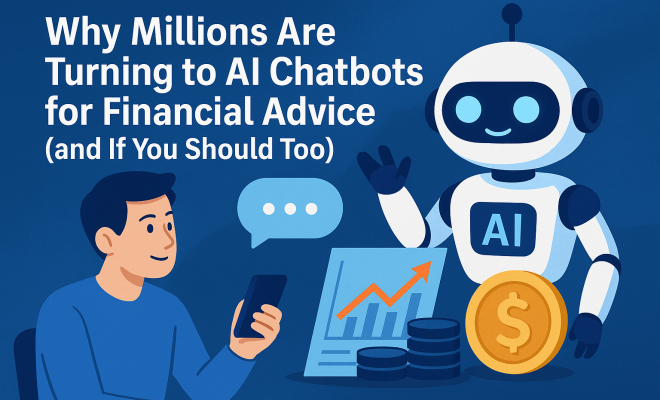
Why Millions Are Turning to AI Chatbots for Financial Advice (and If You Should Too)
“`html
It’s 2026, and the financial landscape is shifting beneath our feet. Not just because of inflation or interest rates, but because of a new, digital advisor making waves: AI chatbots. Suddenly, the complex world of personal finance, investing, and budgeting feels a lot more accessible, thanks to these algorithms promising tailored insights at the tap of a screen. But as more and more people lean on AI chatbots for financial advice, a critical question emerges: can we really trust them with our hard-earned money and our future? For more on this, see payroll planning tool.
This isn’t just about convenience; it’s about a profound change in how we interact with money. The intersection of rapidly advancing AI technology and the deeply personal, often anxiety-inducing nature of financial decision-making has sparked heated debates. On one side, proponents highlight accessibility and objectivity. On the other, skeptics worry about accuracy, liability, and the sheer lack of human empathy. For anyone trying to navigate their finances, understanding the pros and cons of these digital gurus is no longer optional. Let’s dig into what’s driving this trend and what you absolutely need to know before you hand over your financial queries to a bot.
1. The Allure of Accessibility and Cost-Effectiveness: Breaking Down Barriers
One of the most compelling reasons people are flocking to AI chatbots for financial advice is the sheer accessibility they offer. Traditional financial advisors often come with high fees, requiring significant assets to even get a foot in the door. This immediately creates a barrier for many, especially younger individuals, those with lower incomes, or anyone just starting their financial journey. AI chatbots, in contrast, are often free or come with a very low subscription cost, democratizing financial guidance in a way that was previously unimaginable.
Think about it: you can ask a complex question about retirement planning or investment diversification at 2 AM from your couch, and get an instant, often detailed, response. There’s no scheduling appointments, no minimum asset requirements, and no pressure. This instant gratification and low barrier to entry make AI an incredibly attractive option for millions who feel priced out or intimidated by traditional financial services. It’s empowering for individuals who simply need a starting point or quick clarification without the overhead.
2. Objectivity and Data-Driven Insights: Escaping Human Biases
Human financial advisors, for all their experience and empathy, are still human. They can be susceptible to biases, emotional responses, and even conflicts of interest (think commission-based products). AI chatbots, by their very nature, operate purely on data and algorithms. They don’t have personal opinions, they don’t get swayed by market panic, and they certainly don’t have a quota to meet for selling specific funds.
This inherent objectivity is a huge draw. When you ask an AI chatbot for financial advice, you’re theoretically getting recommendations based on vast datasets, market trends, and economic models, free from the psychological pitfalls that can sometimes plague human decision-making. For users wary of being upsold or receiving advice colored by a human’s personal investing philosophy, the cold, hard logic of an an AI can feel incredibly reassuring. It’s about getting the numbers, unvarnished.
3. Personalization at Scale: Tailoring Advice to Your Unique Situation
Early iterations of financial software often provided generic advice. But today’s advanced AI chatbots for financial advice are capable of a remarkable degree of personalization. By asking a series of questions about your income, expenses, debt, risk tolerance, and long-term goals, these bots can construct a surprisingly detailed financial profile. They can then cross-reference this with market data, economic forecasts, and even behavioral finance principles to offer tailored recommendations.
Want to know the optimal savings rate for your specific income level to buy a house in five years? Or how to rebalance your portfolio given your age and desired retirement date? An AI can crunch these numbers and offer specific strategies that feel far more relevant than a general blog post or a standard financial textbook. This ability to provide bespoke guidance, often in real-time, gives users a sense that the advice is truly for them, not just for ‘everyone.’
4. The Black Box Problem: Understanding How Decisions Are Made
Despite the apparent advantages, a significant concern with AI chatbots financial advice is the ‘black box’ problem. When an AI offers a recommendation – say, to invest in a particular ETF or to prioritize paying off one type of debt over another – how did it arrive at that conclusion? The algorithms behind these systems are incredibly complex, often involving neural networks and machine learning models that are difficult for even their creators to fully interpret. Related reading: game-changing financial insights.
This lack of transparency can be deeply unsettling when your financial future is on the line. A human advisor can explain their reasoning, walk you through the pros and cons, and discuss alternative strategies. An AI, while providing an answer, often can’t articulate the nuanced ‘why’ in a way that builds true trust or allows for critical evaluation. This opacity makes it hard for users to truly understand the underlying logic and, crucially, to identify potential flaws or biases in the AI’s programming.
5. Lack of Empathy and Contextual Understanding: Beyond the Numbers
Financial decisions are rarely purely mathematical. They’re deeply intertwined with life events, emotions, fears, and aspirations. A human financial advisor can pick up on subtle cues, understand the emotional weight of a job loss, a new baby, or a health crisis, and adjust their advice accordingly. They can provide comfort, encouragement, and a sounding board during stressful times. An AI chatbot, no matter how sophisticated, fundamentally lacks empathy and true contextual understanding. (See: AI financial advisors gaining popularity.)
It can process data points about your life, but it can’t grasp the emotional nuances. It might recommend a highly aggressive investment strategy based purely on your age and stated risk tolerance, without understanding that you’re also caring for an ailing parent and desperately need liquidity. While objectivity is a strength, the absence of human connection and emotional intelligence can be a severe limitation when navigating the often tumultuous waters of personal finance.
6. Data Security and Privacy Risks: Guarding Your Most Sensitive Information
To provide truly personalized advice, AI chatbots for financial advice need access to a lot of your personal financial data: income, expenses, bank balances, investment holdings, debt obligations, and even future goals. This is incredibly sensitive information, and handing it over to a third-party AI platform raises immediate red flags about data security and privacy. How is this data stored? Who has access to it? What happens if there’s a data breach?
While reputable AI providers will have robust security measures, the risk is never zero. Furthermore, there’s the question of how your data might be used beyond just providing advice. Could it be anonymized and sold for market research? Could it influence targeted advertising for financial products? These are legitimate concerns that users must weigh carefully. The convenience of AI comes with the responsibility of scrutinizing its data handling practices.
7. Regulatory Uncertainty and Liability: Who’s Responsible When Things Go Wrong?
The financial industry is heavily regulated to protect consumers. Human financial advisors are typically licensed, subject to fiduciary duties, and accountable for the advice they provide. If a human advisor gives negligent advice that leads to significant losses, there are clear legal avenues for recourse. With AI chatbots financial advice, the regulatory landscape is far murkier.
Who is liable if an AI provides incorrect or harmful advice? Is it the developer of the AI model? The company that deploys it? The user who chose to follow it? These questions are still largely unanswered by current legislation, creating a significant grey area. This lack of clear accountability is a major concern for both consumers and regulators, and it means that relying solely on AI for critical financial decisions carries an elevated, undefined risk.
8. The Potential for Misinformation and ‘Hallucinations’: When AI Gets It Wrong
Even the most advanced AI models are not infallible. They learn from vast datasets, and if those datasets contain biases or inaccuracies, the AI can perpetuate them. Furthermore, large language models (LLMs) that power many chatbots are known to ‘hallucinate’ – generating plausible-sounding but entirely false information. While this might be amusing in a creative writing context, it’s catastrophic when dealing with financial advice.
Imagine an AI chatbot for financial advice confidently recommending a non-existent investment product, misinterpreting a tax law, or providing an outdated interest rate. Without the ability to critically evaluate and verify every piece of information, users could make disastrous decisions based on AI-generated falsehoods. This vulnerability to misinformation, intentional or unintentional, underscores the need for extreme caution and independent verification.
10. The Evolution of AI in Finance: From Robo-Advisors to Conversational AI
It’s important to remember that AI in finance isn’t entirely new. We’ve seen the rise of robo-advisors over the last decade, offering automated, algorithm-driven portfolio management. These services typically ask you a series of questions about your risk tolerance and financial goals, then automatically invest your money into a diversified portfolio of ETFs or mutual funds, rebalancing it periodically. They’ve been a huge step forward in making investing accessible and affordable.
However, AI chatbots for financial advice represent a significant leap beyond traditional robo-advisors. While robo-advisors automate investment management, chatbots aim to simulate a human conversation, offering advice across a much broader spectrum of financial topics, from budgeting and debt management to complex tax questions and estate planning. They use natural language processing (NLP) to understand your queries and generate human-like responses, moving from structured questionnaires to free-form dialogue. This conversational interface is what makes them feel so revolutionary and, at times, deceptively capable.
This distinction is critical because the expectations and potential pitfalls differ. With a robo-advisor, you understand its scope is typically limited to investment management. With a conversational AI chatbot, the perceived scope can feel limitless, which is where the dangers of misinformation and over-reliance become more pronounced. For more on this, see top AI platforms to watch.
11. Expert Perspectives: What Do Financial Professionals Think?
The financial industry is watching the rise of AI chatbots with a mix of excitement and apprehension. Many forward-thinking financial advisors see AI as a powerful tool to enhance their practices. They imagine using AI to automate routine tasks, analyze vast amounts of market data in seconds, identify emerging trends, and even personalize client communications at scale. This could free up their time to focus on higher-value activities like complex financial planning, behavioral coaching, and building deeper client relationships.
For example, a financial planner might use an AI to quickly generate several retirement scenarios based on different savings rates and market assumptions, then use those as a starting point for a personalized discussion with a client. Or, an AI could monitor a client’s spending habits and flag potential issues before they become major problems, allowing the human advisor to intervene proactively. (See: importance of financial literacy.)
However, there’s also a strong current of skepticism. Many veteran advisors emphasize that financial planning isn’t just about numbers; it’s about life planning. They argue that AI can’t replicate the trust, empathy, and nuanced understanding that comes from a long-term relationship with a human advisor. “You can’t automate empathy,” one advisor might say, pointing out that guiding someone through a divorce, a major illness, or the death of a spouse requires a human touch that algorithms simply don’t possess. The consensus seems to be that AI will change the role of the human advisor, but it won’t eliminate it – at least not anytime soon.
12. Case Studies and Real-World Examples: Where AI Chatbots are Making an Impact
While we’re still in the early stages, several companies are already deploying AI chatbots for financial advice in various capacities.
Banking Customer Service: Many major banks now use AI-powered chatbots to handle routine customer service inquiries. You can ask about your account balance, recent transactions, or how to dispute a charge, and the bot provides an instant answer. This frees up human agents for more complex issues and offers 24/7 support. While not direct financial advice, it’s a foundational step.
Budgeting and Expense Tracking Apps: Apps like Mint or YNAB (You Need A Budget) have incorporated AI-like features for years, categorizing transactions and providing insights into spending habits. Newer versions are adding conversational interfaces, allowing users to ask questions like, “How much did I spend on dining out last month?” or “Can I afford this new gadget?” There’s a fuller look at leading ETFs for AI investment.
Investment Platforms: Some online brokerage firms are experimenting with AI chatbots to help users understand investment terms, research specific stocks or funds, or even execute trades based on natural language commands. While they often stop short of offering direct “buy this” advice, they provide information that aids decision-making.
Niche Financial Planning: We’re also seeing specialized chatbots emerge for specific financial needs. For instance, a chatbot might focus solely on student loan repayment strategies, guiding users through different options and potential savings. Another might assist with tax preparation questions, though usually with strong disclaimers about verifying information with a human expert.
These examples show AI’s growing footprint, often in supportive roles, highlighting its utility for information retrieval and routine tasks rather than complex, fiduciary-level advice.
13. The Future Outlook: Trends and Predictions for AI in Finance
The trajectory for AI chatbots in financial advice points towards increasing sophistication and integration. Here’s what we might expect:
- Enhanced Personalization: As AI models become more adept at processing vast amounts of personal data and understanding context, their ability to offer truly bespoke advice will improve dramatically. They might anticipate your needs based on life stages or market events.
- Proactive Insights: Instead of just responding to queries, AI could become more proactive. Imagine a bot alerting you that you’re consistently over budget in a certain category, or suggesting a portfolio adjustment based on a change in economic indicators, before you even ask.
- Seamless Integration: We’ll likely see AI chatbots seamlessly integrated into existing financial apps and platforms, becoming an invisible assistant that helps manage your money without you even realizing you’re interacting with AI.
- Ethical AI Frameworks: As AI becomes more powerful, the demand for ethical guidelines and transparent AI models will intensify. Regulators, developers, and users will push for clearer accountability and explainability in financial AI.
- Hybrid Dominance: The hybrid model, combining human expertise with AI efficiency, is likely to become the standard. This means AI tools will empower human advisors, making their services more efficient and accessible, rather than entirely replacing them.
Frequently Asked Questions About AI Chatbots and Financial Advice
Q1: Are AI chatbots legally allowed to give financial advice?
This is a complex and evolving area. In many jurisdictions, financial advice is a regulated activity that requires specific licenses and registrations. While AI chatbots can provide information and tools, they typically cannot legally offer personalized, actionable financial advice in the same way a licensed human advisor can. Their recommendations are often framed as “information” or “suggestions” rather than regulated advice. The regulatory landscape is still catching up to the technology. We covered AI chatbots and legal challenges in more detail.
Q2: How accurate is the financial advice provided by AI chatbots?
The accuracy varies widely depending on the chatbot’s underlying model, the quality of its training data, and the complexity of the query. For straightforward, factual questions (e.g., “What is the current interest rate on a 30-year mortgage?”), they can be highly accurate. However, for nuanced, personalized advice involving multiple variables and subjective factors, their accuracy can decrease, and they are prone to ‘hallucinations’ or misinterpretations. Always cross-reference critical information. (See: impact of AI on financial decision-making.)
Q3: Can AI chatbots help me with my taxes?
AI chatbots can certainly help with general tax information, explaining concepts like deductions, credits, or different filing statuses. They might even guide you through the process of using tax software. However, they are not a substitute for a qualified tax professional for personalized tax planning or complex situations. Tax laws are highly specific and constantly changing, and errors can have significant consequences. Use them for general guidance, but consult a human for specific advice.
Q4: Is my financial data safe with an AI chatbot?
Data security is a major concern. Reputable AI providers use encryption and robust security protocols to protect your information. However, no system is entirely foolproof, and data breaches are always a risk. Before sharing sensitive financial data, always research the provider’s privacy policy, security measures, and data retention practices. Consider what data is truly necessary for the advice you seek.
Q5: When should I choose a human financial advisor over an AI chatbot?
You should prioritize a human financial advisor for major life events (marriage, divorce, new baby, job loss, inheritance), complex financial situations (large assets, multiple income streams, business ownership), estate planning, and when you need emotional support or personalized behavioral coaching. Human advisors offer empathy, accountability, and a holistic understanding that AI currently lacks, especially for high-stakes decisions where the ‘why’ behind the advice is as important as the ‘what.’
Q6: Can AI chatbots create a personalized investment portfolio for me?
Some advanced AI chatbots and robo-advisors can suggest personalized investment portfolios based on your stated risk tolerance, financial goals, and time horizon. They do this by analyzing vast market data and optimizing asset allocation. However, these are typically algorithm-driven suggestions rather than the nuanced, ongoing management a human advisor might provide. For complex investment strategies or active management, a human advisor is generally preferable.
Q7: What are the main ethical concerns surrounding AI chatbots giving financial advice?
Ethical concerns include potential biases in training data leading to discriminatory advice, the ‘black box’ problem (inability to explain decisions), lack of accountability for incorrect advice, potential for data misuse or privacy breaches, and the risk of fostering over-reliance on AI for critical life decisions without human oversight. Ensuring fairness, transparency, and user protection is paramount.
9. The Hybrid Approach: The Future of Financial Guidance
Given the strengths and weaknesses of AI chatbots financial advice, it’s becoming clear that the most effective path forward might not be an ‘either/or’ choice, but rather a ‘both/and’ approach. Many experts believe the future lies in a hybrid model, where AI tools augment and empower human advisors, rather than replacing them entirely. Imagine an AI doing the heavy lifting of data analysis, portfolio optimization, and routine calculations, freeing up human advisors to focus on the truly human elements: emotional support, complex problem-solving, behavioral coaching, and navigating unique life circumstances.
This way, you get the best of both worlds: the efficiency, objectivity, and accessibility of AI combined with the empathy, nuanced understanding, and accountability of a human professional. For individuals, this might mean using AI chatbots for preliminary research, budgeting, or basic financial questions, but always consulting a human advisor for major decisions, complex planning, or when significant sums of money are involved. The key is to leverage AI as a powerful tool, not as an unquestioned oracle.
So, should you trust AI chatbots with your financial advice? The answer, like most things in finance, is nuanced. They offer incredible accessibility, cost savings, and objective, data-driven insights that can be genuinely helpful, especially for basic queries and financial planning. However, their limitations – the black box problem, lack of empathy, data security risks, regulatory uncertainty, and potential for errors – mean they should be approached with a healthy dose of skepticism and caution, particularly for high-stakes decisions. For now, AI is a powerful co-pilot, not the sole pilot, of your financial journey.
“`
Trending Now
- our breakdown of alphainvest ai: why thousands are demanding answers after sudden losses
- our breakdown of bizarre: bitcoin ‘zero’ searches soar — what it means for your portfolio
- our breakdown of baffling: how gunra ransomware is exploiting a critical flaw you might miss
Frequently Asked Questions
Are AI chatbots reliable for financial advice?
AI chatbots can provide accessible and cost-effective financial advice, but their reliability varies. While they offer tailored insights based on algorithms, concerns about accuracy and a lack of human empathy remain. It's crucial to evaluate the information provided and consider consulting a human advisor for complex financial decisions.
What are the benefits of using AI chatbots for financial planning?
The primary benefits of AI chatbots for financial planning include their accessibility, lower costs, and convenience. They allow users to seek advice anytime, breaking down barriers that traditional financial advisors may impose, making financial guidance more democratized for individuals at various income levels.
What are the risks of relying on AI for financial advice?
Relying on AI for financial advice poses risks such as potential inaccuracies, lack of personalized understanding, and the absence of human empathy in decision-making. Users should be cautious and verify the advice received, especially for significant investments or financial decisions.
How do AI chatbots democratize financial advice?
AI chatbots democratize financial advice by eliminating high fees and asset requirements typically associated with traditional financial advisors. They provide low-cost or free access to financial guidance, making it easier for younger individuals and those with lower incomes to seek help with their financial planning.
Can AI chatbots replace human financial advisors?
While AI chatbots can offer valuable assistance and information, they are unlikely to fully replace human financial advisors. The emotional intelligence and personalized understanding provided by human advisors are essential for navigating complex financial situations that AI may not adequately address.
Agree or disagree? Drop a comment and tell us what you think.