Robot Teacher in Western New York: A Tech Fiasco
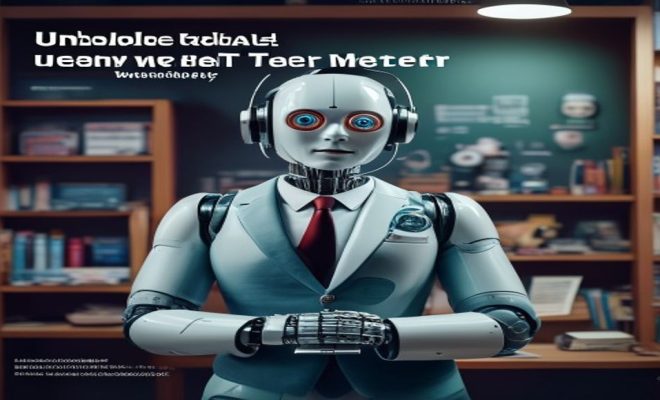
The idea of a robot teacher guiding students through lessons used to be the stuff of science fiction, a futuristic dream or perhaps a dystopian nightmare, depending on your perspective. Yet, in Western New York, that very concept moved from the theoretical to the tangible, only to hit an immediate and rather dramatic snag. A local school district, keen to embrace the cutting edge of educational technology, launched a pilot program featuring a humanoid robot in the classroom. The intent, one might assume, was to innovate, to provide a novel learning experience, and perhaps even to offer a glimpse into the future of pedagogy. But what happened next serves as a potent microcosm of the wider global debate surrounding Artificial Intelligence (AI) and its rapid, often disquieting, integration into our lives, especially when it comes to our children.
This bold experiment in Western New York quickly became a flashpoint. Public debate erupted, fueled by a cocktail of excitement, skepticism, and outright alarm. At the heart of the controversy were deeply held concerns about student data privacy – a perennial worry in the digital age, amplified when sophisticated AI systems are involved. The district, facing mounting pressure and scrutiny, made the difficult but perhaps inevitable decision: they paused the robot teacher program. This local pause isn’t just a minor blip on the educational radar; it’s a stark reminder that while technology barrels forward, societal acceptance and ethical frameworks often lag far behind, particularly when the stakes involve the development and well-being of our youngest generations. The story of the robot teacher in Western New York isn’t just about a school district; it’s about all of us grappling with a future that’s arriving faster than we can often comprehend. There’s a fuller look at AI's impact on education.
The Global AI Debate Echoes in Western New York Classrooms
What happened with the robot teacher in Western New York isn’t an isolated incident; it’s a local manifestation of a much larger, global conversation that’s been intensifying for years. Around the world, policymakers, educators, parents, and technologists are wrestling with the profound implications of AI. The United Nations, for example, recently issued a compelling report that didn’t pull any punches. Their message was clear and urgent: we need stronger international oversight for AI, and we need it now. This isn’t just about abstract technological advancement; it’s fundamentally about human rights, particularly the rights of children. The report highlighted several critical areas of concern, which directly feed into the worries that ultimately stalled the Western New York pilot.
One major point of alarm raised by the UN report is the potential for interactive AI to manipulate children. Think about it: an AI designed to engage, to learn from interactions, and to adapt its responses can, by its very nature, influence young, impressionable minds. Where do we draw the line between helpful guidance and undue influence? How do we ensure that AI systems aren’t subtly shaping children’s beliefs, preferences, or even their understanding of reality in ways that are neither transparent nor beneficial? This question became particularly salient in the context of a robot teacher, a seemingly authoritative figure in the classroom. Furthermore, the UN report brought attention to the alarming rise of deepfakes, particularly those using children’s likenesses. The ability of AI to generate hyper-realistic images and videos, often without consent, presents a terrifying new frontier for exploitation and privacy breaches. While not directly linked to the robot teacher’s function, the general unease surrounding AI’s capabilities in manipulating digital identities certainly contributes to public skepticism about any AI’s role with children. These broader ethical quandaries are precisely why the introduction of a robot teacher in Western New York felt less like an exciting innovation and more like a potential Pandora’s Box to many.
Student Data Privacy: The Unseen Vulnerability of AI in Education
If there was one issue that truly galvanized opposition to the robot teacher in Western New York, it was the specter of student data privacy. In our increasingly digital world, we’re accustomed to the idea that our personal information is constantly being collected, analyzed, and often monetized. But when it comes to children, the stakes feel exponentially higher. Parents rightly ask: what data would this robot teacher collect? How would it be stored? Who would have access to it? And, perhaps most critically, how would it be protected from misuse or breaches?
Imagine an AI system in a classroom. It’s designed to be interactive, to learn student preferences, identify learning patterns, track progress, and perhaps even analyze emotional responses. All of this requires data – vast amounts of it. This data could include academic performance, behavioral patterns, communication styles, and even biometric information if the robot is equipped with advanced sensors. While proponents might argue this data could personalize learning and improve outcomes, critics immediately see a goldmine for advertisers, a potential vulnerability for identity theft, or even a tool for surveillance. The lack of clear, robust, and transparent privacy protocols for such a novel technology can be a deal-breaker. In the case of the Western New York school district, the public’s understandable anxiety about their children’s digital footprints, combined with the relative novelty and unknown implications of a robot teacher, created a powerful impetus for the program’s halt. It wasn’t just about the robot itself; it was about the invisible streams of data it might generate and the potential consequences that no one seemed fully prepared to address.
The Economic Engine: AI’s Soaring Market Value in Education
Despite the ethical hand-wringing and privacy concerns, one undeniable truth about AI in education is its immense economic potential. While discussions about robot teachers might trigger caution, the broader application of AI as a learning partner, as an administrative assistant, or as a content generator is experiencing explosive growth. We’re not talking about small potatoes here; the global AI-in-education market is a booming sector, projected to reach an eye-watering $12 billion to $15 billion by the end of 2026. This isn’t just a trend; it’s a massive shift in how we conceive of and deliver education, driven by technological innovation and market demand.
This projected growth isn’t solely dependent on humanoid robot teachers, mind you. It encompasses a vast ecosystem of AI-powered tools: personalized learning platforms that adapt to individual student needs, intelligent tutoring systems that provide instant feedback, AI-driven assessment tools, automated grading software, language learning apps, and even virtual reality simulations enhanced by AI. Ed-tech companies are pouring billions into research and development, recognizing the huge opportunity to revolutionize learning and administrative efficiency. For investors and entrepreneurs, the education sector, traditionally slow to adopt radical change, is now seen as fertile ground for AI innovation. This economic imperative often clashes with the slower, more deliberative pace required for ethical considerations and regulatory frameworks, creating the very tension that played out with the robot teacher in Western New York. (See: student data privacy concerns.)
Federal Efforts to Prepare Schools for the AI Era
Recognizing the inevitable march of AI into every facet of society, including education, federal lawmakers are beginning to take action. It’s clear that simply ignoring AI or hoping it goes away isn’t a viable strategy. Instead, there’s a growing understanding that schools need to be equipped, both with the technology itself and with the knowledge to wield it effectively and responsibly. In a significant step, the U.S. House Education and Workforce Committee recently advanced the K-12 AI Literacy and Readiness Act of 2026. This legislative effort aims to provide crucial federal funds to schools specifically for AI education initiatives.
What does this mean in practical terms? It could translate into funding for teacher training programs focused on AI tools and pedagogical approaches, curriculum development to teach students about AI’s principles and ethical implications, and investments in AI-powered learning technologies. The goal isn’t necessarily to put a robot teacher in every classroom tomorrow, but rather to ensure that students graduate with a fundamental understanding of AI, its capabilities, and its societal impact. This includes critical thinking skills to evaluate AI-generated content, an understanding of data privacy, and the ability to interact with AI responsibly. Such an act acknowledges that AI literacy is becoming as fundamental as traditional literacy and numeracy in the 21st century. It’s an attempt to proactively shape the future, rather than just react to its challenges, though the ongoing debate in places like Western New York highlights how complex that shaping process will be.
The Emotional and Ethical Minefield of AI Adoption
Why does the topic of AI, particularly when it touches education, ignite such fierce debate and strong emotions? The answer lies in the deeply personal and societal implications of this technology. We’re talking about more than just efficiency gains or new learning tools; we’re talking about the very fabric of human interaction, the future of work, and the ethical lines we’re willing to cross. The controversy surrounding the robot teacher in Western New York perfectly encapsulates this emotional minefield.
One core concern is the impact on human interaction. Education, at its heart, is a deeply human endeavor. It involves empathy, mentorship, the subtle cues of body language, the ability to inspire, and the building of relationships between students and teachers. Can a robot, no matter how advanced, truly replicate this? Many argue that it cannot, and that attempting to do so risks dehumanizing the learning experience. Then there’s the job market disruption. The rise of AI inevitably raises fears about job displacement. While a robot teacher might seem novel, it prompts questions about the future role of human educators. Will AI augment teachers, or eventually replace them? These anxieties are real and contribute significantly to public resistance. Finally, the ethical implications are vast and complex. Beyond data privacy, there are questions about algorithmic bias, accountability when AI makes errors, and the potential for AI to foster dependency rather than independent thought. These aren’t easy questions, and they tap into fundamental values about what it means to be human and how we raise the next generation. It’s this complex web of concerns that makes AI in education such a viral and emotionally charged topic.
AI as a Learning Partner: Beyond the Humanoid Hype
While the image of a humanoid robot teacher often captures headlines and sparks debate, it’s important to understand that AI’s most impactful role in education might not be in replacing human instructors, but rather in acting as a powerful learning partner. The global market projections for AI in education aren’t solely based on schools adopting physical robots; they’re driven by the myriad ways AI can augment and enhance the learning process, often behind the scenes. (privacy concerns for students)
Think about personalized learning platforms that use AI algorithms to adapt content and pace to each student’s unique needs, identifying strengths and weaknesses with precision. Or consider intelligent tutoring systems that can provide instant, tailored feedback on assignments, helping students grasp complex concepts at their own speed. AI can automate tedious administrative tasks for teachers, freeing them up to focus on what they do best: direct instruction, mentorship, and fostering critical thinking. It can generate practice problems, analyze student engagement, and even help identify students who might be struggling before they fall too far behind. In this capacity, AI becomes a powerful tool in the educator’s arsenal, not a replacement. It can democratize access to high-quality, individualized instruction in ways that were previously impossible. The challenge, of course, is to integrate these tools thoughtfully and ethically, ensuring they truly serve the student and the teacher, rather than simply being shiny new gadgets. The Western New York experience reminds us that the ‘how’ is just as important as the ‘what’ when it comes to introducing these technologies.
The Monetization Goldmine: AI’s Impact on Online Education and Career Development
Beyond the classroom, the societal shift towards AI has created a massive monetization opportunity, particularly in online education, software development, and career counseling. The rapid evolution of AI isn’t just changing how we learn; it’s fundamentally reshaping the global job market, creating a surging demand for new skills and new knowledge. This dynamic is driving significant investment and innovation.
Online education is a clear beneficiary. As AI permeates industries, individuals and organizations are scrambling to acquire AI literacy and specialized skills. This has led to an explosion in demand for AI courses, certifications, and specialized training programs, from introductory AI ethics to advanced machine learning engineering. Universities, ed-tech startups, and corporate training divisions are all rushing to fill this gap, offering everything from free online modules to expensive, intensive bootcamps. The software industry is another critical area. Developers are needed to build, maintain, and integrate AI solutions across all sectors, from healthcare to finance. This creates a continuous feedback loop: as more AI software is developed, more people need to be trained to use and manage it. Finally, career development and counseling are seeing a renaissance. With traditional jobs being automated and new roles emerging, people are seeking guidance on how to future-proof their careers. This includes advice on acquiring AI-relevant skills, navigating career transitions, and understanding the evolving landscape of work. The promise of the robot teacher in Western New York was perhaps a glimpse into a future where AI permeates education from the ground up, but the broader economic impact is already here, creating both challenges and unprecedented opportunities for those willing to adapt. (See: the role of robot teachers.)
Expert Perspectives: What Educators and Technologists Say
The conversation around robot teachers and AI in education isn’t just happening in school board meetings; it’s a hot topic among leading academics and tech innovators. For instance, some educational psychologists emphasize the irreplaceable role of human connection in fostering social-emotional learning. They argue that while AI can deliver content, it struggles with the nuanced empathy and relational dynamics essential for a child’s holistic development. A robot teacher, no matter how sophisticated, might miss the subtle signs of a student struggling emotionally, or fail to build the trust that encourages a child to open up about personal challenges.
On the flip side, proponents from the AI and robotics fields often highlight the immense potential for personalization and accessibility. Imagine an AI tutor available 24/7, adapting to a student’s specific learning style and pace, something a human teacher with a classroom of 30 can’t realistically achieve. Dr. Cynthia Breazeal, a pioneer in social robotics at MIT, has long championed the idea of “personal robots” that can serve as companions and tutors, emphasizing the potential for these systems to engage students in novel ways and make learning more interactive and fun. Her work suggests that the goal isn’t replacement, but enhancement – creating new forms of engagement that leverage AI’s unique capabilities. This dichotomy of views underscores the complexity of integrating a robot teacher in Western New York or anywhere else; it’s a constant balancing act between preserving what’s uniquely human in education and harnessing the power of technology.
The Global Landscape: Comparing Approaches to Robot Teachers
While the robot teacher in Western New York hit a snag, it’s worth noting that other countries are exploring similar concepts with varying degrees of success and public acceptance. For example, Japan, a leader in robotics, has experimented with various forms of educational robots for years. Some Japanese schools use robots for English language instruction, particularly for pronunciation and basic conversational practice. These robots are often seen less as full-fledged teachers and more as interactive tools or assistants, integrated into existing curricula rather than replacing human instructors.
Similarly, South Korea has invested significantly in AI for education, including robots designed to assist teachers and engage students. Their approach often focuses on using robots to spark interest in STEM fields, provide supplemental learning, or even help with administrative tasks. The key difference in these more successful implementations seems to be a clearer definition of the robot’s role – they are typically presented as aids or engaging devices, not as a complete substitute for a human educator. This contrast highlights that the issue isn’t always the technology itself, but how it’s framed, introduced, and integrated into an existing educational culture. The Western New York experience might have benefited from clearer communication about the robot’s intended role, managing expectations from the outset.
FAQ: Understanding the Robot Teacher Debate
Q1: What exactly is a “robot teacher” in the context of the Western New York incident?
A “robot teacher” in this case refers to a physical, humanoid robot designed to interact with students, deliver lessons, and potentially assess learning. It’s different from AI-powered software or online learning platforms, as it involves a tangible, physical presence in the classroom. For more on this, see disruption in higher education.
Q2: Why was the robot teacher program in Western New York paused?
The program was paused due to significant public outcry, primarily driven by concerns about student data privacy, the potential for AI to manipulate or unduly influence children, and broader ethical questions about the role of AI in sensitive environments like K-12 education.
Q3: Is the Western New York incident unique, or part of a larger trend?
It’s part of a larger, global conversation about the integration of AI into daily life, especially concerning children. While the specific incident is local, the underlying ethical and privacy concerns are echoed by organizations like the UN and are debated worldwide.
Q4: Does this mean AI has no place in education?
Not at all. Most experts agree that AI has immense potential to enhance education through personalized learning platforms, intelligent tutoring systems, and administrative assistance. The debate isn’t about whether AI should be used, but how it should be implemented responsibly and ethically, with clear guidelines and community input. (See: AI in education research.)
Q5: What are the main benefits cited for using AI in education?
Proponents point to AI’s ability to personalize learning experiences, provide instant feedback, automate mundane tasks for teachers, offer accessible learning resources, and potentially boost student engagement through interactive content.
Q6: What are the primary concerns about using AI, particularly robot teachers, with children?
Key concerns include student data privacy, the potential for AI to influence or manipulate young minds, algorithmic bias, the impact on human interaction and social-emotional development, and job displacement fears for human educators. We covered modern education and AI in more detail.
Q7: How are federal lawmakers addressing AI in schools?
Federal efforts, such as the proposed K-12 AI Literacy and Readiness Act of 2026, aim to provide funding for schools to implement AI education initiatives, train teachers, and develop curricula that teach students about AI’s principles and ethical implications. The goal is to prepare students for an AI-driven future.
Navigating the Future: Balancing Innovation with Ethical Responsibility
The saga of the robot teacher in Western New York serves as a powerful cautionary tale and a valuable lesson for anyone involved in educational technology. It underscores the critical need for a delicate balance: the eagerness to embrace innovation must always be tempered by a profound sense of ethical responsibility. Rushing new technologies, especially those as transformative and potentially intrusive as AI, into sensitive environments like classrooms without robust public discourse, clear privacy frameworks, and thorough vetting is a recipe for public backlash and ultimately, stalled progress.
Moving forward, school districts, technology developers, and policymakers must collaborate more closely. This means engaging parents and communities early in the process, not just as an afterthought. It requires transparent communication about what AI tools will do, how they will operate, what data they will collect, and, crucially, how that data will be protected. We need to develop clear ethical guidelines and regulatory frameworks that evolve as rapidly as the technology itself. The goal shouldn’t be to avoid AI entirely, as its benefits are too significant to ignore. Instead, it should be to integrate AI thoughtfully, ensuring that it enhances human potential, fosters critical thinking, and upholds the values of privacy, equity, and human connection that are so vital to a healthy society. The Western New York experience wasn’t a failure of AI itself, but perhaps a failure in how we introduced it – a crucial distinction we must all learn from as we collectively step further into the AI era.
Trending Now
Frequently Asked Questions
What happened to the robot teacher in Western New York?
The robot teacher program in Western New York faced immediate challenges, leading the local school district to pause the initiative. Concerns about student data privacy and the rapid integration of AI into education sparked public debate and scrutiny, highlighting the gap between technological advancement and societal acceptance.
Why did the school district pause the robot teacher program?
The school district paused the robot teacher program due to mounting public concerns regarding student data privacy and the ethical implications of using AI in classrooms. This decision reflects broader societal worries about the impact of technology on children's education and well-being.
What are the concerns surrounding AI in education?
Concerns about AI in education center on issues like student data privacy, ethical use of technology, and the effectiveness of AI in teaching. The rapid integration of sophisticated AI systems raises questions about their impact on learning and the development of children.
Is a robot teacher a good idea?
The concept of a robot teacher generates mixed opinions. While some see it as an innovative approach to education, others express skepticism and concern over privacy, effectiveness, and the emotional aspects of teaching that a robot may not replicate.
How is AI affecting the future of education?
AI's influence on education is significant, offering potential for personalized learning experiences and efficiency in teaching. However, its rapid integration raises ethical questions and challenges, particularly regarding data privacy and the role of human educators in the learning process.
Have you experienced this yourself? We'd love to hear your story in the comments.