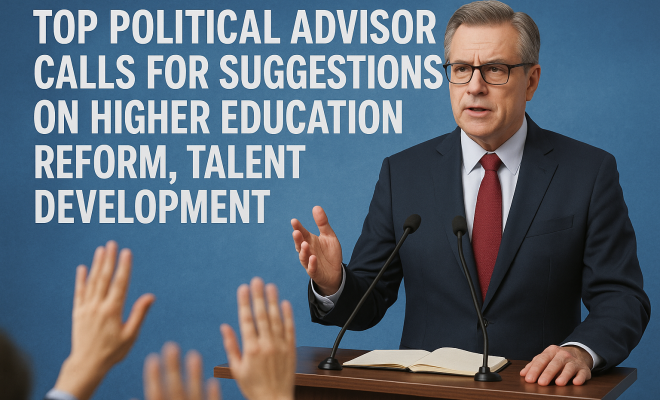
Political Advisor Seeks Public Input on Higher Education Reform
“`html
The realm of higher education is undergoing significant scrutiny, and a prominent political advisor has taken a bold step by calling for public input on necessary reforms. With the rapidly evolving job market and shifting societal needs, this initiative serves as a critical juncture for educators, policymakers, and students alike. This article explores the landscape of higher education reform, the implications of the advisor’s call to action, and the potential pathways to enhance talent development within the academic framework.
1. The Context of the Call for Reform
In recent years, the discussion surrounding higher education reform has gained momentum. Factors such as rising student debt, underemployment among graduates, and the increasing demand for skilled labor in various industries have prompted a re-evaluation of traditional academic structures. The political advisor’s initiative not only highlights these pressing issues but also emphasizes the need for a collaborative approach to developing solutions.
At the heart of the advisor’s call is the recognition that higher education must adapt to meet the needs of the 21st-century workforce. The traditional model, which often prioritizes theoretical knowledge over practical skills, may no longer be sufficient. As the landscape evolves, there is a growing consensus that higher education institutions must cultivate agile learners equipped to navigate complex challenges in their respective fields.
2. Key Points of the Advisor’s Initiative
The advisor’s appeal for suggestions on higher education reform encompasses several key components. Firstly, it seeks to gather insights from a wide range of stakeholders, including educators, students, employers, and community leaders. This inclusive approach is vital for identifying the diverse needs within different sectors and ensuring that reforms are relevant and practical.
Secondly, the initiative emphasizes the importance of aligning educational outcomes with workforce demands. By encouraging collaboration between higher education institutions and industry leaders, the goal is to create a curriculum that not only imparts knowledge but also equips students with the skills necessary for successful careers. This alignment is crucial for reducing the skills gap that many employers currently face.
3. The Role of Technology in Higher Education Reform
As we consider higher education reform, the role of technology cannot be overlooked. Online learning platforms, digital resources, and innovative teaching methods are transforming the educational landscape. The political advisor’s initiative acknowledges that leveraging technology can enhance accessibility and flexibility in education, allowing institutions to reach a broader audience.
Moreover, technology facilitates personalized learning experiences. With the help of data analytics and artificial intelligence, educators can tailor their approaches to meet individual student needs. This shift towards a more personalized educational model not only improves student engagement but also enhances retention rates, ultimately leading to a more skilled workforce.
4. Incorporating Real-World Experience
One fundamental aspect of effective higher education reform is the incorporation of real-world experience into academic curricula. The advisor’s call suggests that internships, co-op programs, and hands-on projects should be integral components of degree programs. Such experiential learning opportunities provide students with valuable insights into their chosen fields and enhance their employability.
Employers increasingly seek candidates who possess not only academic qualifications but also practical experience. By embedding these experiences into the curriculum, institutions can help bridge the gap between theoretical knowledge and practical application, giving students a competitive edge in the job market.
5. Addressing Student Debt and Financial Accessibility
Financial accessibility remains a significant barrier to higher education for many prospective students. The rising cost of tuition and student debt burdens have become pressing concerns. The advisor’s initiative recognizes the urgency of finding solutions to these challenges. Potential reforms might include adjusting tuition models, increasing scholarships, or developing income-share agreements that allow students to pay for their education based on future earnings. This builds on next great challenge in education.
By addressing financial accessibility, institutions can create a more equitable educational landscape. This not only benefits students from diverse backgrounds but also enriches the academic environment by fostering a diverse student body that reflects society’s complexities. (See: U.S. Department of Education on reform.)
6. Fostering Lifelong Learning
The nature of work is changing, and lifelong learning is becoming essential for career advancement. The political advisor’s call for suggestions on higher education reform aligns with the growing need for continuous education and professional development. Institutions must innovate beyond traditional degree programs to offer alternative pathways such as certificate programs, micro-credentials, and skill-based training.
These alternatives can cater to working professionals looking to upskill or change careers. By fostering a culture of lifelong learning, higher education institutions can ensure that individuals remain competitive in the workforce and can adapt to changing job requirements.
7. The Importance of Collaboration Among Stakeholders
For effective higher education reform, collaboration among various stakeholders is crucial. The political advisor has called for engagement with educators, industry leaders, and policymakers to create a cohesive strategy for reform. This collaboration ensures that diverse perspectives are considered, resulting in holistic solutions that benefit all parties involved.
Partnerships between educational institutions and industry can lead to the development of programs that are directly aligned with market needs. Additionally, community engagement can help institutions better understand the unique challenges faced by local industries, further enhancing the relevance of educational programs. (student preparedness issues)
8. Current Relevance and Future Implications
The advisor’s call for suggestions on higher education reform comes at a pivotal moment. As society navigates the post-pandemic landscape, there is an urgent need to reassess the role of education in fostering resilience and adaptability. The issues surrounding higher education are not just academic; they directly impact the workforce, economy, and, ultimately, society as a whole.
The implications of these reforms extend beyond immediate educational outcomes. A well-educated and skilled workforce is essential for driving innovation, economic growth, and social progress. By prioritizing higher education reform, we can create a more equitable and prosperous society for future generations.
As the political advisor opens the floor for suggestions, individuals from all backgrounds have an opportunity to contribute to the dialogue on higher education reform. It’s not just about improving institutions; it’s about shaping the future of our workforce and society. Each voice counts, and collective action can lead to meaningful change.
9. Case Studies of Successful Higher Education Reforms
To better understand the potential impact of higher education reform, we can look at various case studies where institutions have successfully implemented innovative changes. One notable example is Arizona State University (ASU), which has embraced technology and online learning to improve accessibility. ASU launched a significant online degree program that has increased enrollment and graduation rates among non-traditional students, showcasing the potential of technology as a reform catalyst.
Another example is the University of California, Berkeley, which introduced a comprehensive career service program aimed at integrating real-world experience into students’ educational journeys. This initiative not only connects students with internships and job placements but also facilitates networking opportunities with industry leaders, thus enhancing their employability upon graduation.
These case studies exemplify how reform can take shape in practical terms, offering insights into the processes and collaborations required for successful implementation.
10. Statistics that Highlight the Need for Reform
Statistics underscore the urgency of reforming higher education. A recent survey conducted by the National Center for Education Statistics (NCES) indicated that nearly 50% of recent graduates are underemployed, working in jobs that do not require a degree. Additionally, the Institute for College Access and Success reported an average student debt of $30,000 for graduates in the U.S.
Furthermore, data from the Bureau of Labor Statistics suggest that by 2025, 85 million jobs will be unfilled due to a skills gap. This statistic emphasizes the necessity for educational institutions to align their curricula with market needs to ensure graduates possess the skills employers are seeking. (See: New York Times on higher education reform.)
11. Expert Perspectives on Higher Education Reform
Voices from academia, industry, and policy circles offer valuable insights into the future of higher education. For instance, Dr. Anthony Carnevale, a leading education economist, has long advocated for aligning educational outputs with labor market demands. He argues that education should not merely be about acquiring degrees but rather about developing competencies that are relevant to today’s job market.
On the other hand, employers like LinkedIn’s Chief Learning Officer have emphasized the importance of soft skills in addition to technical skills. They advocate for higher education institutions to incorporate emotional intelligence, communication, and teamwork into their curricula to prepare students more comprehensively for the workforce.
12. Frequently Asked Questions (FAQ)
What are the primary goals of higher education reform?
The primary goals of higher education reform include improving accessibility for all students, aligning educational outcomes with workforce demands, decreasing student debt burdens, and fostering a culture of lifelong learning to adapt to a changing job market.
How can technology enhance higher education?
Technology can enhance higher education by providing online learning platforms, enabling personalized learning experiences through data analytics, and increasing access to educational resources for a wider audience. This builds on positive trends for graduates.
What role do employers play in higher education reform?
Employers play a critical role in higher education reform by providing input on workforce needs, collaborating on curriculum development, and offering opportunities for internships and job placements that allow students to gain real-world experience.
Why is student debt a significant concern in higher education?
Student debt is a significant concern because it limits access to education, affects students’ financial stability, and can hinder their ability to invest in their future, such as buying homes or starting businesses. High debt levels can also lead to mental health issues among students.
How can we ensure that reforms are effective and sustainable?
To ensure that reforms are effective and sustainable, it is crucial to engage various stakeholders, gather data on student outcomes, and continuously assess the effectiveness of implemented strategies. Maintaining flexibility to adapt to new challenges and needs is also important.
13. Global Perspectives on Higher Education Reform
Looking beyond the United States, we can observe that higher education reform is a global issue. Countries like Germany have successfully implemented dual education systems that combine classroom learning with hands-on training in industry settings. This model has led to lower youth unemployment rates and a skilled workforce that meets the demands of local economies.
In contrast, countries facing significant challenges, such as those in Sub-Saharan Africa, highlight the need for reform to address issues like access to education, quality of instruction, and the relevance of curricula. Collaborative international efforts and funding initiatives can support these countries in implementing effective reforms.
14. Barriers to Higher Education Reform
Despite the clear need for higher education reform, several barriers can hinder progress. Resistance from traditional institutions that may be reluctant to change their long-standing practices is a significant obstacle. These institutions often prioritize maintaining their reputation over innovating their educational offerings. (See: BBC News on education challenges.)
Additionally, insufficient funding and resources can impede the implementation of new programs and technologies. Many educational institutions operate on tight budgets, which limits their ability to invest in necessary reforms. Advocacy for increased government funding and private investment is crucial to overcome these financial hurdles.
15. Emerging Trends in Higher Education Reform
As we look toward the future of higher education, several emerging trends indicate potential shifts in the landscape. One trend is the rise of competency-based education, where students progress through their studies based on the mastery of specific skills rather than credit hours. This approach allows for more personalized learning experiences and can significantly reduce the time and cost of obtaining a degree.
Another emerging trend is the increasing focus on mental health support within higher education institutions. Recognizing the pressures students face, colleges and universities are beginning to offer more comprehensive mental health services and resources. Addressing mental health is not only crucial for student well-being but also enhances academic performance and retention rates.
16. Policy Recommendations for Higher Education Reform
In order to address the pressing issues within higher education, several policy recommendations can be put forth. One recommendation is to create a national task force on higher education reform that includes representatives from various sectors, including government, education, and industry. This task force would be responsible for identifying best practices and strategies for implementing systemic changes. Related reading: webinar on higher education's future.
Another recommendation is to incentivize institutions to adopt innovative teaching methodologies and curricula that emphasize real-world skills. This could include grants or funding for programs that demonstrate success in aligning education with workforce needs.
17. The Role of Alumni in Supporting Reform
Alumni can play a vital role in supporting higher education reform by engaging in mentorship programs, providing feedback on curriculum relevance, and contributing financially to their alma mater’s initiatives. By sharing their experiences and insights, alumni can help shape educational offerings that better prepare students for the workforce.
Additionally, alumni networks can facilitate connections between current students and potential employers, providing internship and job placement opportunities that enhance the overall educational experience.
18. Conclusion: The Path Forward
Higher education reform is not a one-size-fits-all approach but rather a multifaceted strategy that requires input from diverse stakeholders. As we move forward, prioritizing accessibility, relevance, and quality in education will be crucial for meeting the needs of the workforce and society at large. The opportunity to shape the future of higher education is in our hands, and collective action can lead to meaningful and lasting change.
“`
Trending Now
Frequently Asked Questions
What are the current challenges facing higher education?
Higher education faces several challenges, including rising student debt, underemployment among graduates, and a mismatch between academic programs and the skills demanded in the job market. These issues have prompted calls for reform to better align educational outcomes with workforce needs.
Why is higher education reform necessary?
Reform is necessary to adapt higher education to the evolving job market and societal demands. As industries change, educational institutions must focus on developing practical skills and agile learners to prepare students for complex challenges in their careers.
What is the political advisor's initiative about?
The political advisor's initiative calls for public input on higher education reform, aiming to gather insights from educators, students, employers, and community leaders. This collaborative approach seeks to address the diverse needs across various sectors and enhance talent development.
How can stakeholders contribute to higher education reform?
Stakeholders can contribute by sharing their insights and experiences related to higher education. This includes educators, students, and employers providing feedback on current programs and suggesting practical changes to make education more relevant and effective.
What are the implications of higher education reform?
The implications of higher education reform include the potential for improved job readiness among graduates, reduced student debt, and a better alignment of educational programs with labor market needs. This can lead to a more skilled workforce and enhanced economic growth.
Have you experienced this yourself? We'd love to hear your story in the comments.