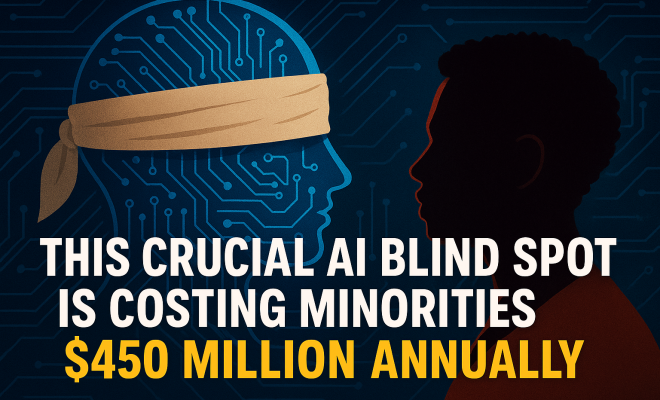
This Crucial AI Blind Spot Is Costing Minorities $450 Million Annually
The Uncomfortable Truth: AI Doesn’t Eliminate Bias, It Exposes It
There’s a prevailing myth out there, a comforting narrative that many of us, especially in the tech world, have clung to: artificial intelligence, with its cold, hard logic and data-driven decisions, will somehow transcend human prejudices. It will be the great equalizer, a beacon of objectivity in a world too often clouded by bias. But if you’re paying attention, particularly in sectors like finance and lending, you’ll quickly realize that this isn’t just wishful thinking; it’s a dangerous delusion. AI doesn’t magically strip away bias; it often mirrors, amplifies, and even weaponizes the biases already embedded in our historical data and societal structures.
Consider the mortgage industry, a colossal economic engine that directly impacts whether millions of people can achieve the dream of homeownership. This sector is currently grappling with the ethical fallout of AI, a challenge that’s only growing more urgent as regulators step in. Fannie Mae and Freddie Mac, the government-sponsored enterprises (GSEs) that back a huge chunk of the U.S. mortgage market, have laid down new AI governance requirements for lenders. These aren’t just suggestions; they’re mandates, set to go live on August 6, 2026. This move acknowledges a stark reality: the algorithms guiding lending decisions can, and do, perpetuate historical discrimination, leading to real, tangible harm for minority communities. It’s a wake-up call, forcing us to confront the uncomfortable truth that while AI offers immense potential, it also demands rigorous oversight and a robust approach to AI bias management. (Lindy.ai overview)
The Staggering Cost of Algorithmic Discrimination in Mortgages
Let’s talk numbers, because the impact of biased AI isn’t abstract; it’s financially devastating for many. A recent, deeply troubling report brought this into sharp focus. It revealed that AI systems, ostensibly designed to assess risk, are effectively charging risk-equivalent Latinx and Black borrowers significantly higher interest rates on loans that are later securitized by GSEs or insured by the FHA. We’re not talking about a few dollars here and there; this systemic discrepancy is costing these communities over $450 million every single year. Think about that for a moment: half a billion dollars, siphoned away from families and communities, simply because an algorithm, trained on flawed data, deemed them a higher risk when they weren’t.
This isn’t just about fairness; it’s about economic justice. Higher interest rates translate to higher monthly payments, less disposable income, reduced ability to build equity, and a slower path to wealth accumulation. It widens the already vast wealth gap and entrenches systemic disadvantages. For a family striving to make ends meet, an extra half-percent on their mortgage rate can mean the difference between financial stability and constant struggle. And when this happens on a national scale, affecting hundreds of thousands of borrowers, the collective impact is catastrophic. This kind of algorithmic bias isn’t just an unfortunate byproduct; it’s a critical flaw that demands immediate and comprehensive AI bias management strategies.
Public Outcry: Why 75% of Consumers Are Wary of AI in Finance
It shouldn’t surprise anyone that the public is growing increasingly concerned about this issue. When reports like the one detailing the $450 million annual cost hit the news, people pay attention. A significant majority – around 75% of consumers – are worried about AI bias, particularly within financial services. And honestly, who can blame them? When your ability to secure a loan, get a fair interest rate, or even open a bank account could be influenced by an opaque algorithm that might be inherently biased against you, it’s natural to feel apprehension, even outrage.
This widespread concern isn’t just a fleeting sentiment; it’s a powerful force shaping regulatory pressure and consumer behavior. People want transparency, accountability, and fairness, especially when their financial well-being is on the line. They understand, intuitively, that if AI systems are built on historical data that reflects past discriminatory practices, those systems will simply learn to replicate and amplify those same biases. This makes the debate around AI fairness, accountability, and its financial impact on minority communities not just an academic exercise but a highly viral and emotionally charged topic. Businesses that ignore this public sentiment do so at their own peril, as trust, once broken, is incredibly difficult to rebuild. Effective AI bias management isn’t just a compliance issue; it’s a fundamental pillar of consumer trust.
The Regulatory Hammer: Fannie Mae and Freddie Mac Step In
The mandated AI governance requirements from Fannie Mae and Freddie Mac, effective August 6, 2026, are a clear signal that regulators are no longer content to wait and see. This isn’t just a polite request; it’s a directive that will fundamentally alter how lenders develop, deploy, and monitor AI systems. For decades, these GSEs have been instrumental in standardizing the mortgage market, and their influence is immense. When they speak, the industry listens.
These new rules will likely compel lenders to adopt robust frameworks for identifying, measuring, and mitigating algorithmic bias. It means moving beyond simply checking a box for compliance and genuinely embedding ethical considerations into the very design of AI systems. Lenders will need to demonstrate that their AI models are fair, transparent, and don’t perpetuate discriminatory outcomes. This will require significant investment in new technologies, skilled personnel, and a cultural shift towards proactive AI bias management. It’s a monumental undertaking, but one that’s absolutely necessary to restore public confidence and ensure equitable access to housing finance. Related reading: AI governance in mortgages.
Beyond the Algorithm: The Human Element in AI Bias Management
It’s easy to point fingers at the algorithms, to blame the inanimate code for biased outcomes. But let’s be clear: algorithms don’t appear out of thin air. They are designed by humans, trained on data collected by humans, and deployed within systems created by humans. This means that effective AI bias management isn’t solely about tweaking lines of code or cleaning datasets; it’s fundamentally about addressing the human element at every stage of the AI lifecycle.
Think about the data scientists, the engineers, and the product managers building these systems. Do they represent diverse perspectives? Are they actively trained to recognize and challenge potential biases in their data sources and model designs? What about the data itself? Is it truly representative, or does it reflect historical inequities that, if fed into an AI, will simply be learned and repeated? This requires a multi-faceted approach: diverse teams, ethical AI training, rigorous data provenance checks, and continuous monitoring. It’s about establishing clear ethical guidelines and ensuring that every stakeholder understands their role in preventing and mitigating bias. Without addressing the human and systemic factors that lead to biased AI, any technical fix will only be a band-aid. (See: AI bias and discrimination issues.)
The Technical Toolkit: Strategies for Identifying and Mitigating Bias
So, what does practical AI bias management look like from a technical standpoint? It’s a complex field, but several key strategies are emerging. First, there’s the critical need for data auditing and debiasing. This involves meticulously examining training data for historical biases, underrepresentation of certain groups, or proxies for protected characteristics. Techniques like re-sampling, re-weighting, or synthetic data generation can help balance datasets and reduce the influence of historical inequalities.
Second, model interpretability and explainability (XAI) are paramount. If we can’t understand *why* an AI made a certain decision, it’s impossible to diagnose bias. Tools that provide insights into feature importance, local explanations for individual predictions, or counterfactual explanations allow developers and auditors to peer inside the ‘black box’ and identify unfair decision-making patterns. Third, fairness metrics and continuous monitoring are essential. There are various mathematical definitions of fairness (e.g., demographic parity, equalized odds, predictive parity), and organizations need to choose and track metrics relevant to their context. Automated systems should continuously monitor model performance for disparate impact across different demographic groups, flagging potential issues before they cause widespread harm. Finally, bias mitigation algorithms can be applied during or after model training to reduce bias while maintaining predictive accuracy. These techniques are evolving rapidly, offering promising avenues for proactive AI bias management.
Beyond Compliance: Building Trust and Ethical Lending Practices
While regulatory mandates are a powerful driver, companies that view AI bias management solely as a compliance hurdle are missing the bigger picture. In an era where consumers are increasingly conscious of corporate ethics, genuinely embracing fair and transparent AI practices can be a significant competitive differentiator. It’s about building and maintaining trust, which is arguably the most valuable currency in financial services.
Ethical lending isn’t just about avoiding lawsuits; it’s about fostering long-term relationships with customers, expanding market access, and strengthening communities. Companies that proactively invest in robust AI bias management, that communicate openly about their efforts, and that demonstrate a clear commitment to fairness will likely gain an edge. They’ll attract customers who value ethical practices, retain employees who are proud of their work, and ultimately contribute to a more equitable financial system. This shift from mere compliance to genuine ethical leadership is where the true long-term value lies.
The Opportunity: Monetizing a More Equitable Future
The current controversy surrounding AI bias in financial services, particularly mortgages, isn’t just a problem; it’s also a significant opportunity. For content creators, financial advisors, legal professionals, and tech innovators, this issue is ripe for monetization within several key niches. Think about the need for accessible, clear information on ethical lending practices. Borrowers, particularly those from minority communities, need to understand their rights, know what questions to ask, and learn how to identify potential algorithmic discrimination. This opens doors for:
- Personal Finance Blogs & Platforms: Creating guides on understanding mortgage terms, spotting red flags in loan offers, and resources for minority borrowers.
- Mortgage/Refinance Comparison Sites: Developing tools that highlight lenders with strong ethical AI policies or provide transparency scores for different platforms.
- Legal Services: Offering advice and representation for borrowers who believe they’ve been victims of algorithmic discrimination, specializing in fair lending laws and AI accountability.
- Tech Solutions: Developing and marketing AI bias management tools, auditing services, and fairness-aware AI models directly to lenders.
The demand for trusted information and solutions in this space is only going to grow as the 2026 deadline approaches and public awareness intensifies. Those who can provide genuine value, clarity, and actionable advice will be well-positioned to serve a critical need.
Looking Ahead: The Path to Responsible AI in Lending
The journey toward truly responsible AI in lending is ongoing and complex. It requires a continuous commitment to learning, adapting, and innovating. We’re not just building algorithms; we’re building the financial infrastructure of the future, and that infrastructure must be fair, equitable, and accessible to everyone. The mandates from Fannie Mae and Freddie Mac are a crucial step, but they are just that – a step.
The industry will need to foster a culture of vigilance, where AI models are not just deployed and forgotten, but are constantly monitored, re-evaluated, and improved. This means investing in ongoing research into fairness-aware AI, collaborating across institutions to share best practices, and engaging with civil rights groups and consumer advocates to ensure that diverse voices are heard and incorporated into the development process. Ultimately, the goal isn’t to eliminate AI from lending, but to harness its power in a way that truly serves all members of society, rather than perpetuating the inequalities of the past. It’s a challenging but absolutely essential endeavor, and effective AI bias management will be at its core.
Understanding the Lifecycle of AI Bias: Where it Hides
To truly manage AI bias, we need to understand where it originates within the AI lifecycle. It’s not just a single point of failure; it’s a series of potential pitfalls. It often starts with the problem definition itself. How is the problem framed? What outcomes are prioritized? If the goal is simply “maximize profit” without considering fairness, you’re already setting the stage for bias. Then there’s the data collection phase. Is the data representative of the entire population the model will serve? Are there historical biases in how data was collected or recorded? For example, if historical lending data shows fewer loans to minority groups, an AI trained on that data might conclude, incorrectly, that these groups are inherently higher risk, simply due to lack of positive historical data.
Next, we move to data preprocessing. This is where features are selected and engineered. Are certain features, even seemingly neutral ones like zip codes, acting as proxies for protected characteristics like race? If so, the model can inadvertently pick up on these correlations and perpetuate discrimination. During model training, the algorithm learns patterns from this potentially biased data. Even sophisticated models can amplify subtle biases if not carefully monitored. Finally, during model deployment and monitoring, ongoing bias can emerge or be missed. A model that performs fairly in testing might degrade in real-world scenarios if the underlying population or external factors change, or if monitoring isn’t robust enough to detect disparate impacts over time. Each stage requires specific AI bias management techniques to prevent, detect, and mitigate these issues. (See: health disparities and biases.)
The Global Picture: AI Bias Management Beyond U.S. Mortgages
While the focus here is heavily on U.S. mortgage lending, it’s crucial to recognize that AI bias management is a global challenge impacting numerous sectors. The issues seen in mortgage lending echo concerns in hiring algorithms, where AI can unintentionally screen out qualified candidates based on gender or ethnicity due to biased training data. In healthcare, diagnostic AI tools have shown disparities in accuracy across different racial groups, potentially leading to misdiagnoses or delayed treatment for minorities. Even in criminal justice, predictive policing algorithms have faced scrutiny for disproportionately targeting certain communities, raising serious ethical questions about fairness and civil liberties.
Regulations are emerging worldwide to tackle these pervasive problems. The European Union, for example, is developing its AI Act, which classifies AI systems based on their risk level, with high-risk systems (like those in finance, employment, and law enforcement) facing stringent requirements for data quality, transparency, human oversight, and bias mitigation. Canada has also introduced its Artificial Intelligence and Data Act (AIDA), aiming to regulate high-impact AI systems. These international efforts highlight a universal understanding that AI’s transformative power must be balanced with robust ethical guardrails and effective AI bias management strategies to prevent harm and foster trust on a global scale.
Expert Perspectives: What Leaders Are Saying About Ethical AI
The conversation around AI bias management isn’t just happening among regulators and academics; industry leaders and ethicists are also weighing in, emphasizing the urgency and complexity of the issue. Andrew Ng, a prominent figure in AI, often stresses the importance of “data-centric AI,” arguing that improving data quality and consistency is often more impactful than simply building bigger, more complex models. This perspective directly aligns with debiasing efforts in AI bias management, highlighting that flawed data is a foundational problem. For more on this, see rising interest rates explained.
Others, like Dr. Joy Buolamwini, founder of the Algorithmic Justice League, have tirelessly advocated for greater accountability and transparency, especially regarding facial recognition technologies. Her work has exposed significant biases in AI systems that perform poorly on darker skin tones and women, underscoring the real-world impact of biased AI. Meanwhile, figures from major tech companies are increasingly acknowledging the need for responsible AI development, not just as a compliance measure, but as a core business imperative. They recognize that public trust and ethical innovation are intertwined, and that neglecting AI bias management can lead to severe reputational and financial costs. This consensus across diverse fields reinforces that AI bias management isn’t a niche concern, but a central pillar of future technological progress.
The Role of Data Governance in Preventing Bias
Effective AI bias management starts long before an algorithm is even trained; it begins with robust data governance. This isn’t just about security or privacy; it’s about establishing clear policies and procedures for how data is collected, stored, accessed, and used throughout its entire lifecycle. A strong data governance framework can proactively address potential sources of bias. For instance, it dictates data quality standards, ensuring data is accurate, complete, and consistent. Incomplete data, especially for certain demographic groups, can lead to underrepresentation and biased model outcomes.
Moreover, data governance includes defining data lineage – understanding where data came from, how it was transformed, and who has accessed it. This transparency is crucial for auditing purposes, allowing organizations to trace potential biases back to their source. It also involves establishing data retention policies and anonymization techniques, minimizing the risk of re-identification and unintended discriminatory use. Without a solid foundation of ethical data governance, any AI bias management efforts will be reactive and less effective. It’s the proactive step that sets the stage for building fair and responsible AI systems.
Frequently Asked Questions About AI Bias Management
Q1: What exactly is AI bias?
AI bias refers to systematic and repeatable errors in an AI system’s output that lead to unfair or discriminatory outcomes against certain groups of people. This bias isn’t usually intentional; it typically stems from the data the AI was trained on, reflecting historical societal biases, or from the design choices made by developers.
Q2: How does AI bias primarily occur in financial services like mortgages?
In mortgages, AI bias often happens when models are trained on historical lending data that includes past discriminatory practices (e.g., redlining, unequal access to credit). The AI learns these patterns and may perpetuate them by, for example, assigning higher interest rates to risk-equivalent borrowers from minority groups or denying loans based on proxies for protected characteristics like zip codes or names.
Q3: What are Fannie Mae and Freddie Mac doing about AI bias?
Fannie Mae and Freddie Mac have issued new AI governance requirements for lenders, mandating that they implement robust frameworks for identifying, measuring, and mitigating algorithmic bias in their lending models. These requirements are set to become effective on August 6, 2026, compelling lenders to ensure their AI systems are fair, transparent, and non-discriminatory. (See: Harvard Business School research on AI.)
Q4: Can we completely eliminate AI bias?
Completely eliminating AI bias is extremely challenging, if not impossible, because AI systems learn from data generated by humans in a world with existing biases. The goal of AI bias management isn’t necessarily to achieve perfect neutrality, but rather to continuously identify, measure, and mitigate bias to ensure equitable and fair outcomes, striving for continuous improvement and reducing disparate impact as much as possible.
Q5: What are some practical steps an organization can take for AI bias management?
Organizations can start by auditing their training data for representativeness and historical biases, using techniques like re-sampling or synthetic data generation. They should also implement model interpretability tools (XAI) to understand how AI makes decisions, adopt fairness metrics for continuous monitoring, and consider bias mitigation algorithms during model development. Crucially, fostering diverse AI development teams and providing ethical AI training are also vital steps.
Q6: Why is consumer trust so important in AI bias management for finance?
Consumer trust is paramount in finance because people are entrusting institutions with their financial well-being. If consumers perceive that AI systems are biased or unfair, they will lose trust in those institutions, leading to reputational damage, customer attrition, and increased regulatory scrutiny. Proactive AI bias management builds trust, which can become a significant competitive advantage and contribute to a more inclusive financial system.
Q7: How does AI bias management relate to regulations like the EU AI Act?
The EU AI Act classifies AI systems by risk, with high-risk systems (like those in finance) facing strict requirements for data quality, transparency, human oversight, and robust bias detection and mitigation. This directly aligns with the principles of AI bias management, making it a critical component for organizations seeking to comply with emerging global AI regulations and avoid penalties.
Q8: What’s the difference between disparate treatment and disparate impact in AI bias?
Disparate treatment occurs when an AI system explicitly treats individuals differently based on protected characteristics (e.g., denying a loan directly because of race). This is usually illegal. Disparate impact occurs when an AI system, even if seemingly neutral on its face, disproportionately harms a protected group (e.g., a credit scoring model that unintentionally leads to higher denial rates for a specific racial group, even if race isn’t an input). AI bias management primarily focuses on identifying and mitigating disparate impact, which is often more subtle and harder to detect.
Q9: Who is responsible for AI bias management within an organization?
Responsibility for AI bias management should be distributed across an organization. Data scientists and engineers are responsible for technical implementation, but product managers, legal teams, compliance officers, and senior leadership all play crucial roles in setting ethical guidelines, ensuring regulatory adherence, and fostering a culture of responsible AI. It’s a collective effort, not just a technical one.
Q10: What are “proxies for protected characteristics” and why are they a problem?
Proxies for protected characteristics are seemingly neutral data points (like zip codes, first names, or specific spending habits) that are highly correlated with protected attributes such as race, gender, or religion. An AI model might learn to use these proxies to make decisions that indirectly discriminate, even if the protected characteristic itself isn’t explicitly used as an input. Identifying and neutralizing these proxies is a key challenge in AI bias management to prevent indirect discrimination. (Chicago landlord's tactic revealed)
Trending Now
Frequently Asked Questions
How does AI bias affect minorities in lending?
AI bias in lending can perpetuate historical discrimination, leading to unfair mortgage rates and loan denials for minority communities. This systemic issue translates to an estimated annual loss of $450 million for these groups, highlighting the urgent need for oversight in AI algorithms used by financial institutions.
What are the new AI governance requirements for lenders?
Starting August 6, 2026, Fannie Mae and Freddie Mac will enforce new AI governance mandates for lenders. These requirements aim to ensure that AI systems used in mortgage lending do not perpetuate existing biases, promoting fairness and accountability in the lending process.
Can AI eliminate bias in financial decisions?
Contrary to popular belief, AI cannot eliminate bias; it often reflects and amplifies existing prejudices embedded in historical data. This reality underscores the necessity for rigorous oversight and proactive bias management in AI systems, especially in sensitive areas like finance.
What is the cost of algorithmic discrimination in mortgages?
Algorithmic discrimination in the mortgage industry is financially devastating, costing minority communities approximately $450 million annually. This figure emphasizes the critical need for addressing biases in AI systems that influence lending decisions.
Why is AI considered a double-edged sword in finance?
AI is seen as a double-edged sword in finance because, while it offers efficiency and data-driven insights, it also risks perpetuating bias and discrimination. Proper governance and oversight are essential to harness its potential without reinforcing historical inequalities.
What's your take on this? Share your thoughts in the comments below — we read every one.