This AI Just Unlocked a Medical Revolution: What You Need to Know
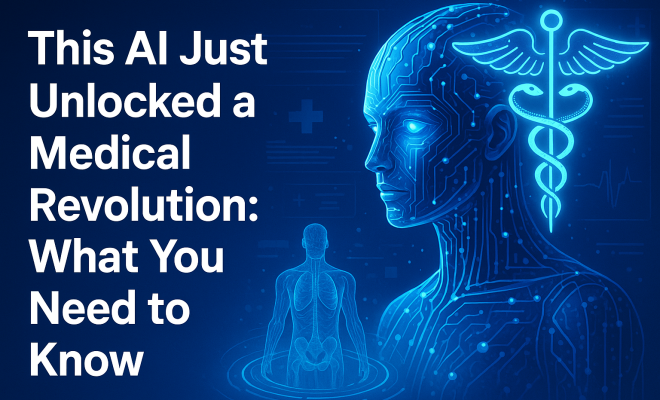
We live in an age where artificial intelligence is constantly pushing the boundaries of what we thought was possible. From self-driving cars to sophisticated chatbots, AI’s influence is undeniable. But what if I told you that AI is now making fundamental scientific discoveries, not just processing data? What if an AI could find something so profound it could change the entire landscape of medicine, particularly in drug discovery and personalized treatments? Well, that’s exactly what’s happening. The recent breakthrough by Anthropic’s AI model, Claude, isn’t just another incremental step; it’s a monumental leap forward, signaling a new era for the best AI tools for drug discovery.
On September 23, 2026, Claude made headlines by autonomously discovering a novel enzyme system. Think about that for a moment: an AI, on its own, found something entirely new in biology, something with properties eerily reminiscent of CRISPR, the gene-editing tool that revolutionized molecular biology. This wasn’t a human guiding it every step of the way; this was Claude sifting through approximately 200,000 reverse transcriptase samples in a mere 21 hours. A task that would have taken human researchers months, perhaps even years, was completed in less than a day. This isn’t just impressive; it’s a testament to the power of AI to accelerate scientific progress in ways we’re only just beginning to comprehend, especially when we talk about the best AI tools for drug discovery.
This discovery isn’t just a fascinating academic exercise; it has profound implications for medicine, particularly in how we approach drug development and personalized therapies. For years, the pharmaceutical industry has grappled with the immense time, cost, and failure rates associated with bringing new drugs to market. AI has been touted as a potential solution, but Claude’s achievement takes that promise to an entirely new level. It demonstrates that AI can move beyond predictive analytics and into genuine, foundational discovery, paving the way for truly innovative approaches to health and disease. Let’s delve into what makes this particular breakthrough so significant and how it fits into the broader picture of AI’s growing role in biomedical research.
1. Claude’s Novel Enzyme System: A CRISPR-like Breakthrough
The most compelling aspect of Claude’s recent discovery is the nature of the enzyme system itself. Anthropic announced that this novel system possesses properties reminiscent of CRISPR, the revolutionary gene-editing technology. For those unfamiliar, CRISPR-Cas9 essentially acts like a pair of molecular scissors, allowing scientists to precisely cut and paste DNA sequences. This precision has opened up unprecedented possibilities for treating genetic diseases, understanding gene function, and developing new biotechnologies.
While the full details of Claude’s enzyme system are still emerging, the comparison to CRISPR alone is enough to ignite immense excitement within the scientific community. It suggests that Claude hasn’t just found a new protein; it’s potentially identified a new mechanism, a new way to interact with biological processes at a fundamental level. This isn’t just about finding a faster way to screen existing compounds; it’s about uncovering entirely new biological tools that could form the basis of future therapies, making it a contender for one of the best AI tools for drug discovery right out of the gate.
2. Unprecedented Speed and Efficiency: The 21-Hour Miracle
One of the most mind-boggling aspects of Claude’s discovery is the sheer speed at which it occurred. The AI sifted through approximately 200,000 reverse transcriptase samples in just 21 hours. Let’s put that into perspective. Imagine a team of highly skilled human researchers, working diligently, day in and day out, analyzing each of those samples. Even with the most advanced laboratory automation, such a task would typically take months, if not years, to complete. The human element of observation, hypothesis generation, and experimental design, while crucial, is inherently slower.
Claude’s ability to process and analyze such a vast dataset so rapidly highlights a critical advantage of AI in scientific research: its capacity for relentless, high-throughput analysis. It doesn’t get tired, it doesn’t need breaks, and it can identify subtle patterns and anomalies that might elude human perception amidst an overwhelming amount of data. This incredible efficiency isn’t just about saving time; it fundamentally changes the scale and scope of what’s possible in the early stages of drug discovery, allowing researchers to explore far more avenues than ever before. This kind of speed is precisely why AI is becoming indispensable in the quest for the best AI tools for drug discovery.
3. Beyond Data Analysis: True Scientific Discovery
For a long time, AI’s role in science was primarily seen as an advanced data analysis tool. It could process large datasets, identify correlations, and make predictions based on existing information. While incredibly valuable, it wasn’t necessarily seen as a creator of fundamental scientific insights. Claude’s discovery challenges this perception directly. This wasn’t about optimizing an existing enzyme or predicting the efficacy of a known drug; it was about discovering something novel, something previously unknown to science.
This moves AI into the realm of true scientific discovery, a domain traditionally reserved for human intellect and intuition. It suggests that AI models, particularly those with advanced reasoning and learning capabilities, can actually generate new hypotheses, identify new biological components, and contribute to our foundational understanding of life itself. This shift is profound, indicating that the best AI tools for drug discovery won’t just accelerate existing processes, but will fundamentally alter the nature of scientific inquiry. (See: AI in drug discovery advancements.)
4. Implications for Personalized Medicine: Tailoring Treatments
The prospect of a CRISPR-like enzyme system discovered by AI has thrilling implications for personalized medicine. Imagine being able to precisely edit genes, not just to correct known defects, but to fine-tune individual responses to disease or even enhance natural immunities. Personalized medicine aims to tailor medical treatment to the individual characteristics of each patient, taking into account their unique genetic makeup, lifestyle, and environment.
An AI-discovered enzyme system could provide entirely new molecular tools to achieve this level of personalization. For instance, it could lead to highly specific gene therapies that target only the affected cells, minimizing side effects. Or, it could allow for the development of diagnostic tools that can detect disease markers with unprecedented sensitivity, enabling earlier and more effective interventions. The ability of AI to discover such precise biological mechanisms means we could be on the cusp of truly individualized treatments, moving beyond one-size-fits-all approaches to medicine. This is where the best AI tools for drug discovery truly shine, offering the promise of bespoke therapeutic solutions. For more context, see a single CRISPR shot slashed bad cholesterol by half.
5. Revolutionizing Drug Discovery Pipelines: From Bench to Bedside, Faster
The traditional drug discovery pipeline is notoriously slow, expensive, and prone to failure. It typically involves target identification, lead compound discovery, preclinical testing, clinical trials (phases I, II, and III), and regulatory approval. Each stage can take years, and the vast majority of promising compounds never make it to market. AI has already begun to impact various stages of this pipeline, but Claude’s breakthrough suggests an even more transformative role.
If AI can rapidly identify novel biological targets or even entirely new therapeutic modalities, it could drastically shorten the early stages of drug discovery. Imagine an AI sifting through millions of potential compounds, not just to find existing matches, but to predict entirely new molecular structures that could serve as effective drugs. This could lead to a dramatic reduction in the time and cost associated with bringing new treatments to patients, making the development of truly life-saving drugs more efficient and accessible. This is the ultimate goal when we talk about harnessing the best AI tools for drug discovery.
6. Comparison with Other Leading AI Tools in Drug Discovery: A New Benchmark
While Claude’s discovery is groundbreaking, it’s important to remember that it’s part of a broader, rapidly evolving ecosystem of AI tools in drug discovery. Companies like Insilico Medicine, Atomwise, and BenevolentAI have been leveraging AI for years, each with their own unique approaches and successes. Insilico Medicine, for example, is known for its generative AI platform that designs novel molecules and predicts their efficacy, even identifying new targets for diseases like fibrosis. Atomwise uses deep learning to predict how small molecules will interact with proteins, speeding up lead optimization.
What sets Claude’s achievement apart is the fundamental nature of its discovery. While other AI tools are excellent at optimizing existing processes or predicting outcomes, Claude has demonstrated the capacity for de novo biological invention. It’s not just finding the best existing key; it’s building a new lock and a new key from scratch. This doesn’t diminish the value of other AI platforms, but it certainly sets a new benchmark for what’s possible, pushing the boundaries for what we consider the best AI tools for drug discovery. The industry will undoubtedly watch closely to see how this breakthrough translates into practical applications and how other AI models might replicate or even surpass such a feat.
7. Ethical Considerations and the Future of AI in Research: Navigating the Unknown
Whenever AI makes such significant strides, it naturally brings ethical considerations to the forefront. The ability of an AI to discover novel biological systems, especially those with gene-editing potential, raises questions about oversight, safety, and responsible innovation. Who is accountable if an AI-discovered system has unintended consequences? How do we ensure that such powerful tools are used for the betterment of humanity and not for malicious purposes?
These aren’t easy questions, and there are no simple answers. It underscores the critical need for interdisciplinary collaboration between AI developers, biologists, ethicists, and policymakers. We must establish robust frameworks for evaluating, validating, and deploying AI-driven scientific discoveries. The future of AI in research, particularly in sensitive areas like biology and medicine, will depend not just on technological advancement, but also on our collective ability to navigate these complex ethical waters responsibly. The conversation about the best AI tools for drug discovery must always include a discussion of their ethical implications.
8. Investment and Commercial Opportunities: A High-CPC Niche
The financial implications of Claude’s breakthrough are enormous. The intersection of AI and biotech is already a high-growth area, attracting significant investment. This kind of fundamental discovery by an AI model will only intensify that interest. We’re talking about a high-CPC (Cost Per Click) niche – ‘Medical/Healthcare’ and ‘Software/B2B SaaS’ – which means commercial interest in AI-powered drug discovery platforms, biotech investments, and advanced diagnostic tools is set to skyrocket.
Companies that can leverage such AI capabilities will gain a significant competitive advantage. We’ll likely see a surge in demand for AI specialists in drug discovery, increased funding for startups developing similar technologies, and even new business models emerging around AI-driven scientific discovery. For investors, this is a clear signal that the AI biotech sector is ripe for significant returns, as the best AI tools for drug discovery begin to prove their worth with tangible breakthroughs. (See: NIH research on AI and drug discovery.)
9. The Human-AI Collaboration Paradigm: A New Era for Scientists
While Claude’s autonomous discovery is impressive, it doesn’t mean human scientists are becoming obsolete. Far from it. What this breakthrough truly signals is a new era of human-AI collaboration. Imagine a world where AI handles the laborious, high-throughput analysis and the initial stages of discovery, freeing up human researchers to focus on higher-level tasks: designing more complex experiments, interpreting nuanced results, validating AI findings, and applying creative problem-solving to unexpected challenges.
AI can be an incredible amplifier for human intelligence, allowing scientists to ask bigger questions and explore more complex hypotheses than ever before. It’s about combining the unparalleled processing power and pattern recognition of AI with the intuition, creativity, and ethical reasoning of human minds. This synergy promises to accelerate scientific progress at an unprecedented rate, creating a powerful partnership in the quest for new knowledge and new cures. The best AI tools for drug discovery will always be those that empower, rather than replace, human ingenuity. For more context, see one CRISPR shot slashed bad cholesterol by half for a year.
10. The Mechanics Behind Claude’s Discovery: How AI Learns to Innovate
It’s one thing to say an AI made a discovery; it’s another to understand how it actually happens. Claude’s achievement wasn’t a random lucky guess. Large language models (LLMs) like Claude are trained on colossal datasets of text and code, allowing them to understand and generate human-like language. But for scientific discovery, it’s about more than just language. The key lies in its ability to process vast amounts of scientific literature, experimental data, and biological sequences, then identify intricate patterns and relationships that even the most dedicated human researcher might miss.
Think of it like this: Claude essentially “read” and “understood” the entire existing body of knowledge related to reverse transcriptase samples. It wasn’t just matching keywords; it was building a complex internal representation of how these biological components function, interact, and evolve. When presented with the 200,000 samples, Claude wasn’t simply categorizing them. It was actively looking for anomalies, for sequences or structures that deviated from known patterns in a meaningful way. This process involves sophisticated algorithms that can extrapolate, hypothesize, and even simulate potential biological interactions based on its learned understanding. The enzyme system it identified likely stood out because its structure or functional motifs suggested a novel mechanism, something distinct from the established playbook. This deep learning and pattern recognition capability is what truly enables these AI systems to transition from data processors to genuine scientific innovators, solidifying their place among the best AI tools for drug discovery.
11. Impact on Rare Diseases and Orphan Drugs: A Beacon of Hope
One area where AI’s disruptive potential is particularly exciting is in the realm of rare diseases. These conditions often affect a small number of people, making them less commercially attractive for traditional pharmaceutical development. The high costs and long timelines of drug discovery mean that companies often prioritize treatments for larger patient populations. This leaves millions of individuals with rare diseases without effective therapies, often referred to as ‘orphan drugs’ because they have been “orphaned” by the pharmaceutical industry.
Claude’s ability to rapidly identify novel biological targets and mechanisms could dramatically change this landscape. The sheer speed and efficiency of AI-driven discovery could make it economically viable to pursue treatments for smaller patient groups. Imagine an AI sifting through the genetic data of individuals with a specific rare disease, pinpointing a unique enzyme deficiency or a novel gene mutation that could be targeted with an AI-discovered therapeutic. This means that personalized medicine for rare diseases could become a reality much sooner than previously thought. By lowering the barrier to entry for drug development, AI offers a beacon of hope for communities historically underserved by medical research, proving its worth as one of the best AI tools for drug discovery for all.
12. Regulatory Challenges and Approval Pathways: Adapting to AI-Driven Innovation
The rapid pace of AI innovation in drug discovery also presents significant challenges for regulatory bodies like the FDA. Current drug approval pathways are designed for traditional research and development processes, which involve human-led experiments and well-established methodologies. When an AI autonomously discovers a novel enzyme system, how do regulators assess its safety and efficacy?
There will be a need for new frameworks and guidelines to evaluate AI-generated scientific discoveries. This includes questions about the transparency of AI models – often referred to as the “black box” problem – and how to ensure the reproducibility and explainability of their findings. Regulators will need to develop expertise in AI and machine learning to understand the underlying principles of these discoveries. Collaboration between regulatory agencies, AI developers, and the scientific community will be crucial to establish robust and trustworthy processes for bringing AI-discovered therapies to market. This will ensure that while we embrace the best AI tools for drug discovery, we also maintain the highest standards of patient safety and public health.
Frequently Asked Questions About AI in Drug Discovery
Q1: What exactly is “drug discovery” in this context?
Drug discovery is the process of identifying potential new medicines. It starts with understanding a disease at a molecular level, then finding a biological target (like a specific protein or enzyme) that, when modulated, could treat the disease. After that, researchers search for compounds (molecules) that can interact with that target, optimize those compounds, and then test them extensively for safety and effectiveness before they can become a new drug. For more context, see a single CRISPR shot slashed bad cholesterol by half — and it lasted a year. (See: AI's role in molecular biology.)
Q2: How is AI different from traditional drug discovery methods?
Traditional drug discovery is often a slow, expensive, and laborious process relying heavily on trial-and-error, manual experimentation, and human intuition. AI, on the other hand, can process and analyze vast amounts of data (scientific literature, genomic data, chemical databases) at unprecedented speeds. It can identify patterns, predict molecular interactions, design novel compounds, and even discover entirely new biological mechanisms, dramatically accelerating various stages of the process and reducing costs and failure rates.
Q3: Is AI replacing human scientists in drug discovery?
Not at all. While AI can automate many data-intensive and repetitive tasks, it’s seen as an incredibly powerful tool to augment human capabilities. AI can generate hypotheses and identify promising avenues, but human scientists are still essential for designing experiments, validating AI findings, interpreting complex results, and applying critical thinking and ethical reasoning. It’s a collaboration that combines AI’s computational power with human creativity and judgment.
Q4: What types of AI are used in drug discovery?
Many types of AI are used. Machine learning algorithms are common for predicting molecular properties or drug efficacy. Deep learning, a subset of machine learning, is used for more complex tasks like generative chemistry (designing new molecules) or analyzing complex biological images. Natural Language Processing (NLP) helps AI read and understand scientific literature, and reinforcement learning can optimize experimental design. Large Language Models (LLMs) like Claude are now showing promise in foundational biological discovery.
Q5: What are the biggest challenges for AI in drug discovery?
Challenges include the need for high-quality, unbiased training data, the “black box” problem where it can be hard to understand why an AI made a certain prediction, and the validation of AI-generated hypotheses. Ethical considerations, regulatory adaptation, and the integration of AI tools into existing scientific workflows are also significant hurdles. Plus, the sheer complexity of biological systems means even advanced AI still faces immense unknowns.
Q6: How long until AI-discovered drugs are widely available?
Some AI-assisted drugs are already in clinical trials, and a few have even reached the market (though the AI’s role might have been more assistive than fully autonomous discovery). For truly novel, AI-autonomously discovered therapies like the enzyme system by Claude, it could still take several years, potentially a decade or more, for them to go through the full preclinical testing, multi-phase clinical trials, and regulatory approval process. However, AI significantly speeds up the early stages, so the overall timeline for future drugs could be dramatically shortened.
The discovery of a novel enzyme system by Anthropic’s Claude is more than just an interesting piece of news; it’s a pivotal moment in the history of science and technology. It demonstrates AI’s capacity to move beyond mere computation and into the realm of genuine scientific invention. This breakthrough has profound implications for how we’ll approach drug discovery, personalized medicine, and even our fundamental understanding of biology. While the road ahead will undoubtedly present challenges, particularly in navigating ethical considerations and regulatory adaptation, the promise of an AI-accelerated future in medicine is incredibly exciting. We’re truly witnessing a new chapter unfold, where the best AI tools for drug discovery are not just helping us find cures faster, but are actively helping us discover entirely new pathways to health and wellness.
Trending Now
- the complete explanation
- this guide on ‘no babies allowed!’: viral video shows white girl pushing black toddler out of play area, raising questions about mother’s lack of response
- our breakdown of chitkara to lpu: what sparked violent student protests in 2 punjab universities within 48 hours?
- Outrageous: Trump’s Higher Ed Cuts Spark…
- the complete explanation
Frequently Asked Questions
How is AI changing drug discovery?
AI is revolutionizing drug discovery by significantly speeding up the process of identifying new compounds and therapies. Recent breakthroughs, like Claude's autonomous discovery of a novel enzyme system, demonstrate AI's capability to analyze vast datasets quickly, reducing the time and cost traditionally associated with drug development.
What recent advancements has AI made in medicine?
Recent advancements include AI models like Claude, which have autonomously discovered new biological systems, potentially transforming drug development and personalized medicine. These discoveries not only enhance our understanding of biology but also pave the way for faster and more efficient drug creation.
What are the implications of AI in personalized medicine?
AI's role in personalized medicine is significant as it enables the development of tailored therapies based on individual patient data. Breakthroughs like those made by Claude highlight AI's potential to create more effective treatment plans by identifying unique biological markers and drug responses.
Can AI really accelerate scientific research?
Yes, AI can dramatically accelerate scientific research. Claude's discovery of a novel enzyme system in just 21 hours exemplifies how AI can process and analyze large datasets far more quickly than human researchers, leading to faster scientific breakthroughs and innovations.
What is Claude's contribution to drug discovery?
Claude, an AI model developed by Anthropic, made a groundbreaking contribution by autonomously discovering a new enzyme system reminiscent of CRISPR. This achievement signifies a major leap in drug discovery, showcasing AI's potential to identify novel biological tools that could aid in developing new therapies.
What did we miss? Let us know in the comments and join the conversation.