
A Single CRISPR Shot Slashed Bad Cholesterol by Half — And It Lasted a Year!
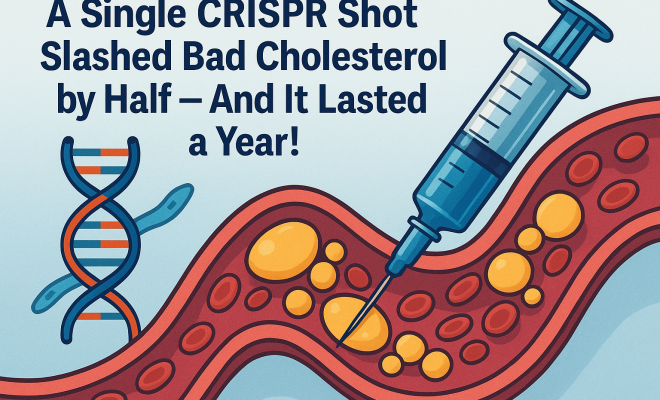
Imagine a world where managing your cholesterol isn’t a daily pill-popping chore, or a constant worry about diet and exercise alone. What if a single treatment could dramatically cut your ‘bad’ cholesterol, and keep it down for a whole year, perhaps even longer? It sounds almost too good to be true, doesn’t it? Yet, the latest buzz in medical circles suggests this isn’t science fiction, but a rapidly approaching reality, thanks to the revolutionary gene-editing technology known as CRISPR. We’re talking about a potential game-changer for millions living under the shadow of heart disease.
Recent reports from early trials have sent ripples of excitement through the medical community. A novel CRISPR-Cas9 therapy, administered as a single intravenous infusion, has shown truly remarkable results: a staggering 52.5% reduction in LDL cholesterol – that’s the notorious ‘bad’ cholesterol – at its highest dose. And here’s the kicker: this profound effect wasn’t a fleeting moment; it persisted for a full year. For anyone familiar with the relentless nature of cholesterol management, this longevity is nothing short of astonishing. This isn’t just about managing a number; it’s about fundamentally altering the body’s predisposition to high cholesterol, potentially rewriting the script for cardiovascular health. The implications of these early findings for CRISPR cholesterol management benefits are immense, offering a beacon of hope for a future free from the constant burden of high LDL.
The Silent Killer: Why High Cholesterol Is Such a Big Deal
Before we dive deeper into the CRISPR marvel, let’s take a moment to understand why cholesterol, particularly high LDL, is such a formidable adversary. Cholesterol itself isn’t inherently bad; it’s a waxy, fat-like substance vital for building healthy cells. Your body needs it to make hormones, Vitamin D, and substances that help you digest food. The problem arises when there’s too much of the wrong kind. High levels of low-density lipoprotein (LDL) cholesterol can lead to a dangerous buildup in your arteries, forming plaques that narrow the vessels and restrict blood flow. This process, known as atherosclerosis, is the primary cause of heart attacks and strokes.
Think of your arteries like the plumbing in your house. Over time, if you’re constantly pouring grease down the drain, you’ll get blockages. Similarly, high LDL acts like that grease, slowly but surely clogging your vital arteries. Many people walk around with dangerously high cholesterol levels for years without any noticeable symptoms, which is why it’s often dubbed a ‘silent killer.’ By the time symptoms appear, significant damage might already have been done. The sheer scale of this problem is immense; cardiovascular disease remains the leading cause of death globally, and high cholesterol is a major, modifiable risk factor. Traditional treatments, while effective, often require lifelong adherence, which can be challenging for many patients. This is precisely where the promise of CRISPR cholesterol management benefits truly shines.
Unpacking CRISPR: The Genetic Scissors Revolution
So, what exactly is CRISPR, and how can it achieve such a dramatic and lasting effect on something as complex as cholesterol? CRISPR, an acronym for Clustered Regularly Interspaced Short Palindromic Repeats, is a groundbreaking gene-editing technology that has revolutionized molecular biology. At its core, it’s a sophisticated molecular tool that allows scientists to precisely edit segments of DNA. Think of it as a pair of molecular scissors that can be programmed to cut DNA at specific points, enabling researchers to remove, add, or alter genetic material with unprecedented accuracy.
The CRISPR-Cas9 system, the most commonly used variation, consists of two key components: a guide RNA (gRNA) and a Cas9 enzyme. The gRNA acts like a GPS, guiding the Cas9 enzyme to a specific target sequence in the DNA. Once there, the Cas9 enzyme, a molecular scissor, makes a precise cut. This cut triggers the cell’s natural DNA repair mechanisms, which can then be harnessed to introduce desired genetic changes. This remarkable precision and relative ease of use have made CRISPR an incredibly powerful tool with applications spanning everything from agriculture to treating genetic diseases. In the context of cholesterol, the idea is to edit genes responsible for its regulation, thereby offering a more permanent solution than symptomatic treatments. The long-term CRISPR cholesterol management benefits stem directly from this ability to make fundamental genetic changes.
Targeting the PCSK9 Gene: The Key to Lowering LDL
The specific genetic target for this promising new CRISPR therapy is the PCSK9 gene. Why PCSK9? Well, this gene plays a crucial role in regulating LDL cholesterol levels in the blood. The protein produced by the PCSK9 gene essentially acts as a brake on LDL receptors in the liver. These receptors are responsible for clearing LDL cholesterol from the bloodstream. When PCSK9 is active, it degrades these receptors, meaning fewer LDL particles are removed from circulation, leading to higher LDL levels. Conversely, if you inhibit PCSK9, you allow more LDL receptors to remain on the liver cells, which in turn leads to more efficient removal of LDL cholesterol from the blood.
The concept isn’t entirely new. Medications that inhibit PCSK9, known as PCSK9 inhibitors, have been available for several years. These are typically injectable drugs that patients take regularly. While highly effective, they require ongoing administration. What CRISPR offers is a potentially permanent or at least very long-lasting solution by essentially ‘turning off’ or significantly reducing the function of the PCSK9 gene within the liver cells themselves. By making a precise edit to the PCSK9 gene, the body’s own machinery is reprogrammed to produce less of the PCSK9 protein, leading to a sustained increase in LDL receptors and, consequently, a dramatic and lasting reduction in LDL cholesterol. This direct genetic intervention is what makes the CRISPR cholesterol management benefits so compelling, moving beyond temporary fixes to foundational biological change.
The Groundbreaking Trial Results: Half the Bad Cholesterol, A Full Year On
Let’s get down to the specifics that have everyone talking. The early trial data, while still preliminary, is incredibly encouraging. Researchers administered a single intravenous infusion of the CRISPR-Cas9 therapy to a cohort of patients. The results for those receiving the highest dose were particularly striking: a 52.5% reduction in LDL cholesterol. To put that in perspective, cutting your bad cholesterol by more than half with a single treatment is a monumental achievement. For many, this level of reduction could mean the difference between a life plagued by cardiovascular risk and one significantly healthier and longer. (See: First human trial of CRISPR therapy.)
But the story doesn’t end with the initial drop. The persistence of this effect is perhaps even more impressive. The significant reduction in LDL cholesterol was observed to last for a full year. This ‘one-and-done’ or at least ‘one-and-long-lasting’ approach is a paradigm shift. Imagine the relief for patients who currently face daily medication regimens, frequent doctor visits, and constant monitoring. A single infusion that provides a year of robust cholesterol control could profoundly improve quality of life and reduce the burden on healthcare systems. These early results are a powerful indicator of the profound CRISPR cholesterol management benefits, suggesting a future where genetic editing plays a central role in preventative medicine.
Safety First: Promising Early Signals
Of course, with any groundbreaking medical intervention, safety is paramount. Gene editing, by its very nature, involves altering the body’s fundamental blueprint, so concerns about off-target edits or unforeseen side effects are always at the forefront. This is where the early trial reports offer another significant reason for optimism. The trial, involving 15 patients, reported no dose-limiting toxicity. This means that even at the highest effective doses, the therapy didn’t cause severe side effects that would necessitate stopping treatment. For more context, see battling hidden health crises.
Furthermore, there were no serious adverse events directly tied to the therapy itself. This is a critical finding, suggesting that the CRISPR system, at least in this specific application, is well-tolerated by the human body. The researchers also noted no Grade 3 or higher liver enzyme changes, which is important because the liver is the primary target organ for this therapy, and severe liver enzyme elevation could indicate liver damage. While these are early results from a relatively small cohort, the initial safety profile is incredibly reassuring and bodes well for larger, more extensive trials down the line. It underscores the careful, deliberate approach being taken to harness CRISPR cholesterol management benefits safely.
Beyond PCSK9: The Broader Horizon for Gene Editing in Cardiovascular Health
While the focus right now is rightly on PCSK9 and its role in LDL cholesterol, it’s worth remembering that this is just one piece of the puzzle in cardiovascular health. The success of CRISPR in this area opens up a much broader horizon for gene editing. Imagine targeting other genes involved in lipid metabolism, inflammation, or even directly addressing genetic predispositions to conditions like familial hypercholesterolemia, a severe inherited form of high cholesterol that often doesn’t respond adequately to conventional treatments.
For patients with familial hypercholesterolemia, who are born with extremely high cholesterol levels and face significantly elevated risks of early heart disease, a durable gene-editing solution could be truly life-altering. Beyond cholesterol, researchers are exploring CRISPR’s potential to correct genetic mutations that cause other cardiovascular diseases, such as hypertrophic cardiomyopathy or specific arrhythmias. The ability to precisely modify genes offers the tantalizing prospect of not just managing symptoms, but fundamentally correcting the underlying genetic causes of many heart conditions. This is the expansive vision for CRISPR cholesterol management benefits, extending far beyond the initial application.
Challenges and the Road Ahead for CRISPR Cholesterol Management Benefits
Despite the excitement, it’s crucial to maintain a realistic perspective. While these early results are phenomenal, this therapy is still in its nascent stages. There are significant hurdles to overcome before it becomes widely available. First, larger, randomized controlled trials involving many more patients are needed to confirm both the efficacy and long-term safety of the treatment. These trials will need to assess the therapy’s performance across diverse patient populations, including those with different genetic backgrounds and varying degrees of cardiovascular risk.
Another major consideration is the potential for off-target edits. While CRISPR is highly precise, there’s always a theoretical risk that it might cut DNA at unintended locations, leading to unforeseen consequences. Continuous monitoring and advanced sequencing techniques are essential to detect and understand any such events. Then there’s the question of durability. While a year of effect is impressive, how long will it truly last? Will patients need repeat treatments every few years, or could it be a one-time cure? The answers to these questions will be critical in determining the ultimate value proposition. Finally, and perhaps most importantly, is the cost. Advanced gene therapies are notoriously expensive, and ensuring equitable access will be a significant societal challenge. We need to think carefully about how to make these groundbreaking treatments affordable and available to all who need them, not just a privileged few. The path to fully realizing CRISPR cholesterol management benefits will be long and complex, but the initial steps are incredibly promising.
The Impact on Patients and Healthcare Systems
Let’s consider the profound impact this could have. For patients, the promise of a single, long-lasting treatment for high cholesterol could mean a dramatic improvement in quality of life. Imagine no longer needing to remember daily pills, or the constant worry about drug interactions. It could reduce the psychological burden associated with chronic disease management, freeing up mental energy for other aspects of life. For those with severe forms of hypercholesterolemia, where conventional therapies fall short, this could be a true lifeline, preventing premature heart attacks and strokes.
From a healthcare system perspective, while the upfront cost of a gene therapy might be high, the long-term savings could be substantial. Reducing the incidence of heart attacks, strokes, and the associated hospitalizations, surgeries, and rehabilitation costs could lead to significant economic benefits. Less frequent doctor visits for cholesterol management could also free up healthcare resources. Moreover, a healthier population is a more productive population, contributing to broader societal well-being. The potential CRISPR cholesterol management benefits extend far beyond individual health, touching every facet of public health and economic stability.
Looking Ahead: The Future of Personalized Medicine
The success of CRISPR in cholesterol management isn’t just about one disease; it’s a powerful affirmation of the potential of personalized medicine and gene therapy. This technology is pushing us closer to an era where treatments are tailored not just to a disease, but to an individual’s unique genetic makeup. Instead of a one-size-fits-all approach, we can envision therapies designed to correct specific genetic vulnerabilities, preventing disease before it even manifests. This is the ultimate promise of precision medicine, and CRISPR is at the forefront of this revolution.
As research continues, we’ll undoubtedly see more applications of CRISPR for a myriad of conditions, from genetic disorders to infectious diseases and even cancer. The journey from lab bench to bedside is often long and arduous, but the initial reports on CRISPR for cholesterol management are a powerful testament to human ingenuity and our relentless pursuit of better health. We are witnessing the dawn of a new era in medicine, where our ability to edit the very code of life is transforming how we approach some of our most persistent health challenges. The ongoing development of CRISPR cholesterol management benefits will be a bellwether for many other genetic therapies to come. (See: Cholesterol management guidelines.)
Comparing CRISPR to Existing Cholesterol Treatments
It’s helpful to put the potential of CRISPR into context by comparing it with our current arsenal of cholesterol management tools. Right now, the frontline defense typically starts with lifestyle changes – diet modifications, regular exercise, and maintaining a healthy weight. These are crucial and often effective for many, but they require consistent effort and discipline, which can be tough to sustain over decades.
Then we have medications. Statins are probably the most well-known, and they’re incredibly effective at lowering LDL cholesterol by inhibiting an enzyme involved in its production in the liver. They’ve saved countless lives, but they need to be taken daily, potentially for life, and some patients experience side effects like muscle pain. Ezetimibe is another option that reduces cholesterol absorption in the intestine, often used in combination with statins. And, as we mentioned, PCSK9 inhibitors are a newer class of injectable drugs that are very powerful in lowering LDL, especially for those who can’t tolerate statins or have very high inherited cholesterol. However, these require regular injections, typically every two to four weeks, again, indefinitely. For more context, see impact of technology on health management.
What CRISPR brings to the table is a different paradigm altogether. Instead of daily pills or bi-weekly injections that temporarily alter a biological process, CRISPR aims to make a more permanent, foundational change at the genetic level. A single infusion could potentially achieve what years of medication aim to do, but with a level of sustained effect that current treatments can’t match. This isn’t just an incremental improvement; it’s a conceptual leap. It shifts the burden from continuous patient adherence to a one-time (or at least very infrequent) intervention, offering a freedom from the disease management routine that’s simply not possible with existing therapies. The CRISPR cholesterol management benefits, in this light, represent a profound shift in how we might approach chronic disease.
Ethical Considerations and Societal Implications
As with any powerful new technology, especially one that tinkers with our genetic code, CRISPR comes with significant ethical considerations. One of the most talked-about concerns is germline editing – making changes to sperm, egg, or early embryos that would be inherited by future generations. This particular trial focuses on somatic cell editing, meaning changes are made to cells in an adult patient (like liver cells) and are not passed down. This distinction is crucial, as germline editing raises far more complex ethical questions about human identity, consent, and unforeseen consequences across generations.
Beyond that, we need to think about equitable access. If these therapies are incredibly effective but also incredibly expensive, who gets them? Will they only be available to the wealthiest individuals, creating a new form of health disparity? This isn’t just a hypothetical; it’s a real challenge we’re already grappling with for other advanced therapies. We need robust public discourse and policy frameworks to ensure that CRISPR cholesterol management benefits, and other gene therapies, are accessible to everyone who needs them, regardless of their socioeconomic status. Transparency in research, clear regulatory pathways, and public education are all vital components of navigating these complex ethical and societal waters responsibly. The potential for misuse or unintended consequences, however small, demands our careful attention as this technology matures.
Expert Perspectives on the Future of Gene Editing in Cardiology
Leading cardiologists and geneticists are expressing cautious optimism about these developments. Dr. Kiran Musunuru, a prominent cardiologist and gene-editing researcher, has been a vocal proponent, highlighting the transformative potential for patients with severe inherited forms of hypercholesterolemia who often struggle with conventional therapies. He often emphasizes that while the initial focus is on cholesterol, the real excitement lies in the ability to address the root genetic causes of many cardiovascular diseases.
Many experts agree that while the current results are exciting, the journey is just beginning. They stress the need for long-term follow-up studies, perhaps for a decade or more, to fully understand the durability and any potential delayed side effects of gene editing. They also point to the importance of refining delivery methods to ensure maximum precision and minimize off-target effects. The consensus seems to be that CRISPR isn’t a silver bullet, but rather a powerful new arrow in the quiver for fighting heart disease. It represents a fundamental shift in how we think about treatment, moving from managing symptoms to potentially curing or preventing disease at its genetic source. This expert consensus reinforces the profound, long-term impact that CRISPR cholesterol management benefits could have.
Frequently Asked Questions About CRISPR and Cholesterol
Let’s tackle some common questions you might have about this exciting new frontier.
Q: Is CRISPR a cure for high cholesterol?
A: It’s too early to call it a definitive “cure” in the broadest sense. However, for the specific mechanism it targets (PCSK9), it offers a highly effective and long-lasting reduction in LDL cholesterol by essentially turning off the gene responsible for a protein that raises LDL. For many, this could mean effectively neutralizing their genetic predisposition to high cholesterol, drastically reducing their risk of heart disease. (See: CRISPR technology in cardiovascular health.)
Q: How is the CRISPR therapy delivered to the body?
A: In the trials, the therapy is delivered via a single intravenous (IV) infusion. The CRISPR components are packaged within a delivery system, often a modified virus (like an adeno-associated virus, or AAV), which acts as a tiny vehicle to carry the genetic instructions specifically to the liver cells, where the PCSK9 gene is targeted for editing.
Q: Will this therapy replace statins and other cholesterol medications?
A: It’s unlikely to completely replace them overnight, especially considering the vast number of people successfully managed by existing drugs. However, for specific populations – like those with very high inherited cholesterol (familial hypercholesterolemia) or those who can’t tolerate or don’t respond well to conventional treatments – CRISPR could become a primary, preferred option due to its sustained effects. It will likely be another powerful tool in the doctor’s toolkit, used strategically.
Q: What are the potential long-term side effects?
A: That’s a critical question that ongoing and future trials aim to answer. While early safety data is promising, with no serious adverse events directly linked to the therapy in initial small trials, the long-term effects of altering a gene are still being studied. Researchers are particularly vigilant for any potential off-target edits (where CRISPR cuts DNA at unintended places) or immune responses to the delivery vehicle. Long-term monitoring of patients will be essential.
Q: How soon could CRISPR cholesterol therapies be available to the public?
A: While the early results are very exciting, it’s important to remember this therapy is still in clinical trials. It needs to go through larger, multi-phase trials to confirm efficacy and safety across diverse populations. This process typically takes several years, sometimes a decade or more, before regulatory approval (like by the FDA in the US) can be granted. So, while it’s on the horizon, it’s not likely to be widely available for several years.
Q: Does CRISPR affect other genes in the body?
A: The goal of CRISPR is to be highly precise, targeting only the intended gene (PCSK9 in this case). However, the possibility of “off-target edits”—where the CRISPR system makes cuts at other, unintended locations in the DNA—is a known theoretical risk. Researchers are constantly improving CRISPR technology to enhance its specificity and minimize these off-target effects. Advanced sequencing techniques are used to screen for and monitor any such occurrences in trials.
Q: What is the difference between this CRISPR therapy and existing PCSK9 inhibitors?
A: Both aim to reduce the activity of the PCSK9 protein to lower LDL cholesterol. Existing PCSK9 inhibitors are biologic drugs (antibodies) that bind to and neutralize the PCSK9 protein in the bloodstream. They are highly effective but require regular, lifelong injections. The CRISPR therapy, on the other hand, edits the PCSK9 gene directly within the liver cells, essentially reprogramming the cells to produce much less PCSK9 protein themselves. This genetic change is intended to be much more permanent or long-lasting, potentially requiring only a single treatment instead of continuous medication.
Trending Now
Frequently Asked Questions
How does CRISPR lower cholesterol?
CRISPR technology, specifically the CRISPR-Cas9 therapy, works by editing genes that influence cholesterol levels. In recent trials, a single intravenous infusion led to a remarkable 52.5% reduction in LDL cholesterol, the 'bad' cholesterol, demonstrating its potential to fundamentally alter how the body manages cholesterol.
What are the benefits of using CRISPR for cholesterol management?
The primary benefit of CRISPR in cholesterol management is its ability to produce a significant and lasting reduction in LDL cholesterol levels, potentially eliminating the need for daily medication. This could drastically improve cardiovascular health and reduce the risks associated with heart disease.
How long does the effect of CRISPR on cholesterol last?
Early trials indicate that the effects of CRISPR-Cas9 therapy on lowering LDL cholesterol can last for a full year. This sustained reduction is particularly promising for those struggling with chronic high cholesterol management.
Is CRISPR treatment safe for cholesterol reduction?
While early trial results are promising, ongoing research is necessary to fully assess the safety and long-term effects of CRISPR for cholesterol reduction. As with any new treatment, comprehensive clinical trials will help establish its safety profile.
What does a reduction in LDL cholesterol mean for heart health?
A reduction in LDL cholesterol is crucial for heart health, as high levels of this 'bad' cholesterol are linked to an increased risk of heart disease and stroke. By effectively lowering LDL levels, CRISPR therapy could significantly improve cardiovascular outcomes for many individuals.
Have you experienced this yourself? We'd love to hear your story in the comments.


