Trump & King Charles III: A Handshake’s Diplomatic Power Play
The political sphere often witnesses moments that encapsulate broader diplomatic sentiments, and one such moment recently emerged from a meeting between former U.S. President Donald Trump and King Charles III of the United Kingdom. The exchange, particularly their handshake, has sparked a wave of commentary and analysis, highlighting the complexities of royal diplomacy and the nuances of international relations. This seemingly simple gesture has become symbolic of the underlying tensions that can permeate high-profile meetings.
The Context of the Meeting
The encounter between Trump and King Charles III comes at a time when both figures are navigating their respective political landscapes. Trump, who served as the 45th President of the United States from 2017 to 2021, has remained a prominent figure in American politics, often stirring controversy with his statements and actions. On the other hand, King Charles III, who ascended the throne in 2022 following the death of his mother, Queen Elizabeth II, is currently adapting to his role as a monarch in a rapidly changing world.
A Closer Look at the Handshake
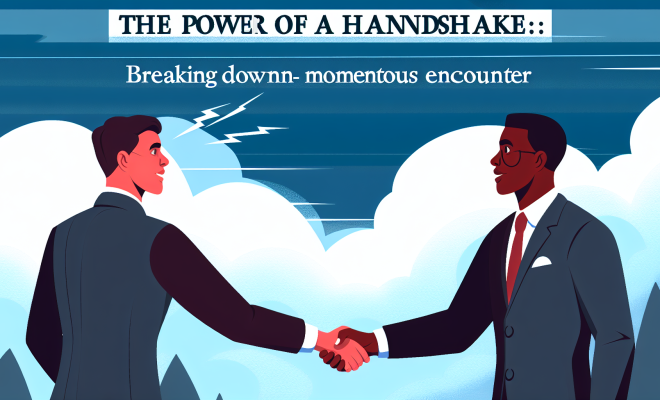
During their meeting, the handshake between Trump and King Charles III was marked by a palpable tension. Observers noted that the British monarch did not yield to Trump’s assertive handshake, which many interpreted as a power move. This refusal to back down from the handshake can be seen as a subtle assertion of royal dignity and authority, contrasting sharply with Trump’s often boisterous and confrontational demeanor.
The handshake has since gone viral, prompting discussions about the significance of such gestures in diplomacy. Handshakes can convey a range of sentiments, from cordiality and cooperation to competition and defiance. In this instance, the refusal to yield was seen as a statement in itself, reflecting the current state of Anglo-American relations.
The Viral Reaction
Social media platforms quickly amplified the encounter, with videos of the handshake gaining significant traction online. Commentators and analysts flocked to platforms like Twitter and TikTok, dissecting the moment and offering their interpretations. Some viewed the handshake as a failure on Trump’s part, suggesting it illustrated his struggle to maintain respect even in the presence of a royal figure.
Others highlighted King Charles III’s poised demeanor, interpreting it as a sign of his commitment to maintaining the monarchy’s dignity in the face of unpredictable political figures. This incident has reignited discussions surrounding the nature of power dynamics in modern diplomacy and the role of non-verbal communication.
Diplomatic Implications
The implications of this encounter extend beyond a mere handshake. For many, it serves as a reminder of the delicate balance that exists in diplomatic relationships. The British monarchy has long been a symbol of stability and continuity, while Trump’s presidency was characterized by a more tumultuous approach to governance and international relations.
In the context of U.S.-U.K. relations, the handshake incident may reflect broader concerns regarding the future of these ties. As both nations navigate a post-Brexit world, with the U.K. seeking to redefine its place on the global stage, the symbolism of such a meeting cannot be underestimated.
Analyzing the Symbolism
Handshakes have long been a staple in diplomatic interactions, often serving as a barometer for the health of bilateral relations. A firm handshake can signify mutual respect and cooperation, while a limp or hesitant one may indicate underlying tensions. In this instance, Trump’s attempt to dominate the handshake was met with King Charles III’s unyielding stance, creating a moment rich with meaning.
Many analysts view this interaction as emblematic of the larger narrative surrounding Trump’s tenure and the evolving role of the monarchy under Charles. It raises questions about how power is perceived and exercised in international diplomacy, particularly when it involves figures from different backgrounds and institutions.
The Broader Political Landscape
As the world continues to grapple with political polarization and shifting alliances, moments like the Trump-King Charles III handshake serve to highlight the complexities of leadership. Trump’s assertive style has often been seen as confrontational, while King Charles III represents a more traditional and reserved approach to authority.
This contrast is particularly significant as global politics become increasingly interconnected. Leaders are now more than ever required to navigate not just their domestic challenges but also the nuanced expectations of international diplomacy. The handshake incident serves as a microcosm of these broader themes, inviting further scrutiny into how leaders assert their influence on the world stage.
Conclusion: The Lasting Impact of a Moment
The handshake between Donald Trump and King Charles III, while a brief interaction, underscores the intricate dance of diplomacy. It encapsulates the complexities of power dynamics, the importance of non-verbal communication, and the evolving nature of international relations.
As the world observes the fallout from this moment, it remains to be seen how it will influence public perception and the future of U.S.-U.K. relations. The viral nature of the handshake serves as a reminder that even small gestures can have significant implications, resonating far beyond the moment itself.
In a world where every action is scrutinized and analyzed, the handshake between Trump and King Charles III will likely be remembered as a defining moment in the ongoing narrative of global politics.