The Hidden Cost: Why Childcare vs Home Care Could Break Your Budget
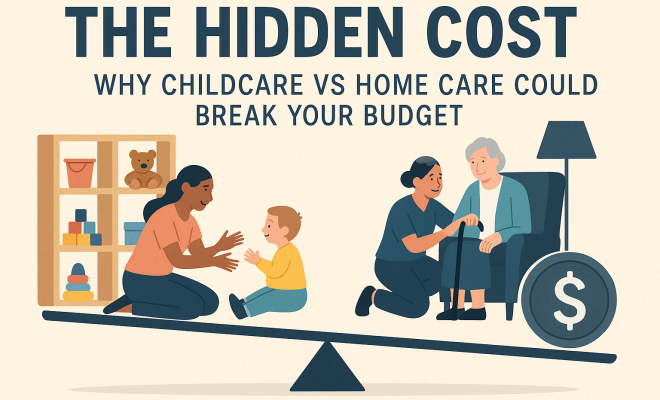
As a former K-12 teacher and someone deeply invested in the landscape of education, I’ve seen firsthand how crucial early childhood care is. But let’s be honest, for most families, the conversation quickly shifts from ‘what’s best for my child’ to ‘what can we actually afford?’ It’s a brutal reality that the escalating cost of childcare in the United States isn’t just a minor line item in a family budget; it’s a full-blown financial crisis for millions. We’re talking about a situation where basic necessities are being sacrificed, careers are being derailed, and the very foundation of financial stability is being eroded for families across the nation. The question of childcare vs home care cost comparison isn’t just academic; it’s deeply personal and profoundly impactful.
Consider this sobering fact: the national average annual cost of childcare hit approximately $13,184 in 2025. Let that sink in for a moment. That figure often surpasses median rent and, in many states, even mortgage payments. We’re not talking about a luxury expense here; we’re discussing the cost of enabling parents to work and contribute to the economy. A Brookings Institution analysis laid it bare, revealing that childcare costs pushed over 4 million families with children aged 12 and younger into financial instability in 2024. This isn’t just about money; it’s about the emotional toll, the stress, and the impossible choices parents are forced to make. It’s a systemic issue that demands our attention, and understanding the financial implications of childcare vs home care is the first step toward finding solutions.
1. The Escalating National Childcare Crisis: A Deep Dive into the Numbers
The numbers don’t lie, and they tell a story of a system under immense strain. When we talk about the national average annual cost of childcare hitting around $13,184 in 2025, it’s not just a statistic; it represents a significant portion of many families’ take-home pay. For context, imagine dedicating an entire month’s salary, or even more, just to ensure your child has care while you work. This isn’t hyperbole; it’s the lived experience for countless parents. This financial burden is so substantial that it regularly outstrips other major household expenses like housing, which traditionally has been the largest single outlay for most families. The sheer scale of this cost makes the childcare vs home care cost comparison a critical decision point for any family welcoming a new child or needing ongoing care.
What’s truly alarming is how this economic pressure forces parents, predominantly mothers, to make difficult career choices. Many find themselves reducing work hours, shifting to part-time roles, or even leaving the workforce entirely. This isn’t just a temporary setback; it has profound long-term consequences for career progression, earning potential, and overall financial stability. Imagine the lost income, the missed opportunities for promotion, and the impact on retirement savings. These individual decisions, born out of necessity, collectively impact the national economy. It’s a vicious cycle: high childcare costs limit workforce participation, which in turn can stifle economic growth. The conversation about childcare vs home care isn’t just about saving money; it’s about preserving careers and empowering parents to contribute fully to both their families and society.
2. Center-Based Childcare: Understanding the Costs and Benefits
When most people think of childcare, they often picture a traditional center-based facility. These are licensed institutions designed specifically for group care, typically offering structured environments, educational curricula, and social interaction for children. The costs associated with these centers can vary wildly depending on location, the age of the child, the staff-to-child ratio, and the reputation of the facility. For an infant, who requires more direct supervision, you’ll almost always pay a premium. The average cost of that $13,184 I mentioned earlier often skews higher for infants and toddlers, reflecting the intensive care and lower staff-to-child ratios legally mandated for younger children. These centers often have fixed schedules, which can be both a blessing and a curse, offering predictability but sometimes lacking flexibility for parents with non-traditional work hours.
Despite the high price tag, center-based childcare offers some undeniable benefits. Children in these settings often gain crucial social skills, learning to interact with peers and adults outside their family unit. Many centers also incorporate early childhood education programs, which can give children a head start academically and developmentally. Furthermore, centers are typically regulated and licensed by the state, meaning they adhere to specific safety standards, staff training requirements, and curriculum guidelines. This can provide parents with a certain level of peace of mind. However, the lack of flexibility, the potential for exposure to illnesses (a common concern in group settings), and the often rigid fee structures (where you pay for full-time care even if you only need part-time) are significant drawbacks that factor heavily into the childcare vs home care cost comparison. (See: Brookings Institution analysis on childcare costs.)
3. Hiring a Nanny: The Personal Touch and Its Price Tag
For families seeking a more personalized approach, hiring a nanny often comes to mind. A nanny provides individualized, in-home care for your children, often becoming an integral part of the family unit. This option offers unparalleled flexibility, as schedules can often be negotiated to fit a family’s specific needs, including evenings, weekends, and travel. A nanny can also tailor activities and routines specifically to your child’s interests and developmental stage, fostering a highly personalized learning environment. Plus, your child remains in the comfort and familiarity of their own home, which can be particularly beneficial for infants or children with specific needs. For more context, see 9 Financial Strategies Every Educator Needs Now.
However, this level of personalized care comes at a significantly higher cost than center-based options, especially if you have only one child. While the national average for center-based care is around $13,184 annually, a full-time nanny can easily cost upwards of $30,000 to $60,000 per year, or even more, depending on location, experience, and responsibilities. This figure often doesn’t even include additional expenses like payroll taxes, health insurance, paid time off, and potential overtime. When considering the childcare vs home care cost comparison, a nanny represents the premium end of the spectrum. While the benefits of one-on-one attention and convenience are substantial, the financial outlay requires careful budgeting and often means this option is only feasible for higher-income households or those with multiple children where the per-child cost might become more competitive.
4. Family Home Care (Family Childcare Homes): A Middle Ground?
Family home care, sometimes referred to as family childcare homes, offers a compelling alternative that often sits between the large center and the individual nanny in terms of cost and intimacy. These are typically smaller, home-based operations where a caregiver looks after a small group of children in their own residence. They’re often licensed or regulated by the state, though the oversight can vary more than with larger centers. The environment tends to be more home-like, offering a comfortable and less institutional feel, which can be very appealing to both parents and children.
Financially, family home care can often be more affordable than a traditional childcare center, especially for infants. The overhead costs for these providers are generally lower, and they might have more flexibility in their pricing. The smaller group size often means more individualized attention than a large center, while still providing opportunities for social interaction that a nanny might not. However, finding a high-quality, available family home care provider can be challenging, as spaces are limited and word-of-mouth often plays a significant role in their availability. When doing your childcare vs home care cost comparison, don’t overlook this option; it can offer a sweet spot for many families seeking a balance between cost, personal attention, and a nurturing environment.
5. Relative Care: The Unsung Hero of Childcare
For countless families, especially within close-knit communities, relative care is the backbone of their childcare strategy. This involves grandparents, aunts, uncles, or other family members stepping in to provide care for children. The most obvious financial benefit here is that it’s often free, or at least significantly less expensive than formal childcare options. This can be a game-changer for families struggling with the high costs we’ve discussed, directly alleviating the financial strain that pushes so many into instability. Beyond the monetary savings, there’s an immense emotional and developmental benefit: children are cared for by people who love them unconditionally, reinforcing family bonds and cultural values.
However, it’s not without its potential challenges. While financially advantageous, relying on relatives can sometimes strain family relationships if expectations aren’t clearly communicated or if the care provider feels overburdened. There might also be a lack of formal early education structure compared to a center, though many family members are incredibly dedicated to engaging children in learning. Moreover, for many families, having relatives nearby or available isn’t always an option. But for those who can make it work, relative care is an invaluable resource that profoundly impacts the childcare vs home care cost comparison, often making it the most economical and emotionally rich choice.
6. Au Pairs: Cultural Exchange with a Childcare Twist
An au pair arrangement is a unique blend of childcare and cultural exchange, offering a distinctive option for families. Typically, an au pair is a young person from a foreign country who comes to live with a host family, providing childcare services in exchange for room, board, a stipend, and the opportunity to experience a new culture and often study. This model is regulated by specific government programs in countries like the U.S., ensuring certain standards for both the au pair and the host family. It offers live-in care, which can be incredibly convenient for parents with demanding or irregular schedules, and it introduces children to different languages and cultures right in their own home. (See: CDC on early childhood care importance.)
From a cost perspective, an au pair can be more affordable than a traditional nanny, especially for families with multiple children. While you’re providing room and board, the weekly stipend is generally much lower than a nanny’s salary, and you often don’t incur the same payroll tax burden. However, families must consider the additional costs of providing a private room, food, and potentially contributing to education expenses for the au pair. There’s also the commitment to integrating a young adult into your household. When you’re weighing the childcare vs home care cost comparison, an au pair presents an intriguing, culturally enriching, and often cost-effective solution for families comfortable with having another person live in their home. For more context, see How to Secure High-Paying Jobs in Finance.
7. Cost-Saving Strategies and Government Support: Navigating the Financial Maze
Given the exorbitant costs of childcare, simply choosing an option isn’t enough; families often need to employ various strategies to make it work financially. One common approach is looking into employer-sponsored benefits, such as Dependent Care Flexible Spending Accounts (FSAs), which allow parents to set aside pre-tax money for childcare expenses, effectively reducing their taxable income. Some employers also offer direct childcare subsidies or discounts with partner facilities. It’s always worth checking with your HR department to see what benefits might be available to you.
Beyond employer benefits, government support programs play a critical role, though their reach and funding often fall short of the actual need. Programs like the Child Care and Development Fund (CCDF) provide subsidies to low-income families, but eligibility requirements can be strict, and waiting lists are common. The federal Child and Dependent Care Tax Credit can also offer some relief at tax time, allowing families to claim a percentage of their childcare expenses. However, a recent and deeply troubling development is the U.S. Department of Health and Human Services rescinding a rule that required states to cap childcare co-pays at 7% of family income. This move will undoubtedly place even greater financial pressure on families already struggling, making the childcare vs home care cost comparison even more fraught for those who rely on these vital subsidies. It’s a clear signal that families need to be even more proactive in exploring every possible avenue for financial assistance.
8. The Impact of Rescinding the 7% Co-Pay Cap: A Step Backward for Families
Let’s talk about that rescinded rule for a moment, because it’s a significant blow to families already teetering on the edge of financial instability. The U.S. Department of Health and Human Services had previously mandated that states cap childcare co-pays for families receiving subsidies at 7% of their income. This cap, while still substantial for many, provided a vital safeguard, ensuring that childcare costs didn’t completely overwhelm a family’s budget. By rescinding this requirement, the federal government has effectively given states the green light to allow co-pays to rise without limit, or at least without this specific federal floor. This isn’t just a technical change; it’s a policy decision with immediate and devastating real-world consequences for millions of parents.
For families already relying on these subsidies, this means their childcare costs could surge, forcing them to either pay more out of pocket, reduce their work hours, or, in the worst-case scenario, leave the workforce altogether. It directly undermines the very goal of making childcare affordable and accessible. This decision exacerbates the childcare crisis, making the decision between childcare vs home care even more critical and complex for low and middle-income families. It highlights a troubling trend where the financial burden is increasingly shifted onto individual families, rather than being addressed through robust systemic support. As an educator and advocate, I find this particular move deeply concerning, as it will undoubtedly deepen the financial instability for the very families who need the most support to thrive.
9. Considering Your Family’s Unique Needs: Beyond Just the Dollars
While the childcare vs home care cost comparison is undeniably a primary driver for most families, it’s crucial to look beyond just the dollar signs and consider the unique needs and dynamics of your own household. What works for one family might be completely unsuitable for another, regardless of the price tag. For instance, if you have a child with specific developmental needs or a chronic health condition, a more individualized care setting like a nanny or a very small family home care might be preferable, even if it costs more. The ability to have a caregiver trained in specific areas or to administer medication on a precise schedule can be invaluable, and sometimes, worth the extra investment. For more context, see Why Educators Urgently Need AI Upskilling Now. (See: AP News report on childcare financial crisis.)
Conversely, if your child thrives on social interaction and a structured learning environment, a high-quality center-based program, despite its cost, might offer the best developmental opportunities. Think about your work schedule: do you need flexibility for late nights or early mornings? A nanny or au pair might offer that, while a center often has strict pick-up times. What about convenience? Is a facility close to your home or work important? How important is it for your child to be exposed to different cultures or languages? These non-financial factors are just as vital in making the ‘best’ decision for your family, because ultimately, childcare isn’t just a service; it’s an extension of your parenting and a significant influence on your child’s early life experiences.
10. Long-Term Financial and Career Implications: The Hidden Costs
When we talk about childcare costs, it’s easy to focus on the immediate monthly or annual outlays. But the real discussion, the one that often gets overlooked, is about the profound long-term financial and career implications that these choices have. As I mentioned earlier, millions of parents, particularly mothers, are forced to reduce work hours or leave the workforce entirely due to prohibitive childcare expenses. This isn’t just a temporary pause; it’s a significant hit to lifetime earnings, retirement savings, and career progression. Every year out of the workforce, or every year working part-time instead of full-time, translates into lost income, lost opportunities for promotions, and a smaller social security benefit down the line. It’s a compounding effect that can impact a family’s financial well-being for decades.
Beyond individual finances, there’s a broader economic impact. When skilled workers, especially women, are sidelined due to a lack of affordable childcare, the economy loses valuable talent and productivity. This isn’t just a ‘women’s issue;’ it’s an economic issue that affects us all. The childcare vs home care cost comparison isn’t just about finding the cheapest option today; it’s about making a strategic decision that supports both your child’s development and your family’s long-term financial health. Policymakers and communities need to recognize that investing in affordable, high-quality childcare isn’t just a social good; it’s an economic imperative that pays dividends in a stronger workforce, increased productivity, and more financially stable families.
Navigating the complex world of childcare in America today feels like an impossible puzzle for so many families. The choices are fraught with financial stress, emotional considerations, and the constant worry of doing what’s best for our children while keeping our heads above water. From the staggering national average costs that eclipse rent and mortgages to the deeply concerning decision to rescind the 7% co-pay cap, the landscape is challenging, to say the least. It’s clear that the decision between childcare vs home care isn’t just a matter of preference; it’s a high-stakes financial calculation that can profoundly shape a family’s present and future. As parents, educators, and advocates, we need to continue pushing for systemic changes that ensure all families have access to affordable, quality childcare, allowing them to thrive without sacrificing their financial stability or career aspirations.
Trending Now
- 7 Grab-and-Go Breakfast Ideas for Busy…
- How to Secure High-Paying Jobs in…
- our breakdown of why ignoring ai training now could brutally end your career
- The Shocking Truth: Why AI Upskilling Is Your Only Path to Job Security
- The Looming Crisis: Why Companies Are Cutting AI Training as Daily Use Skyrockets
Frequently Asked Questions
What is the average cost of childcare in the United States?
As of 2025, the national average annual cost of childcare in the United States is approximately $13,184. This figure often exceeds median rent and, in some states, even mortgage payments, highlighting the financial burden many families face.
How does childcare cost impact family budgets?
Childcare costs can significantly strain family budgets, often forcing parents to sacrifice basic necessities or even derail their careers. The high expense of childcare contributes to financial instability for millions of families, making it a critical issue to address.
What are the emotional effects of high childcare costs?
The escalating costs of childcare can lead to immense emotional stress for parents. Many are faced with impossible choices that affect their mental well-being and family dynamics, as they struggle to balance financial responsibilities with the needs of their children.
How does home care compare to childcare in terms of cost?
When comparing childcare to home care, families often find that both options can be financially challenging. However, home care may offer more flexibility and potential savings, depending on individual circumstances and the specific needs of the child.
What can be done to address the childcare financial crisis?
Addressing the childcare financial crisis requires systemic solutions, including policy changes, increased funding for affordable childcare options, and support for families. Raising awareness about the impact of childcare costs is the first step toward finding effective solutions.
What's your take on this? Share your thoughts in the comments below — we read every one.