The AI Revolution: Why AI Learning Experience Architects Are Leaving Instructional Designers Behind
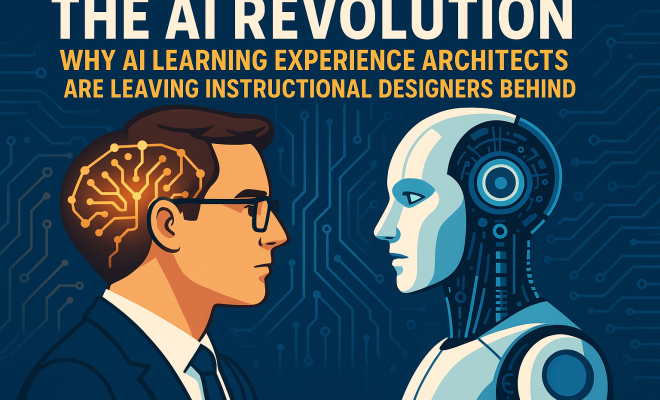
Alright, let’s talk about something that’s truly shaking up the education world. We’ve all been hearing the buzz about AI, but now it’s not just theoretical; it’s actively reshaping career paths in EdTech. The traditional instructional designer, a role many of us understand and respect, is now finding itself alongside a new, specialized professional: the AI Learning Experience Architect. This isn’t just a fancy new title; it represents a profound shift in how we approach education, especially with the recent announcement from CogniLearn on October 4, 2026, about their groundbreaking AI-powered adaptive learning platform. This platform isn’t just personalizing content; it’s creating an urgent demand for a new kind of expertise. Understanding the core differences between AI Learning Experience Architects vs Instructional Designers is crucial for anyone looking to navigate the future of education.
For years, instructional designers have been the backbone of curriculum development, translating complex subjects into digestible, effective learning experiences. They’ve focused on pedagogical principles, learning theories, and content structure. But AI introduces a whole new dimension – the ability to truly personalize learning at scale, adapt in real-time, and leverage data in ways that were once unimaginable. This isn’t about replacing human educators, not yet anyway, but about augmenting their capabilities and creating entirely new roles that demand a blend of technical prowess and deep pedagogical insight. Experts are even predicting a 40% surge in demand for these AI Learning Experience Architect roles over the next year, which tells you just how quickly things are evolving. It’s a significant shift, and one that educators and professionals absolutely need to wrap their heads around.
1. The Core Mission: Personalization vs. Standardization
At the heart of the distinction between an AI Learning Experience Architect and a traditional instructional designer lies their fundamental mission. A traditional instructional designer typically aims to create a standardized, yet effective, learning path that can be applied to a group of learners. They design courses, modules, and activities with a general audience in mind, striving for clarity, engagement, and measurable outcomes for the average student. Their focus is often on creating a robust framework that can be delivered consistently, whether it’s through an online learning management system (LMS) or a physical classroom. Think about designing a college course; while there might be some elective choices, the core curriculum is usually the same for everyone in that cohort.
Conversely, the AI Learning Experience Architect’s mission is deeply rooted in personalization. Their goal isn’t just to create an effective learning path, but to engineer an *adaptive* path that responds dynamically to each individual learner. This means leveraging AI to understand a student’s strengths, weaknesses, learning style, pace, and even emotional state, then automatically adjusting content, difficulty, and instructional strategies in real-time. The CogniLearn platform, for example, is designed to personalize educational content for millions of students simultaneously. This isn’t just about offering options; it’s about creating a truly unique, evolving journey for every single learner, moving far beyond the ‘one size fits all’ or even ‘some sizes fit most’ approach that often characterizes traditional design.
2. Skillsets Required: Pedagogy Meets AI and Data Science
When we look at the required skillsets, the differences between an AI Learning Experience Architect and an instructional designer become starkly clear. A traditional instructional designer relies heavily on a strong foundation in educational psychology, cognitive science, and adult learning theories. They’re adept at curriculum development, content creation, multimedia integration, and assessment design. They know how to write clear learning objectives, structure information logically, and craft engaging activities. Tools like Articulate Storyline, Adobe Captivate, and various LMS platforms are their bread and butter. Their expertise is largely centered on the human element of learning and the best practices for human-to-content interaction.
An AI Learning Experience Architect, while still needing a solid grasp of pedagogy (you can’t design good learning without it!), adds a significant layer of technical expertise. They need to understand machine learning principles, data analytics, algorithmic design, and how AI models are trained and deployed. They’re not necessarily coders in the traditional sense, but they must be fluent in the language of AI, capable of collaborating with data scientists and software engineers. They need to understand how to define the parameters for an adaptive algorithm, interpret data on learner performance to refine AI models, and troubleshoot issues related to AI-driven content delivery. This blend of deep pedagogical insight with technical AI acumen is precisely what makes this role so novel and in such high demand. It’s about designing the *system* that designs the learning, rather than just designing the learning itself.
3. Responsibilities: From Content Creation to System Optimization
Let’s break down the day-to-day responsibilities. A traditional instructional designer spends a good chunk of their time creating and curating content. They might write scripts for videos, develop interactive exercises, design quizzes, and structure entire courses. They often work closely with subject matter experts to translate their knowledge into effective learning materials. Their focus is on the direct creation of the learning assets and ensuring they meet established learning objectives. They’re the architects of the learning *content* itself, ensuring its quality and efficacy for a broad audience.
An AI Learning Experience Architect, on the other hand, operates at a higher level of abstraction. While they certainly need to understand content, their primary responsibility shifts towards designing, implementing, and optimizing the AI-driven educational pathways. This means defining the rules and parameters for how the AI adapts, what data points it should consider, and how it should respond to different learner behaviors. They’re involved in setting up the feedback loops for AI models, evaluating the effectiveness of adaptive algorithms, and continuously refining the system based on performance data. Imagine them not just designing a lesson, but designing the intelligent system that *generates* and *adapts* the lesson for millions of unique users. Their work is less about direct content creation and more about shaping the intelligence that drives content delivery and personalized learning journeys. (See: AI's impact on education and learning.)
4. Industry Trends: The Surge in AI-Driven EdTech
The rise of the AI Learning Experience Architect isn’t happening in a vacuum; it’s a direct response to monumental shifts in the EdTech industry. For years, we’ve seen digital learning grow, but often it’s been about digitizing traditional methods – putting textbooks online or delivering lectures via video. Now, with advancements in AI and machine learning, we’re moving into an era of truly intelligent and adaptive learning systems. CogniLearn’s platform, launched recently, is a prime example of this trend, promising personalized educational content for millions. This isn’t just an incremental improvement; it’s a fundamental change in how education can be delivered and consumed. For more context, see the AI Skill Secret College Isn’t Telling You.
This groundbreaking development is creating an urgent demand for specialized roles. The prediction of a 40% surge in demand for AI Learning Experience Architects over the next year isn’t just a number; it reflects a significant reorientation of the job market within EdTech. Companies are no longer just looking for people to build digital courses; they need professionals who can design the intelligence behind those courses. This shift is also fueling a massive social media engagement and debate about AI’s role in education – both the excitement for personalized learning and the valid concerns about job displacement. The industry is rapidly moving towards highly technical and pedagogical expertise in AI integration, making this role a critical component of future EdTech innovation.
5. Tools and Technologies: Beyond the Standard LMS
For a traditional instructional designer, the toolkit typically includes learning management systems (LMS) like Canvas, Blackboard, or Moodle, authoring tools such as Articulate 360 or Adobe Captivate, and various multimedia development software. They’re comfortable with SCORM and xAPI standards, and they understand how to integrate different content types into a cohesive learning experience within these established platforms. Their focus is on leveraging existing technologies to deliver content effectively and track basic learner progress.
An AI Learning Experience Architect, while still aware of these traditional tools, delves into a far more complex technological landscape. Their tools extend to AI platforms, machine learning frameworks, data visualization software, and advanced analytics dashboards. They might work with custom-built adaptive learning engines, natural language processing (NLP) tools for content analysis, or recommendation systems that guide learners. They need to understand how to configure and interact with AI models, interpret data from sophisticated telemetry systems, and potentially even work with A/B testing frameworks to optimize AI algorithms. Their world is less about content delivery platforms and more about the underlying intelligent systems that power personalized learning. It’s a leap from managing content within a system to designing and optimizing the intelligence of the system itself.
6. Impact on Learning Outcomes: Adaptive vs. Designed Pathways
The impact on learning outcomes is where the distinction truly shines. A well-designed traditional course, crafted by an experienced instructional designer, can lead to significant learning gains for many students. By structuring content logically, providing clear explanations, and offering varied practice opportunities, these courses aim to create a predictable and effective learning pathway. Success often depends on the student’s ability to keep pace with the general curriculum and engage with the provided materials.
The AI Learning Experience Architect, however, is aiming for something far more ambitious: hyper-personalized learning outcomes. By continuously adapting the learning path, content, and feedback based on real-time performance and cognitive states, AI-driven platforms promise to optimize learning for *every* individual. This could mean a struggling student receives immediate remedial support and alternative explanations, while an advanced student is challenged with more complex problems or accelerated content. The goal isn’t just to achieve learning; it’s to achieve *optimal* learning for each student, minimizing frustration and maximizing engagement. The adaptive nature of these systems, like the one CogniLearn just rolled out, has the potential to dramatically improve retention, mastery, and efficiency of learning in ways that static course designs simply can’t match.
7. Collaboration Ecosystems: Expanding Beyond SMEs
Instructional designers traditionally collaborate closely with subject matter experts (SMEs), graphic designers, and sometimes project managers. Their primary communication loop involves translating expert knowledge into teachable content and ensuring it’s visually appealing and user-friendly. They act as the bridge between content specialists and the end-learner, ensuring accuracy and pedagogical soundness.
AI Learning Experience Architects operate within a much broader and more technical collaborative ecosystem. While they still interact with SMEs for content validation, their core team expands to include data scientists, machine learning engineers, software developers, and UX/UI designers who specialize in adaptive interfaces. They become the crucial link between the pedagogical vision and the technical execution of the AI system. They might be explaining learning theories to an engineer or interpreting algorithmic performance for an educator. This multi-disciplinary collaboration is essential because the ‘learning experience’ they are designing is not just content, but an intelligent, dynamic system that requires input and expertise from several highly specialized technical fields. It’s a role that demands strong communication skills across very different professional languages. (See: technology's role in education.)
8. Ethical Considerations: Bias, Privacy, and Control
Both roles, of course, grapple with ethical considerations, but the nature of these concerns shifts significantly. For traditional instructional designers, ethical considerations often revolve around accessibility, cultural sensitivity, and ensuring content is unbiased and inclusive. They consider how to present information fairly and avoid perpetuating stereotypes through their materials. Their ethical lens is primarily focused on the direct impact of the content itself on the learner. For more context, see Why AI Certification Might Outshine Your Traditional Degree.
AI Learning Experience Architects face a far more complex ethical landscape, one that touches upon the very core of data science and AI. They must contend with issues of algorithmic bias – ensuring that the AI doesn’t inadvertently disadvantage certain groups of learners due to biased training data. Data privacy and security are paramount, given the vast amounts of personal learning data being collected. There’s also the question of learner agency and control: how much should the AI dictate the learning path versus allowing the student to choose? The ‘black box’ problem, where AI decisions aren’t easily explainable, also falls under their purview. They are on the front lines of ensuring AI-driven education is not just effective, but also equitable, transparent, and respectful of individual rights. This is a massive, ongoing debate, and it’s a critical part of the AI Learning Experience Architect’s responsibility to navigate these treacherous waters.
9. Career Trajectories: The Future is Adaptive
Looking at career trajectories, the landscape is clearly evolving. While the role of the traditional instructional designer isn’t disappearing overnight – there will always be a need for well-crafted, human-designed content and courses – the growth opportunities are heavily shifting towards AI integration. An instructional designer might find themselves specializing in specific content areas or becoming experts in particular authoring tools. Their path often involves senior instructional design roles, lead roles, or moving into project management for educational initiatives.
For AI Learning Experience Architects, the future looks incredibly bright and expansive. The predicted 40% surge in demand is just the beginning. These professionals are positioned at the cutting edge of EdTech, with potential career paths leading to roles like Head of Adaptive Learning, Director of AI Education Strategy, or even Chief Learning Officer for companies heavily invested in AI. Their expertise in blending pedagogy with AI means they’re not just designing learning experiences; they’re shaping the very infrastructure of future education. This makes the distinction between an AI Learning Experience Architect vs Instructional Designers not just a matter of different job descriptions, but a clear indicator of where the most significant innovation and career growth will occur in the coming years. For those of us in education, it’s a call to action to understand and adapt to these profound changes, or risk being left behind.
10. The Human Element: Preserving Empathy and Creativity in AI Education
It’s vital to acknowledge that even with the incredible advancements in AI, the human element in education remains irreplaceable. While an AI Learning Experience Architect designs the intelligent system, they must do so with a deep understanding of human psychology, motivation, and the nuanced aspects of learning that go beyond data points. Instructional designers, on the other hand, often bring a direct, empathetic connection to the learner through their content. They craft stories, provide relatable examples, and anticipate common misconceptions with a human touch that AI currently struggles to replicate. The challenge for AI Learning Experience Architects is to build systems that augment, rather than diminish, this human connection. How do you design an AI that can detect a student’s frustration and offer a genuinely encouraging word, not just a different problem set? How do you ensure the learning experience feels supportive and engaging, not just efficient? It’s about preserving the art of teaching within the science of AI, ensuring that creativity and empathy are designed into the very fabric of adaptive platforms.
This often involves working with educational psychologists and user experience researchers to ensure the AI’s interactions are perceived as helpful and motivating. For example, a traditional instructional designer might write specific, encouraging feedback messages for common errors. An AI Learning Experience Architect needs to design the *framework* for the AI to generate or select appropriate, empathetic feedback in real-time, considering the learner’s emotional state as well as their cognitive performance. It’s a subtle but significant difference, emphasizing the need for a human-centered approach even when working with highly technical systems.
11. Measuring Success: Beyond Test Scores
When it comes to measuring success, both roles aim for improved learning outcomes, but their methodologies and the metrics they prioritize can differ. A traditional instructional designer might focus on pre- and post-tests, course completion rates, and learner satisfaction surveys. Their success is often tied to how well a cohort of students performs on standardized assessments and how positively they review the course materials. The data they collect is generally aggregate and focused on the course’s overall effectiveness. For more context, see 7 AI Courses College Students Are Using to Conquer the Job Market. (See: Harvard's research on AI in education.)
AI Learning Experience Architects, however, dive into a much richer, more granular dataset. Beyond traditional test scores, they’re looking at metrics like time spent on specific concepts, number of attempts before mastery, error patterns, response times, engagement levels (e.g., clicks, scrolls, interactions), and even biometric data in more advanced systems to infer cognitive load or emotional state. They’re constantly evaluating the *adaptive algorithms* themselves – is the AI successfully identifying misconceptions? Is it presenting the optimal next piece of content? Are students progressing faster or with deeper understanding in AI-driven pathways compared to control groups? Their success is intrinsically linked to the efficacy of the AI system’s personalization capabilities and its ability to optimize individual learning trajectories. This requires a strong understanding of statistical analysis and experimental design to truly understand if the AI is making a difference.
Frequently Asked Questions About AI Learning Experience Architects vs Instructional Designers
Q1: Is the AI Learning Experience Architect role going to replace traditional instructional designers?
No, not entirely. The two roles are distinct but often complementary. Traditional instructional designers will still be essential for creating foundational content, especially for scenarios where deep personalization isn’t the primary goal or isn’t yet feasible. However, the demand for AI Learning Experience Architects is growing rapidly as EdTech increasingly moves towards adaptive, AI-driven platforms. Many instructional designers might find themselves upskilling to become AI Learning Experience Architects or specializing in areas that support AI-driven learning, like creating content specifically designed to be ingested and adapted by AI.
Q2: What’s the typical educational background for an AI Learning Experience Architect?
It’s quite varied right now, reflecting the newness of the role. Many come from an instructional design background and have acquired technical skills in AI, data science, or machine learning through bootcamps, certifications, or self-study. Others might come from computer science, data science, or engineering fields and have developed a strong understanding of pedagogical principles. Degrees in educational technology, cognitive science, or human-computer interaction with a focus on AI are also becoming increasingly relevant. A blend of education and technology expertise is key.
Q3: How do AI Learning Experience Architects ensure fairness and prevent bias in learning algorithms?
This is a critical and complex part of the role. AI Learning Experience Architects work closely with data scientists to carefully select and scrutinize training data for potential biases. They design algorithms with fairness considerations in mind, often implementing mechanisms to detect and mitigate bias in real-time. This can involve A/B testing different algorithmic approaches, regularly auditing the AI’s performance across diverse learner demographics, and ensuring transparency in how the AI makes decisions. It’s an ongoing process of monitoring, evaluation, and refinement to ensure equitable learning experiences for all students.
Q4: What kind of companies are hiring AI Learning Experience Architects?
You’ll find them in a wide range of organizations. EdTech startups and established education technology companies are leading the charge, especially those developing adaptive learning platforms, intelligent tutoring systems, and personalized curriculum tools. Large corporations with extensive corporate training programs are also increasingly hiring for these roles to optimize employee learning and development. Universities and research institutions working on advanced learning methodologies are another growing area. Basically, any organization looking to leverage AI for highly personalized and effective learning is a potential employer.
Trending Now
- this guide on michigan parents charged with misdemeanors after 3-year-old son displayed loaded gun at daycare
- Terrifying: The Hidden Dangers of Energy…
- this guide on the silent revolution: why traditional degrees are crumbling against this unstoppable force
- Education Dept. Goes Viral with Takedown…
- Why You’re Falling Behind: The AI Skill Secret College Isn’t Telling You
Frequently Asked Questions
What is an AI Learning Experience Architect?
An AI Learning Experience Architect is a new professional in the education sector focused on leveraging artificial intelligence to personalize learning experiences. Unlike traditional instructional designers, they integrate advanced data analysis and adaptive technologies to create tailored educational pathways that respond to individual learner needs.
How do AI Learning Experience Architects differ from instructional designers?
The primary difference lies in their approach to education. While instructional designers emphasize pedagogical principles and standardized learning experiences, AI Learning Experience Architects utilize AI to personalize learning at scale, adapt content in real-time, and analyze data for improved outcomes.
Why is there a growing demand for AI Learning Experience Architects?
The demand for AI Learning Experience Architects is surging due to the increasing integration of AI in education. With advancements like AI-powered adaptive learning platforms, there is a need for professionals who can effectively blend technical skills with pedagogical insight to enhance personalized learning.
What impact does AI have on instructional design?
AI significantly impacts instructional design by enabling real-time personalization of content, enhancing data-driven decision-making, and creating new roles that require a mix of technical knowledge and educational expertise. This shift encourages instructional designers to adapt and evolve in their practices.
How can educators prepare for the AI revolution in education?
Educators can prepare by gaining skills in AI technologies and understanding their application in personalized learning. Staying informed about emerging roles like AI Learning Experience Architects and adapting pedagogical strategies to incorporate AI can help educators remain relevant in the evolving educational landscape.
What's your take on this? Share your thoughts in the comments below — we read every one.