
Supreme Court to Reexamine Birthright Citizenship in 2026
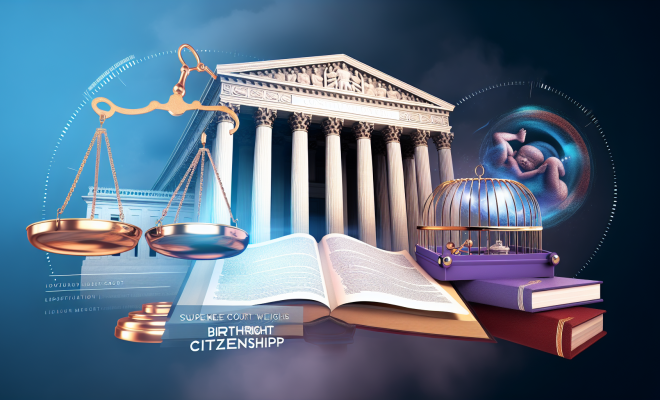
The U.S. Supreme Court is gearing up for a pivotal examination of birthright citizenship, a topic that has ignited fierce debate across the political spectrum. In a case that could redefine the legal landscape for citizenship in America, the justices are set to review a presidential directive that seeks to alter the long-standing principle of granting citizenship to anyone born on U.S. soil.
The Context of the Legal Challenge
This latest legal battle comes on the heels of a significant 6-3 Supreme Court ruling in June 2026, which limited the ability of lower courts to issue nationwide injunctions. However, it provided a pathway for class-action lawsuits, which have subsequently put a halt to former President Donald Trump’s executive order aimed at curtailing birthright citizenship.
Potential Consequences of the Directive
Justice Brett Kavanaugh, during oral arguments, expressed concerns over what he termed potential “chaos” in verifying the citizenship status of newborns if the directive were to take effect. His remarks underscore the complexities involved in determining citizenship for children born to parents who may not be citizens themselves, a situation that could lead to significant legal and bureaucratic challenges.
Understanding Birthright Citizenship
Birthright citizenship in the United States is rooted in the 14th Amendment, which states that anyone born in the country is automatically granted citizenship. This provision was established in the aftermath of the Civil War to ensure that all individuals born in the U.S., regardless of their parents’ status, were recognized as citizens.
However, the recent push to revisit this principle has sparked a heated debate about immigration, national identity, and human rights. Advocates for the directive argue that it is necessary to address issues related to undocumented immigration, while opponents warn that it could lead to widespread discrimination and the denial of basic rights to thousands of children.
Implications for Newborns and Families
The Supreme Court’s decision is expected to have profound implications for newborns and their families. If the directive is upheld, many children could find themselves in a precarious situation, facing legal challenges to their citizenship status from the moment of birth.
- Increased Legal Scrutiny: Families may face additional hurdles in proving their children’s citizenship, leading to lengthy and costly legal battles.
- Impact on Healthcare: Newborns without guaranteed citizenship may struggle to access essential healthcare services, as many hospitals require proof of citizenship for enrollment in programs.
- Psychological Toll: The uncertainty surrounding citizenship could inflict emotional distress on families, particularly on parents who fear for their child’s future.
The Broader Legal Landscape
This case also falls within a broader spectrum of legal challenges concerning immigration policy and citizenship rights. The implications of the Supreme Court’s ruling could set a precedent that affects not just birthright citizenship but also other aspects of immigration law.
The legal community is closely monitoring this case, as it could influence the direction of future immigration policies and the principles underlying citizenship in the United States. Legal experts warn that a shift away from the current interpretation of birthright citizenship could lead to a fragmented and inconsistent approach across different states, resulting in what some have termed a “patchwork” of citizenship laws.
Public Opinion and Political Ramifications
Public sentiment on birthright citizenship is divided, with various factions expressing strong opinions on the issue. Those in favor of maintaining the status quo argue that birthright citizenship is a fundamental American value, while opponents assert that it is being abused and exploited.
Political leaders from both sides have weighed in on the matter, with some advocating for comprehensive immigration reform that addresses the root causes of undocumented immigration while preserving the rights of children born in the U.S.
The Path Forward
As the Supreme Court prepares to hear arguments regarding the constitutionality of the presidential directive, the attention of the nation will be focused on the justices and their interpretations of the law. A ruling is expected by the end of June 2026, directly addressing the constitutionality of the directive rather than merely procedural concerns.
The outcome of this case will not only determine the fate of birthright citizenship but could also reshape the legal framework surrounding immigration and citizenship in the United States for generations to come.
In summary, the impending Supreme Court decision represents a critical juncture in the ongoing debate over birthright citizenship, with significant implications for countless families across the nation. As the justices deliberate, the stakes have never been higher for the future of citizenship in America.

