Sunspot AR4478: Understanding the Beta-Gamma-Delta Solar Threat
“`html
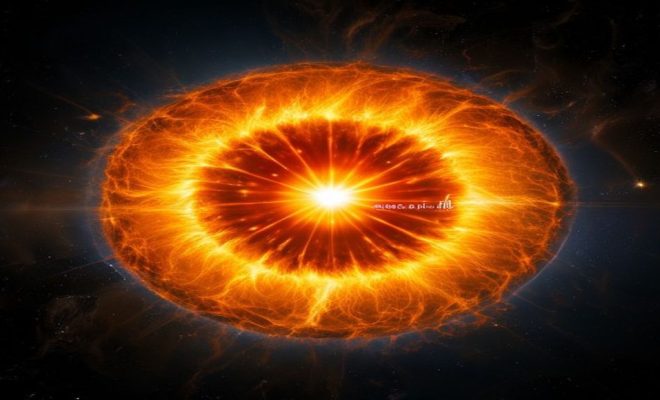
The cosmos is more than just a vast expanse of stars; it’s a dynamic environment constantly in flux. Recent developments have particularly caught the eye of astronomers and laypeople alike. The sunspot region AR4478 has been classified as a ‘beta-gamma-delta monster’, sparking significant interest and concern. Experts have reported a dramatic rise in the probabilities of solar flares emanating from this region. With M-class flares now at a staggering 50% likelihood and X-class flares at 10%, understanding the implications of AR4478 has never been more crucial.
1. What Makes AR4478 a ‘Beta-Gamma-Delta Monster’?
The classification of sunspots into categories is an essential aspect of solar physics. These categories are based on the complexity of the magnetic field associated with the sunspot. The ‘beta-gamma-delta’ classification indicates a particularly complex arrangement of magnetic fields that can lead to powerful solar flares. AR4478 has been classified in this way due to its intricate magnetic topology, which poses a higher risk for explosive activity.
This classification is not just a technicality; it has immediate implications for solar activity. The increased complexity means that the region can produce stronger and more unpredictable flares. The potential for M-class and X-class flares is alarming, as these types can disrupt satellite communications and power grids on Earth. Scientists are closely monitoring this region to anticipate any potential eruptions that could have far-reaching consequences.
2. The Risk of M-Class and X-Class Flares
Understanding M-class and X-class flares is vital for grasping the risks posed by AR4478. M-class flares are considered medium-level flares; they can cause brief radio blackouts and minor radiation storms, primarily affecting polar regions. However, X-class flares are a different beast entirely. Classified as the most intense type of solar flares, they can cause substantial disruptions to satellite communication, navigation systems, and even power infrastructure.
With the odds of M-class flares at 50% and X-class flares at a concerning 10%, the stakes are high. Even a single X-class flare could potentially wreak havoc, affecting everything from GPS systems to aviation operations. The potential for these disruptions has led to heightened concern within the scientific community and among the general public alike.
3. Historical Context: Solar Flares and Their Impact
To fully appreciate the implications of AR4478, it’s important to consider historical instances of solar flares and their impact. For instance, the Carrington Event of 1859 is a notable example, where a massive solar storm led to widespread telegraph outages and even sparked fires in some systems. More recently, in 1989, a solar storm caused a nine-hour blackout in Quebec, Canada, affecting millions.
These historical events underscore the kind of disruptions that AR4478 could cause if it unleashes an X-class flare. Consequently, scientists are urging for heightened preparedness, especially as we move into an era where our reliance on technology is greater than ever. The lessons from the past serve as a stark reminder of the potential devastation that solar activity can produce.
4. Consequences for Technology and Infrastructure
The technological implications of solar flares are significant, particularly for power grids and satellite systems. Satellites can experience disruptions, leading to incorrect GPS readings and communication blackouts. Power grids can also be affected, with the risk of surges damaging transformers and leading to extensive outages. This is why the classification of AR4478 as a beta-gamma-delta monster is so alarming.
Utility companies and satellite operators are advised to monitor solar activity closely, especially when regions like AR4478 show increased flare probabilities. Preparation can include adjusting power loads during heightened solar activity or putting satellites into safe mode to protect sensitive instruments from potential damage.
5. Global Response and Preparedness
Given the potential risks associated with sunspot region AR4478, global preparedness is essential. Agencies like NASA and the National Oceanic and Atmospheric Administration (NOAA) continuously monitor solar activity to provide timely alerts. These organizations are not only focused on predicting solar flares but are also working on improving infrastructure resilience.
This preparedness includes developing better forecasting models for solar activity and enhancing public awareness campaigns. For example, information on how flares can affect daily life is vital. People need to understand the risks to their devices and what steps they can take to protect them during heightened solar activity. (See: Understanding sunspots and their classifications.)
6. The Science Behind Solar Flares
The science of solar flares is fascinating yet complex. Solar flares are bursts of radiation from the sun’s surface that occur when magnetic energy has built up in the solar atmosphere. When this energy is suddenly released, it results in an explosion that emits intense radiation across the electromagnetic spectrum.
The processes that lead to flares involve intricate interactions between the sun’s magnetic fields and plasma. This is why understanding the behavior of sunspot regions like AR4478 is essential. Scientists use data from various satellites, including the Solar Dynamics Observatory, to gather information about the sun’s activity and predict potential flares.
7. Social Media and Public Awareness
The rise in concern over sunspot region AR4478 has been amplified by social media. Platforms like Twitter and Facebook have become hotspots for discussions about solar activity. People are sharing information, seeking advice on how to protect their technology, and expressing their fears regarding potential disruptions.
This digital dialogue serves two purposes: it raises awareness and fosters community resilience. By sharing knowledge, individuals can better prepare for the potential impact of solar flares. This trend reflects a growing understanding that our relationship with technology necessitates vigilance regarding solar activity.
8. What You Can Do to Prepare
In light of the heightened risk from sunspot region AR4478, it’s prudent to consider how you can prepare. First, assess your reliance on technology. If you’re heavily dependent on electronic devices, consider investing in surge protectors and uninterruptible power supplies (UPS) that can help mitigate damage from geomagnetic storms.
Additionally, keeping informed is key. Following reliable news sources and space weather agencies can help you stay updated on AR4478 and other solar events. It’s also wise to develop a contingency plan in case of extended power outages, especially if you live in areas more vulnerable to solar activity.
9. Looking Ahead: The Future of Sunspot Activity
The classification of sunspot region AR4478 as a beta-gamma-delta monster is not just a momentary concern; it may also signal a more active solar cycle ahead. The sun has a roughly 11-year cycle of activity, and we may be entering a phase where such potent sunspots become more common.
As scientists continue to study and monitor these phenomena, the importance of public awareness and preparedness remains paramount. The cosmos will always be a source of awe and fear, and understanding how to navigate its whims is vital as we move forward.
10. Understanding the Impacts of Solar Flares on Earth
Solar flares can have a wide range of effects on Earth, not merely confined to technology. The impact extends to the natural environment as well. For example, solar flares can enhance auroras, creating stunning displays of light in the polar regions. When protons from flares collide with the Earth’s magnetic field, they can produce vibrant auroras, also known as the Northern and Southern Lights. This phenomenon can serve as a reminder of the sun’s power, showcasing nature’s beauty amidst potential hazards.
However, these same solar events can also trigger geomagnetic storms that can cause fluctuations in the Earth’s magnetic field. These storms can affect everything from animal migration patterns to atmospheric phenomena. Certain species, like migratory birds and sea turtles, rely on the Earth’s magnetic field for navigation. Disruptions to this field can lead to disorientation and altered migratory patterns, impacting ecosystems.
11. Expert Perspectives on AR4478
To gain deeper insight into AR4478, we reached out to experts in solar physics. Dr. Emily Johnson, a renowned astrophysicist, emphasized the unpredictability of sunspot regions with such complex magnetic fields. “AR4478’s classification as a beta-gamma-delta region indicates that it can produce unpredictable events that are hard to forecast accurately,” she stated. “What we know is that when these regions are active, we need to be on alert.”
Another expert, Dr. Mark Chen, a solar meteorologist, highlighted the need for real-time monitoring. “The advancements in satellite technology have significantly improved our ability to predict solar flares, but there’s still a level of uncertainty involved,” he noted. “In the case of AR4478, we’re watching closely to see how it develops.”
12. Statistics on Solar Activity
Understanding the scale of solar activity provides context for the significance of AR4478. According to NASA, during the most active phase of the solar cycle, known as solar maximum, the sun can produce over 100 flares per day. In stark contrast, during solar minimum, this number can drop to just a few a month. (See: NASA's insights on solar activity.)
Recent data from NOAA indicates that the current solar cycle, which began in December 2019, is expected to peak around 2025. As we approach this peak, regions like AR4478 may become increasingly common. Furthermore, during solar maximum, the likelihood of experiencing X-class flares can rise significantly, making monitoring regions like AR4478 even more crucial.
13. Frequently Asked Questions (FAQ)
What is a sunspot?
A sunspot is a temporary phenomenon on the sun’s photosphere that appears as a spot darker than its surroundings. These spots are caused by magnetic field fluctuations and can vary in size and lifespan.
Why is sunspot region AR4478 referred to as a ‘beta-gamma-delta monster’?
This terminology describes the complexity of the magnetic field in the sunspot region. A beta-gamma-delta classification indicates that the magnetic field is complex enough to lead to powerful solar flares.
What types of solar flares can AR4478 produce?
AR4478 has a 50% chance of producing M-class flares and a 10% chance of producing X-class flares. M-class flares are medium in strength, while X-class flares are the most intense and can have significant impacts on technology and communications.
How can solar flares affect Earth?
Solar flares can disrupt satellite communications, cause power grid failures, and even impact GPS accuracy. They can also create stunning auroral displays but can lead to geomagnetic storms that disrupt animal navigation and other natural systems.
What precautions should be taken during heightened solar activity?
Individuals and businesses should ensure their sensitive electronic equipment is protected with surge protectors and UPS systems. Staying informed through reliable news sources and being prepared for potential power outages is also crucial.
How often do solar flares occur?
Solar flares can occur frequently, especially during a solar maximum phase of the solar cycle. In peak times, hundreds of flares may happen daily, while during quiet periods, only a few flares may occur each month.
Are scientists able to predict solar flares?
While advancements in technology have improved the ability to forecast solar flares, there remains an element of unpredictability. Scientists rely on data from satellites and models to assess the likelihood of solar activity but cannot predict exact occurrences with certainty.
14. The Role of International Collaboration in Solar Monitoring
In the realm of solar science, collaboration among nations has become increasingly important. Organizations like the European Space Agency (ESA) and Japan’s Aerospace Exploration Agency (JAXA) work alongside NASA to monitor solar activity. These collaborations allow for data sharing and pooling of resources, enhancing the understanding of solar phenomena. See also recent solar flare news.
International efforts have led to the establishment of projects like the Solar and Heliospheric Observatory (SOHO), which provides invaluable data about the sun. The exchange of information between countries helps improve the accuracy of predictions and preparedness strategies for solar flares.
15. Future Research Directions in Solar Physics
As we continue to unravel the complexities of the sun, researchers are focusing on various areas to enhance our understanding of solar physics. One promising direction is the study of the sun’s magnetic field dynamics and their role in flare production. Advanced simulation models are being developed to predict how these magnetic fields behave under different conditions. (See: Impacts of solar storms on Earth.)
Another area of interest is the potential impact of solar flares on climate. While the sun’s energy is a primary driver of Earth’s climate, the direct relationship between solar activity and climate change is still being researched. Understanding this connection could provide insights into long-term climate trends.
Finally, enhancing public understanding of solar activity remains a crucial aspect of future research. Educating the public about the sun’s behavior, the risks associated with solar flares, and the importance of preparedness will empower individuals and communities to navigate the challenges posed by solar phenomena.
16. Understanding the Solar Cycle
The sun operates on an approximately 11-year solar cycle characterized by varying levels of solar activity, including sunspots, solar flares, and coronal mass ejections (CMEs). Each cycle consists of a solar minimum phase, where activity is relatively low, and a solar maximum phase, marked by increased sunspot production and solar storms.
During the solar maximum, more sunspots form, which increases the likelihood of significant solar events like those associated with AR4478. As we approach the peak of the current solar cycle in 2025, experts anticipate that the frequency and intensity of sunspot regions like AR4478 will rise, leading to potential global impacts.
17. Long-Term Effects of Solar Activity on Technology
Beyond immediate disruptions, solar activity can have long-term impacts on technology. For instance, satellites can suffer from cumulative radiation exposure over time, which can degrade their materials and electronics. This degradation can shorten their operational lifespan, leading to increased costs for satellite operators who must replace or upgrade systems frequently.
Additionally, the power grid infrastructure is also vulnerable to long-term effects from solar storms. Prolonged geomagnetic storms can induce currents in power lines, which may cause transformers to overheat and fail. This risk has prompted utility companies to invest in hardening their infrastructure against solar events.
18. The Relationship Between Solar Flares and Space Weather
Solar flares are a key component of space weather, which encompasses the environmental conditions in space as influenced by the sun. Space weather can affect not only technological systems on Earth but also affect astronauts and spacecraft in orbit. Increased radiation levels during solar flares pose risks for astronauts, who may have to take shelter in shielded spacecraft during such events.
Understanding the relationship between solar flares and broader space weather phenomena is crucial for safeguarding space missions and ensuring the safety of human life in orbit. This underscores the importance of continuous monitoring and research in the field of heliophysics.
“`
Trending Now
- this guide on why plumbing businesses can’t afford to ignore these review automation tools in 2026
- the complete explanation
- our breakdown of the unseen dangers of ai agents: a ciso’s guide to emerging cybersecurity risks
- this guide on the terrifying rise of the ai-powered cybersecurity worm: what you need to know
Frequently Asked Questions
What is sunspot region AR4478?
Sunspot region AR4478 is a newly identified solar area classified as a 'beta-gamma-delta monster.' This classification indicates a complex magnetic field structure, which increases the likelihood of powerful solar flares, including M-class and X-class flares, posing potential risks to satellite communications and power grids on Earth.
Why is AR4478 classified as a 'beta-gamma-delta monster'?
AR4478 is classified as a 'beta-gamma-delta monster' due to its intricate magnetic field arrangement. This complexity heightens the potential for explosive solar activity, leading to stronger and more unpredictable solar flares that can have significant impacts on Earth.
What are M-class and X-class solar flares?
M-class flares are medium-level solar flares that can cause brief radio blackouts, mainly affecting polar regions. In contrast, X-class flares are the most intense type, capable of causing substantial disruptions to satellite operations and power systems on Earth.
How could AR4478 affect Earth?
The sunspot region AR4478 poses a risk to Earth through its potential to produce M-class and X-class solar flares. These flares can disrupt satellite communications, cause power grid fluctuations, and lead to radiation storms, particularly impacting polar regions.
What should we monitor regarding sunspot region AR4478?
It is crucial to monitor sunspot region AR4478 for any signs of solar flares due to its high likelihood of producing M-class and X-class activity. Scientists are closely observing this region to predict eruptions that could impact technology and infrastructure on Earth.
What did we miss? Let us know in the comments and join the conversation.