NASA’s Bold Plan: Private LEO Stations to Replace ISS
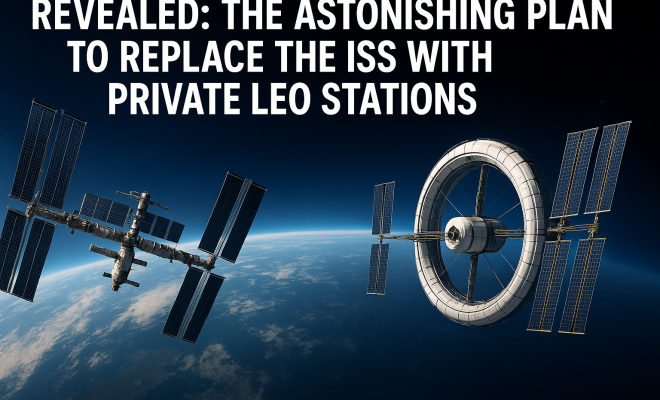
NASA is making a monumental shift in how we’ll live and work in space, and it’s got everyone talking. Imagine a future where the International Space Station (ISS) isn’t the only game in town, but rather a bustling neighborhood of privately owned and operated orbital outposts. That’s precisely the vision NASA is pushing for with its recent draft Request for Proposals (RFP) for the Commercial Low Earth Orbit Destination Contract (CLEODC). This isn’t just about building new hardware; it’s a fundamental pivot to a ‘tenant model,’ where the agency plans to buy services from these commercial ventures, much like you’d rent an office or apartment on Earth. It’s a bold move, designed to spark a vibrant orbital economy and ensure a continuous human presence in low Earth orbit long after the ISS is decommissioned.
But like any massive undertaking, this shift isn’t without its detractors. While the prospect of private LEO stations has ignited excitement among many, particularly those dreaming of a future in space tourism and manufacturing, it’s also drawn sharp criticism. Organizations like the Space Frontier Foundation have voiced concerns, arguing that NASA’s draft RFP might be too bogged down in bureaucracy, inadvertently stifling the very private investment it aims to attract. It’s a classic tension between government oversight and private sector agility. Still, the wheels are already in motion, with several ambitious companies actively developing their own commercial stations, eager to carve out their slice of the orbital pie. This really is a high-stakes game, and the future of human spaceflight hangs in the balance.
1. The ISS Succession Plan: Why NASA is Changing Course
For decades, the International Space Station has been humanity’s crowning achievement in low Earth orbit. A symbol of international cooperation and scientific endeavor, it’s served as an invaluable laboratory, allowing us to understand how humans adapt to microgravity, test new technologies, and conduct groundbreaking research. But the ISS is aging. Launched in stages starting in 1998, it wasn’t built to last forever, and its operational lifespan is rapidly approaching its end. Maintaining such a colossal, complex structure in orbit is incredibly expensive, costing billions of dollars annually.
NASA’s decision to pursue private LEO stations as its successor isn’t just about replacing a piece of hardware; it’s about evolving our approach to space exploration. The agency wants to transition from being the primary owner and operator of orbital infrastructure to a customer, purchasing services from commercial providers. This ‘tenant model’ frees up NASA’s resources and budget for more ambitious deep-space missions, like returning to the Moon and eventually sending humans to Mars. It’s a strategic move to de-risk future LEO operations by distributing the financial and operational burden across multiple private entities, while still ensuring U.S. access to low Earth orbit for research and technology development.
The financial burden of the ISS is a key driver. Estimates suggest the station costs NASA somewhere in the ballpark of $3-4 billion annually to operate and maintain. That’s a significant chunk of the agency’s overall budget, funds that could be redirected towards other strategic priorities. By shifting to a commercial model, NASA hopes to see these operational costs dramatically decrease over time as competition among private LEO station providers intensifies and economies of scale emerge. This isn’t just about saving money; it’s about optimizing resource allocation to push the boundaries of human exploration further than ever before.
2. The Commercial LEO Destination Contract (CLEODC): A New Era for Space Services
The Commercial Low Earth Orbit Destination Contract (CLEODC) is the formal mechanism through which NASA intends to procure these commercial space station services. Think of it as NASA putting out a ‘help wanted’ ad, but for entire orbiting outposts. The draft RFP outlines the agency’s requirements for these private LEO stations, detailing everything from crew capacity and research facilities to safety standards and operational capabilities. It’s a comprehensive document designed to ensure that whatever commercial platforms emerge can adequately support NASA’s needs.
This contract signals a profound shift. Historically, government agencies have built and operated the vast majority of space infrastructure. With CLEODC, NASA is actively inviting the private sector to take the lead in developing and managing these complex systems. The hope is that this will foster competition, drive innovation, and ultimately reduce costs for taxpayers. If successful, it could unlock a truly commercialized space economy, where private LEO stations become commonplace, serving a diverse range of customers beyond just government agencies.
The CLEODC isn’t just a simple contract; it’s a multi-phased approach. Initially, NASA plans to award multiple contracts for the design and development of these commercial LEO destinations. This encourages a diverse set of solutions and prevents a single point of failure. Later, as these private LEO stations become operational, NASA will transition to purchasing services on a competitive basis. This two-stage process aims to nurture the nascent commercial space station industry while ensuring NASA eventually gets the best value and most reliable services for its needs. It’s a delicate balance of fostering innovation and securing essential capabilities.
3. The ‘Tenant Model’: How NASA Plans to Buy Space
The ‘tenant model’ is the cornerstone of NASA’s strategy for private LEO stations. Instead of owning and operating its own space station, NASA will become a customer, purchasing specific services from commercial providers. This could include everything from crew time and cargo delivery to access to research facilities and data transmission capabilities. It’s akin to how government agencies on Earth often lease office space or contract out logistics services rather than building and managing every single aspect themselves.
This approach offers several compelling advantages. First, it offloads the immense capital expenditures and ongoing operational costs of maintaining a space station from the taxpayer to private companies. Second, it allows NASA to be more agile, potentially contracting with multiple providers and diversifying its risk. If one private LEO station experiences issues, NASA could potentially shift its operations to another. Ultimately, the goal is to create a more resilient, cost-effective, and dynamic low Earth orbit ecosystem, driven by market forces rather than singular government directives.
Consider the analogy of commercial airlines. NASA isn’t buying airplanes and hiring pilots to fly its personnel; it’s buying tickets on existing commercial flights. Similarly, with private LEO stations, NASA will book research slots, crew accommodations, and cargo space. This flexibility means NASA isn’t tied to a single platform or technology. If a new, more efficient, or specialized private LEO station becomes available, NASA can adjust its purchasing strategy. This competitive marketplace is expected to drive down ‘space habitat costs’ and incentivize providers to offer increasingly sophisticated and tailored services, benefiting not just NASA, but also other potential commercial customers.
4. Vast’s Haven-1 Module: A Glimpse into the Future of Private LEO Stations
Among the companies making serious strides in this new frontier is Vast, a privately funded space startup. They’re not just talking about private LEO stations; they’re actively building one. Vast has set an ambitious target for the launch of its Haven-1 module in the first quarter of 2027. This isn’t just a concept on paper; it’s a concrete step towards realizing the vision of commercially operated space habitats.
Haven-1 is designed to be a compact, self-contained space station capable of hosting human crews for up to 30 days. While smaller than the ISS, it represents a crucial first step. Vast intends for Haven-1 to serve as an independent commercial space station, offering services to private astronauts, researchers, and potentially government agencies. Their long-term vision includes expanding this initial module into a much larger, multi-module orbital outpost. It’s this kind of entrepreneurial spirit and aggressive timeline that truly excites proponents of the commercial space industry, demonstrating that private LEO stations are not just a distant dream, but a rapidly approaching reality. (See: Overview of the International Space Station.) Related reading: explore space tourism.
Vast’s strategy with Haven-1 highlights a crucial aspect of commercialization: starting small and scaling up. Unlike the monolithic ISS, which was built piece by piece over decades, Haven-1 is designed as a standalone, functional unit from day one. This modular approach allows for quicker deployment and earlier revenue generation. Once Haven-1 is operational, Vast plans to add additional modules, gradually building out a larger orbital complex. This incremental growth model is far more aligned with typical commercial development cycles and could prove to be a more sustainable path for ‘commercial space station investment’ than the traditional government-led mega-projects.
5. Axiom Space and Starlab Space: The Competitors in the Orbital Race
Vast isn’t alone in this burgeoning market for private LEO stations. Axiom Space and Starlab Space are also major players, each with their own compelling designs and strategies for establishing a commercial presence in orbit. Axiom Space, for instance, has already made significant progress. They’ve conducted private astronaut missions to the ISS using SpaceX’s Crew Dragon, proving their operational capabilities. Their plan involves initially attaching modules to the ISS, which will eventually detach to form a standalone commercial space station, known as Axiom Station. This phased approach allows them to leverage existing infrastructure while building towards independent operations.
Starlab Space, a joint venture between Voyager Space and Airbus, is another formidable contender. They’re developing the Starlab commercial space station, designed to be a continuously crewed, free-flying platform. Starlab aims to provide robust research capabilities, manufacturing opportunities, and tourism experiences. The competition among these companies is fierce, but that’s exactly what NASA is hoping for. This competitive environment is expected to drive down costs, accelerate technological development, and ultimately provide NASA with a range of viable options for its future LEO needs. It’s a healthy race to define the next chapter of human spaceflight.
A closer look at Axiom Space’s strategy reveals a clever way to mitigate risk and ensure continuity. By attaching their modules to the ISS first, they gain invaluable operational experience and can begin generating revenue from private astronaut missions and research activities sooner. This “crawl-walk-run” approach is a smart business move, de-risking the transition to a fully independent ‘private LEO station’. Starlab, on the other hand, is designing a purpose-built, free-flying station from the ground up, emphasizing dedicated research facilities and robust power generation. Each company brings a unique value proposition, ensuring a diverse range of options for future ‘orbital real estate’ clients, including NASA itself.
6. Controversy and Criticism: Is NASA Stifling Innovation?
While the prospect of private LEO stations is undeniably exciting, NASA’s approach hasn’t been universally praised. The Space Frontier Foundation, a prominent advocacy group for space exploration, has been particularly vocal in its criticism of the draft RFP. Their core argument is that the document is overly bureaucratic and prescriptive, potentially stifling the very private investment and innovation it’s meant to encourage. They worry that NASA is imposing too many government-style requirements on commercial entities, making it difficult for agile startups to compete or for established companies to truly innovate.
The concern here is a valid one: if the barrier to entry is too high, or the rules too rigid, it could deter private capital from flowing into this sector. Critics suggest that NASA should adopt a more hands-off approach, setting broad performance goals rather than dictating specific technical solutions. The debate highlights the delicate balance NASA must strike between ensuring safety and reliability, and fostering a truly commercial, free-market environment in low Earth orbit. It’s a tough tightrope walk, and the outcome will significantly shape the future trajectory of private LEO stations.
This criticism isn’t new in the world of government contracting, but it takes on particular significance in a nascent industry like commercial space. Imposing detailed technical specifications, for example, might be appropriate for a mature technology, but for an emerging field like private LEO stations, it can inadvertently lock out innovative approaches that NASA hasn’t even considered. A more performance-based approach, where NASA specifies what it needs the station to *do* rather than *how* it should do it, could empower companies to develop truly groundbreaking solutions and keep ‘space habitat costs’ more competitive. This philosophical difference between prescriptive requirements and performance-based outcomes is at the heart of the ongoing debate.
7. The Vision of an Orbital Economy: From Research to Real Estate
Beyond simply replacing the ISS, the ultimate vision behind private LEO stations is to ignite a thriving orbital economy. Imagine a future where space isn’t just for government astronauts and elite scientists. We’re talking about a diverse ecosystem of activities, from advanced manufacturing in microgravity to space tourism and even orbital real estate. Companies could develop specialized stations for pharmaceutical research, material science, or even entertainment production.
The potential for monetization is enormous. Think about ‘commercial space station investment’ as a new asset class, or the demand for ‘space habitat costs’ as companies and individuals look to establish a presence off-world. Luxury travel to orbital hotels could become a reality, offering unparalleled views of Earth. This isn’t just about science anymore; it’s about creating entirely new industries and job markets in space. The infrastructure provided by private LEO stations would be the bedrock for this ambitious new economy, fundamentally changing our relationship with space.
Consider the economic ripple effect. A robust orbital economy wouldn’t just create jobs for astronauts and engineers; it would spur innovation in fields like advanced robotics for maintenance, closed-loop life support systems, and even space-based power generation. Specialized orbital facilities could host everything from data centers leveraging the vacuum of space for unique computing environments to art installations offering truly out-of-this-world experiences. The shift from a government-centric model to one driven by ‘private space travel companies’ opens the door to entrepreneurial ventures that are currently unimaginable, transforming low Earth orbit into a vibrant marketplace.
8. Investment Opportunities and Commercial Search Intent: Following the Money
The shift towards private LEO stations isn’t just a boon for space enthusiasts; it’s creating significant new investment opportunities. Savvy investors are already looking at companies like Vast, Axiom Space, and Starlab Space as potential long-term plays in a burgeoning market. We’re seeing commercial search intent around terms like ‘commercial space station investment’ and ‘private space travel companies’ skyrocket, indicating a growing public and institutional interest in capitalizing on this future.
Beyond the direct investment in station developers, there’s a whole ecosystem of supporting industries that will benefit. Think about companies providing launch services, life support systems, robotics, and even orbital debris removal. As the demand for space access and habitation grows, so too will the need for innovative solutions across the entire supply chain. It’s a truly expansive market, and those who get in early could see substantial returns as the orbital economy takes shape.
The burgeoning private LEO station market is also attracting venture capital and private equity firms, traditionally keen on disruptive technologies. These investors are not just looking at the headline-grabbing station developers, but also at the foundational technologies and services that will enable this new economy. This includes advancements in in-space manufacturing, recycling technologies for long-duration missions, and even new forms of entertainment or communication tailored for orbital environments. The “space economy” isn’t a future concept; it’s a present reality, and the rise of private LEO stations is a major catalyst, influencing ‘space habitat costs’ and the long-term viability of these ventures.
9. The High Stakes: What Happens if Private LEO Stations Fail?
The stakes couldn’t be higher. Successfully transitioning from the ISS to a fleet of private LEO stations is crucial for maintaining U.S. leadership in human spaceflight and ensuring a continuous American presence in low Earth orbit. If these commercial ventures falter, or if the transition is poorly managed, it could create a significant gap in our ability to conduct vital research, develop new technologies, and maintain access to space for our astronauts. That would be a major setback, not just for NASA, but for the entire nation’s space ambitions. (See: The future of commercial space stations.)
Moreover, the geopolitical implications are substantial. Other nations, particularly China, are rapidly advancing their own space station programs. A failure to successfully establish robust private LEO stations could cede leadership in this critical domain. This is why the debate over the CLEODC’s structure is so important; getting it right means fostering innovation and ensuring long-term success, while getting it wrong could have dire consequences for the future of human exploration and commercialization of space.
A potential failure scenario isn’t just about losing a platform; it’s about losing momentum and capability. Without a readily available LEO destination, NASA’s ability to train astronauts for deep-space missions, conduct critical microgravity experiments, and test new technologies would be severely hampered. This could lead to a brain drain in the aerospace sector, as talented individuals seek opportunities elsewhere. Furthermore, the economic investment in ‘private space travel companies’ and ‘commercial space station investment’ could dry up, setting back the orbital economy by years, if not decades. The success of this transition is therefore not just a technical challenge, but a national strategic imperative.
10. The Future of Space Real Estate: Beyond Earth’s Atmosphere
Ultimately, the development of private LEO stations marks the dawn of true space real estate. We’re moving beyond temporary outposts and into an era where orbital habitats can be built, owned, and operated by private entities, serving a diverse clientele. This isn’t just about where astronauts will live; it’s about creating new frontiers for commerce, research, and even tourism.
Imagine the possibilities: dedicated pharmaceutical labs in orbit, zero-gravity manufacturing facilities, or even luxury space hotels offering unparalleled views of our home planet. The ‘space habitat costs’ might seem astronomical now, but as technology advances and economies of scale kick in, these costs will inevitably decrease, making orbital living and working more accessible. This future, once confined to science fiction, is rapidly becoming a tangible reality, setting the stage for humanity’s permanent expansion into the cosmos.
This concept of ‘orbital real estate’ isn’t limited to traditional station modules. We might see inflatable habitats offering vast internal volumes, or even partially autonomous facilities dedicated to specific industrial processes. The modularity inherent in many private LEO station designs means that customization will be key. A company needing a specific microgravity environment for crystal growth could lease a module precisely configured for that purpose, rather than trying to adapt a general-purpose laboratory. This specialization will drive down ‘space habitat costs’ for niche applications and accelerate the development of truly unique space-based industries.
11. The Role of International Partnerships: Beyond U.S. Borders
While NASA’s CLEODC focuses on U.S. commercial providers, the future of private LEO stations isn’t likely to be confined within national borders. The ISS itself is a testament to the power of international collaboration, bringing together partners from around the globe. As commercial orbital platforms emerge, we can anticipate similar international interest and partnerships. European, Japanese, Canadian, and other space agencies might also seek to purchase services from these private LEO stations, just as NASA plans to do.
This could lead to a truly global orbital economy, where different nations contribute expertise, funding, and even modules to a network of interconnected private LEO stations. Such a decentralized model offers greater resilience and a wider pool of resources and talent. It also presents opportunities for international competition and cooperation, balancing national interests with the shared goal of expanding humanity’s presence in space. The ‘commercial space station investment’ landscape will undoubtedly include international players and partnerships, further diversifying the market and accelerating innovation.
12. Regulatory Frameworks and Safety Standards: Establishing Order in Orbit
With the rise of private LEO stations comes the critical need for robust regulatory frameworks and safety standards. On Earth, industries operate under a complex web of laws, certifications, and oversight bodies to ensure public safety and environmental protection. Space is no different, and perhaps even more challenging due to its unique environment and the potentially catastrophic consequences of failure.
NASA, through the CLEODC, will certainly impose stringent safety requirements on its contractors. However, beyond NASA’s immediate needs, there needs to be a broader regulatory structure to govern commercial activities in low Earth orbit. Who sets the standards for orbital debris mitigation? What are the protocols for emergency situations involving multiple private LEO stations? How are property rights and liability handled in space? Agencies like the Federal Aviation Administration (FAA) in the U.S. are already involved in commercial launch licensing, and their role, or the role of an equivalent body, will likely expand to cover orbital operations. Establishing clear, internationally recognized guidelines will be vital for fostering confidence, attracting ‘commercial space station investment’, and ensuring the sustainable growth of the orbital economy.
13. Environmental Considerations: Managing Orbital Debris and Sustainability
As low Earth orbit becomes increasingly populated with private LEO stations, satellites, and other commercial ventures, the issue of orbital debris becomes even more pressing. Each launch and every operational spacecraft contributes to the existing debris field, posing a collision risk to all assets in orbit. For the long-term viability of private LEO stations and the orbital economy, sustainable practices are paramount.
This means not only adhering to strict guidelines for debris mitigation during operations and at end-of-life (e.g., de-orbiting or moving to graveyard orbits), but also investing in technologies for active debris removal. Companies developing private LEO stations will need to design their platforms with sustainability in mind, minimizing their own contribution to debris and potentially incorporating features that facilitate future servicing or capture. The ‘space habitat costs’ will increasingly need to factor in these environmental responsibilities, as a cluttered and hazardous LEO environment would ultimately undermine the very future these private stations aim to build.
Frequently Asked Questions About Private LEO Stations
What is a private LEO station?
A private LEO station is a space habitat or laboratory in Low Earth Orbit (LEO) that is owned, operated, and funded by a commercial company, rather than a government agency like NASA. These stations will offer services to various customers, including government astronauts, researchers, and private citizens.
Why is NASA transitioning to private LEO stations?
NASA is transitioning for several key reasons: the International Space Station (ISS) is aging and expensive to maintain; it allows NASA to free up resources and budget for deeper space missions (Moon, Mars); and it aims to foster a commercial space economy, driving innovation and potentially reducing costs through competition.
What is the ‘tenant model’ for NASA’s involvement?
The ‘tenant model’ means NASA will shift from owning and operating its own space station to becoming a customer. The agency will purchase services, such as crew time, cargo delivery, and access to research facilities, from commercially owned and operated private LEO stations, similar to how it buys services for cargo and crew transport to the ISS now.
Who are the main companies developing private LEO stations?
Key players in the development of private LEO stations include Vast (with its Haven-1 module), Axiom Space (planning Axiom Station), and Starlab Space (a joint venture between Voyager Space and Airbus, developing the Starlab station).
What are the potential benefits of private LEO stations?
The benefits are numerous: lower costs for government agencies, increased innovation and competition, diversification of risk, new opportunities for space tourism and manufacturing, and the development of a robust orbital economy creating new industries and jobs.
What are the main criticisms or concerns about this transition?
Critics, like the Space Frontier Foundation, worry that NASA’s draft contract requirements might be too bureaucratic or prescriptive, potentially stifling innovation and deterring private investment. There are also concerns about ensuring a smooth transition and continuous U.S. access to LEO if commercial ventures face unexpected challenges.
Will private LEO stations replace the ISS?
Yes, the long-term plan is for private LEO stations to succeed the ISS, taking over its role as a platform for human presence, research, and technology development in low Earth orbit after the ISS is decommissioned.
What kind of activities will private LEO stations support?
These stations are expected to support a wide range of activities, including microgravity research (pharmaceuticals, materials science), in-space manufacturing, private astronaut missions, space tourism, and technology development and testing for future deep-space missions.
How will ‘space habitat costs’ be managed and reduced?
Competition among multiple commercial providers is expected to drive down ‘space habitat costs’. Additionally, modular designs, economies of scale from increased commercial utilization, and private funding models will contribute to making orbital living and working more cost-effective over time.
What are the investment opportunities in private LEO stations?
‘Commercial space station investment’ opportunities exist not only in the companies directly developing and operating the stations but also in the vast supporting ecosystem. This includes companies providing launch services, life support systems, robotics, in-space services, and even specialized research or manufacturing equipment designed for orbital environments.
Trending Now
Frequently Asked Questions
What is NASA's plan for the ISS?
NASA is shifting from the International Space Station (ISS) to a model that supports private Low Earth Orbit (LEO) stations. The agency has issued a draft Request for Proposals (RFP) for the Commercial Low Earth Orbit Destination Contract, aiming to create a vibrant orbital economy by purchasing services from commercial ventures.
How will private LEO stations work?
Private LEO stations will operate under a 'tenant model,' similar to renting an office or apartment. NASA plans to buy services from these commercial entities, fostering a competitive environment for innovation and investment in space, particularly for tourism and manufacturing.
What are the criticisms of NASA's new plan?
Critics, including organizations like the Space Frontier Foundation, argue that NASA's draft RFP may introduce excessive bureaucracy. They fear this could hinder private investment and limit the agility needed for commercial ventures to thrive in the emerging orbital economy.
Why is NASA moving away from the ISS?
NASA is transitioning from the ISS to promote a sustainable presence in low Earth orbit beyond the ISS's decommissioning. This shift aims to stimulate commercial investment and innovation, ensuring continued human activity and research in space.
What does the future hold for human spaceflight?
The future of human spaceflight is poised for transformation as NASA supports the development of private LEO stations. This shift promises to foster a robust orbital economy, enabling advancements in space tourism, scientific research, and technological innovation.
Have you experienced this yourself? We'd love to hear your story in the comments.