
Orca’s Unprecedented Attack: Witnessing a Sunfish Explode
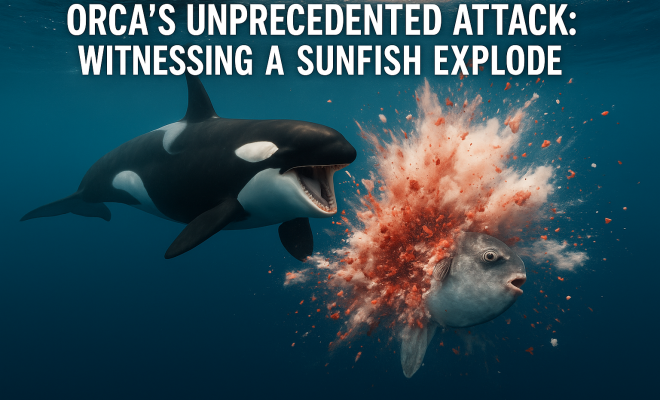
Imagine the serene blue of the Gulf of California, a place teeming with marine life, where the sun glistens on the water and the only sounds are the gentle lapping of waves. Now, picture that tranquility shattered by an act of raw, unbridled power: an orca, a creature renowned for its intelligence and hunting prowess, deliberately ramming into a giant sunfish with such force that the unfortunate victim literally disintegrates into a cloud of fragments. It sounds like something out of a fantastical nature documentary, doesn’t it? Yet, this astonishing, almost unbelievable event was recently observed and documented by researchers, offering a truly unprecedented glimpse into the complex and sometimes brutal world of marine predators.
This isn’t just another tale of predator and prey. What scientists witnessed in July 2026 wasn’t merely an orca hunting a sunfish; it was a sophisticated, almost theatrical display of coordinated force, a behavior so extreme it has left the scientific community buzzing. The term “explosive disintegration” isn’t hyperbole here. We’re talking about a large marine animal being reduced to thousands of pieces by the sheer impact of another. This particular orca sunfish encounter rewrites what we thought we knew about these apex predators, revealing a hunting strategy that is both shocking in its execution and fascinating in its implications.
The Gulf of California: A Stage for Unseen Dramas
The Gulf of California, often called the “aquarium of the world” by Jacques Cousteau, is a biodiversity hotspot. Its nutrient-rich waters support an incredible array of marine species, from tiny plankton to colossal whales. This vibrant ecosystem makes it a prime location for studying marine life, and researchers frequently venture into its depths to observe and document the behaviors of its inhabitants. It’s a place where new discoveries are always on the horizon, but even seasoned marine biologists weren’t prepared for the spectacle that unfolded during these recent observations.
The specific incidents took place in an area known for its rich marine life, providing the perfect backdrop for such a dramatic interaction. Researchers were out on the water, likely engaged in routine observation or data collection, when they became unwitting witnesses to these extraordinary events. The clarity of the water and the sheer scale of the sunfish, combined with the powerful actions of the orcas, made for an unforgettable and frankly, quite graphic, scene. It’s a testament to the unpredictable nature of scientific fieldwork – you never truly know what you’ll encounter when you’re out in the wild, especially in an environment as dynamic as the open ocean.
Anatomy of an Attack: The Unflinching Details of the Orca Sunfish Encounter
Let’s get down to the nitty-gritty of what actually happened. The researchers documented not one, but two separate instances of this astonishing behavior. In each case, the sequence of events was strikingly similar, suggesting a deliberate and perhaps even practiced hunting technique. The primary target was the giant sunfish, or Mola mola, a truly bizarre-looking creature that can weigh over 2,000 pounds and grow to be over 10 feet tall. Despite its imposing size, the sunfish is known for its rather placid demeanor and somewhat clumsy swimming style, often seen basking near the surface.
The first stage of the attack involved an orca gripping a dead sunfish by one of its fins. This detail is crucial. It wasn’t a live, struggling sunfish being targeted in mid-swim, but one already deceased. This suggests that the initial kill might have happened separately, or perhaps the sunfish was already incapacitated. While one orca held the sunfish steady, another orca, with incredible precision and power, charged directly at it. The collision was described as nothing short of explosive. The force of the impact was so immense that the sunfish, a creature of considerable mass, literally broke apart into thousands of pieces, scattering across the water. Imagine the sheer kinetic energy required to achieve such a feat. It’s a level of predatory violence rarely seen, and certainly rarely documented with such clarity.
Why the Sunfish? Deconstructing Orca Predation
Orcas, often called killer whales, are apex predators with a highly diverse diet. Their menu can include fish, seals, sea lions, dolphins, and even other whales. However, sunfish are generally not considered a primary food source. They are bony, often laden with parasites, and don’t offer the same caloric reward as a fatty seal or a schooling fish. So, why would an orca expend such energy on a sunfish, especially in such a dramatic and seemingly inefficient manner?
One theory gaining traction is that this behavior might not be solely about immediate caloric intake. It could be a form of training for younger orcas, a way to hone their hunting skills and coordination. The sunfish, being slow-moving and somewhat unwieldy, could serve as a perfect practice target for developing ramming techniques and cooperative hunting strategies. Another possibility is that the orcas are targeting specific, more palatable parts of the sunfish, or that they are simply engaging in a form of play or social bonding, albeit a violent one. Orcas are incredibly intelligent and social animals, and their behaviors are often complex, extending beyond simple sustenance. This particular orca sunfish encounter might reveal a new facet of their behavioral repertoire, one that combines elements of hunting, teaching, and even social interaction.
Beyond Sustenance: Play, Practice, or Pure Power?
The question of motive is perhaps the most intriguing aspect of this discovery. If it’s not primarily for food, what drives such a powerful and destructive act? The idea of practice, as mentioned, holds significant weight. Young orcas, much like young land predators, need to learn and refine their hunting techniques. A sunfish, with its large, somewhat cumbersome body, presents a unique challenge and opportunity. Mastering the art of ramming, coordinating with another individual, and delivering a fatal blow requires immense skill and strength. This could be a high-stakes training exercise, preparing younger orcas for encounters with larger, more formidable prey.
Then there’s the element of play. Orcas are known for their playful nature, often engaging in behaviors that seem to have no direct survival benefit, like tossing seals or breaching repeatedly. Could this sunfish explosion be a particularly extreme form of play, a way to exert dominance, or simply a demonstration of their incredible power? While it seems brutal from a human perspective, the animal kingdom operates under different rules. Understanding the motivations behind such complex behaviors requires extensive further research, but these observations certainly open up new avenues of inquiry into the multifaceted lives of orcas.
The Viral Potential: Why This Story Captures Our Imagination
It’s no surprise that a story like this has “viral potential.” The phrase “orca ram sunfish explodes” is inherently attention-grabbing. It combines the majesty of one of the ocean’s most iconic predators with a visual of extreme, almost cinematic violence. People are naturally drawn to dramatic narratives, especially those that reveal unexpected aspects of the natural world. The graphic nature of the event, the sheer power displayed, and the previously undescribed behavior make for a compelling story that resonates across social media platforms and news outlets. (See: Learn more about orcas.)
This kind of extreme natural event often sparks widespread discussion. It raises questions about animal intelligence, predatory ethics (from a human perspective, of course), and the sheer unpredictability of wildlife. It reminds us that even in a world increasingly explored and documented, there are still mysteries lurking beneath the surface, waiting to be discovered. The shock value, coupled with genuine scientific intrigue, ensures that this particular orca sunfish encounter will be talked about for a long time to come.
Orca Intelligence: A Constant Source of Awe and Mystery
Orcas are often hailed as one of the most intelligent animals on the planet, second only to humans and perhaps some other great apes. Their complex social structures, sophisticated communication methods, and highly adaptable hunting strategies are well-documented. They exhibit culture, passing down knowledge and behaviors through generations, and have even been observed to grieve for their dead. This latest observation only adds another layer to their enigmatic intelligence.
The coordinated nature of the attack, with one orca holding the sunfish while another delivered the blow, speaks volumes about their cooperative abilities. This isn’t just instinctual; it requires planning, communication, and a shared understanding of the objective. It underscores their capacity for strategic thinking and problem-solving, even when faced with unusual prey. Every new observation, especially one as dramatic as this orca sunfish encounter, serves as a powerful reminder of how much we still have to learn about these magnificent creatures and the depths of their cognitive abilities.
Implications for Marine Biology and Conservation
While the immediate reaction to this discovery might be one of shock and fascination, its implications for marine biology are quite profound. Documenting previously unknown behaviors is always a significant step forward in understanding a species. It helps researchers build a more complete picture of an animal’s ecological role, its adaptability, and its interactions within its ecosystem. This particular behavior, if it becomes more widely observed, could lead to a re-evaluation of the sunfish’s place in the marine food web, even if it’s not a primary prey item.
From a conservation standpoint, understanding the full range of orca behaviors is also vital. Knowing their hunting strategies, their social dynamics, and their adaptability can inform conservation efforts, helping to protect their habitats and ensure their long-term survival. While this specific orca sunfish encounter doesn’t immediately suggest a threat to either species, it highlights the dynamic and often brutal nature of marine ecosystems, where every interaction contributes to the delicate balance of life.
Future Research: What This Discovery Unlocks
This initial documentation is just the beginning. The next steps for researchers will involve trying to understand how widespread this behavior is. Is it unique to a particular pod of orcas in the Gulf of California, or is it a behavior that occurs more broadly in different populations? Are there specific environmental conditions that trigger it? Do young orcas participate more frequently than older ones?
Scientists will undoubtedly be looking for more opportunities to observe and record similar incidents, perhaps even deploying advanced tracking and imaging technologies to capture more details. Understanding the energy expenditure involved, the nutritional benefit (if any), and the social context surrounding these events will be key to deciphering the full meaning of this extraordinary orca sunfish encounter. Every new piece of data will help piece together the puzzle of why orcas engage in such an astonishing display of power and precision. The ocean, it seems, still holds countless secrets, and sometimes, those secrets are revealed in the most dramatic and unexpected ways.
The Sunfish: More Than Just a Bizarre Target
Let’s take a moment to appreciate the sunfish itself. The Mola mola, often called the ocean sunfish, is truly one of nature’s most peculiar creations. It looks like a fish head with a tail, flattened laterally, with enormous dorsal and anal fins. They can reach incredible sizes, easily over 10 feet long and weighing thousands of pounds, making them the heaviest bony fish in the world. Despite their size, they’re often considered gentle giants, spending their days basking at the surface, which is where they get their name.
Their diet primarily consists of jellyfish, which are not exactly nutrient-dense. This explains why they need to consume such vast quantities. This diet, along with their distinctive, almost clumsy swimming style, makes them seem like an unlikely target for a highly efficient predator like an orca. However, their sheer bulk might present a unique challenge, or perhaps an opportunity, for orcas looking to practice or demonstrate strength. They’re also known to be covered in a thick layer of mucus and host a multitude of parasites, which further supports the idea that they aren’t a preferred food source for many predators.
Orca Ecotypes: Different Strokes for Different Folks
It’s important to remember that not all orcas are the same. Scientists recognize different “ecotypes” or populations of orcas, each with distinct diets, hunting techniques, vocalizations, and even physical characteristics. For example, transient orcas (also known as Bigg’s killer whales) primarily eat marine mammals like seals, sea lions, and other whales, employing stealthy, coordinated attacks. Resident orcas, on the other hand, mainly feed on fish, often using echolocation to find their prey and herding techniques to corral them.
The orcas involved in this sunfish encounter were observed in the Gulf of California, an area known for both resident and transient populations. Identifying which ecotype was responsible could shed more light on the motivation. If it was a transient pod, which typically targets fatty mammals, the sunfish behavior becomes even more perplexing from a purely nutritional standpoint. If it was a resident pod, it’s still unusual, as sunfish aren’t a common fish prey. This distinction is crucial for understanding the broader context of this behavior and whether it represents a novel adaptation or a unique cultural practice within a specific group.
The Role of Observation and Technology in Unveiling Mysteries
This discovery underscores the critical role of sustained observation in scientific research. It wasn’t a planned experiment to make a sunfish explode; it was a chance encounter by researchers diligently observing marine life. This highlights the serendipitous nature of scientific breakthroughs in the field. Without researchers spending countless hours on the water, documenting the everyday and the extraordinary, such events would remain hidden. (See: New York Times on orca hunting strategies.)
Furthermore, advances in technology play an increasingly vital role. High-resolution cameras, drones, and hydrophones (underwater microphones) allow scientists to capture details previously impossible to document. Imagine if this event had been captured by a drone, providing an aerial perspective of the impact and the scattering fragments. Such footage could offer invaluable insights into the physics of the collision and the precise coordination of the orcas. As technology continues to evolve, we can expect even more incredible and detailed observations of the natural world.
Learning from the Unexpected: Challenging Our Assumptions
This orca sunfish encounter fundamentally challenges some of our assumptions about predatory behavior. We often categorize predators based on their primary prey and established hunting methods. This event shows that nature is far more dynamic and unpredictable. It reminds us that animals, especially highly intelligent ones like orcas, are capable of novel behaviors that defy easy categorization.
It also prompts us to reconsider our anthropocentric views of animal actions. We might interpret the “explosive disintegration” as brutal or wasteful, but for the orcas, it could be entirely functional, whether as a teaching tool, a display of strength, or even a form of play. This kind of discovery forces us to shed our human biases and try to understand the world from the perspective of the animals themselves, appreciating the complexity and diversity of their motivations.
Comparing Predation Strategies: Ramming vs. Other Techniques
Orcas employ a vast array of hunting strategies, each tailored to specific prey. For instance, when hunting seals on ice floes, they might create waves to wash the seal off. Against large whales, they often work in groups to separate a calf from its mother, then drown it. When targeting schooling fish, they use “carousel feeding,” herding the fish into a tight ball before stunning them with tail slaps.
The ramming technique observed with the sunfish is distinct. While orcas certainly use their powerful bodies in hunts, a direct, high-impact ram resulting in such fragmentation is rarely documented as a primary method for dispatching prey. This suggests a unique adaptation for a specific situation or target, or perhaps it’s a behavior that serves a purpose beyond immediate consumption. It adds another tool to the orca’s already impressive predatory toolkit, showcasing their remarkable adaptability and innovation in hunting.
Expert Perspectives: What Scientists Are Saying
Marine biologists and cetacean experts around the world have reacted with a mix of astonishment and excitement. Dr. Robert Pitman, a renowned marine mammalogist known for his work with killer whales, has previously documented orcas tearing apart large sharks. He and other experts emphasize the rarity of such an explicit observation of “explosive disintegration.” Many agree that the “training” or “play” theories hold strong weight, especially given the sunfish’s characteristics. Others point to the possibility of orcas simply experimenting or engaging in a form of cultural transmission, where a novel behavior is learned and passed down within a pod.
The consensus seems to be that this is a significant finding that broadens our understanding of orca behavioral ecology. It highlights that even in well-studied species, there’s always something new to learn, especially in vast, unexplored environments like the open ocean. The scientific community is eager for more observations to corroborate these initial findings and to understand the frequency and context of this intriguing behavior.
Frequently Asked Questions About the Orca Sunfish Encounter
What exactly is a sunfish?
A sunfish, or Mola mola, is the heaviest known bony fish in the world. It has a distinctive flattened, circular body shape, often described as a “half-fish,” and can grow to enormous sizes, weighing over 2,000 pounds and reaching lengths of 10 feet or more. They are pelagic, meaning they live in the open ocean, and are known for basking near the surface.
Are sunfish a common prey item for orcas?
No, sunfish are generally not considered a common or preferred food source for orcas. Their flesh is bony, often laden with parasites, and lacks the high caloric content of fatty marine mammals or schooling fish. This is part of what makes the observed ramming behavior so surprising to scientists.
What does “explosive disintegration” mean in this context?
“Explosive disintegration” describes the sheer force of the orca’s impact, which was so powerful it caused the sunfish to break apart into thousands of small fragments. It’s not a common term in marine biology, but it was used by the researchers to convey the extreme and destructive nature of the collision. (See: Understanding One Health concept.)
Why do scientists think the orcas did this if not for food?
Several theories exist. The most prominent ones suggest it could be a form of practice or training for younger orcas to hone their ramming and cooperative hunting skills. It might also be a form of play, a demonstration of power, or even a way to target specific, more palatable parts of the sunfish, though this is less likely given its general unsuitability as food.
Was the sunfish alive during the attack?
The researchers documented that the orca was gripping a *dead* sunfish by its fin before the ramming occurred. This suggests the sunfish was either already deceased or incapacitated, meaning the ramming wasn’t necessarily the initial method of killing, but rather a subsequent action.
Where did this encounter take place?
The observations were made in the Gulf of California, also known as the Sea of Cortez, a region off the coast of Mexico renowned for its rich biodiversity and vibrant marine ecosystem.
Is this behavior widespread among orcas?
Currently, this behavior has only been documented in these specific instances in the Gulf of California. Researchers are keen to determine if it’s a unique practice within a particular pod, or if it occurs more broadly in other orca populations around the world.
How does this discovery impact our understanding of orcas?
This discovery adds another layer to our understanding of orca intelligence, adaptability, and complex social behaviors. It shows their capacity for novel hunting strategies, cooperative actions, and behaviors that extend beyond immediate nutritional needs, further solidifying their reputation as one of the ocean’s most sophisticated predators.
What are the next steps for researchers?
Future research will focus on observing more such incidents to understand the frequency, context, and potential motivations behind this behavior. Scientists will also try to identify the specific ecotype of orcas involved and investigate any environmental factors that might contribute to this unique interaction.
The ocean is a vast and mysterious place, and just when we think we have a handle on its inhabitants, a new discovery emerges that challenges our preconceptions. This documented orca sunfish encounter, with its graphic and surprising display of predatory behavior, serves as a powerful reminder of the raw, untamed nature of the wild. It underscores the incredible power and intelligence of orcas, and leaves us contemplating the sheer wonder—and occasional brutality—of life beneath the waves.
Trending Now
- our breakdown of this one kitchen gadget under $20 actually blew my mind
- the complete explanation
- this guide on stunning: new crypto ethics bill still leaves a loophole for trump’s family fortunes
- Two Cross-Chain Bridge Hacks in One…
- our breakdown of shocking truth: 2026 data breaches expose a disturbing new cybercrime era
Frequently Asked Questions
What happened during the orca's attack on the sunfish?
In July 2026, researchers observed an orca deliberately ramming into a giant sunfish with such force that the sunfish disintegrated into fragments. This unprecedented event showcased the orca's hunting prowess and revealed a new level of coordinated hunting behavior among these apex predators.
Why is the Gulf of California important for marine research?
The Gulf of California, known as the 'aquarium of the world,' is a biodiversity hotspot teeming with marine life. Its nutrient-rich waters support a vast array of species, making it an ideal location for researchers to study marine behaviors and document new discoveries.
What does 'explosive disintegration' mean in the context of the sunfish incident?
'Explosive disintegration' refers to the dramatic effect of the orca's impact on the sunfish, which was reduced to thousands of pieces. This term highlights the extraordinary force applied by the orca during the attack, emphasizing the raw power of these marine predators.
How does the orca's hunting strategy differ from what we previously understood?
The orca's attack on the sunfish reveals a sophisticated and theatrical hunting strategy that was previously unknown. This behavior demonstrates a level of coordination and power that challenges existing perceptions of orca hunting techniques, suggesting they may employ more complex methods than previously thought.
What implications does this orca behavior have for marine biology?
The observed behavior of the orca during the sunfish attack has significant implications for marine biology, as it may prompt researchers to re-evaluate the hunting strategies of apex predators. This revelation could lead to new insights into predator-prey dynamics and the ecological roles of orcas in their environments.
Agree or disagree? Drop a comment and tell us what you think.


