91-Foot Asteroid 2026 FV6 Approaches Earth – No Threat!
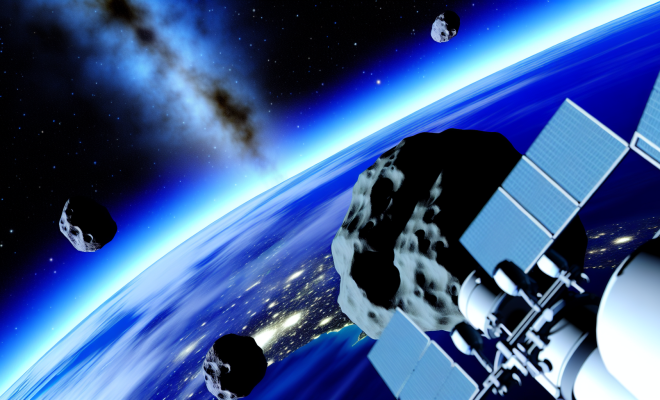
NASA is currently keeping a close eye on an asteroid designated as 2026 FV6, a space rock measuring approximately 91 feet in length, which is set to make a significant close approach to Earth on April 13, 2026. This asteroid, roughly the size of an airplane, will pass at a distance of about 1.78 million miles from our planet, a distance that is roughly 7.4 times greater than the distance to the Moon.
No Collision Threat
Despite the asteroid’s proximity, NASA has confirmed that there is no threat of collision with Earth. The agency’s ongoing monitoring of near-Earth objects (NEOs) serves to enhance our planetary defense systems and provide timely information regarding potential hazards. The close approach of 2026 FV6 is just one of many instances where NASA’s vigilance ensures that the public is aware of such events without cause for alarm.
Understanding Near-Earth Objects
Near-Earth objects are defined as comets and asteroids that have been nudged by the gravitational attraction of nearby planets into orbits that bring them into proximity with Earth. The study and monitoring of these objects are crucial, as some of them can pose a risk to our planet.
- Size and Composition: Asteroids vary in size, with some being mere boulders while others can be hundreds of miles wide. Their composition also differs, with rocky, metallic, and icy bodies all categorized as asteroids.
- Potential Risks: While the vast majority of NEOs pose no threat, larger asteroids can have catastrophic effects if they collide with Earth. Hence, tracking their paths is essential for planetary safety.
- NASA’s Initiatives: NASA employs several programs aimed at detecting and tracking NEOs, which include the Near-Earth Object Observations (NEOO) program and advanced telescopes that scan the skies for potential threats.
The Importance of Continuous Monitoring
NASA’s tracking of asteroids like 2026 FV6 is part of a broader initiative to improve our understanding of potential threats from space. The agency utilizes advanced technology and collaborations with international space organizations to ensure comprehensive monitoring of NEOs.
The ability to predict the trajectory of asteroids is paramount. NASA has developed sophisticated algorithms and software tools to calculate the orbits of these objects with high precision, allowing scientists to predict their paths years in advance. In the case of 2026 FV6, it has been determined that it poses no danger to Earth.
Public Awareness and Education
Public interest in asteroids and their potential impact on Earth has grown significantly in recent years, fueled by both scientific discoveries and popular media. NASA actively engages with the public to disseminate information about NEOs and the measures taken to safeguard our planet.
Educational programs and outreach initiatives aim to raise awareness about the importance of tracking these celestial bodies. By informing the public about the nature of asteroids and the precautions taken, NASA helps to alleviate fears regarding potential impacts.
Looking Ahead: The Future of Planetary Defense
The monitoring of asteroids like 2026 FV6 is just a small part of a larger effort in planetary defense. As technology advances, NASA aims to improve detection methods and response strategies for potential asteroid threats.
- Planetary Defense Coordination Office (PDCO): Established in 2016, the PDCO is responsible for coordinating efforts to detect, track, and characterize NEOs, as well as to plan for any potential impact scenarios.
- Impact Mitigation Strategies: Researchers are exploring various methods to mitigate the impact of an asteroid, should one be determined to be on a collision course with Earth. These may include deflection strategies or evacuation plans.
- International Collaboration: The global nature of asteroid threats has led to increased collaboration between space agencies worldwide. Joint missions and shared data enhance our capabilities to monitor and respond to NEOs.
Conclusion
As we prepare for the flyby of asteroid 2026 FV6 on April 13, 2026, it is essential to recognize the extensive efforts undertaken by NASA and other space agencies to ensure our safety. While the asteroid will pass at a safe distance with zero threat of collision, it serves as a reminder of the importance of continuous monitoring and public education regarding near-Earth objects.
Through ongoing research and advancements in technology, we can remain vigilant against potential space threats, safeguarding our planet for future generations.