The Edvocate

Top Menu

Main Menu

  • Start Here
    • Our Brands
    • Governance
      • Lynch Education Consulting, LLC.
      • Dr. Lynch’s Personal Website
      • Careers
    • Write For Us
    • Books
    • The Tech Edvocate Product Guide
    • Contact Us
    • The Edvocate Podcast
    • Edupedia
    • Pedagogue
    • Terms and Conditions
    • Privacy Policy
  • PreK-12
    • Assessment
    • Assistive Technology
    • Best PreK-12 Schools in America
    • Child Development
    • Classroom Management
    • Early Childhood
    • EdTech & Innovation
    • Education Leadership
    • Equity
    • First Year Teachers
    • Gifted and Talented Education
    • Special Education
    • Parental Involvement
    • Policy & Reform
    • Teachers
  • Higher Ed
    • Best Colleges and Universities
    • Best College and University Programs
    • HBCU’s
    • Diversity
    • Higher Education EdTech
    • Higher Education
    • International Education
  • Advertise
  • The Tech Edvocate Awards
    • The Awards Process
    • Finalists and Winners of The 2025 Tech Edvocate Awards
    • Finalists and Winners of The 2024 Tech Edvocate Awards
    • Finalists and Winners of The 2023 Tech Edvocate Awards
    • Finalists and Winners of The 2021 Tech Edvocate Awards
    • Finalists and Winners of The 2022 Tech Edvocate Awards
    • Finalists and Winners of The 2020 Tech Edvocate Awards
    • Finalists and Winners of The 2019 Tech Edvocate Awards
    • Finalists and Winners of The 2018 Tech Edvocate Awards
    • Finalists and Winners of The 2017 Tech Edvocate Awards
    • Award Seals
  • Apps
    • GPA Calculator for College
    • GPA Calculator for High School
    • Cumulative GPA Calculator
    • Grade Calculator
    • Weighted Grade Calculator
    • Final Grade Calculator
  • The Tech Edvocate
  • Post a Job
  • AI Powered Personal Tutor

logo

The Edvocate

  • Start Here
    • Our Brands
    • Governance
      • Lynch Education Consulting, LLC.
      • Dr. Lynch’s Personal Website
        • My Speaking Page
      • Careers
    • Write For Us
    • Books
    • The Tech Edvocate Product Guide
    • Contact Us
    • The Edvocate Podcast
    • Edupedia
    • Pedagogue
    • Terms and Conditions
    • Privacy Policy
  • PreK-12
    • Assessment
    • Assistive Technology
    • Best PreK-12 Schools in America
    • Child Development
    • Classroom Management
    • Early Childhood
    • EdTech & Innovation
    • Education Leadership
    • Equity
    • First Year Teachers
    • Gifted and Talented Education
    • Special Education
    • Parental Involvement
    • Policy & Reform
    • Teachers
  • Higher Ed
    • Best Colleges and Universities
    • Best College and University Programs
    • HBCU’s
    • Diversity
    • Higher Education EdTech
    • Higher Education
    • International Education
  • Advertise
  • The Tech Edvocate Awards
    • The Awards Process
    • Finalists and Winners of The 2025 Tech Edvocate Awards
    • Finalists and Winners of The 2024 Tech Edvocate Awards
    • Finalists and Winners of The 2023 Tech Edvocate Awards
    • Finalists and Winners of The 2021 Tech Edvocate Awards
    • Finalists and Winners of The 2022 Tech Edvocate Awards
    • Finalists and Winners of The 2020 Tech Edvocate Awards
    • Finalists and Winners of The 2019 Tech Edvocate Awards
    • Finalists and Winners of The 2018 Tech Edvocate Awards
    • Finalists and Winners of The 2017 Tech Edvocate Awards
    • Award Seals
  • Apps
    • GPA Calculator for College
    • GPA Calculator for High School
    • Cumulative GPA Calculator
    • Grade Calculator
    • Weighted Grade Calculator
    • Final Grade Calculator
  • The Tech Edvocate
  • Post a Job
  • AI Powered Personal Tutor
  • 12 Fun Things to Do in Tennessee with Kids — Best Family-Friendly Attractions!

  • 12 Fun Things to Do in Santa Rosa with Kids — Family-Friendly Activities!

  • 12 Fun Things to Do in Roanoke with Kids — Family-Friendly Activities!

  • 12 Fun Things to Do in North Carolina with Kids — Best Family-Friendly Attractions!

  • 12 Fun Things to Do in Norfolk with Kids — Family-Friendly Activities!

  • 12 Fun Things to Do in Nevada with Kids — Best Family-Friendly Attractions!

  • 12 Fun Things to Do in Louisiana with Kids — Best Family-Friendly Attractions!

  • 12 Fun Things to Do in Kentucky with Kids — Best Family Friendly Attractions!

  • 12 Fun Things to Do in Islamorada with Kids — Family-Friendly Activities!

  • 12 Fun Things to Do in Hot Springs with Kids — Family-Friendly Activities!

EdTech & InnovationEducation NewsTeachers
Home›EdTech & Innovation›The Key to STEM Achievement: Answering the Question

The Key to STEM Achievement: Answering the Question
By Matthew Lynch
November 29, 2016
0
Spread the love

‘When Am I Going to Use This?’

In Maureen Foelkl’s classroom at Chapman Hill Elementary School in Salem, Oregon, second and third grade students designed solutions to seasonal flooding and erosion in their community with the help of actual engineers in the field.

The project won Foelkl the Presidential Award of Excellence in Math and Science Teaching. While working on it her students learned about complicated concepts such as how a flood plain works, how structures can keep water out, and what kinds of materials can hold water in.

Foelkl invited civil engineers to talk with her students about these topics either in person or through interactive conversations that took place online. Her students then designed and tested their own prototype structures for mitigating the effects of or for withstanding a flood.

Foelkl, who is now an independent contractor writing science, technology, engineering, and math (STEM) curriculum for multiple organizations, says her students were highly engaged throughout the project. Having outside experts speak with them “brought authenticity to the lesson,” she says. “My students asked questions that I could not begin to answer.”

She adds: “No textbook I know can come close to interacting with students in that fashion.”

Making It Real

Research suggests the No. 1 reason students avoid STEM-related courses or careers is because they don’t see the relevance of what they are learning. In other words, there is a huge gap between what is happening in the classroom and in the real world.

Clearly, it’s time for a new approach—and Foelkl and many others have found that connecting students with actual STEM professionals helps make these subjects come alive in ways that a textbook just can’t replicate.

In Oregon, the state has created nearly a dozen STEM Partnerships, or regional hubs in which leaders from the education, business, and nonprofit communities come together to design community-based solutions to their STEM workforce challenges.

The South Metro-Salem STEM Partnership is one such hub, which serves districts in the Salem and Portland areas—accounting for about 25 percent of the state’s students. A key element of their effort is Oregon Connections, which is connecting students (and teachers) with industry experts. These STEM-related professionals come into the classroom either in-person or virtually to make science and math more meaningful for students.

“To me, the most important thing is making it real,” says Melissa Dubois, director of the South Metro Salem STEM Partnership. “We don’t get the innovations we get by magic. You don’t get an iPhone because it just materialized from nowhere; there are people with skills and expertise who have a really great time trying to dream up and build these kinds of products.”

Through Oregon Connections, teachers can request scientists, engineers, and other STEM-related experts to visit their classrooms in person or through an online conversation to talk about the work they do and why it’s important. The online conversations are powered by Nepris, which matches teachers with STEM experts from anywhere in the country and also hosts the video conferences.
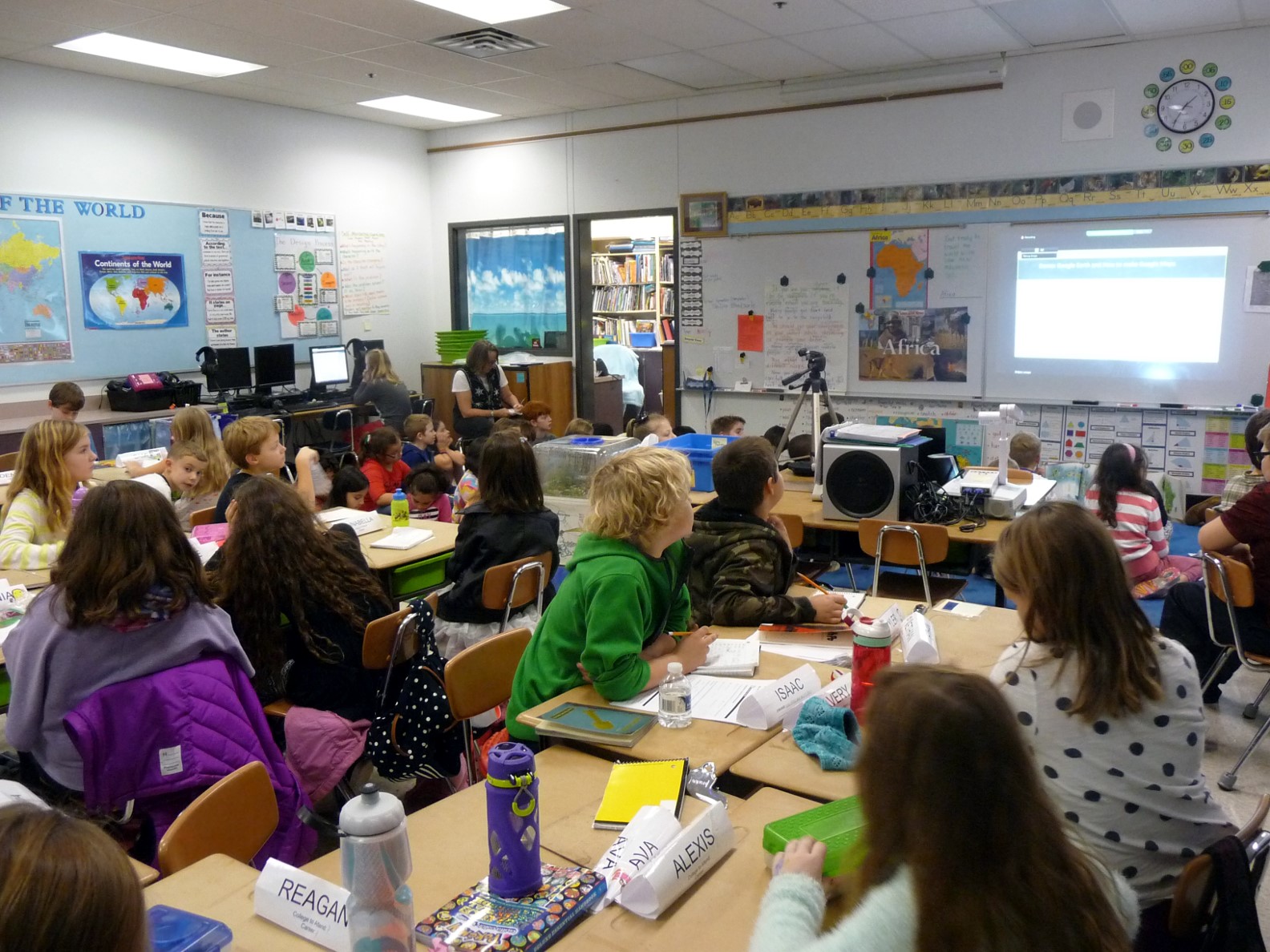
Teacher, Maureen Foelkl, guides her third graders from Chapman Hill Elementary School in Salem, Oregon through a STEM lesson and brings in industry experts to her class virtually using Nepris or for in-class visits using Oregon Connections.

Teacher, Maureen Foelkl, guides her third graders from Chapman Hill Elementary School in Salem, Oregon through a STEM lesson and brings in industry experts to her class virtually using Nepris or for in-class visits using Oregon Connections.

“I have been using Oregon Connections extensively over the past three years,” says Dylan McCann, a sixth grade math and science teacher at Twality Middle School in Tigard, Oregon. “We’ve met virtually with programmers, military defense engineers, naval architects, and pilots. My students have had the opportunity to see actual professionals using concepts we have been learning in the classroom—and that gives them an answer to the age-old question: ‘When am I ever going to use this?’”

Opening Students’ Eyes to New Possibilities

Besides making STEM topics more engaging and relevant for students, bringing industry experts into the classroom also opens students’ eyes to new career choices they might never have considered before. And, having the entire world of professionals at their fingertips through Nepris means there are virtually no limits on whom they can talk to.

Dubois says it’s important for students to know that the things they love to do could lead directly to a career: “If you’re an outdoor kind of kid, there’s a role for you. Do you love exploring the woods after school? There are people who do this for a living, and it’s a really important job, because it helps us manage our resources and be good stewards of the environment.”

That personal connection, now fulfilled by Oregon Connections, seems to be missing in many classrooms, she adds. And even though it might only be 30 minutes with somebody on a giant screen through the Nepris connection or a short in-person visit arranged by the partnership, “it’s far more impactful than the teacher saying, ‘You could be an engineer when you grow up.’” When students are exposed to actual professionals who are doing this work on a daily basis, those are the things they remember. They remember the people, not the words.”

The Oregon Connections program has “opened doors to occupations that hone in on students’ interests,” Foelkl says. “I have my students tell me at the beginning of the year what they might want to do after high school. The most frequent answers used to be a veterinarian, a zookeeper, a teacher, or someone in the military. These are all grand occupations, but somewhat limiting.” After hearing from STEM professionals, she says, “I had students tell me they want to work on plane engines, become a chemical engineer, become an inventor and open their own business, teach others about how to stay safe, lead environmental causes, write their own code—and still care for animals.”
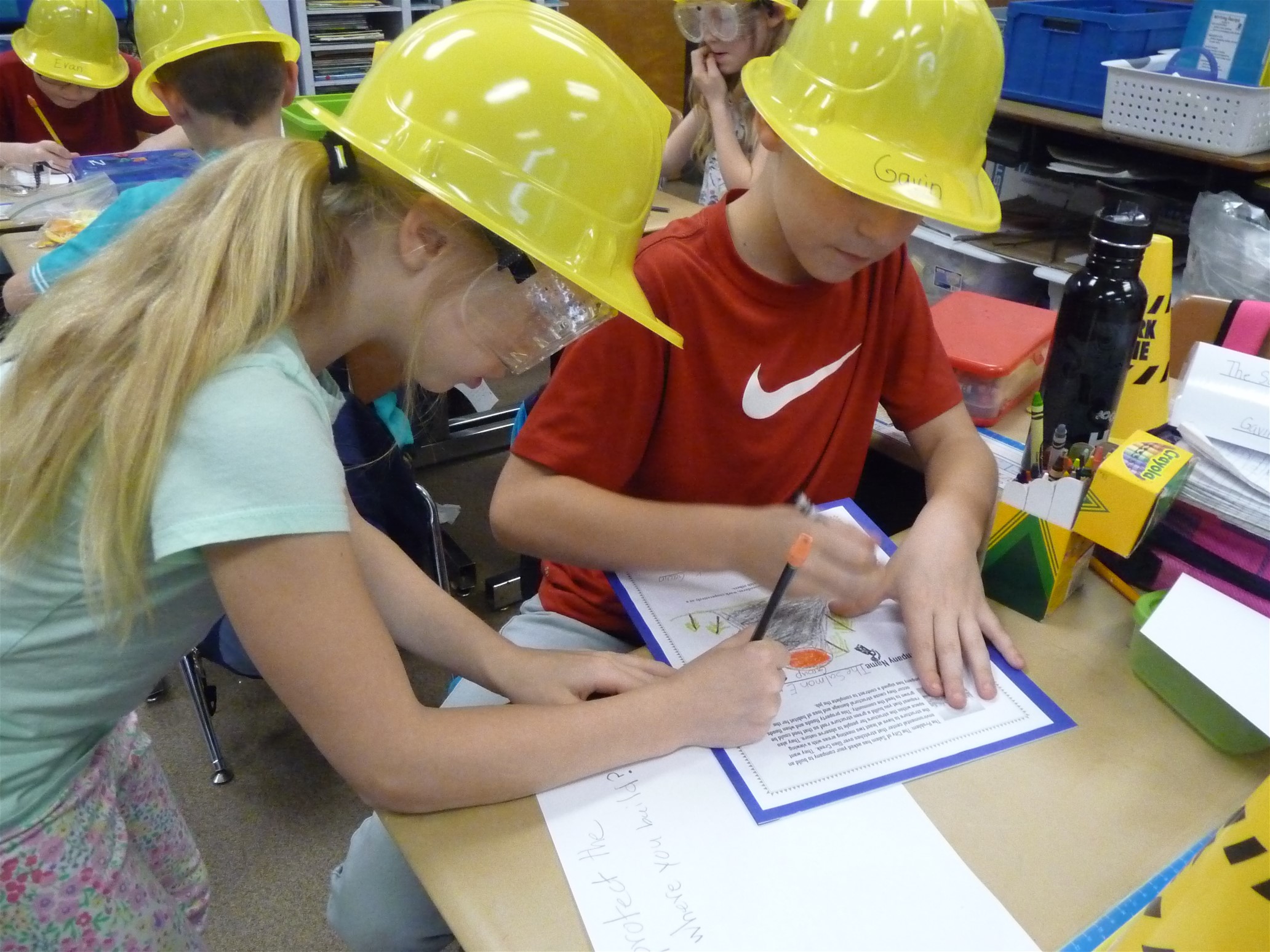
Students in Maureen Foelkl’s third-grade class at Chapman Hill Elementary School in Salem, Oregon designed solutions to flooding and erosion with help from professionals linked to their class through Oregon Connections.

Students in Maureen Foelkl’s third-grade class at Chapman Hill Elementary School in Salem, Oregon designed solutions to flooding and erosion with help from professionals linked to their class through Oregon Connections.

Seeing STEM professionals who look like them also helps address a lack of equity in these fields.

“I purposely try to bring in professionals who can personally connect with my young girls and students of color,” McCann says. “I think it is extremely important to give students in the underrepresented demographics (role models) they can look up to and have conversations with. For instance, last year my students were learning about thermal energy transference, and I had a young African American woman talk to my students about what it’s like to design, build, and test rockets—and what it’s like to get to blow things up for a living. She spoke about her journey as an African American woman (in a STEM-related field), and she showed my students that with perseverance and a great attitude, they can achieve anything they ever want.”

He concludes: “Giving my students the opportunity to connect with real people using what we are learning in class every day is invaluable. Without this real-world exposure, there is no context to what we are doing in the classroom. I have seen my students remember concepts and maintain excitement for careers they never thought possible, years after a visit with a professional. Bringing professionals into my classroom will continue to be a part of my teaching strategy for years to come.”




TagsSTEM
Previous Article

10 techniques to ensure that your lessons ...

Next Article

What Parents Really Think about Parent-Teacher Communication ...

Matthew Lynch

Related articles More from author

  • Online Learning & eLearningTrending Topics

    How to Keep the Humanity in Online Courses

    September 8, 2017
    By Matthew Lynch
  • EdTech & InnovationTrending Topics

    10 Virtual Tools for the Math Classroom

    June 1, 2017
    By Matthew Lynch
  • Digital & Mobile TechnologyEarly Childhood & K-12 EdTechPersonalized LearningTrending Topics

    5 Industries that Artificial Intelligence Will Disrupt

    November 24, 2017
    By Matthew Lynch
  • Early Childhood & K-12 EdTechPersonalized Learning

    Why Neuroscience Should Drive Personalized Learning

    January 18, 2018
    By Matthew Lynch
  • Education Leadership

    My Vision for the Future of Education Leadership

    August 2, 2018
    By Matthew Lynch
  • Higher Education EdTechTrending Topics

    How is Technology Revolutionizing Campus Libraries?

    August 25, 2017
    By Matthew Lynch

Search

Registration and Login

  • Register
  • Log in
  • Entries feed
  • Comments feed
  • WordPress.org

Newsletter

Signup for The Edvocate Newsletter and have the latest in P-20 education news and opinion delivered to your email address!

RSS Matthew on Education Week

  • Au Revoir from Education Futures November 20, 2018 Matthew Lynch
  • 6 Steps to Data-Driven Literacy Instruction October 17, 2018 Matthew Lynch
  • Four Keys to a Modern IT Approach in K-12 Schools October 2, 2018 Matthew Lynch
  • What's the Difference Between Burnout and Demoralization, and What Can Teachers Do About It? September 27, 2018 Matthew Lynch
  • Revisiting Using Edtech for Bullying and Suicide Prevention September 10, 2018 Matthew Lynch

About Us

The Edvocate was created in 2014 to argue for shifts in education policy and organization in order to enhance the quality of education and the opportunities for learning afforded to P-20 students in America. What we envisage may not be the most straightforward or the most conventional ideas. We call for a relatively radical and certainly quite comprehensive reorganization of America’s P-20 system.

That reorganization, though, and the underlying effort, will have much to do with reviving the American education system, and reviving a national love of learning.  The Edvocate plans to be one of key architects of this revival, as it continues to advocate for education reform, equity, and innovation.

Newsletter

Signup for The Edvocate Newsletter and have the latest in P-20 education news and opinion delivered to your email address!

Contact

The Edvocate
910 Goddin Street
Richmond, VA 23230
(601) 630-5238
[email protected]
  • situs togel online
  • dentoto
  • situs toto 4d
  • situs toto slot
  • toto slot 4d
Copyright (c) 2025 Matthew Lynch. All rights reserved.