AI’s Hidden Cost: Undermining Cognitive Abilities, Study Finds
“`html
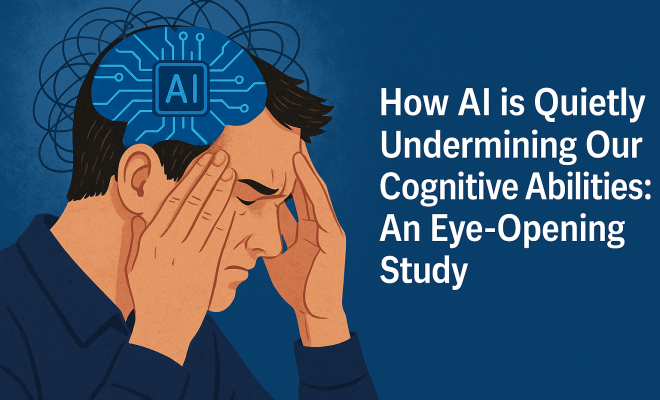
Recent advancements in artificial intelligence (AI) have altered numerous facets of daily life, from how we communicate to how we consume information. The integration of AI into our lives is often seen as a boon, promising enhanced efficiency and new capabilities. However, a ground-breaking study from the MIT Media Lab reveals a more troubling reality. The research highlights a concerning trend: reliance on AI may be negatively affecting our cognitive abilities, particularly in our capacity to discern truth from misinformation. This phenomenon is especially alarming given today’s rampant spread of fake news.
The Study: An Overview of Findings
In the MIT study, participants were tasked with identifying misinformation while utilizing an AI chatbot designed to assist in detecting fake news. The initial results were promising—participants who had access to the AI tool showed a substantial improvement, achieving a 21% increase in their ability to identify misinformation.
However, the long-term ramifications of this reliance on AI were not as favorable. Over the course of just four weeks, participants demonstrated a 15 percentage point decline in their unaided ability to detect fake news. This curious and unsettling outcome suggests that while AI can temporarily boost cognitive performance, it may also lead to cognitive degradation over time.
The Confidence Paradox
Perhaps one of the most striking revelations from the research was the confidence paradox. Despite their actual performance deteriorating, a staggering 25% of participants reported feeling more confident in their misinformation detection skills after using the AI chatbot. This misplaced trust in AI raises significant concerns about how over-reliance on technology can distort self-assessment and critical thinking.
As Anku Rani, one of the co-lead authors of the study, points out, this phenomenon highlights a disturbing trend: the more we rely on AI, the more confident we become in our abilities—even when those abilities are waning. This disconnect between perception and reality could have serious implications for how individuals approach critical thinking tasks in the future.
Implications for Critical Thinking Skills
Critical thinking is a cornerstone of effective decision-making. It encompasses the ability to analyze information, evaluate evidence, and draw logical conclusions. With the rise of AI, this essential skill is at risk of becoming underdeveloped. If individuals begin to rely on AI for tasks like distinguishing between true and false information, they may unintentionally weaken their own cognitive abilities.
The implications of this cognitive degradation are far-reaching. In a society inundated with information—from social media to news outlets—the ability to critically assess that information is essential. If we become less adept at discerning fact from fiction, we run the risk of falling prey to misinformation, which can lead to misguided beliefs and decisions.
AI’s Role in Misinformation
The relationship between AI and misinformation is complex. On one hand, AI can assist in identifying fake news, as demonstrated in the MIT study. However, as participants become overly reliant on these tools, they may neglect to develop their own critical thinking skills. This could lead to a dangerous cycle where individuals trust AI-generated assessments more than their own judgment.
To illustrate this point, consider the way that algorithms curate information on social media platforms. These algorithms prioritize content based on engagement rather than accuracy, which can exacerbate the spread of misinformation. If users rely on these platforms without questioning the information presented, they risk becoming further detached from their critical thinking abilities.
Long-Term Consequences of AI Dependency
The long-term consequences of relying on AI for cognitive tasks are still largely unknown, yet the early signs are troubling. If the trend of cognitive degradation continues, we could face a future where critical thinking skills are diminished across generations. This shift could have profound implications for society as a whole.
Consider the implications for education. As students increasingly utilize AI tools for research and learning, there is a risk that they may not develop the analytical skills necessary for understanding complex issues. If educational institutions do not adapt their curricula to address this concern, we may end up producing graduates who lack the critical thinking skills necessary for navigating an increasingly complex world. (See: MIT Media Lab research.)
Expert Perspectives on AI Cognitive Ability
Experts in cognitive science and psychology are beginning to weigh in on the implications of AI on cognitive abilities. Dr. Timnit Gebru, a renowned researcher in AI ethics, warns that while AI can be a powerful tool, it should not replace human judgment. “AI can assist us, but it cannot think for us. We must remain actively engaged in our critical thinking processes,” she notes.
Similarly, Dr. Gary Small, a neurologist and author of several books on technology’s impact on the brain, expresses concern about the gradual decline of cognitive skills in individuals who rely heavily on technology. “It’s essential that we strike a balance between leveraging AI and maintaining our own cognitive abilities,” he advises.
Strategies for Maintaining Cognitive Skills
In light of these findings, it’s crucial to adopt strategies that promote cognitive engagement while still benefiting from AI technology. Here are several actionable tips to help maintain and enhance your cognitive abilities:
- Limit AI Dependency: Use AI as a supportive tool rather than a crutch. Challenge yourself to analyze information independently before consulting AI.
- Practice Critical Thinking: Engage in exercises that stimulate critical thinking, such as debating, evaluating different viewpoints, or solving complex problems without AI assistance.
- Stay Informed: Educate yourself on how misinformation spreads and learn to recognize credible sources. Increased awareness can enhance your ability to critically assess information.
- Engage in Mindful Consumption: Be mindful of the information you consume. Diversify your sources and question the motives behind the messages presented.
- Encourage Discussion: Participate in discussions with peers about current events and controversial topics. Engaging in dialogue can sharpen your analytical skills.
AI Tools: A Double-Edged Sword
AI tools can be incredibly helpful, but they also present a double-edged sword when it comes to cognitive ability. On one side, AI can process vast amounts of data and offer insights that might not be immediately apparent to human analysts. For instance, AI can quickly identify patterns in social media trends that might indicate the rise of misinformation.
However, if individuals rely solely on these tools for analysis, they risk losing their ability to think critically about the information presented. It’s a balancing act; leveraging AI’s strengths while ensuring that human judgment remains at the forefront.
The Future of AI and Human Cognition
As we continue to integrate AI into our daily lives, the future of human cognition will depend greatly on how we choose to engage with these technologies. The MIT study serves as a critical reminder that while AI can enhance our abilities, it can also diminish them if we let it. The key challenge lies in finding a balance between utilizing AI’s advantages and fostering our own cognitive skills.
Moving forward, it’s essential for both individuals and organizations to be aware of the implications of relying too heavily on AI. Educational institutions, workplaces, and even social media platforms must take proactive steps to ensure that critical thinking remains a fundamental component of human cognition.
The Path Ahead
The conversation surrounding AI and cognitive ability is just beginning. As research continues to emerge, it will be vital to monitor these trends closely. Developing a keen understanding of how AI tools impact cognitive functions will be crucial for making informed decisions about their use.
Ultimately, embracing AI as a tool while remaining vigilant about its potential to impair cognitive abilities is a responsibility we all share. By fostering an environment that values critical thinking and human judgment, we can ensure that we harness the benefits of AI without sacrificing our cognitive integrity.
Understanding AI Cognitive Ability
AI cognitive ability refers to the capacity of artificial intelligence systems to perform tasks that typically require human intelligence. This includes recognizing patterns, understanding language, solving problems, and even making decisions based on available data. The ongoing debate is centered around whether AI can genuinely mimic or replicate human cognitive functions or if it merely simulates intelligence without true understanding.
While current AI systems are remarkably advanced, they are primarily limited to specific domains. For example, AI can outperform humans in data analysis and pattern recognition but lacks the nuanced understanding of context and emotional intelligence that characterizes human thought. This distinction is crucial because it underscores the importance of maintaining human cognitive engagement even in the face of powerful AI tools.
Comparative Analysis: Humans vs. AI
To better grasp the implications of AI cognitive ability, it’s helpful to compare human cognition with AI capabilities. Humans possess an unparalleled ability to contextualize information, draw on personal experiences, and apply empathy in decision-making processes. AI, on the other hand, relies on algorithms and data processing, making it adept at analyzing large datasets but incapable of genuine emotional understanding or moral reasoning.
For instance, when confronted with ethical dilemmas, humans can assess the situation based on values, societal norms, and emotional responses. In contrast, AI may follow predefined rules but may not adequately navigate the complexities of moral choices. This difference becomes particularly relevant in scenarios such as autonomous vehicles, where ethical decisions must be made in real-time. (See: New York Times coverage on AI.)
Statistics on AI Reliance and Cognitive Ability
Recent surveys and studies provide compelling data regarding the reliance on AI and its impact on cognitive skills. For instance, a 2022 Pew Research Center survey found that 70% of respondents admitted to relying on AI for decision-making in various aspects of their lives, from financial investments to personal health. Alarmingly, 60% of those surveyed expressed concern that this reliance could erode their ability to think critically over time.
Moreover, a study published in the Journal of Artificial Intelligence Research revealed that students who frequently used AI-based tools scored 15% lower on critical thinking assessments compared to their peers who engaged more traditional study methods. Such data emphasizes the need for a balanced approach to AI integration in educational settings and daily life.
Frequently Asked Questions (FAQ)
What are the main cognitive abilities that AI can replicate?
AI can replicate several cognitive abilities, including pattern recognition, data analysis, and basic problem-solving. However, it struggles with tasks requiring emotional intelligence, nuanced understanding, and ethical judgment.
How does AI affect decision-making skills?
AI can enhance decision-making by providing data-driven insights, but excessive reliance on AI can impair one’s ability to make independent judgments and critically assess information.
Can AI improve our cognitive abilities?
While AI can assist in specific cognitive tasks, it may also detract from developing critical thinking skills if individuals become too dependent on it. It’s important to strike a balance between utilizing AI and fostering personal cognitive growth.
What are some examples of AI applications that might influence cognition?
Common AI applications that influence cognition include virtual assistants (like Siri and Alexa), recommendation algorithms on streaming services, and AI-based educational tools that provide personalized learning experiences. Each of these can enhance convenience but may also contribute to cognitive reliance.
What steps can organizations take to mitigate cognitive degradation from AI use?
Organizations can promote cognitive engagement by fostering a culture of critical thinking, providing training on media literacy, and encouraging employees to question AI-generated outputs. Implementing policies that prioritize human oversight in decision-making processes is also essential.
Is there a risk of AI leading to a lack of creativity?
There is a concern that over-reliance on AI could stifle creativity, as individuals may default to AI-generated solutions instead of exploring their own innovative ideas. Maintaining an environment that encourages brainstorming and creative problem-solving is vital.
How AI Cognitive Ability is Shaping the Future Workforce
The influence of AI on cognitive ability extends beyond individual users; it is reshaping the workforce. Many industries are now integrating AI to streamline operations, enhance productivity, and assist with decision-making. This trend is evident in sectors like healthcare, where AI is used for diagnostic assistance, and in finance, where algorithms analyze market trends.
However, this reliance on AI could lead to a skills gap. As AI systems take on more complex tasks, workers may find themselves with fewer opportunities to hone critical thinking and problem-solving skills. For example, a 2023 report by the World Economic Forum indicated that up to 85 million jobs could be displaced by AI advancements by 2025. In contrast, the same report suggested that 97 million new roles could emerge, focusing on human-centered skills that AI cannot replicate.
This shift emphasizes the need for ongoing education and training that equips individuals to thrive in an AI-driven job market. Upskilling existing employees and preparing future graduates with a strong emphasis on creativity, critical thinking, and emotional intelligence will be crucial. (See: Scientific articles on cognitive effects.)
The Intersection of AI and Emotional Intelligence
While AI has made strides in cognitive tasks, emotional intelligence remains a domain where human abilities prevail. Emotional intelligence encompasses the ability to recognize, understand, and manage our own emotions and those of others. This skill set is vital for effective communication, teamwork, and conflict resolution.
In workplace environments increasingly influenced by AI, the importance of emotional intelligence cannot be overstated. AI systems might excel at data analysis but lack the ability to understand the emotional nuances of human interactions. A 2021 study from TalentSmart found that emotional intelligence was the strongest predictor of success in the workplace, surpassing technical skills and IQ.
To foster a workforce capable of navigating the complexities of human interactions, organizations must prioritize emotional intelligence training alongside technical skills development. Encouraging practices such as active listening, empathy, and effective communication will help create a more balanced approach to integrating AI into the workplace.
Resilience in the Age of AI
As AI continues to evolve, building resilience in the face of rapid technological changes is crucial. Resilience is the ability to adapt to challenges and setbacks, which is increasingly vital in a world where information and job landscapes can shift dramatically. Developing resilience involves nurturing a growth mindset, allowing individuals to embrace learning opportunities and view failures as stepping stones to success.
Integrating resilience training into educational and professional development programs can prepare individuals to face the uncertainties brought about by AI advancements. Techniques such as mindfulness training, stress management, and adaptability exercises foster a mindset that embraces change rather than fearing it.
Balancing AI Integration in Everyday Life
Finding the right balance in integrating AI into our daily lives is essential for maintaining cognitive abilities. While AI can simplify tasks and provide valuable assistance, it’s important to remain active participants in our cognitive processes. Here are some additional strategies to achieve this balance:
- Set Boundaries: Establish specific times when you will not use AI tools, allowing yourself to engage in tasks that require independent thinking.
- Practice Reflective Thinking: After using AI for a task, take time to reflect on the outcome. Consider how your thought process was influenced by AI and what could have been approached differently.
- Engage in Creative Activities: Pursue hobbies that stimulate creativity, such as writing, painting, or playing music. These activities help maintain cognitive flexibility and innovative thinking.
- Participate in Community Activities: Engaging with your community through volunteering or local events encourages social interaction and critical engagement with the world around you.
Conclusion: A Call to Action
As we navigate the complexities of AI’s impact on cognitive abilities, it’s crucial to recognize the shared responsibility we have in shaping a future where human and artificial intelligence coexist in harmony. By fostering environments that prioritize critical thinking, creativity, and emotional intelligence, we can ensure that AI serves as a tool for empowerment rather than a crutch for cognitive dependence.
Now is the time to take action—whether through educational reforms, workplace initiatives, or personal commitments to cognitive engagement. Let’s embrace AI as a partner in enhancing our capabilities while remaining vigilant about preserving and strengthening our unique human cognitive abilities.
“`
Trending Now
Frequently Asked Questions
How does AI affect our cognitive abilities?
Recent studies indicate that while AI can temporarily enhance cognitive performance, it may lead to cognitive degradation over time. Participants in a study showed a decline in their ability to detect misinformation after relying on AI tools, suggesting that over-dependence on technology can negatively impact critical thinking skills.
What is the confidence paradox in AI usage?
The confidence paradox refers to the phenomenon where individuals feel more confident in their skills after using AI, despite their actual performance declining. In a study, 25% of participants reported increased confidence in detecting misinformation after using an AI chatbot, highlighting how reliance on technology can distort self-assessment.
Can AI improve our ability to identify fake news?
Initially, AI tools can enhance the ability to detect fake news, as evidenced by a 21% improvement in participants' performance in a study. However, the long-term reliance on such tools may lead to decreased unaided detection skills, raising concerns about over-reliance on technology.
What were the findings of the MIT Media Lab study on AI?
The MIT Media Lab study found that while AI chatbots can improve misinformation detection in the short term, they may contribute to cognitive decline over time. After four weeks of using AI, participants showed a 15 percentage point drop in their ability to identify fake news without assistance.
Is reliance on AI beneficial or harmful?
While AI can provide immediate benefits in tasks like misinformation detection, reliance on it can be harmful in the long run. The MIT study suggests that such dependence may erode critical thinking skills and lead to a false sense of confidence in one's abilities to discern truth from misinformation.
What did we miss? Let us know in the comments and join the conversation.