AI in Cybersecurity: Transforming Defense & Response (2026)
“`html
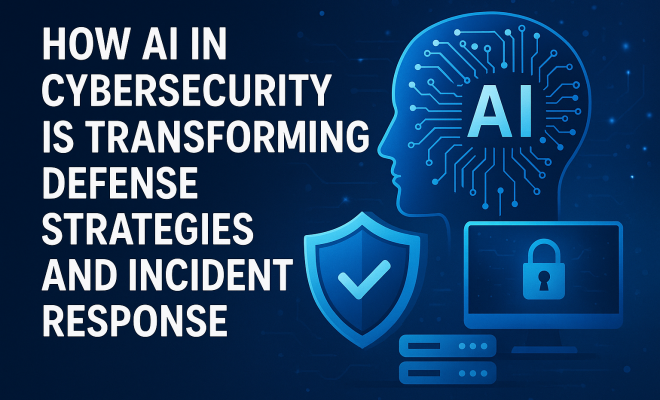
The landscape of cybersecurity is continually evolving, and one of the most significant forces behind this change is the integration of AI in cybersecurity. This was particularly evident during a recent congressional hearing on June 4, 2026, where representatives from Google Threat Intelligence shared their insights on the dual-edged nature of AI in this critical field. The testimony underscored how AI enhances threat detection and response while simultaneously presenting new challenges for cybersecurity professionals.
The Promise of AI in Cybersecurity
AI is reshaping the cybersecurity landscape by automating and optimizing several core functions, primarily in detection and incident response. Google’s testimony emphasized that AI can process vast amounts of telemetry data at unparalleled speeds, allowing security teams to detect anomalies and potential threats much faster than human analysts could. This capability is particularly crucial given the relentless pace of modern cyberattacks, where milliseconds can determine the difference between thwarting an attack and suffering a catastrophic breach.
Moreover, AI systems can learn from past incidents, improving their effectiveness over time. By analyzing data from previous breaches and emerging threat patterns, AI can predict and identify new vulnerabilities, enabling proactive measures. This aspect of AI in cybersecurity not only enhances defensive capabilities but also empowers organizations to anticipate threats before they manifest.
The Volume Challenge: Too Many Alerts
While AI offers transformative benefits, it also presents significant challenges. One of the primary concerns highlighted during the hearing was the overwhelming volume of alerts generated by AI systems. In a world where cyber threats are increasing exponentially, defenders are bombarded with more alerts than they can feasibly manage. This phenomenon, often referred to as alert fatigue, can lead to critical threats being overlooked or mismanaged.
The testimony pointed out that even though AI can help filter and prioritize alerts, the sheer volume can still be daunting. Security teams may find themselves in a state of constant reaction rather than proactive defense, which can ultimately undermine their overall security posture. This paradox raises an essential question: how can organizations leverage AI’s capabilities without becoming overwhelmed by its outputs?
Improving Signal Processing
According to experts at the hearing, the key to managing the flood of alerts lies in refining the way signals are processed. AI can assist in identifying which alerts require immediate attention and which can be deprioritized. By implementing advanced algorithms, businesses can fine-tune their systems to focus on high-risk alerts, thereby reducing noise and allowing security teams to concentrate on what truly matters.
Furthermore, organizations should consider investing in AI-driven analytics platforms that provide contextual understanding alongside alerts. Instead of simply presenting data, these systems can offer insights into an organization’s specific vulnerabilities and the potential impacts of different types of attacks. This context is invaluable in helping security teams make informed decisions quickly.
Enhancing Incident Response with AI
In addition to improving detection, AI is also revolutionizing incident response. AI-driven tools can automate initial response actions, such as isolating affected systems or blocking malicious IP addresses, thereby significantly reducing response times. This capability is especially critical during active attacks, where every second counts.
During the congressional hearing, Google representatives noted that AI can also facilitate coordinated incident responses across different teams. By centralizing information and streamlining communication, AI tools provide security professionals with a holistic view of an ongoing incident. This coordination helps in managing crises more effectively and ensures that all team members are on the same page.
The Impact on Security Teams
As AI continues to infiltrate the cybersecurity domain, the roles and responsibilities of security teams are also changing. The hybrid model of human and AI collaboration is becoming the norm. Security professionals now spend more time on strategic planning and less on routine tasks, thanks to AI’s automation of threat detection and response.
However, this shift also necessitates a change in skill sets. Security teams must evolve to understand and manage AI tools effectively. This requires training in data analysis, AI system management, and the ability to interpret AI-generated insights. Organizations that invest in upskilling their teams will likely gain a competitive advantage in the ongoing battle against cyber threats.
Ethical Considerations of AI in Cybersecurity
While AI brings numerous advantages, its integration into cybersecurity also raises ethical questions. One of the primary concerns is the potential for bias in AI algorithms, which can lead to disproportionate scrutiny of specific groups or user behaviors. During the congressional hearing, this issue was highlighted as a critical area for oversight and regulation. (See: NIST guidelines on AI in cybersecurity.)
Furthermore, there’s the question of accountability. When AI takes action, such as blocking a user or flagging certain activities as suspicious, who is held responsible for those decisions? As organizations increasingly rely on AI, clear guidelines and frameworks must be established to address these ethical dilemmas.
The Future of AI in Cybersecurity
Looking ahead, the integration of AI in cybersecurity is expected to deepen even further. As technology advances, we can anticipate more sophisticated AI systems capable of adapting to new threats in real-time. These advances will likely shift the cybersecurity landscape from a reactive approach to a more predictive and preventive model.
At the same time, as AI becomes more powerful, so too do the potential risks. Cybercriminals are already beginning to exploit AI technologies to enhance their attacks. This arms race between defenders and attackers underscores the urgent need for ongoing research and development in AI security technologies.
Policy Implications and Government’s Role
The congressional hearing also pointed to the role of government in shaping the future of AI in cybersecurity. Policymakers must prioritize creating an environment that fosters innovation while also establishing regulations that mitigate potential risks. This balance is vital to ensure that the benefits of AI can be fully realized without compromising security.
Governments can facilitate collaboration between the public and private sectors to share threat intelligence and best practices. Additionally, funding for research into AI cybersecurity solutions could accelerate advancements, benefiting both national security and private sector resilience.
AI-Driven Threat Intelligence
One of the most promising applications of AI in cybersecurity is its role in threat intelligence. By aggregating, analyzing, and interpreting data from various sources, AI can uncover hidden threats and provide actionable insights. This capability is particularly useful in identifying new malware strains, zero-day vulnerabilities, and advanced persistent threats (APTs).
For instance, AI systems can analyze data from both past attacks and current threat landscapes in real time, offering organizations the ability to quickly adapt their defenses. According to a report by Cybersecurity Ventures, organizations that employ AI for threat intelligence can reduce their detection time by up to 80%, significantly limiting the window of opportunity for attackers.
Moreover, AI-driven threat intelligence can help organizations prioritize their security efforts. By evaluating the likelihood and potential impact of various threats, companies can allocate resources more effectively, focusing on the most pressing risks instead of spreading themselves thin across numerous lower-priority alerts. We covered unseen forces in cybersecurity in more detail.
Case Study: AI in Action
To illustrate the effectiveness of AI in cybersecurity, let’s look at a case study involving a large financial institution that deployed an AI-driven security solution. Facing an unprecedented increase in phishing attacks, the company turned to AI to enhance its defenses.
After implementing an AI system capable of analyzing email patterns and detecting anomalies, the organization reported a 70% reduction in successful phishing attempts within the first three months. The AI tool not only identified and flagged suspicious emails but also learned from each interaction, continuously improving its detection capabilities.
This case highlights how leveraging AI can lead to significant improvements in security posture, enabling organizations to stay ahead of evolving threats. It also demonstrates the importance of ongoing adjustments and learning cycles inherent in AI systems, as they become increasingly adept at recognizing threats.
Statistics on AI in Cybersecurity
The dramatic rise in cyber threats has prompted an overwhelming interest in AI solutions. Recent statistics indicate a rapid adoption of AI technologies across the cybersecurity sector:
- According to a report by MarketsandMarkets, the global AI in cybersecurity market is projected to grow from $8.8 billion in 2022 to $38.2 billion by 2026, at a compound annual growth rate (CAGR) of 34.8%.
- A survey by McKinsey found that over 80% of executives believe AI will be a “game changer” for their organization’s cybersecurity efforts within the next five years.
- Companies leveraging AI for cybersecurity had reported a 50% decrease in the time it takes to identify and respond to security incidents as per a study conducted by IBM Security.
These statistics reflect a growing recognition of AI’s transformative potential in enhancing security, ultimately leading to a more resilient digital infrastructure. (See: CDC's cybersecurity resources.)
Challenges in AI Implementation
Despite the benefits, implementing AI in cybersecurity is not without its challenges. The complexity of AI systems can lead to integration issues with existing security infrastructure, resulting in increased costs and potential vulnerabilities. Organizations must ensure that any AI solutions they adopt can seamlessly integrate with their current tools and processes.
Data privacy is another significant concern. AI systems rely heavily on data to learn and make decisions. Organizations need to strike a balance between utilizing data for improving security and adhering to privacy regulations. The General Data Protection Regulation (GDPR) in Europe, for example, requires strict compliance when handling personal data, which can complicate the deployment of AI technologies.
Additionally, there is a need for transparency in AI decision-making processes. Understanding how AI arrives at specific conclusions is crucial, especially in high-stakes scenarios where the outcome could have serious implications. Organizations are encouraged to consider explainable AI (XAI) solutions that provide insights into the reasoning behind AI decisions, helping to build trust in these systems.
Frequently Asked Questions (FAQ)
What are the main benefits of integrating AI into cybersecurity?
AI enhances threat detection and response, automates routine tasks, processes vast amounts of data quickly, and improves incident response times. It can also predict future threats based on historical data.
What are the risks associated with AI in cybersecurity?
Some risks include potential bias in AI algorithms, data privacy concerns, integration challenges, and a lack of transparency in AI decision-making processes. Additionally, cybercriminals may use AI to develop more sophisticated attacks.
How can organizations manage the volume of alerts generated by AI systems?
Organizations can refine signal processing to prioritize high-risk alerts, implement AI-driven analytics for context, and invest in training their security teams to effectively interpret and respond to alerts.
What skills do security professionals need to work with AI systems?
Security professionals should develop skills in data analysis, AI system management, and the interpretation of AI-generated insights. Training in these areas will be essential as AI continues to play a larger role in cybersecurity.
Is AI the future of cybersecurity?
While AI is not a complete solution to cybersecurity challenges, its integration will continue to grow, enhancing defensive capabilities and enabling organizations to respond to threats more effectively. A balanced approach, combining human expertise with AI-driven tools, will be essential.
Real-World Applications of AI in Cybersecurity
AI in cybersecurity isn’t just theoretical; it’s being applied in various industries with remarkable outcomes. For example, in healthcare, AI systems analyze electronic health records to detect anomalies that could indicate data breaches or insider threats. By identifying patterns that may not be visible to human analysts, these systems can alert security teams before any damage occurs.
Another application can be seen in the automotive industry. With the rise of connected vehicles, manufacturers are using AI to assess the security of vehicle communication systems. AI can identify vulnerabilities in vehicle software that could be exploited by hackers, ensuring that consumer safety is prioritized as technology advances.
Retail is also leveraging AI for cybersecurity. With numerous transactions happening daily, AI helps in monitoring for fraudulent activities by analyzing purchase patterns and flagging any inconsistencies. These real-time insights enable retailers to act swiftly against potential fraud, maintaining customer trust and safeguarding revenue.
The Evolving Role of AI: From Detection to Prevention
Traditionally, cybersecurity focused on detection and response, but AI is shifting this paradigm towards prevention. Predictive analytics powered by AI can help organizations not only detect threats but also anticipate them. By leveraging historical data, AI can highlight vulnerabilities before they are exploited. (See: AI in cybersecurity research article.)
For instance, companies are increasingly using AI to conduct penetration testing, simulating attacks to identify weaknesses in their systems. This proactive approach allows organizations to bolster their defenses before an actual attack occurs, significantly reducing the risk of breaches.
Additionally, AI can enhance endpoint protection by continuously learning user behaviors and identifying deviations that may signify an attack. This means that organizations can act preemptively to secure their systems rather than waiting for an alert after a breach has occurred.
AI and Machine Learning: A Powerful Duo
The relationship between AI and machine learning (ML) is vital to advancements in cybersecurity. While AI refers to the broader concept of machines being able to carry out tasks in a way that we would consider “smart,” machine learning is a subset of AI that includes the idea that systems can learn from data, identify patterns, and make decisions with minimal human intervention.
In cybersecurity, ML algorithms can improve threat detection by learning from previous incidents. Each time a potential threat is detected, the system refines its understanding of what constitutes a threat, leading to improved accuracy over time. This is particularly powerful in combating sophisticated threats like APTs, which evolve and adapt to bypass traditional security measures.
The Importance of Collaboration: Human and AI Synergy
While AI brings many capabilities to the table, human expertise remains crucial. The collaboration between AI systems and human analysts creates a stronger defense strategy. AI can process and analyze vast amounts of data quickly, but human analysts are needed to interpret the context and implications of the findings.
This synergy allows security teams to focus on strategic decision-making while AI handles the heavy lifting of data processing. For instance, during a security incident, AI can automate the initial stages of triage, giving human analysts more time to focus on complex decision-making processes that require critical thinking and experience.
Conclusion: Embracing AI’s Potential in Cybersecurity
The integration of AI into cybersecurity is not merely an option; it’s becoming a necessity. As highlighted during the testimony from Google Threat Intelligence, embracing AI can significantly enhance the capabilities of security teams, allowing them to respond to threats more efficiently and effectively. However, navigating the challenges that accompany these advancements is essential to ensure that organizations do not find themselves overwhelmed by the technology they’ve adopted. (GSA's extended comment period)
By investing in training, honing incident response strategies, and addressing ethical concerns, organizations can leverage the power of AI to create a more secure digital environment. The journey of AI in cybersecurity is just beginning, and its trajectory will undoubtedly shape the future of how we defend against cyber threats.
“`
Trending Now
Frequently Asked Questions
How is AI changing cybersecurity?
AI is transforming cybersecurity by automating threat detection and incident response. It processes vast amounts of data quickly, enabling security teams to identify anomalies and potential threats faster than human analysts. Additionally, AI systems learn from past incidents to predict new vulnerabilities, enhancing proactive defense strategies.
What are the benefits of AI in cybersecurity?
The benefits of AI in cybersecurity include improved threat detection speed, automation of routine tasks, and the ability to analyze historical data for better predictive capabilities. This allows organizations to respond to threats more effectively and anticipate potential vulnerabilities before they are exploited.
What challenges does AI present in cybersecurity?
AI presents challenges such as alert fatigue, where cybersecurity professionals receive an overwhelming number of alerts generated by AI systems. This can lead to critical threats being missed, as defenders struggle to manage the sheer volume of information in a rapidly evolving threat landscape.
Can AI prevent cyber attacks?
While AI cannot completely prevent cyber attacks, it significantly enhances an organization's ability to detect and respond to threats quickly. By analyzing patterns and learning from past breaches, AI helps identify vulnerabilities and enables proactive measures to mitigate risks before they escalate.
What role does AI play in incident response?
AI plays a crucial role in incident response by automating the identification and analysis of security incidents. It helps security teams prioritize alerts based on severity and context, streamlining the response process and allowing for faster remediation of potential threats.
Have you experienced this yourself? We’d love to hear your story in the comments.