Could Humans Live to 250? Billionaires Fund Radical Longevity Science
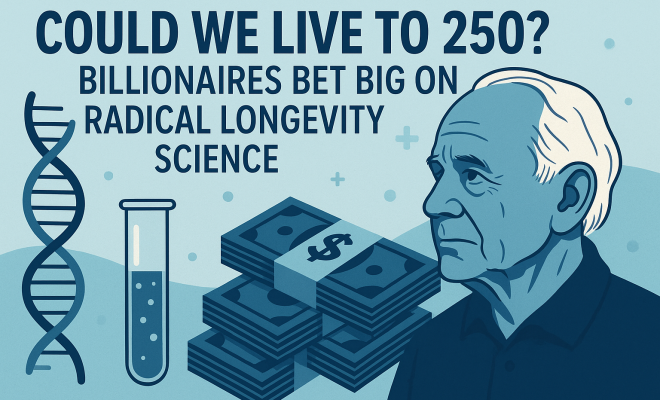
Imagine a world where ‘old age’ as we know it becomes a relic of the past, a quaint historical footnote. It’s a vision that’s long resided in the realm of science fiction, but today, fueled by stunning advances in biotechnology and an influx of unprecedented funding, that future feels less like fantasy and more like an increasingly tangible, albeit distant, possibility. Recent anti-aging studies have sparked a wildfire of online speculation, with sensational claims suggesting humans could soon live to 250 years old. While the scientists behind these breakthroughs haven’t exactly endorsed that specific, eye-popping number, the sheer buzz around it underscores a fundamental human desire: to extend not just life, but healthy, vibrant life. This isn’t just wishful thinking; it’s the driving force behind a multi-billion-dollar boom in longevity science.
The field of longevity biotechnology is experiencing an absolutely unprecedented surge in investment and innovation. We’re talking billions in venture funding pouring in, not just from traditional biotech investors, but also from some rather unexpected corners, including crypto donors and tech titans like Jeff Bezos. What exactly are they betting on? They’re investing in the very fabric of life itself, seeking to unravel the mysteries of aging at a cellular and molecular level. It’s an ambitious undertaking, certainly, but one that promises revolutionary medical advancements that could fundamentally alter what it means to be human.
The Allure of Extreme Longevity: Separating Hype from Hope
Let’s address the elephant in the room: the 250-year lifespan. When such a number goes viral, it’s easy to dismiss it as pure internet sensationalism. And to a degree, you’d be right; no credible scientist is currently putting a definitive timeline on such an extreme extension of human life. However, the very fact that this number resonates so strongly, sparking countless social media discussions and news articles, speaks volumes about our innate yearning for more time. It’s a powerful cocktail of aspiration and fear – the desire to witness more, experience more, and avoid the inevitable decline that aging brings.
This public fascination isn’t just about sensational headlines; it’s deeply rooted in our shared human experience. Who wouldn’t want more years with loved ones, more time to pursue passions, or simply more moments of healthy, pain-free existence? The longevity science conversation taps into something profoundly primal. It’s also amplified by the involvement of high-profile figures. When names like Bezos are attached, it lends a certain gravitas, even a futuristic sheen, to what might otherwise seem like fringe science. Their financial backing isn’t just capital; it’s a powerful endorsement that signals serious intent and belief in the potential for groundbreaking change.
Billions Pouring In: The Investment Landscape of Longevity Science
The financial commitment to longevity science is truly staggering. We’re witnessing a gold rush, not for precious metals, but for the biological secrets of aging. Venture capitalists, pharmaceutical giants, and a new breed of philanthropic tech billionaires are all throwing their weight behind this burgeoning sector. Why? Because the potential for returns, both financial and societal, is immense. This isn’t just about developing a new drug; it’s about fundamentally altering the human condition, which opens up entirely new markets and possibilities.
Consider the scope: if we could meaningfully delay or even reverse age-related diseases like Alzheimer’s, heart disease, or cancer, the economic impact alone would be colossal, let alone the immeasurable human benefit. The ‘illness industry’ is enormous, and longevity science aims to disrupt it by preventing these conditions before they manifest. Companies working on everything from cellular reprogramming to novel drug compounds are attracting massive valuations. This isn’t just speculative; it’s a calculated bet on the future of healthcare and human potential. The smart money is recognizing that the biggest health challenges we face are often symptoms of the aging process itself.
From Bench to Bedside: Early Human Trials and Breakthroughs
The transition of longevity research from laboratory experiments to human clinical trials marks a critical juncture. It’s one thing to see promising results in petri dishes or animal models; it’s another entirely to begin testing these interventions in people. This is where the rubber meets the road, where theoretical potential begins to confront the complexities of human biology.
A prime example of this progression is the work being done by Life Biosciences. They’ve just initiated a Phase 1 trial for a cellular reprogramming therapy, and here’s the crucial part: it involves the very first human patient being dosed. The initial target isn’t radical life extension, but something more immediately impactful: optic neuropathies, a group of conditions that can lead to vision loss. This targeted approach is smart. By focusing on specific age-related diseases, researchers can gather vital data on safety and efficacy, paving the way for broader applications down the line. It’s a methodical, scientific approach to addressing the myriad ways aging impacts our bodies, starting with tangible, measurable outcomes.
Cellular Reprogramming: A Glimpse into the Future of Anti-Aging
Cellular reprogramming is arguably one of the most exciting and revolutionary frontiers in longevity science. The concept, pioneered by Nobel laureate Shinya Yamanaka, involves essentially ‘resetting’ adult cells back to a more youthful, pluripotent state, much like embryonic stem cells. These induced pluripotent stem cells (iPSCs) have the remarkable ability to then differentiate into almost any cell type in the body.
The therapeutic potential here is immense. Imagine being able to rejuvenate failing organs by replacing old, senescent cells with fresh, reprogrammed ones. Or, as in the Life Biosciences trial, targeting specific tissues like the optic nerve to reverse age-related damage. The challenge, of course, is doing this safely and effectively within a living organism, without causing uncontrolled cell growth or other adverse effects. Early research focuses on partial reprogramming, aiming to ‘dial back’ the age of cells just enough to restore function without losing their identity or inducing tumor formation. It’s a delicate dance, but one that holds the promise of truly transformative therapies that could address the root causes of aging, rather than just managing its symptoms. (See: NIH initiative on longevity research.)
The Role of Tech Billionaires and Crypto Philanthropy
It’s hard to ignore the significant financial muscle being flexed by tech billionaires and the emerging crypto elite in the longevity space. Jeff Bezos, for instance, is a prominent investor in Altos Labs, a biotech company reportedly focused on cellular rejuvenation programming. These aren’t just minor contributions; we’re talking about hundreds of millions, sometimes billions, of dollars being channeled into cutting-edge research. Why are these particular individuals so keen on longevity science?
Part of it surely stems from a Silicon Valley ethos of ‘disruption’ – the idea that any problem, no matter how fundamental, can be solved with enough ingenuity and resources. For these visionaries, aging isn’t an inevitability; it’s a problem to be engineered around. Crypto donors, too, are making their mark, often driven by a similar future-forward mindset and a desire to make a significant, lasting impact. They see longevity as the ultimate frontier, a challenge that, if overcome, would revolutionize humanity more profoundly than any technological innovation to date. Their involvement not only provides crucial funding but also brings a certain swagger and high-stakes ambition to the field, pushing the boundaries of what’s considered possible.
Ethical Quagmires and Societal Implications
While the prospect of extended healthy lifespans is undeniably exciting, it’s crucial to acknowledge the profound ethical and societal questions that longevity science raises. If we truly achieve radical life extension, who will have access to it? Will it exacerbate existing inequalities, creating a super-elite of ‘immortals’ while the rest of humanity continues to age and die at traditional rates? This isn’t a trivial concern; access to advanced medical treatments already shows stark disparities globally.
Beyond access, think about the impact on population dynamics, resource allocation, and even the very meaning of life and death. Would extended lifespans lead to overpopulation, straining our planet’s resources to breaking point? How would it affect social structures, career paths, and retirement? What about emotional and psychological well-being over centuries? These aren’t just philosophical musings; they’re very real challenges that society will have to grapple with as longevity science progresses. We need proactive discussions, not just reactive responses, to ensure that the benefits of this research are broadly shared and that we avoid creating new, unforeseen problems.
The Monetization Potential: Beyond Philanthropy
Beyond the scientific breakthroughs and philanthropic investments, there’s a very real and significant monetization potential in the longevity space. This isn’t just about venture capital; it’s about a burgeoning consumer market eager for any perceived edge against aging. The high-CPC (cost-per-click) niches like medical/healthcare, weight loss, and investing are ripe for tapping into this desire. top biotech programs offers useful background here.
Think about the affiliate marketing opportunities for health supplements promising anti-aging benefits, or the growing market for reviews of specialized longevity clinics that offer everything from advanced diagnostics to personalized wellness plans. Discussions around ‘longevity investments’ and the ‘cost of anti-aging treatments’ are already prevalent. This commercial aspect, while sometimes criticized for exploiting hope, also drives innovation and makes these discussions accessible to a wider audience. Companies are positioning themselves to offer services and products that cater to individuals looking to optimize their health and, if possible, extend their vitality. It’s a powerful economic engine that runs parallel to the scientific pursuit, creating a robust ecosystem around the quest for longer, healthier lives.
Navigating the Longevity Landscape: What’s Real and What’s Not?
With so much hype and so many bold claims circulating, it can be incredibly challenging for the average person to discern what’s genuine scientific progress from what’s pure snake oil. The ‘longevity’ label is increasingly affixed to everything from exotic diets to unproven supplements. So, how can you navigate this complex landscape?
The key is critical thinking and a healthy dose of skepticism. Always look for evidence-based research, preferably published in peer-reviewed scientific journals. Be wary of products or treatments that promise miraculous, overnight results without robust clinical data. Remember that genuine longevity science focuses on understanding and modulating the fundamental biological processes of aging, not just masking symptoms or selling quick fixes. It’s about rigorous scientific inquiry and incremental progress, not magical elixirs. Follow reputable scientists and institutions, and prioritize transparency and verifiable claims over marketing hype. Your best bet for true longevity isn’t a miracle cure, but rather a combination of established healthy lifestyle choices combined with potential future breakthroughs from legitimate scientific research.
Key Biological Hallmarks of Aging: The Scientific Battleground
To truly understand how longevity science aims to extend healthy lifespans, we need to look at the specific biological mechanisms scientists are targeting. Researchers have identified several “hallmarks of aging” – molecular and cellular changes that contribute to the aging process and age-related diseases. These aren’t just random occurrences; they’re interconnected processes that, when disrupted, accelerate aging.
One primary hallmark is cellular senescence. These are ‘zombie cells’ that stop dividing but don’t die. Instead, they hang around, secreting inflammatory molecules that damage surrounding healthy tissue. Senolytics, a class of drugs, are designed to selectively kill these senescent cells, and early human trials are already showing promise in improving certain age-related conditions. Another critical area is epigenetics, the study of how gene expression changes without altering the underlying DNA sequence. Our epigenome can be thought of as the software that tells our genes what to do, and it tends to get ‘messy’ with age. Scientists are exploring ways to ‘reset’ this epigenetic clock, potentially reversing some aspects of cellular aging. (See: Scientific advancements in aging.)
Then there’s mitochondrial dysfunction. Mitochondria are the powerhouses of our cells, producing the energy we need to function. As we age, they become less efficient and more prone to damage, leading to energy deficits and contributing to many age-related diseases. Research into compounds that boost mitochondrial health, like NMN (nicotinamide mononucleotide), is a hot topic. Finally, telomere attrition – the shortening of protective caps on our chromosomes with each cell division – is a well-known marker of cellular aging. While directly reversing telomere shortening in a controlled way is still a challenge, understanding its role is crucial for developing therapies that maintain genomic stability. We covered leading universities in biotechnology in more detail.
The Intersection with AI and Big Data
The sheer complexity of human biology means that traditional research methods, while valuable, can be slow. This is where artificial intelligence (AI) and big data are becoming indispensable tools in longevity science. AI algorithms can sift through vast datasets of genetic information, clinical trial results, and molecular interactions at speeds and scales impossible for human researchers.
Imagine AI identifying novel drug targets for age-related diseases by analyzing millions of genetic mutations, or predicting how different compounds might interact with our biological systems. Machine learning models are already being used to identify biomarkers of aging, allowing scientists to more accurately measure biological age versus chronological age. This ability to ‘read’ the body’s internal clock is crucial for evaluating the effectiveness of anti-aging interventions. Furthermore, AI can accelerate drug discovery by simulating molecular interactions, potentially reducing the time and cost associated with bringing new therapies to market. The synergy between biology and computation is truly transforming the pace of discovery in this field.
Nutritional and Lifestyle Interventions: The Foundation of Longevity
While cutting-edge biotechnology grabs headlines, it’s vital not to overlook the foundational role of nutrition and lifestyle in promoting healthy longevity. Even with future breakthroughs, these established practices will likely remain crucial for optimizing health and extending vitality. Think of it this way: you can’t build a skyscraper on a shaky foundation, and the same goes for a long, healthy life.
Dietary patterns like the Mediterranean diet, rich in whole foods, healthy fats, and antioxidants, are consistently linked to reduced risk of age-related diseases. Caloric restriction, where calorie intake is reduced without malnutrition, has shown remarkable longevity benefits in various animal models, and human studies are exploring its practical applications, often through intermittent fasting. Regular physical activity, beyond just maintaining weight, has profound effects on cellular health, inflammation, and cognitive function. Sleep, too, often underestimated, plays a critical role in cellular repair and hormonal balance. Stress management, through practices like mindfulness or meditation, helps mitigate the damaging effects of chronic stress on aging processes. These aren’t magic bullets, but they are powerful, accessible tools that everyone can leverage right now to improve their health span.
Expert Perspectives: What Scientists Really Think
With all the sensationalism, it’s worth hearing from the experts themselves. While the 250-year claims are largely dismissed as speculative, leading longevity researchers are cautiously optimistic about significant extensions to *healthy* human lifespan. Dr. David Sinclair, a prominent Harvard geneticist, often speaks about the possibility of extending our “health span” – the period of life spent in good health – by decades. He emphasizes that we’re moving from a paradigm of treating individual diseases to treating aging itself as the underlying cause.
Many scientists agree that the first major breakthroughs will likely be in preventing or reversing specific age-related diseases, rather than simply stopping the aging process entirely. Think of it as chipping away at the causes of decline. The goal isn’t necessarily immortality, but rather to compress morbidity, meaning to drastically reduce the time people spend suffering from age-related illnesses at the end of their lives. This would be a monumental achievement in itself, fundamentally reshaping healthcare and quality of life for billions. The consensus among serious researchers is that while radical life extension is a long-term aspiration, extending healthy life by 10-20 years within the next few decades is a more realistic and immediate goal.
FAQ: Your Questions About Longevity Science Answered
The world of longevity science can feel a bit overwhelming, so let’s tackle some common questions you might have.
Q: Is longevity science just about living longer, or living better?
A: It’s overwhelmingly about living *better* – extending what scientists call “health span.” The primary goal is to delay or prevent the onset of age-related diseases and maintain vitality, cognitive function, and physical independence for as long as possible. While an extended total lifespan might be a byproduct, the focus is on quality of life, not just quantity. (See: World Health Organization on aging.)
Q: Are there any proven anti-aging treatments available today?
A: No single “anti-aging” treatment has been proven to reverse human aging or drastically extend lifespan in a clinical setting. However, certain drugs like metformin (for diabetes) and rapamycin (an immunosuppressant) are being studied for their potential longevity benefits due to their effects on cellular pathways related to aging. For now, the most proven “anti-aging” strategies remain healthy lifestyle choices: a balanced diet, regular exercise, adequate sleep, and stress management.
Q: What’s the difference between chronological age and biological age?
A: Chronological age is simply the number of years you’ve been alive. Biological age, on the other hand, reflects the physiological state of your body’s cells and tissues. Two people of the same chronological age can have very different biological ages due to genetics, lifestyle, and environmental factors. Longevity science aims to reduce biological age, effectively making your body function like it belongs to a younger person.
Q: Will longevity treatments be affordable for everyone?
A: This is one of the biggest ethical concerns. Early, cutting-edge treatments are often expensive. However, as technologies mature and become more widespread, costs typically decrease. The hope is that, like many medical advancements, eventually these therapies will become accessible to a broad population, perhaps even integrated into public health strategies. Proactive discussions are needed now to ensure equitable access.
Q: What are the biggest risks or downsides of pursuing radical longevity?
A: Beyond the ethical concerns of equitable access and potential overpopulation, there are scientific risks. Unintended side effects from novel therapies are always a possibility. From a societal standpoint, questions arise about identity (who are we if we live for centuries?), purpose, and the implications for social structures, family dynamics, and even economic systems if people don’t retire or die at traditional rates. These are complex challenges that will require careful consideration as the science progresses.
Q: How long do scientists realistically think we might extend healthy human life?
A: While the viral “250 years” is sensational, many serious researchers believe that extending healthy human lifespan by 10-30 years within the next few decades is a plausible and ambitious goal. This would mean a significant portion of the population living robustly into their 90s and beyond, free from debilitating age-related diseases. Radical life extension beyond that is considered a much longer-term, highly speculative endeavor.
The Future of Longevity: A Marathon, Not a Sprint
The journey towards significantly extended healthy human lifespans is undoubtedly a marathon, not a sprint. While the viral claims of living to 250 might seem outlandish, they reflect a deeper truth: that humanity is actively and aggressively pursuing solutions to the ravages of aging. The billions being invested, the groundbreaking research in cellular reprogramming, and the first human trials are not just fleeting trends; they represent a fundamental shift in how we approach health and disease.
We’re moving beyond simply treating the symptoms of age-related illnesses to directly addressing the aging process itself. This is a monumental undertaking, fraught with scientific challenges, ethical dilemmas, and immense societal implications. But for the first time in human history, the prospect of genuinely extending our healthy years, and perhaps even our total lifespan, feels like a tangible scientific goal rather than a distant dream. The conversations we have today, the investments we make, and the research we support will shape a future that could redefine what it means to be human in ways we can only just begin to imagine.
Trending Now
- 7 Pivotal Steps to Master AI in Early Childhood Education — Before It’s Too Late
- our breakdown of the brutal truth: ai curriculum specialist vs traditional educator – which career dominates?
- our breakdown of the unseen power: how ai is quietly reshaping early childhood education careers
- this guide on the astonishing truth about ai in early childhood education careers
- our breakdown of the astonishing truth: why business schools must embrace ai now
Frequently Asked Questions
Can humans really live to 250 years old?
While no credible scientist currently supports the idea of humans living to 250 years, recent advancements in biotechnology and anti-aging research have sparked discussions about extreme longevity. The fascination with such a lifespan reflects a broader desire to extend healthy life, even if the specific timeline remains speculative.
What is longevity science?
Longevity science focuses on understanding and potentially extending human lifespan and healthspan. It encompasses research into the biological processes of aging, cellular regeneration, and innovative medical technologies aimed at promoting healthier, longer lives, driven by significant investments from various sectors, including tech and biotech.
Why are billionaires investing in anti-aging research?
Billionaires are investing in anti-aging research due to the potential for revolutionary breakthroughs in longevity biotechnology. With billions in funding, they aim to unravel the mysteries of aging, driven by a desire to extend life and improve overall health, which could fundamentally change human existence.
What are the latest advancements in anti-aging studies?
Recent advancements in anti-aging studies include breakthroughs in understanding cellular aging and potential methods for rejuvenation. These studies are gaining traction and funding, leading to speculation about extending human life significantly, although no specific timelines or guarantees have been established by scientists.
Is the idea of living for centuries just a fantasy?
While the notion of living for centuries may seem fantastical, ongoing advancements in biotechnology and longevity science are making the concept more plausible. However, claims about extreme lifespans should be approached with caution, as they often lack scientific endorsement and are subject to ongoing research and debate.
What's your take on this? Share your thoughts in the comments below — we read every one.