Kaiser Permanente’s AI Surveillance of Nurses Sparks Outcry (2026)
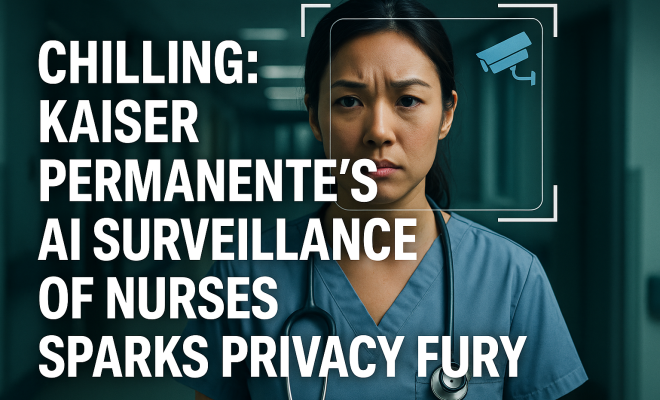
Imagine you’re a nurse, dedicated to helping people in their most vulnerable moments, offering calm advice over the phone. Now, imagine every single word you utter, every pause, every inflection, is being analyzed by an artificial intelligence system. Not for quality improvement in a supportive way, but to generate a ‘performance score’ that could impact your job. This isn’t a scene from a dystopian novel; it’s the stark reality facing advice hotline nurses at Kaiser Permanente in California, as revealed in a bombshell investigation by CalMatters on July 9, 2026.
The implementation of this invasive AI surveillance has ignited a firestorm of controversy, drawing fierce condemnation from healthcare workers, privacy advocates, and anyone concerned about the erosion of human dignity in the workplace. The story of Kaiser Permanente AI surveillance is quickly going viral, and it’s not hard to see why. It taps into our deepest anxieties about technology, job security, and the increasingly blurred lines between oversight and outright intrusion, particularly in a sector as sensitive and critical as healthcare. What does it mean for patient care when the human element is constantly under the digital microscope?
The Unveiling: What CalMatters Revealed About Kaiser Permanente AI Surveillance
The CalMatters investigation pulled back the curtain on a system that many nurses likely suspected but couldn’t definitively prove. According to the report, Kaiser Permanente, one of the nation’s largest not-for-profit health plans, has quietly rolled out AI technology designed to monitor the calls of its advice hotline nurses. This isn’t just about recording calls for auditing purposes, which is a fairly standard practice in many call centers. This goes much deeper, employing predictive productivity software that scrutinizes various aspects of each interaction.
The critical detail that sent shockwaves through the nursing community was the generation of monthly performance scores. These scores, derived from the AI’s analysis, aren’t just for internal metrics; they become part of a nurse’s performance evaluation. Think about that for a moment. An algorithm, devoid of empathy, context, or the nuanced understanding of human interaction, is judging the efficacy and quality of a nurse’s professional advice. This kind of Kaiser Permanente AI surveillance fundamentally alters the dynamic between employer and employee, injecting an element of constant, algorithmic judgment into every shift.
A ‘Profound Invasion of Privacy’: The Human Cost
The immediate and visceral reaction from nurses and their advocates has been one of outrage, labeling the system a ‘profound invasion of privacy.’ And it’s easy to see why. Healthcare professionals, particularly those on advice hotlines, deal with incredibly personal and often distressing situations. They are trained to listen, to empathize, and to provide comfort and clear guidance. This requires a level of human connection and trust that can be severely undermined when nurses know they are under constant, algorithmic scrutiny.
The stress this creates is immense. Imagine trying to navigate a complex medical query while simultaneously wondering if your tone, your word choice, or the length of your call is going to negatively impact your monthly score. This isn’t conducive to quality patient care; it’s a recipe for burnout. Nurses are already on the front lines, dealing with immense pressure and emotional labor. Adding an AI overseer that quantifies their every move without understanding the qualitative nuances of their work can only exacerbate these challenges, potentially driving skilled professionals out of a vital role. There’s a fuller look at privacy concerns.
Beyond Metrics: The Erosion of Trust and Professionalism
One of the most damaging aspects of this kind of Kaiser Permanente AI surveillance is its potential to erode trust. Trust is foundational in healthcare, both between patient and provider, and between employer and employee. When nurses feel they are being watched, judged, and potentially penalized by an impersonal system, it creates an adversarial environment. This can lead to nurses focusing on ‘gaming’ the system to achieve a good score rather than focusing solely on the patient’s needs.
Furthermore, it undermines the very professionalism of nursing. Nursing is a profession built on expertise, clinical judgment, and human compassion. Reducing these complex attributes to a series of quantifiable data points generated by an AI risks devaluing the human element that makes nursing so critical. It suggests that the nuances of patient interaction can be perfectly captured and evaluated by an algorithm, which many would argue is a dangerous oversimplification of a highly skilled and empathetic role. How can a machine truly assess the effectiveness of a nurse calming a panicked parent, or gently guiding an elderly patient through a difficult diagnosis?
The Broader Ethical Implications of AI in Healthcare
The Kaiser Permanente AI surveillance situation isn’t an isolated incident; it’s a stark reminder of the broader ethical quagmire we’re entering with the rapid integration of AI into sensitive sectors like healthcare. While AI holds immense promise for improving diagnostics, streamlining administrative tasks, and even personalizing treatment plans, its application in employee surveillance raises fundamental questions about human rights, privacy, and the future of work.
We’re wrestling with the balance between technological efficiency and human well-being. Is the pursuit of ‘optimized’ productivity worth the cost of increased stress, diminished morale, and the potential for a surveillance-state mentality in the workplace? For many, the answer is a resounding no. The ethical framework for AI deployment needs to prioritize human dignity and well-being, especially when dealing with professions that require high levels of empathy and personal judgment. Otherwise, we risk creating a healthcare system that is technically advanced but emotionally bankrupt. (See: CDC on healthcare worker safety.)
The Slippery Slope: From ‘Efficiency’ to ‘Control’
Proponents of such systems often frame them as tools for efficiency and quality improvement. They might argue that AI can identify patterns, highlight areas for training, and ensure consistent service delivery. And in some contexts, that might hold true. But there’s a very thin line between using technology to support and empower employees, and using it to monitor and control them. The concern with Kaiser Permanente AI surveillance is that it appears to have crossed that line, moving squarely into the realm of control.
When an AI generates a ‘performance score’ that directly impacts a nurse’s career, it shifts the focus from supportive coaching to punitive measurement. This creates a culture of fear rather than one of learning and growth. The slippery slope argument is particularly relevant here: what starts as monitoring for ‘productivity’ can easily morph into an all-encompassing surveillance that stifles autonomy, creativity, and the very human judgment that makes a good nurse invaluable. Where do we draw the line when algorithms dictate the terms of human labor?
Industry Reactions and the Call for Accountability
The backlash against Kaiser Permanente has been swift and severe. Unions representing healthcare workers have voiced strong opposition, citing concerns about unfair labor practices and the dehumanizing nature of the surveillance. Privacy advocates are highlighting the broader societal implications, warning that if such invasive practices become normalized in healthcare, they could spread to other industries, fundamentally altering the nature of employment.
The public reaction is also critical. Patients entrust their care to nurses, expecting compassion and professionalism. When nurses are under undue stress from algorithmic oversight, it inevitably impacts the quality of care they can provide. There’s a growing call for greater transparency from Kaiser Permanente and other organizations employing similar technologies. People want to know what data is being collected, how it’s being used, and what safeguards are in place to protect employee privacy and well-being. This incident serves as a crucial case study for how companies implement AI, and the need for accountability when those implementations cross ethical boundaries.
The Future of Work: Balancing Technology and Humanity
This controversy forces us to confront fundamental questions about the future of work. As AI becomes more sophisticated and ubiquitous, how do we ensure that it serves humanity rather than dominating it? How do we leverage technology’s power to enhance human capabilities without diminishing human value? The answer certainly doesn’t lie in turning skilled professionals into cogs in an algorithmic machine.
Instead, we need to foster a paradigm where AI acts as an assistant, a tool that augments human intelligence and empathy, rather than replacing or policing it. This means involving employees in the design and implementation of AI systems, ensuring transparency, and building ethical guardrails that protect privacy, promote well-being, and respect professional autonomy. The Kaiser Permanente AI surveillance saga is a wake-up call, reminding us that unchecked technological advancement, without a strong ethical compass, can lead to deeply troubling outcomes for both workers and the people they serve.
What’s Next for Kaiser Permanente and its Nurses?
As the story continues to gain traction, the pressure on Kaiser Permanente will undoubtedly intensify. They will face scrutiny not just from internal employee groups but also from regulators, privacy watchdogs, and the general public. It’s likely that this incident will spark broader conversations about labor laws pertaining to AI surveillance, potentially leading to new policies or even legislative action aimed at protecting workers from overly intrusive monitoring.
For the nurses directly affected, the path forward is uncertain but critical. They are at the forefront of a battle for dignity in the digital age. Their collective voice, amplified by unions and advocacy groups, will be instrumental in pushing for a re-evaluation of these surveillance practices. This isn’t just about one organization; it’s about setting a precedent for how technology is integrated into human-centric professions. The outcome here could significantly shape the landscape of employee rights and AI ethics for years to come.
The Kaiser Permanente AI surveillance scandal serves as a stark reminder that while technology offers incredible potential, it must be wielded with extreme care, especially when it touches the lives and livelihoods of dedicated professionals. We must never allow the pursuit of efficiency to overshadow the fundamental human need for dignity, privacy, and trust in the workplace.
The Technical Underbelly: How AI Surveillance Works in Practice
Let’s peel back the layers a bit on what this AI surveillance actually entails. It’s not just a simple recording. We’re talking about advanced natural language processing (NLP) and machine learning algorithms. These systems are designed to transcribe spoken words, yes, but then they go much further. They analyze speech patterns, tone of voice, even silence. For example, the AI might track the average length of a call, the number of times a nurse interrupts a caller, or specific keywords used or not used. It could flag calls where the nurse’s tone is perceived as ‘lacking empathy’ or where certain medical terms aren’t used in a prescribed way.
The data points collected are extensive. Think about metrics like talk-to-listen ratio, sentiment analysis (is the nurse’s sentiment positive, negative, or neutral?), adherence to scripts, identification of ‘filler words,’ and even the pace of speech. Each of these data points, often hundreds per call, gets fed into a complex model that churns out that dreaded performance score. The problem is that these algorithms are trained on vast datasets, and if those datasets aren’t carefully curated to understand the nuances of healthcare communication, they can easily misinterpret intent or context. A pause, for instance, might be a moment of thoughtful consideration for a nurse, but for an AI, it could be registered as ‘inefficiency.’
The Regulatory Vacuum: Why This Is Happening
Part of the reason companies like Kaiser Permanente can implement such pervasive AI surveillance is because the regulatory landscape hasn’t quite caught up with technological advancements. In many jurisdictions, laws around workplace monitoring were written long before sophisticated AI systems became prevalent. There are often broad allowances for employers to monitor communications for ‘quality assurance’ or ‘training purposes,’ without specific stipulations on algorithmic judgment or performance scoring. (See: NIH on AI technology in healthcare.)
For instance, while federal laws like the Electronic Communications Privacy Act (ECPA) touch on intercepting communications, they generally have exceptions for business use. State laws vary, with some requiring consent for call recording, but few explicitly address the deep analytical surveillance of employee performance by AI. This regulatory vacuum leaves a significant loophole, allowing companies to experiment with these technologies without clear legal boundaries or robust oversight. It’s a Wild West scenario where employers are largely free to define the rules of engagement with AI in the workplace, often to the detriment of employee rights and privacy.
Impact on Patient Care: A Ripple Effect
While the focus is rightly on the nurses’ rights, it’s crucial to understand how this Kaiser Permanente AI surveillance ultimately impacts the patient. When nurses are under immense pressure to hit algorithmic targets, their focus can shift away from genuine patient engagement. Instead of listening actively and responding authentically, they might become preoccupied with meeting specific AI-driven metrics.
Imagine a nurse cutting a conversation short to improve their ‘call handling time’ score, even if the patient still has lingering questions or needs further emotional support. Or a nurse rigidly sticking to a script, even when a more flexible, empathetic approach would be better for a distressed caller, all because the AI values ‘script adherence.’ This isn’t theoretical; it’s a documented phenomenon in other industries where similar surveillance systems have been implemented. The quality of care becomes standardized, not necessarily optimized, and the essential human connection that’s so vital in healthcare diminishes. Patients might receive technically correct information, but lose out on the compassion and individualized attention that differentiates good care from great care.
The Role of Unions and Advocacy in Challenging AI Overreach
The robust response from nursing unions, like the California Nurses Association (CNA), is a testament to their critical role in situations like this. Unions provide a collective voice and legal framework for challenging employer practices that infringe upon worker rights. They can negotiate for better terms, file grievances, and even advocate for new legislation. In the face of AI surveillance, unions can demand transparency about the algorithms, challenge the validity of AI-generated scores, and push for human oversight and appeal processes.
Beyond unions, privacy advocacy groups and civil liberties organizations are also stepping up. They frame these issues as part of a broader fight for digital rights and against unchecked corporate power. Their role is to educate the public, lobby lawmakers, and highlight the societal implications of such technologies. Together, these groups form a powerful bulwark against the uncritical adoption of AI in ways that undermine human dignity and professional autonomy.
Comparison to Other Industries: A Growing Trend
The Kaiser Permanente AI surveillance isn’t an anomaly; it’s part of a growing, disturbing trend across various industries. We’ve seen similar systems implemented in warehouse logistics, delivery services, customer call centers, and even in remote work environments. Companies are increasingly using AI to monitor everything from keyboard strokes and mouse movements to facial expressions during video calls, all under the guise of ‘productivity’ or ‘efficiency.’
For example, some delivery companies use AI-powered cameras in vehicles to monitor drivers’ behavior, flagging things like hard braking or distracted driving. While there might be valid safety concerns, the extent of surveillance often extends to tracking routes, delivery times, and even micro-movements inside the cab. The healthcare sector, however, presents unique challenges due to the sensitive nature of the work and the high degree of trust required. What might be deemed acceptable (though still controversial) in a logistics setting takes on a much graver ethical dimension in a profession dedicated to human well-being.
Building Ethical AI Frameworks: A Path Forward
To avoid similar controversies in the future, we need to proactively develop robust ethical AI frameworks. These frameworks shouldn’t just be internal corporate guidelines; they need to involve multi-stakeholder input, including employees, unions, ethicists, and regulators. Key principles should include:
- Transparency: Employees must know exactly what data is being collected, how it’s analyzed, and how it impacts their evaluations.
- Human Oversight: AI should assist, not replace, human judgment. There must always be a human in the loop for critical decisions, with clear avenues for appeal.
- Fairness and Bias Mitigation: Algorithms can perpetuate and even amplify existing biases. Regular audits are needed to ensure the AI doesn’t unfairly penalize certain demographics or communication styles.
- Privacy by Design: Data collection should be minimized, anonymized where possible, and secured against breaches.
- Purpose Limitation: Data collected for one purpose (e.g., training) shouldn’t be repurposed for another (e.g., punitive performance scoring) without explicit consent.
- Employee Empowerment: AI tools should be designed to empower workers, reduce administrative burden, and enhance their capabilities, rather than being used as a disciplinary tool.
Implementing such frameworks will require a significant shift in mindset from companies, prioritizing ethical considerations alongside technological innovation and profit margins.
FAQ: Understanding Kaiser Permanente AI Surveillance
Q1: What exactly is Kaiser Permanente AI surveillance?
Kaiser Permanente AI surveillance refers to the use of artificial intelligence technology to monitor and analyze the calls of its advice hotline nurses. This goes beyond simple call recording; the AI uses natural language processing and machine learning to scrutinize speech patterns, tone, word choice, call duration, and adherence to scripts. Based on this analysis, the AI generates a ‘performance score’ for each nurse, which is then used in their monthly evaluations. (See: AP News on technology and privacy.)
Q2: Why is this considered controversial?
It’s highly controversial for several reasons: it’s seen as a profound invasion of privacy for nurses, undermining their professionalism and creating immense stress. Critics argue that an algorithm cannot accurately assess the nuanced, empathetic work of a nurse, potentially leading to unfair performance evaluations. It also raises concerns about the erosion of trust in the workplace and the potential for a negative impact on patient care if nurses prioritize AI metrics over genuine human connection.
Q3: What kind of data does the AI collect about nurses’ calls?
The AI collects a wide range of data. This can include call duration, talk-to-listen ratio, sentiment analysis (the perceived emotional tone of the nurse), identification of specific keywords or phrases, adherence to pre-defined scripts, detection of ‘filler words,’ and analysis of speech pace and pauses. This granular data is then fed into an algorithm to calculate a performance score.
Q4: How does this impact nurses’ jobs?
The AI-generated performance scores directly impact nurses’ job evaluations. This means that an algorithm’s assessment, which may lack context or empathy, could influence a nurse’s standing, potential for advancement, or even job security. It creates an environment where nurses feel constantly judged by a machine, leading to increased stress and burnout, and potentially driving skilled professionals out of the role.
Q5: Is this type of AI surveillance common in healthcare?
While call recording for quality assurance is common, the use of AI to generate performance scores that directly impact employee evaluations is a newer, and less widespread, development in healthcare. However, AI-driven employee monitoring is a growing trend across many industries, including logistics, customer service, and remote work, reflecting a broader shift towards algorithmic management.
Q6: What are the ethical concerns surrounding Kaiser Permanente AI surveillance?
The ethical concerns are significant. They include privacy violations, the potential for algorithmic bias (where the AI unfairly penalizes certain communication styles or demographics), the dehumanization of work by reducing complex professional skills to quantifiable metrics, the erosion of trust between employer and employee, and the potential for a negative impact on the quality of patient care due due to nurses focusing on metrics rather than patient needs.
Q7: What is the role of unions in this situation?
Nursing unions, such as the California Nurses Association, are playing a crucial role by vocally opposing these surveillance practices. They advocate for their members’ rights, challenge unfair labor practices, and work to negotiate protections against intrusive AI monitoring. Unions provide a collective voice for nurses and can push for greater transparency, human oversight, and legislative action to regulate AI in the workplace.
Q8: What can be done to prevent similar situations in the future?
Preventing similar situations requires a multi-faceted approach. This includes developing robust ethical AI frameworks with input from employees, unions, and ethicists. These frameworks should emphasize transparency, human oversight, fairness, privacy by design, and the empowerment of workers. Additionally, new labor laws and regulations are needed to address AI surveillance specifically, providing clear legal boundaries and protections for employees.
Trending Now
Frequently Asked Questions
What is the controversy surrounding Kaiser Permanente's AI surveillance of nurses?
The controversy stems from Kaiser Permanente's implementation of AI technology to monitor nurses' calls, generating performance scores that could affect their jobs. This invasive surveillance has raised concerns among healthcare workers and privacy advocates about the erosion of dignity and the impact on patient care.
How does Kaiser Permanente's AI surveillance impact nurses?
Kaiser Permanente's AI surveillance impacts nurses by analyzing their calls in real-time, focusing on their words, pauses, and tone to generate performance scores. This could lead to increased stress, job insecurity, and concerns about the quality of patient care as the human element is constantly monitored.
What did the CalMatters investigation reveal about Kaiser Permanente's AI practices?
The CalMatters investigation revealed that Kaiser Permanente has deployed AI technology to monitor advice hotline nurses, going beyond standard call recording to analyze interactions deeply. This practice has drawn significant backlash for its potential to invade privacy and affect job performance.
Why are healthcare workers opposed to AI surveillance in nursing?
Healthcare workers oppose AI surveillance in nursing because it undermines their autonomy and dignity while prioritizing productivity over patient care. They argue that constant monitoring can lead to stress and negatively impact the quality of care provided to patients.
What are the implications of AI surveillance on patient care?
The implications of AI surveillance on patient care include the risk of diminished human interaction and empathy, as nurses may feel pressured to perform for algorithms rather than focusing on patient needs. This shift raises concerns about the overall quality of care in the healthcare sector.
What did we miss? Let us know in the comments and join the conversation.