Staggering Childcare Costs in Fresno: 10 Ways to Slash Your Family’s Biggest Expense
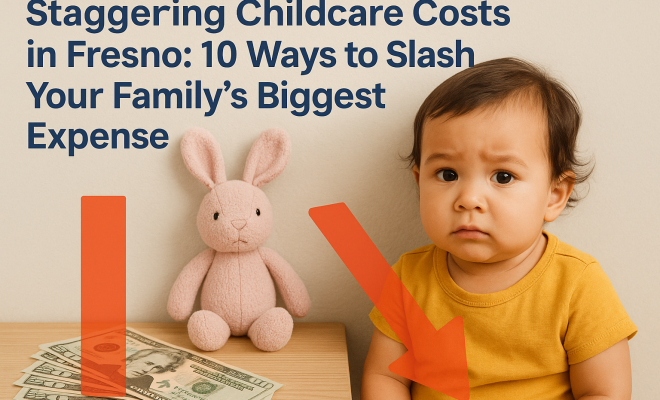
If you’re a parent in Fresno, you don’t need a report to tell you that childcare costs are through the roof. You feel it every single month when you look at your budget, right? It’s not just a feeling, though; the numbers are truly eye-opening. A recent “2026 State of Childcare Report” by the research firm Beverly laid it all out: families in Fresno are shelling out an average of 31% of their pre-tax household income just to keep their kids cared for while they work. Let that sink in for a moment. Thirty-one percent! That makes Fresno the city with the highest childcare cost burden among all large California cities.
And if you have an infant? Well, it gets even tougher. The report specifically highlighted that infant care alone devours an astonishing 31.2% of a median household income of $66,804. It’s no wonder this finding has sparked a heated debate across the city and pushed Fresno City Council members to create a “Commission on Family Affordability and Childcare Access.” They’re looking for solutions, and frankly, so are you. This isn’t just about statistics; it’s about real families struggling to make ends meet, wondering how they can possibly afford to raise their children in this city. It forces us to ask tough questions about the sustainability of family life here and the systemic changes we desperately need. But while the city works on policy, you need practical strategies, and you need them now. So, let’s talk about how to budget for childcare in Fresno without completely breaking the bank. Here are 10 concrete ways to navigate this financial minefield.
1. Deep Dive into Your Current Budget: Uncover Hidden Savings
Before you can effectively tackle the beast that is childcare costs, you’ve got to know exactly where every single dollar of your income is going. This isn’t just about glancing at your bank statement; it’s about a forensic audit of your finances. Sit down, open up a spreadsheet or use a budgeting app like Mint or YNAB, and meticulously track every penny for at least a month, ideally two or three. You’ll be surprised at what you find.
Are there subscription services you’ve forgotten about? Daily coffee runs that add up to hundreds over a year? Impulse purchases that could be reined in? Be brutally honest with yourselves. Every dollar you can free up from discretionary spending is a dollar that can go towards reducing the strain of childcare. This initial step, while perhaps a bit painful, is absolutely foundational to figuring out how to budget for childcare in Fresno in a sustainable way.
2. Explore Local Fresno Financial Resources and Subsidies: Don’t Leave Money on the Table
It’s easy to feel like you’re alone in this, but Fresno, like many communities, does have programs designed to help families with childcare costs. The key is knowing where to look and being persistent. Start by checking with the Fresno County Office of Education (FCOE) or organizations like the Central Valley Children’s Services Network (CVCSN). These entities often administer state and federal childcare subsidy programs, like those funded by the California Department of Social Services (CDSS) or Head Start initiatives.
Eligibility for these programs usually depends on your income, family size, and the age of your children. Don’t assume you won’t qualify without checking. Many families who think they earn too much are surprised to find they meet the criteria, especially with the high cost of living in California. Navigating the application process can be a bit daunting, requiring paperwork and patience, but the potential savings are significant and well worth the effort. Think of it as investing your time to save thousands of dollars annually.
3. Negotiate with Childcare Providers: It Never Hurts to Ask
Many parents assume childcare tuition rates are set in stone, but that’s not always the case. While large corporate centers might have less flexibility, smaller, independent providers or in-home daycares often have a bit more wiggle room. When you’re discussing enrollment, don’t be afraid to politely inquire about potential discounts. This is a crucial part of learning how to budget for childcare in Fresno effectively.
Could they offer a sibling discount if you have more than one child enrolling? What about a discount for paying several months in advance, or for committing to a longer contract? Some providers might offer a slight reduction for consistent, on-time payments, or even for referring new families. Frame your request respectfully and emphasize your commitment as a long-term client. The worst they can say is no, and you might just shave a few percentage points off your monthly bill, which adds up quickly.
4. Consider In-Home Care Alternatives: Nannies and Au Pairs
When you look at the raw numbers, the idea of an in-home nanny or au pair might seem like a luxury. However, for families with multiple children, or those with very specific scheduling needs, it can actually be more cost-effective than sending several kids to a traditional daycare center. Nannies typically come at a higher hourly rate, but the cost per child decreases significantly with each additional child.
Au pairs, who are typically young adults from other countries living with your family and providing childcare in exchange for room, board, and a stipend, can be an even more economical option. The cultural exchange aspect is also a huge bonus for many families. While there are upfront costs and agency fees involved with au pair programs, the overall monthly expense can be substantially less than multiple daycare tuitions. Plus, you get the convenience and personalized attention that only in-home care can provide.
5. Form a Childcare Co-Op with Other Fresno Parents: Strength in Numbers
This is a brilliant, grassroots solution that many communities embrace, and it’s particularly effective when you’re trying to figure out how to budget for childcare in Fresno. A childcare co-op involves a group of trusted parents pooling their resources and time to care for each other’s children. Instead of paying a provider, you trade hours of childcare. For example, if you watch another family’s children for 10 hours this week, they’ll watch yours for 10 hours next week, or another family in the co-op can cover you. (See: positive parenting resources from CDC.)
The key to a successful co-op is finding families with similar parenting philosophies, reliable schedules, and a high level of trust. You’ll need to establish clear rules, a fair tracking system for hours, and good communication. While it requires a bit of organization and commitment, a well-run co-op can drastically reduce or even eliminate your childcare expenses for certain periods, offering immense financial relief and building a strong community network.
6. Leverage Employer-Sponsored Benefits: Don’t Overlook Your Workplace
Many employers, particularly larger companies, offer benefits that can significantly ease the childcare burden, and it’s astonishing how many employees don’t fully utilize them. Start by checking if your workplace offers a Dependent Care Flexible Spending Account (DCFSA). This allows you to set aside pre-tax money from your paycheck to pay for eligible childcare expenses, effectively reducing your taxable income. For more context, see The Staggering Truth About Child Care Costs.
While the maximum contribution limit is typically $5,000 per household per year (or $2,500 if married filing separately), saving on taxes for that amount is real money back in your pocket. Some progressive employers might also offer direct childcare subsidies, discounts with partner childcare centers, or even on-site daycare facilities. Even if your company doesn’t advertise these, it’s always worth asking your HR department about any existing or potential benefits related to childcare. It’s a proactive step in how to budget for childcare in Fresno that many parents miss.
7. Evaluate Part-Time or Flexible Work Options: The Schedule Shuffle
This isn’t an option for everyone, but for some families, adjusting work schedules can be a game-changer when it comes to childcare costs. Could one parent shift to a part-time schedule, even temporarily, to cover some of the childcare hours? Could you and your partner work opposing shifts, so one of you is always home with the children?
Remote work or jobs with flexible hours can also open up possibilities. Even reducing your paid childcare by a few hours a day or a couple of days a week can lead to substantial savings over time. It requires a careful calculation of lost income versus childcare savings, but for some, the financial and family benefits outweigh the professional adjustments. This often involves a family meeting to discuss priorities and potential sacrifices, but it offers a direct way to reduce your dependence on external care.
8. Consider Family and Friends for Support: The Grandparent Advantage
This might seem obvious, but sometimes we’re hesitant to lean on our closest support systems. Grandparents, aunts, uncles, or even trusted family friends can be an invaluable, and often free or low-cost, resource for childcare. Many grandparents, especially if they’re retired or have flexible schedules, would jump at the chance to spend more quality time with their grandchildren.
Of course, this isn’t a free pass. It’s crucial to have open and honest conversations about expectations, schedules, and any compensation (even if it’s just covering their gas or providing meals). You want to ensure it’s a sustainable arrangement that works for everyone involved, maintaining respect and gratitude. Even if they can only help a couple of days a week, those are significant savings that contribute directly to how to budget for childcare in Fresno.
9. Utilize Tax Credits for Childcare Expenses: Uncle Sam Can Help (a Little)
Don’t forget about tax benefits! The federal Child and Dependent Care Credit allows you to claim a percentage of your childcare expenses, up to certain limits, if you pay for care for a child under 13 so you can work or look for work. While it’s a credit, not a deduction, meaning it directly reduces your tax liability, the actual amount you receive depends on your adjusted gross income and the amount of expenses.
It’s not a massive windfall, but every bit helps. Keep meticulous records of all your childcare payments, including the provider’s name, address, and their tax identification number (TIN) or Social Security number. You’ll need this information when you file your taxes. Also, check if California offers any state-specific childcare tax credits, as these can further reduce your overall tax burden and help stretch your childcare budget.
10. Advocate for Systemic Change: Your Voice Matters
While these individual strategies are crucial for your family’s immediate financial health, let’s not forget the bigger picture. The fact that Fresno families are spending 31% of their income on childcare isn’t just a personal problem; it’s a systemic issue that demands broader solutions. The Fresno City Council’s new “Commission on Family Affordability and Childcare Access” is a direct result of this growing concern, and they need to hear from you.
Attend public meetings, write letters to your council members, and participate in community surveys. Share your stories and the real impact these costs have on your family. Advocate for policies that support new childcare businesses, increase worker compensation (which can lead to better quality and retention), and expand affordable childcare options. Your voice, combined with others, can help shape the future of childcare in Fresno, making it more accessible and affordable for everyone. This isn’t just about how to budget for childcare in Fresno for yourself, but how to create a more equitable system for all families.
Navigating the incredibly high cost of childcare in Fresno is undoubtedly challenging, but it’s not an insurmountable obstacle. By combining careful budgeting, exploring all available resources, considering alternative care models, and even advocating for policy changes, you can alleviate some of the financial pressure. It takes diligence, creativity, and sometimes, a willingness to ask for help, but every step you take brings you closer to a more manageable and sustainable family budget.
11. Leverage Community College Early Childhood Education Programs: A Win-Win
Here’s a strategy many parents in Fresno might overlook: look into local community colleges with Early Childhood Education (ECE) programs. Often, these colleges run campus-based childcare centers that serve as training grounds for their ECE students. Because these centers are part of an academic program, they sometimes offer tuition rates that are significantly lower than private centers. (See: New York Times article on childcare costs.)
It’s not just about cost savings, either. These programs are often high-quality, supervised by experienced faculty, and follow best practices in early childhood development. They provide a nurturing and educational environment for your kids while giving ECE students valuable hands-on experience. Call Fresno City College or other nearby community colleges to inquire about their ECE programs and if they operate a childcare center open to the community. There might be waiting lists, so it’s best to get on them early, but the potential for both savings and quality care makes this worth investigating.
12. Understand the True Cost of Different Childcare Models: Beyond the Sticker Price
When you’re comparing childcare options, it’s easy to focus solely on the monthly fee. But you need to think about the total cost. For instance, a daycare center might seem more expensive upfront than an in-home provider. However, what does the daycare include? Meals? Educational materials? Field trips? Some in-home providers might charge extra for these things, or you might have to provide them yourself, adding to your grocery bill or supply costs. For more context, see How Unaffordable Healthcare Forces Mothers to Sacrifice Their Own Well-being.
Also, consider the “soft” costs. If a daycare closes for every federal holiday or has frequent staff sick days, that means you’re scrambling for backup care, potentially taking unpaid time off work, or paying for emergency babysitters. An in-home nanny, while pricier hourly, might offer more flexibility and consistency, potentially saving you money in lost work hours or last-minute care. Create a spreadsheet and itemize everything included in each option, as well as potential hidden costs, to get a truly accurate picture of what you’ll be paying.
13. Explore Flexible Spending Accounts (FSAs) and Health Savings Accounts (HSAs) for Related Costs: Maximize Pre-Tax Savings
We talked about Dependent Care FSAs, but don’t forget about regular Health Savings Accounts (HSAs) or Flexible Spending Accounts (FSAs) for health-related expenses. While these aren’t directly for childcare tuition, kids get sick, right? And those doctor visits, prescriptions, and even over-the-counter medications can add up quickly. Using pre-tax dollars from an FSA or HSA for these health costs means more of your after-tax income is available for childcare.
This is all about optimizing your entire financial picture. If you’re currently paying for health expenses with after-tax money, shifting to an FSA or HSA can free up hundreds, if not thousands, of dollars annually. It’s not direct childcare savings, but it indirectly boosts your capacity to budget for childcare in Fresno by reducing other unavoidable family expenses. Talk to your employer’s HR department about setting up one of these accounts if you haven’t already.
14. Consider After-School Programs for Older Children: Bridging the Gap
As your children get older and start school, your childcare needs shift, but they don’t disappear. School typically ends earlier than the average workday, leaving a few hours where kids need supervision. Instead of full-day care, you’re now looking at after-school programs. These programs, often run by schools, community centers (like the YMCA), or Boys & Girls Clubs, are generally much more affordable than full-day daycare.
Many of these programs in Fresno offer enriching activities, homework help, and a safe environment until you can pick them up. Research local school districts and community organizations to see what after-school options are available. Some might even offer sliding scale fees based on income. This can significantly reduce your overall childcare expenditure compared to maintaining a full-time spot in a traditional center for a school-aged child.
15. The Long-Term Financial Impact of Childcare Costs: More Than Just Monthly Bills
It’s vital to recognize that the high cost of childcare in Fresno isn’t just a monthly budget crunch; it has significant long-term financial implications for families. When 31% of your income goes to childcare, that’s 31% not going into savings, retirement accounts, or paying down debt. This can delay major life milestones like buying a home, saving for college, or achieving financial independence.
For some parents, particularly mothers, the cost-benefit analysis of working versus staying home becomes stark. If a parent’s entire take-home pay, or even a significant portion of it, is consumed by childcare, it can incentivize them to leave the workforce. This not only impacts family income but also career progression, future earning potential, and retirement savings. Understanding this broader impact reinforces why it’s so critical to actively budget for childcare in Fresno and to advocate for systemic change. It’s about securing your family’s future, not just making it through the month.
Frequently Asked Questions About Childcare in Fresno
Q1: What is the average cost of childcare in Fresno?
A1: According to the “2026 State of Childcare Report,” families in Fresno spend an average of 31% of their pre-tax household income on childcare. For infant care specifically, it consumes about 31.2% of a median household income of $66,804. These are averages, so individual costs can vary based on the type of care, age of the child, and specific provider.
Q2: Where can I find financial assistance for childcare in Fresno?
A2: Start with the Fresno County Office of Education (FCOE) and the Central Valley Children’s Services Network (CVCSN). They often administer state and federal subsidy programs, like those from the California Department of Social Services (CDSS) or Head Start. Eligibility is usually based on income and family size, so it’s always worth applying.
Q3: Are there tax benefits for childcare expenses in California?
A3: Yes, at the federal level, you can utilize the Child and Dependent Care Credit. This credit allows you to claim a percentage of your childcare expenses (up to certain limits) if you pay for care for a child under 13 so you can work or look for work. It directly reduces your tax liability. You should also check with the California Franchise Tax Board or a tax professional to see if California offers any state-specific childcare tax credits that could provide additional relief.
Q4: What’s a Dependent Care Flexible Spending Account (DCFSA) and how can it help?
A4: A DCFSA is an employer-sponsored benefit that lets you set aside pre-tax money from your paycheck to pay for eligible childcare expenses. This effectively reduces your taxable income, saving you money on taxes. The typical maximum contribution is $5,000 per household per year. It’s a great way to save money on expenses you’re already paying for.
Q5: Is it possible to negotiate childcare tuition rates with providers in Fresno?
A5: Absolutely. While larger corporate centers might have less flexibility, smaller, independent providers and in-home daycares often have some wiggle room. It never hurts to politely ask about sibling discounts, discounts for paying in advance, or for committing to a longer contract. Frame your request respectfully, and you might be surprised by the outcome.
Q6: What are childcare co-ops, and how do they work?
A6: A childcare co-op is a group of trusted parents who agree to trade childcare hours with each other instead of paying a professional provider. For example, if you watch another family’s kids for 10 hours, they (or another family in the co-op) will watch yours for 10 hours. It requires organization, clear rules, and mutual trust, but it can significantly reduce or even eliminate childcare costs for participating families.
Q7: When should I start looking for childcare in Fresno?
A7: Given the high demand and often long waiting lists, especially for infant care and highly-rated centers, it’s advisable to start looking as early as possible. For infant care, some parents even start researching and getting on waitlists during pregnancy. For older children, as soon as you know your needs, begin your search.
Q8: Are there any specific considerations for in-home care like nannies or au pairs in Fresno?
A8: For families with multiple children, or those needing flexible or personalized care, nannies or au pairs can be cost-effective. While nannies are typically paid hourly, the cost per child decreases with more children. Au pairs offer a cultural exchange and a lower overall monthly cost (room, board, stipend) but involve agency fees. It’s crucial to understand the legal and tax obligations for employing household help, which can be complex.
Q9: How can flexible work schedules impact childcare budgeting?
A9: Adjusting work schedules, such as one parent working part-time, or parents working opposing shifts, can drastically reduce the number of hours you need paid childcare. This can lead to substantial savings. It requires careful planning and communication with your employer and partner, but the financial and family benefits can be significant.
Q10: How can I advocate for better childcare policies in Fresno?
A10: Your voice matters! Attend public meetings of the Fresno City Council’s “Commission on Family Affordability and Childcare Access,” write letters to your local representatives, and participate in community surveys. Share your personal stories about how childcare costs affect your family. Advocate for policies that support new childcare businesses, improve worker compensation, and expand affordable childcare options for all Fresno families.
Trending Now
Frequently Asked Questions
What are the average childcare costs in Fresno?
Families in Fresno are facing staggering childcare costs, averaging 31% of their pre-tax household income. For those with infants, the cost can reach 31.2% of a median household income of $66,804, making it the city with the highest childcare burden among large California cities.
How can I save on childcare expenses?
To save on childcare costs, start by conducting a thorough budget review to uncover hidden savings. Consider alternative childcare options, negotiate rates, or explore state assistance programs designed to help families manage these expenses effectively.
Why are childcare costs so high in Fresno?
Childcare costs in Fresno are high due to a combination of factors including demand exceeding supply, rising operational costs for childcare providers, and low wages that limit the affordability of services for families, leading to a significant financial burden.
What is the impact of high childcare costs on families?
High childcare costs can significantly strain family budgets, forcing parents to make difficult decisions about work, savings, and overall quality of life. This financial pressure can lead to stress and impact family stability and well-being.
What is the Commission on Family Affordability and Childcare Access?
The Commission on Family Affordability and Childcare Access was established by Fresno City Council to address the soaring childcare costs in the city. Their goal is to explore solutions and create policies that enhance accessibility and affordability for local families.
Have you experienced this yourself? We'd love to hear your story in the comments.